


FW
Amazon to expand brick-and-mortar presence in the US
Amazon.com Inc is plans to expand its brick-and-mortar presence in the US by opening large physical shops that will operate like department stores.
To span over 30,000 sq ft, some of Amazon's first department stores will open in Ohio and California. They will offer products from well-known consumer brands.
Amazon, which dominates the online shopping space, made its biggest bet in the brick-and-mortar format with its acquisition of upscale grocer Whole Foods in 2017.
Amazon also experimented with small physical stores for books and groceries in at least 13 U.S. states including California, Colorado, and Washington.
The e-commerce giant has benefited from a surge in online purchases from homebound shoppers as COVID-19 forced millions to stay indoors over the past year. Traditional retailers also saw online sales surge, though total sales fell as they were forced to shut stores, which make up the bulk of their revenue.
Steady vaccine rollouts are now encouraging more Americans to return to brick-and-mortar stores to buy clothes, footwear, and electronics.
Department store chains Macy's Inc and Kohl's Corp beat Wall Street estimates for second-quarter sales, and also raised their forecasts on full-year revenue and profit as buyers came back to stores and spent on perfumes, shoes, and apparel.
H&M launches resale platform
Swedish fashion retailer H&M has launched a new resale platform specifically for the Canadian market. H&M Rewear is a one-stop digital customer to customer (C2C) resale destination where Canadians can buy and sell any piece of clothing from any brand.
The H&M Rewear platform will allow sellers to search H&M products directly by putting in the product number found on the care label which then will give them access to pictures, descriptions, color from previous seasons through the H&M search bar. Additionally, H&M Rewear, which is being launched together with resale-as-a-service (RaaS) technology company Reflaunt, will advise sellers on prices through its price recommendation algorithm, helping the sellers determine the best competitive price and optimize their chances of selling.
H&M Canada will offer its sellers two ways of receiving payment. Sellers will have the choice between direct deposit or receiving an H&M gift card with an added 20 per cent value that can be redeemed at H&M online and in store. H&M Canada will also offer its members the option to resell their past purchases in one click through its "smart button.
Small manufacturers in Bangladesh suffer as brands shift to bigger apparel makers
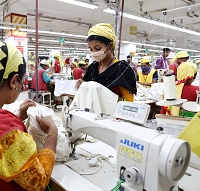 The ongoing global pandemic has been particularly tough on small and less-competitive apparel makers in Bangladesh due to the unhealthy price-cut competition. Large and well-established suppliers have been able to survive and receive larger work orders from big garment buyers. However, these suppliers are being compelled to take on product designing and development, inventory management, stock holding, logistics, factory selection and multi-factory production planning, says a new research by the International Labor Organization. A study by the United States Fashion Industry Association (USFIA) highlights, competition amongst local suppliers in Bangladesh will increase in the next two years as US fashion companies’ will increase sourcing from the country.
In 2020, brands including Inditex, Fast Retailing, H&M, Nike, Adidas, Gap Inc, PVH, Hanesbrands, Levi's and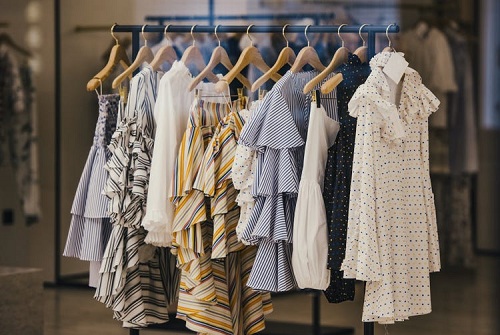 LVMH – improved their market share in the region from 8.8 per cent in 2011 to 11.4 per cent in 2020.
Bigger players in focus to reduce lead times
Small entrepreneurs may find it difficult to survive this adverse business environment as the world’s largest apparel retailers' -- Amazon and Walmart have intensified their concentration on bigger sourcing and sales markets, adds the ILO study. Nike has also concentrated its supplier base from 631 factories in 2019 to 334 in 2021, shows the ILO study. Gap reduced the number of sourcing factories from 1,020 in 2010-11 to 800 only in 2020.
Such consolidation has been a long-term strategy adopted by brands to extend their supplier base by investing in newer markets. Post-pandemic, brands are likely to concentrate more on small and medium enterprises. Brands also plan to reduce their lead times and inventories by adopting 'made-in-cloud' technologies like the Mapped in Bangladesh (MiB), digital mapping technology that tracks the export-oriented RMG factories in Bangladesh.
Data from 400 MiB factories shows, Nike has reduced its supplier base from 35 in 2019 to 25 in 2021. However, the brand started sourcing from five new local factories in 2021. Adidas also reduced the number of factories it sourced from Bangladesh by 16 this year from 41 in 2019 while adding five new factories in 2021.
Factories with better COVID-19 responses gain
Buyers are shifting to factories and countries dealing more effectively with COVID-19 challenges and making timely shipments, adds Khondaker Golam Moazzem, Research Director, Center for Policy Dialogue (CPD). This is leading to big suppliers having better cash flow bagging more work orders. Bangladesh Garment Manufacturers and Exporters Association (BGMEA) stats, show 351 big factories earned export revenues worth $12.29 billion in fiscal year 2019-20. Around 1,334 BGMEA-registered RMG factories earned revenues worth $19.32 billion during the year out of total $27.94 billion export revenues earned during the year.
Lotto Sport Italia signs up WHP Global to market the brand globally
Lotto Sport Italia (LS") has signed an agreement with WHP Global to market the global trademarks for iconic Italian sports brand Lotto; and LSI. Andrea Tomat, CEO will continue to operate the Lotto brand in the core markets of Italy, Europe, the Middle East, and Africa. Together, LSI and WHP will provide design, product development, marketing, and brand management services to Lotto's extensive existing network of over 50 global partners across the world who generate more than USD$400 million in annual retail sales.
The premier Italian sports brand established in 1973, Lotto is world-renowned for its innovative performance-driven footwear, apparel and accessories, which feature the signature double diamond logo. With an eye towards accelerating its dominance in the performance sportswear category, WHP and LSI will together invest in expanding into new markets and product categories while activating the brand through untapped digital channels and partnerships with world class athletes.
WHP Global is a leading New York based global brand acquisition and management firm backed by equity capital from funds managed by Oaktree Capital Management, L.P. and leverage financing provided by BlackRock. WHP owns and manages over USD$3.5 billion in retail sales across its portfolio of brands that includes Anne Klein, Joseph Abboud, Toys "R" Us, Babies "R" US and Lotto.
US’ T-shirt imports rise by 37.97% during H1’21
T-shirt imports by the US grew 37.97 per cent Y-o-Y to $ 9.78 billion during the January-June ’21 period, reports OTEXA. As per Apparel Resources, the volume of these imports surged by 46.37 per cent on a Y-o-Y basis to 287.62 million dozen during the period. Vietnam emerged the top exporter with exports surging by 21.82 per cent to $1.72 billion while exports from China grew by 43.59 per cent Y-o-Y to $1.56 billion.
Exports from India grew by 35 per cent Y-o-Y to $494.44 million in value while the volume of India’ shipment stood jumped by 55.2` per cent to 14.62 million from the same period of 2020. The volume of Bangladesh’s exports increased to 19.18 million dozen while value increased to $471.19 million, noting 62.85 per cent surge in values on yearly note. India’s unit prices of shipped T-shirt in H1 ’21 valued $33.82 per dozen, while the unit prices in case of Bangladesh hovered around $24.56 per dozen.
Government sets up committee to double handloom production
The government has constituted an eight-member committee to double production and quadruple the exports of handlooms in three years. The committee was set up by the Textiles Ministry under the leadership of Sunil Sethi, Chairman, Fashion Design Council of India. The committee will help the government achieve its target of increasing handloom production to Rs 1.25 lakh crore from Rs 60,000 crore and increasing handloom exports to Rs 10,000 crore from Rs 2,500 crore in three years’ time.
Members of the committee include Sudha Dhingra, Professor, National Institute of Fashion Technology; Shefali Vaidya, Freelance Writer, Influencer and Textile Expert; Anagha Gaisas, Owner, Saudamini Handlooms and Paithani revivalist; Suket Dir, Fashion Designer and Managing Director, SKA Advisors and Sunil Alagh, Former Managing Director and CEO, Britannia Industries; KN Prabhu, Paradigm International and Member, HEPC Executive Committee, and Hetal R Mehta, Chairman, Science Engineering and Technological Upliftment Foundation (SETU), Surat.
As per the statement, the panel would also put forth ways for collaboration of handloom weaver agencies with the designers, buying houses and institutions, organizations and exporters, and improving the marketing of products, improving input supplies such as raw materials, credit, technology upgradation, skilling and designs.
Lululemon collaborates with Genomatica for a plant-based nylon
Leading fashion brand Lululemon has collaborated with leading sustainability material manufacturer Genomatica to create a lower-impact, plant-based nylon. As per an Apparel Resources report, the initiative will help Lululemon replace conventional nylon which forms the largest volume of synthetic material used by the brand in its products as of now.
Genomatica uses biotechnology and fermentation to convert plant-based ingredients into widely used chemical building blocks, like those used to make nylon. These building blocks are converted into pellets and yarns, and the two companies will be working closely with Lululemon’s fabric supply chain to incorporate this material into future products.
Through this collaboration, both the companies seek to create positive change within the $22 billion global nylon market by building more sustainable supply chains. Calvin McDonald, CEO, Lululemon, opines, Genomatica’s bio-based innovations, along with its distinctive track record of successful commercial applications, will help the brand achieve its goal of making 100 per cent of its products with sustainable materials and end-of-use solutions by 2030
DGTR recommends anti-dumping duty on polyester yarn imports
After concluding an investigation under the commerce ministry, India’s Directorate General of Trade Remedies (DGTR) has recommended an anti-dumping duty (ADD) on polyester yarn from China, Indonesia and Vietnam for five years. Experts believe, the move will protect domestic players against cheap imports from these countries.
The investigation was conducted after a complaint by domestic players. DGTR concluded the yarn dumped by these countries at cheap rates is affecting India’s domestic yarn industry. The authority recommended a duty in the range of $4 per ton and $281 per ton. The finance ministry will take the final call to impose these duties.
DGTR has also recommended imposition of duty on imports of aceto acetyl derivatives of aromatic or heterocyclic compounds, also known as arylides, from China. Formed in May 2018 as an integrated single window agency, the authority provides comprehensive and swift trade defense mechanism in India.
Earlier, the Directorate General of Anti-dumping and Allied Duties (DGAD) dealt with anti-dumping and CVD cases, Directorate General of Safeguards (DGS) dealt with safeguard measures and DGFT dealt with quantitative restriction (QR) safeguards. The DGTR brings DGAD, DGS and Safeguards (QR) functions of DGFT into its fold by merging them into one single national entity. DGTR now deals with Anti-dumping, CVD and Safeguard measures. It also provides trade defense support to the domestic industry and exporters in dealing with increasing instances of trade remedy investigations instituted against them by other countries.
Nein Hsing Textile Co to lay off 2,500 workers
Denim manufacturer Nien Hsing Textile Co is in the process of terminating 2,500 workers from its C&Y Garments, Formosa Textiles, Global International and Nien Hsing International factories in South Africa. A fifth, Glory International, sent home 1,500 workers when it shuttered last year. As per a Sourcing Journal report, Nein Hsing Textile has laid off 4,000 workers over the past year, the result of a dearth of orders from American brands, the rising cost of salaries, unrest in South Africa and an ongoing pandemic.
The company manufactures jeans for reputed brands like Levi Strauss, Wrangler and The Children’s Place. It blames the negative impact of COVID-19 and other market forces for the job eliminations. Recent wage protests also precipitated a loss in revenue by crippling the company’s production, while fluctuating COVID-19 infections and riots in neighboring South Africa following the arrest of former president Jacob Zuma contributed to an uncertain business environment that made it difficult for the company to continue operating.
Most of Nien Hsing’s output is destined for the United States, where it benefits from the African Growth and Opportunity Act’s duty-free access for thousands of products, including apparel and textiles.
Fartech Q2 luxury goods sales grows 40 per cent in
In Q2 FY2021-22, online luxury fashion firm Fartech sold 40 per cent more goods than a year earlier. As per an Evening Standard report, the total value of the goods by the firm totaled $1 billion (£730 million) during the quarter. The company also increased revenues in the three months to June to $523.3 million, from $364.7 million year on year. Floated in New York in 2018, Fartech lists thousands of products on its website on behalf of brands such as Balenciaga, Burberry and Vivienne Westwood. The retailer also provides tech services to a number of companies in the industry.
The firm was founded in London by entrepreneur José Neves in 2007. It has an office in Old Street, London while a large number of the over 5,000 employees are based in the capital. The company is amongst the few luxury firms that reported higher sales recently.











