


FW
Strategic partnerships can boost Bangladesh’s PPE exports: Study
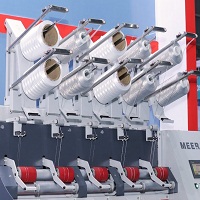 Despite posing unprecedented challenges, COVID-19 also offered the Bangladesh textile and apparel industry new opportunities to produce and export technical textiles such as PPE, surgery gowns, masks, etc. As per a BGMEA study, in FY 2020-21, Bangladesh exported PPE products worth over $618 million. Export of textile face masks without a replaceable filter or mechanical parts, including surgical masks and disposable face masks of non-woven textiles, increased to $105 million in the FY 2020-21 from $22.52 million in FY 2019-20, as per the study.
Titled ‘Feasibility Study on Upscaling the Production of TT / PPE in Bangladesh,’ the BGMEA study was conducted in collaboration with the German Development Corporation and GFA. It predicts, the global market for technical textiles will grow on an average 4.2 per cent annually to $224.4 billion by 2025. By 2025-end, the market is estimated to reach $93 billion. Europe will emerge as the leading importer of medical textiles followed by North America. This will present Bangladesh with unprecedented opportunities to boost exports.
Step up investments in backward linkages
PPEs and technical textile-based products do not form Bangladesh’s traditional exports. Hence, the country needs to develop its technical abilities to cater to this demand. It needs to step up investments in backward linkages besides entering into new collaborations and joint ventures to ensure uninterrupted supply of raw materials.
The BGMEA study guides manufacturers on ways to strategically plan future investments. It proves to be a valuable resource for industry associations, financial institutions, private companies, training and support service providers, investors both in-country and overseas, as well as government agencies.
Redefine operational paradigms
The study states, Bangladesh manufacturers planning to enter the TT/PPE market need to reorganize operations. They need to repriortize their objectives and redefine current operational paradigms. For this, they need to expand into the EU and US markets and build their reputation as a compliant and certified trading partner. Once Bangladesh builds its reputation, it can gradually introduce advanced and sophisticated products that offer greater profit margins to manufacturers. This will encourage more companies to foray into this subsector
Collaborations to boost market share Also, Bangladesh needs to combine infrastructure with new investments to compete effectively in technical textiles and PPE market. It needs to link technical textiles manufacturing with the traditional textile industry by making minor modifications in the knitting and weaving machinery.
The future of the Bangladesh TT/PPE sector lies in synergies and collaboration across the entire value chain. The industry needs to collaborate closely with scientists for new product innovation. However, most apparel factories are either reluctant to invest in R&D with long-term returns or lack sufficient resources to do so in a meaningful manner. This proposed sectoral development strategy will help integrate the key partners into the TT/PPE supply chain in a practical and organized fashion. The industry needs to seek out the necessary strategic partners as it attempts to capture its share in the TT/PPE market.
Reliance on imports hinders Vietnam’s textile and garment industry
Weak support industries and the heavy reliance on material imports are the biggest obstacles for Vietnam’s textile and garment industry development. It is necessary to make appropriate investments in supporting industries. Vietnam’s enterprises are still doing outsourcing for foreign partners, with 65 per cent imported inputs.
Free trade agreements allows Vietnam enterprises to enjoy preferential tariffs and a competitive edge to enter member markets. The textile and garment sector is one of the industries enjoying the most benefits from these agreements. However, the benefits only occur if Vietnam can satisfy rules of origin. Under the CPTPP (Comprehensive and Progressive Agreement for Trans-Pacific Partnership), for example, Vietnam’s products must satisfy the yarn forward rule to be able to enjoy preferential tariffs. For EVFTA (EU-Vietnam Free Trade Agreement), it is the fabric forward rule. This means that the yarn used to form the fabric and the fabric used to produce textile and garment products must originate from Vietnam or FTA member countries. However, Vietnam is weak at producing yarn and fabric and these input materials are mostly imports.
One way is to establish a timeline for developing weaving and dyeing industries. Another way is establishing textile and garment clusters, which not only comprise yarn, textile, dyeing and garment companies, but also downstream enterprises.
US textiles and apparel exports grew 20 per cent till September
US exports of textiles and apparels increased 20.15 per cent year on year in the first nine months of 2021 reveals OTEXA figures. Apparel exports increased 28.94 per cent year on year while exports of textile mill products rose 17.31 per cent during the first nine months of 2021. Among textile mill products, yarn exports increased by 26.09 per cent year on year, while fabric exports were up 15.79 per cent and made-up and miscellaneous article exports grew 12.92 per cent.
Country-wise, Mexico and Canada together accounted for nearly half of the total US textile and clothing exports during the period under review. The US supplied $4.726 billion worth of textiles and apparel to Mexico during the nine-month period, followed by $3.911 billion to Canada and $1.051 billion to Honduras.
In recent years, US textile and clothing exports have remained in the range of $22-25 billion per annum. In 2014, they stood at $24.418 billion, while the figure was $23.622 billion in 2015, $22.124 billion in 2016, $22.671 billion in 2017, $23.467 billion in 2018, and $22.905 billion in 2019. However, the value decreased to $19.330 billion last year due to the effect of the Covid pandemic.
Jordan attracts Bangladesh apparel industry’s labor
Jordan has become a top destination for skilled garment workers from Bangladesh, says a report by Arab News. Hundreds of Bangladeshi women find employment in Jordan’s clothing sector every week. The Jordanian garment sector currently employs 40,000 Bangladeshi women. In other Middle Eastern countries, Bangladeshi women work mostly as domestic helpers. This presents a good opportunity for Bangladeshi female migrants to earn more as a skilled workforce with much more dignity. All they need to have is some working experience in the local garment factories. And female migrants are very interested in taking the opportunity since it’s an employer pay model, where the employer bears all costs to have the migrants’ services.
The average monthly salary of Bangladeshi garment workers in Jordan is between $260 and $360 and all of them initially receive two-year contracts. Bangladesh started exporting skilled garment workers to Jordan in 2010. Jordan’s garment industry has expanded rapidly in the past few years. The demand for Bangladeshi labor has been on the rise since the lifting of coronavirus restrictions. In 2020, Jordan accepted only about 3700 garment workers from Bangladesh, but this year up to September 30 more than 12,300 had already left for the Middle Eastern country. Jordanian employers bear all the costs of processing working permits, travel, accommodation and healthcare.
Japanese retailers widen base in Vietnam
Japanese retailers have started expanding business in Vietnam as localities loosen social distancing restrictions and accelerate vaccination against Covid. Coffee chain Arabica, which currently has over 100 outlets in 18 countries, will open its first shop in Vietnam. Casual wear producer and retailer Uniqlo has opened a new store, its tenth outlet in Vietnam. In early November, it had inaugurated an online store in the country.
Beauty brand ReFa will open three stores late this year before expanding by mid-2022. Retail group Aeon plans to double the number of shopping malls across the country in the coming time. It also plans to list shares on the Vietnamese stock market, and facilitate export of Vietnamese seafood, garments and other products to Japan. Japanese firms are scaling up investment in Vietnam’s textile and garment sector.
Japanese company Matsuoka produces casual apparel in Vietnam to be exported to Japan and China. Vietnam’s total goods retail sales and service revenues in October 2021 rose 18.5 per cent over the previous month. The retail sector is expected to grow late this year, when vaccination is stepped up, more economic activities resume and many festivals take place. The sector’s profit is expected to increase over 20 per cent this year.
Vietnam apparel, footwear exports grows in November post lockdown
Vietnam’s apparel and footwear exports in November 2021 jumped 18.5 per cent from last year, the most since May post opening up after lockdown, reveals Hanoi-based General Statistics Office. Coronavirus restrictions had led to the closing of many factories, particularly in the Southern industrial belt, that produce shoes and clothes for global brands such as Nike and Abercrombie & Fitch. The restrictions were lifted in early October. Plants have struggled to lure migrant workers, who returned to their home provinces amid the nation’s worst outbreak, back to assembly lines.
Most workers are returning. However plants, with much of their workforce back, now worry three-week mandatory quarantines for vaccinated workers who test positive could affect orders for early 2022. Many Christmas orders remain unfulfilled. Business associations are now seeking a reduction in quarantine time. The pandemic is still complicated, with rising numbers of new virus patients in the community.
Current factory operation rules in Vietnam remain strict and very complicated, which could hinder employees’ ability to return to work. Several factors weigh against expectations for a fast resumption in production activities. These include the likely persistence of labor shortages, rising raw material costs and supply chain disruptions in many other parts of Asia.
Siyaram’s launches innovative and eco-friendly bamboo fabric

One of India’s top textile brand in men’s fashion for over 40 years Siyaram’s has launched an innovative range of eco-friendly bamboo-based fabric with Bollywood star Ranveer Singh as its brand ambassador.
Biodegradable, renewable properties
Bamboo is one of the most renewable, biodegradable and fastest-growing resources with great environmental benefits. Moreover it contains natural anti-bacterial and anti-fungal properties. Siyaram’s team of experts researched on bamboo to create a fabric for consumers who appreciate inspirational craftsmanship. As Ramesh Poddar, CMD of Siyaram Silk Mills says, “We have always believed in giving back to nature on multiple fronts and initiatives for years. Today, we are extremely proud to successfully integrate our commitment to nature into our products as well. Siyaram’s bamboo fabric is a material that we have created with a lot of passion without compromising on the style quotient, the texture, the feel, the designs and, the range of colors it will be made available in.”
Bamboo fabric stands out because of its numerous properties. Powerfully insulating, it keeps the wearer cooler in summer and warmer in winter. Being hypoallergenic it does not cause any allergic reaction. Its highly absorbent as the thermal regulating effects of bamboo fibres absorbs up to 70 per cent more moisture than other fabrics. Its anti bacterial as the natural elements of bamboo keeps bacteria away, which lets one stay odour free and fresh. Sweat wicking as its structure wicks moisture away from the skin letting it evaporate and keeping one dry. The fabric is breathable as the microscopic holes in bamboo fibres allow air to circulate through the fabric’s weave letting the skin breathe easily. Moreover, it gives luxurious softness.
As Bollywood star and style icon Ranveer Singh who is also the brand ambassador for Siyaram’s explains, “The bamboo fabric launched by Siyaram’s is a new benchmark in fabric innovation. It’s one of softest fabrics in the world and it keeps one fresh throughout the day. I am happy to be associated with a brand which has such a great and vast legacy. The bamboo fabric is a game changer. I have been wearing shirts made from this new fabric and I have to say that I’m absolutely loving it!”
Siyaram’s has created a campaign promoting the innovative bamboo fabric featuring Ranveer Singh. Siyaram’s constantly works with some of the most talented craftsmen across the world and is constantly developing products to make the best of the world available to the Indian consumers.
M&S buys stake in Nobody’s Child
Marks & Spencer has snapped up a 25 per cent share in fashion brand Nobody’s Child. Nobody’s Child was the first third-party brand M&S stocked online. It will continue to operate as an independent business. The deal means the brand will now be able to access M&S’s infrastructure and investment to scale up its business. For M&S Nobody’s Child will bring a number of benefits, including its focus on near-sourcing supply.
The move is part of M&S’ strategy, which uses business models, including exclusive collaborations, strategic acquisitions, wholesale agreements and investments. M&S now works with over 30 partner brands, including Clarks and Ghost. Working with other brands helps M&S become more relevant to more people while working with M&S is an attractive proposition for other brands because of the retailer’s broad customer base.
Nobody’s Child is an eco-conscious fashion brand for women and aims for zero-waste capsule collections at accessible prices. Founded in 2015 Nobody’s Child is affordable, directional and approachable for thinking millennials who want style with substance.
Marks & Spencer has 268 franchise stores in 34 markets and an established joint venture in Greece as well as India. It also trades online in 21 markets reaching customers through its fully localised owned and operated websites via established marketplaces such as Myntra in India and Zalando in Europe and with its established franchise partners.
Egypt’s textile exports up 28 per cent
Egypt’s textile exports increased 28 per cent during the first nine months of 2021. Fabric exports went up 17 per cent. Higher exports were driven by the gradual easing of restrictions and the high vaccination rates across the world. Egypt wants to have stronger trade relations with Africa. And to achieve this, its taking part in international exhibitions in Africa and setting up an Egyptian-African free trade zone. The main countries Egypt is interested in are Kenya, Zambia and Ivory Coast.
Egypt plans to develop its textile industry with the objective of becoming the next textile factory of the planet. Machinery will be renovated and workers will be trained. The vision is to quadruple exports of textiles and garments by 2025. The aim is to support Egypt’s private sector upstream manufacturers’ competitiveness in the world markets. The restructuring program aims at restoring Egypt’s prominent position in the world market and capitalising on the globally renowned fine Egyptian cotton fiber. The program includes the modernisation of spinning, weaving, knitting, dyeing, finishing, printing and confection, based on a product line definition which brings forth added value to Egyptian cotton, from cotton farming to readymade goods with world class levels in terms of quality and efficiency.
Mumbai hosts technical textiles event Techtextil
Techtextil was held in Mumbai, November 25 to 27, 2021. This is a trade fair for technical textiles and nonwovens and was one of the first major business events in India for the technical textile sector since the pandemic. The aim was to present a strong showcase of technical textile technologies crucial for the development of India across industries such as healthcare, agriculture, construction, infrastructure, sports, apparel etc.
Covering the most demanding application areas, the trade fair attracted buyers from the fields of agriculture, automotives, building, clothing and protective clothing, environmental protection, geo-technology, housing and home, medical science, packaging and sports, among others. The three-day business event included a series of digital symposiums to present a global outlook on technical textile trends, the current industry debate on sustainability and digitalisation as well as opportunities for Indian technical textile players in the global arena.
Leading technical textile players from Tamil Nadu and across the nation participated in the business event. There are several inherent advantages for the growth of technical textiles in Tamil Nadu. Since raw materials used in the production of sanitary products, artificial ligaments, seat belt webbings and airbags are still heavily imported, the Techtextil India Forum was seen as a way of reducing import dependency and bringing investments in R&D, manufacturing by partnering with global technical textile companies. The Indian market for technical textiles is growing at a CAGR of 12 per cent, three times faster than the global growth rate, indicating strong export opportunities.











