FW
Focus on denim sector can help Bangladesh reach desired goals

Overcoming all COVID-19 related uncertainties, Bangladesh has emerged top supplier of denims to the US and the EU. The denim jeans market in Bangladesh is expected to grow at 6.7 per cent from 2022-2029 indicates a research report by Data Bridge Market. The market price of denim jeans in Bangladesh is expected to grow at 3 per cent CAGR from 2021-2031 to reach $152 billion by 2031, adds Textile Focus.
US emerges top export destination
One of the top producers and exporters of denim garments in the world, Bangladesh exports about 200 million pieces of denims every year. There are 35 denim fabric mills in Bangladesh manufacturing over 435 million yards of fabrics every year, as per BTMA. It was the top exporter to the US from January-September 2021. Its exports to the country increased by 32 per cent to $436.53 million during the year. Data from Office of Textiles and Apparel (OTEXA) shows, Bangladesh exported denim products worth $436.53 million to the US in 2021. In 2020, exports to the US had declined 4 per cent to $561 million in 2019. Bangladesh is also one of the top exporters of denim garments to the EU. However, exports to the region declined to €1 billion in 2020 from €1.27 billion in the previous year. The country had a 29 per cent market share in total EU denim market.
Supply chain disruption in China impact Bangladesh
The pandemic has had a deep impact on Bangladesh denim industry. The industry is suffering from supply chain disruptions in China-the main source of raw materials. Disruptions are affecting Bangladesh industries dependent on Chinese market for 50 per cent raw materials.
Around 93 per cent of Bangladesh suppliers faced delays in raw material supplies during the pandemic. Delays also resulted in a surge in prices, resulting in the shutdown of many factories. They also resulted in order cancellation from denim brands and retailers. The industry is also facing payments delays from retailers. Additionally, sales of brands and retailers have gone down to zero. On the other hand, many workers lost their jobs during the pandemic.
Industry to reach $87.3 billion by 2027
The Bangladesh denim industry is expected to reach $87.3 billion by 2027. It is currently facing rising production costs, VAT & taxes, increase in power crisis, lack of product innovation, increased workers’ wages, development and innovation of denim products.
To meet the growing demand for denim in international market, factories need to produce high value-added and high quality garments by acquiring the required machinery and technology. The industry also needs to step up investments in research and innovation in the denim sector. It can reach its desired goal by prioritizing on the denim industry and supporting entrepreneurs.
Right pricing strategies can boost cotton production in India
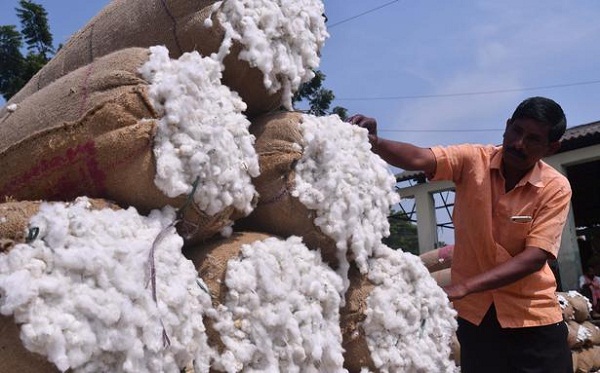
Hit by rising prices of cotton yarn, textile manufacturers in India are making various demands to the government, As per A Narayanamoorty, Senior Professor and Head, Department of Economics and Rural Development, Alagappa University, Karaikudi, farmers are demanding higher taxes on cotton exports, scrapping of the11 per cent import duty on cotton and a halt in cotton trade to stabilize prices. However, these demands are likely to affect 58 lakh Indian farmers engaged in cotton cultivation on almost 134 lakh hectare in the country, says Narayanamoorty. India grows cotton in various states with Maharashtra, Gujarat, Telangana accounting for almost 70 per cent of India’s total area under cotton cultivation.
India is also the world’s largest cotton cultivator with cotton being cultivation on around 37 per cent of its agricultural land. The area under cotton cultivation increased significantly from 77 lakh hectares in 2002-03 to about 134 lakh hectares in 2019-20. During this period, India’s cotton production also increased from 86 lakh bales to 352 lakh bales.
Rising costs offset production benefits
Cotton cultivation is a complicated process in India. Farmers face various challenges during the process. First, they have to cultivate under a rarified area. Besides, they have to face a low yield and high risks. The high risk of bollworm and other pests attack also increases farmers’ costs on pesticides.
Cotton cultivation in India is mainly a manual process and requires a large labor force. The cost of harvesting is also high. Data from the Commission for Agricultural Costs and Prices (CACP) shows, in Maharashtra, the cost of cotton cultivation per hectare increased from Rs 14,234 in 2000-01 to Rs 84,743 in 2018-19. The cost of cotton cultivation in Gujarat also increased from Rs 10,691 to Rs 75,186 during this period while in Tamil Nadu, it increased from Rs 28,149 to Rs 113,334. The cost of cotton cultivation in these states increase almost seven times during the 2000-01 to 2018-19 period.
Besides cultivation costs, the value of production (VOP) of cotton per hectare also increased from 2000-01 to 2018-19. VOP in Maharashtra increased from Rs 12,148 to Rs 85,937, Gujarat from Rs 8,696 to Rs 83,209 and Tamil Nadu from Rs 20,992 to Rs 98,966.
Increased VOP fails to curb prices
However, increase in VOP failed to protect farmers from huge losses as cultivation cost is increasing rapidly. Rising cultivation costs are forcing farmers to sell cotton at lower than the Minimum Support Price to private traders. Reports from CACP show, from January 2019-January 2021, farmers sold cotton below the determined MSP. Of the total 119 market days, cotton prices in Maharashtra surged above MSP for just 86 days during the kharif season, from October 2020 to February 2021. In Gujarat, they surged for just 32 days out of 140 days.
Farmers call for government measures
However, rise in cotton prices has led to farmers demanding 11 per cent import duty on cotton and a higher tax to restrict cotton exports unjustifiable. Textile manufacturers are also urging the government to halt futures trade in cotton. However, their reasoning that cotton prices increase due to futures trade is invalid as India holds a miniscule share of just 0.27 per cent in global cotton futures trade.
Resumption in textile production is also boosting cotton prices in India. However, there is a huge demand-supply mismatch in the country as farmers shy away from cultivating cotton due rising costs. Granting remunerative prices can prevent them from importing cotton from other countries.
Sympatex will be exhibit at Lineapelle for the 13th time in a row
Sympatex will be exhibit at Lineapelle for the 13th time in a row. For the company, this platform provides an opportunity to show the latest trends to a broad specialist audience and to jointly further develop innovative material and production concepts.
As one of the worldwide leading producers, Sympatex® Technologies has been a synonym for high-tech functional materials in clothing, footwear, accessories and technical fields of application since 1986. Together with selected partners, Sympatex develops, produces and distributes membranes, laminates and functional textiles as well as finished products worldwide.
The Sympatex membrane is highly breathable, 100% wind- and waterproof and regulates the climate. It is 100 per cent recyclable, climate-neutral, bluesign® certified, and it received the ‘Oeko-Tex-Standard 100’ certificate. It is also PTFE-free and PFC-free. The technologies and procedures are based on the principles of ecological responsibility and sustainability with a special focus on the optimal carbon footprint
To be held from February 22-24, 2022, Lineapelle will showcase latest trends in sustainability, Eco-design and resource conservation.
Levi’s launches new streetwear inspired collection
US denim giant Levi’s has launched special streetwear-inspired collection in collaboration with television series The Simpsons.
To be unveiled on 3 March 2022, the new collection comprises offers apparel and accessory essentials inspired by Bart, Lisa, Milhouse, and a whole host of Springfield’s most popular residents.
The loose-fit faded indigo denim Levi’s Trucker jacket featuring a graphic of Bart Simpson alongside the iconic Levi’s Batwing logo is also a highlight.
Notably, there’s also a blend of school-inspired styles that included a ringer tee, a riff on a letterman sweatshirt, and a vintage school uniform-inspired wide whale yellow corduroy jacket and pants – all in honour of Springfield Elementary.
The collection will also feature a good blend of tees, hoodies and crew neck sweatshirts that include graphic prints of scenes from iconic Simpsons episodes – not to mention Levi’s x ‘Simpsons’ embroidered beanies.
Founded in 1853, Levi Strauss & Co. is an American clothing firm, which is globally known for its Levi’s brand of denim jeans.
US’ imports of dressing gowns grow by 34.87 %
The dressing gown category has seen a notable growth in the US apparel in 2021. As per Apparel Resources, US’ import of dressing gowns increased by 34.87 per cent to $789.57 million.
The import values also crossed the pre-pandemic values when the US had sourced $ 692.33 million worth of dressing gowns.
Around 66.60 per cent of this total value was contributed by China and Vietnam together, while other countries such as Cambodia, Turkey, Bangladesh, India and Indonesia have also grown significantly.
China’s shipments grew by 32.18 per cent to $410.61 million. On the other hand, Vietnam’s shipment dipped by 3 per cent on yearly basis to $115.09 million.
The shipments of Cambodia, Indonesia, Turkey, Bangladesh and India totaled$46.55 million, $39 million, $38.12 million, $31.94 and $28.4 million, respectively.
All five countries upped their respective exports of dressing gown to the US by 24.27 per cent, 143.45 per cent, 62.47 per cent, 166.18 per cent and 44.95 per cent on Y-o-Y basis.
Allbirds launches new resale platform
US sustainable footwear and apparel company Allbirds has launched the AllbirdsReRun, a new resale platform in partnership with recommerce specialist Trove.
Planned for the US only, the program will offer customers at three stores the option of trading in their prelovedAllbirds shoes for $20 in store credit. Following the launch in Los Angeles, Chicago and New York City, the brand plans to expand the program to additional retail locations nationally. The platform will sell slightly imperfect and gently used shoes at reduced price points, starting at $59.
As per a Spin Off report, the platform has partnered with Trove to prolong the life of its products, which is a key component of Allbirds’ sustainability strategy. Allbirds claims to be already a 100 per cent carbon-neutral business through the use of third-party verified carbon offsets.
Allbirds needs to control its recommerce channel, enabling the brand to own its customer relationships and data. According to the company it also works with partners including Lululemon, Patagonia, REI, Nordstrom, Levi’s, Eileen Fisher and Arc’teryx.
C.L.A.S.S. to attend the Filo fair
The international eco-hub has CLASS been invited to attend the Filofair with its own space in order to spread the word on the utmost importance of injecting innovation, sustainability and change starting from the very beginning of the supply chain.
Since 2007 CLASS has been working alongside groundbreaking clients and partners which have been pursuing this avant-garde way of creating a new generation of fashion. These key players at yarn level which will be part of the C.L.A.S.S. space are:
Bemberg™ by Asahi Kasei, a one-of-a-kind, matchless and original new generation material made from the smart-tech transformation of cotton linter pre-consumer material, converted through a traceable and transparent closed loop process. Bemberg™ has the RCS, Oeko-Tex Standard 100 e ISO 14001 certifications.
Circular Systems™, a materials science company focused on creating a net positive impact on our environment, society, and economy through innovation. Their circular plus regenerative technologies provide systemic solutions for transforming waste into valuable fiber, yarn, and fabrics for the fashion industry. With the textile waste to fiber platform (Texloop™), and food-crop-waste to BioFibre™ innovation (Agraloop™), Circular Systems™ provides scalable solutions for the circular economy derived from two very abundant waste streams. Recycled cotton fiber from Texloop, and Agraloop
Ghezzi, a company that offers advanced twisting, covering and twist-texturizing processes for yarns and threads thanks to its precious corporate heritage and continuous investment in innovative technologies. For some time now, the Como-based company has implemented an offer - unique in this field - strongly linked to sustainability, which is translated into the selection of products capable of reducing environmental impact. In fact, Ghezzi processes a wide range of items developed from recycled synthetic or vegetable fibers, organic products or materials coming from responsibly managed forests.
ROICA™ :ROICA™ “Advanced fit for living” is a premium stretch fiber with an innovative range of smart functions. ROICA™ shapes comfort with high quality, performance and fit, adding value to everyday living for sport, activewear, intimates, fashion and business wear. The ROICA Eco-Smart™ family is a unique, certified eco high tech offer, able to meet responsible business needs and contemporary consumer desires for the modern wardrobe. Today there are two distinct options: ROICA™ EF (German plant) is a world-first Global Recycled Standard (GRS) certified stretch yarn re-made from pre-consumer materials, while ROICA™ V550 is a pioneer in eco-circular stretch which smartly breaks down without releasing harmful substances in the environment, according to Hohenstein Environment Compatibility Certification.
Supreme Green Cotton®, an innovative and socially-responsible system from the cotton field to the end product that supports greek family farmers at the foothills of Mount Olympus. The whole supply chain up to the yarn is located within 200 km, thus drastically reducing the CO2 footprint, claiming GMO-free cotton seeds, water savings up to 40%, high-quality long-staple fibers and complete transparency and traceability via "Diafania SI". Diafania SI platform is a unique and specialized communication and information software, backed by blockchain technology, in combination with a special QR-Code, which is imprinted on the Supreme Green Cotton® hangtags. The newest addition, Supreme Green Cotton® Platinum, is the right choice for high quality and long-lasting products made from extra long-staple cotton.
India’s leather and footwear exports to surge past Rs 44,800 crore in 2022-23
India’s leather and footwear exports are expected to cross Rs 44,800 crore in 2022-23 as demand from the US and new markets such as Middle East, Africa and Latin America will increase, says Sanjay Leekha, Chairman, Council of Leather Exports (CLE). The recent FTA between India and UAE would also push India’s exports besides creating new employment opportunities in the sector, he adds. During the fiscal April-January, India’s leather and leather products exports rose 33 per cent to $3.6 billion. They are expected to cross $6 billion in 2022-23, adds Leekha.
The leather and leather goods industry is upbeat about the recovery from the COVID-19 pandemic as it has acquired a healthy orderbook. Leekha believes, the industry can achieve a total turnover of $30 billion in the next five years including an export turnover of $10 billion. It will also create employment for 15 lakh more people, he adds.
The industry is also urging the government to extend the Production Linked Incentive (PLI) to the sector. It has been granted the extension of the Indian Footwear and Leather Development Program with an approved financial outlay of Rs 1,700 crore.
UK brands raise A/W collection prices by 20 per cent
Fashion brands across the United Kingdom are increasing prices of their Autumn/Winter collections by around 20 per cent, signaling the persistence of inflationary pressures in the country. As per a Business Matters report, prices of Diesel D-Luster jeans are expected to rise by 20 per cent from £110 to £130. Similarly, the price of a pair of Tommy Hilfiger’s “iconic” trainers is expected to rise from £85 to £100 for its autumn-winter collection.
Brands including Ralph Lauren and Coach also plan to raise footwear prices by 10-12 per cent. The retail price of a pair of Lacoste Powercourt trainers is expected to rise to £90 from £75. The prices are increasing due to unprecedented costs pressures on brands. Brands’ costs are rising due to an eightfold increase in shipping costs, a near doubling of cotton prices and increases to the minimum wage in China.
Imports have become expensive too as European clothing suppliers now have to pay duties to export clothes sourced from Asia to the UK. Last month the rising price of clothing and footwear led to inflation hitting a 30-year high of 5.5 per cent in January. The Bank of England expects inflation to peak at more than seven per cent in April, when household energy bills are due to shoot up by 54 per cent.
Fix Tk3 as uniform VAT on sale on artificial yarn, urges Bangladesh Revenue Board
The Bangladesh Commerce Ministry has urged the National Board of Revenue to fix Tk3 as a uniform VAT rate on sales of 1 kg of yarn made from artificial and man-made fiber. Currently, the revenue board collects Tk3 in VAT on sales of 1kg cotton yarns and Tk6 for non-cotton yarns. Uniform VAT rate on all types of yarn will encourage local millers to produce more non-cotton yarns, say local textile millers. This will boost investment and employment in the sector, they add.
At present, local textile mills have to pay VAT on domestic sales of yarns. Earlier, the VAT on non-cotton yarns increased to Tk6 per kg. Md Khorshed Alam, Chairman, Little Star Spinning Mills, opines, the reduction in VAT on synthetic fibre-made yarns will help reduce prices of such fabrics in the local market.
Monsoor Ahmed, CEO, BTMA adds, garments made from synthetic yarns are mostly bought by consumers having limited income. Increasing demand is likely to encourage local entrepreneurs to set up factories for manufacturing non-cotton apparel items. A report by the Bangladesh Trade and Tariff Commission states, Bangladesh needs to reduce dependence on cotton as fabrics made from artificial fibre-made yarns are cheaper, more fashionable, more varied and more durable than fabrics produced from any other yarns. It urges the government to reduce VAT on sale of yarns made from artificial and manmade fibres to Tk3 per kg,