FW
Meedan launches new yarn strength tester
Manufacturer of yarn splicers and laboratory quality control equipment, Meedan has launched a fully automatic 24 positions yarn strength tester called Autofil.
Made in Italy, Autofilis a fast, versatile, accurate, and silent yarn strength tester. © Mesdan
The integrated automatic cop feeding system, the built-in PC, its versatile applications, compact design and high testing speed are only few features that characterize the new Autofil. It can test hanks and fabrics as well in the semi-automatic mode, is suitable for testing a wide variety of yarns: spun, continuous filaments, POY, spandex, etc. Autofil includes an integrated and interactive pre-loaded database of testing methods and conforms to major testing methods (ISO, ASTM, JIS, BS, IWS, NEXT, M&S, etc.).
Its main features include belt free, direct-drive ball bearing screw, automatic pretension and automatic load cell and clamp recognition, top quality load cells, integrated sensor into the motor ensuring accurate clamp positioning, possibility to perform tests at extremely low and high speed, automatic reset of force values when load cell/clamps are changed, high resolution of acquired data, high return speed, quick load cell exchange, advanced alarm system to prevent accidents; safety clamp movement and modern software, flexible and easy to use.
Amann Group launches new thread made from basalt stone fibers
The international sewing thread producer Amann Group has launched a sewing thread made entirely from basalt stone fibers.
Known as Basalt tech, the thread can be used for a variety of different applications. It is ideally suited for protective workwear with maximum heat load, hot gas filtration, or applications with liquid metal contact. Its burning behavior got tested by Hohenstein Laboratories according to DIN EN ISO 15025. Thanks to its special raw material, the permanent temperature resistance of Basalt-tech is up to approx. 650°C and the softening temperature at approx. 1050°C.
Basalt tech also resists chemicals, corrosion, rot and UV and can be used for e.g. thermal covers. Another unique benefit of Basalt-tech is its non-conductivity. This special feature is very important for e.g. sleeves for welding equipment to protect electronics.
Basalt-tech can also be used in hydraulic engineering. Basalt bags filled with sand, gravel or concrete from Jaeger Mare Solutions GmbH are used, for example, as scour protection around wind power plants, as cable weights for submarine cables or in the area of dyke stabilisation. These bags are made of basalt fabric and sewn with the Basalt-tech sewing thread. This makes the entire application 100 per cent sustainable and plastic-free.
Cardicagroup acquires Varcotex
Affiliated Portfolio Company of HIG Capita, Cadicagroup, a group specialized in the supply of accessories to the main clothing brands active in the premium and absolute luxury market, has acquiredthe label company Varcotex.
Based in Carpi (Modena) and with approximately 60 employees, Varcotexhas been producing woven labels, tags, printed labels and leather labels mainly for the luxury sector since 1982.
The integration with Varcotex will allow Cadicagroup to further develop its strategic positioning, strengthening its production capabilities and further enriching the group's offering to high-end customers with an increasingly integrated supply chain in line with a greater focus and attention to sustainability.
Varcotex’s CEO, Paolo Munari, who has been active in the sector for more than 25 years, will reinvest in Cadicagroup and will remain involved in the management of the group’s production activity.
Massimo Stefanello, CEO, Cadicagroup,says, the acquisition of Varcotexgives even greater impetus to our vision of providing the Italian and international fashion industry with a reliable and competitive partner in terms of cost, responsiveness and services offered.
Founded in 1974 in Carpi, one of the historic areas in the textile industry in Northern Italy, Cadicagroup specializes in Brand Identity, in other words, the production of accessories, such as such as labels, tags, embellishment, patches and packaging, which are the essential details of luxury fashion products. Cadicagroup has commercial and distribution bases in the US, China, Hong Kong, Romania and Turkey.
Delhi government to develop Gandhi Nagar market
Delhi government plans to develop the textile market in Gandhi Nagar and re-brand and reposition it as a major garment hub, says Manish Sisodia, Deputy Chief Minister. Presenting the Rs 75,800-crore budget in the Assembly for the financial year 2022-23, the state government praised the Gandhi Nagar market as ‘Asia's largest ready-made garment market.’ The daily turnover of this market is over Rs 100 crore and it generates one lakh direct and 2-3 lakh indirect employment opportunities, he informed.
The development of this market will involve legal recognition, infrastructure redevelopment, construction of new service centres and re-branding, marketing and re-positioning, he added. This project is expected to create 40,000 new employment opportunities in the next five years. The city government will also provide an online platform named Delhi Bazaar for local merchants to join and sell online
The Delhi Bazaar will enable customers from anywhere in the world to take a virtual tour of the iconic markets of Delhi such as Chandani Chowk, Sarojini Nagar and Karol Bagh. The market will be developed with an outlay of Rs 20 crore and benefit 10 lakh specific vendors in Delhi.
Russia looks to Turkish, Indian retailers to replace outgoing Western brands
An umbrella organization representing developers, shopping center owners and retail chain operators, the Russian Council of Shopping Centers (RCSC), is negotiating with its representatives in Turkey, China, India, and Iran to find alternatives to western brands. This will help supplement or completely replace goods of the defunct brands with ones of a similar quality and design, the council said.
Dozens of big brands have suspended operations in Russia or exited the country since Moscow started a “special operation” to invade Ukrainian territories on Feb. 24. Held recently, an RCSC meeting of more than 100 market participants discussed the challenges facing Russian retailers.
Igor Maltinsky, Director-Development, Melon Fashion Group, said, the main challenge facing domestic retail firms is the increase in procurement and logistic costs which is leading to an uncontrollable growth in production costs. Melon owns four fashion brands - Zarina, Befree, Love Republic, and Sela - and had 846 stores across Russia and former Soviet republics at the end of 2021. It had been planning to hold an initial public offering (IPO) this year.
Withdrawal from Russia, a symbolic gesture for many fashion brands
Amidst the companies making mass exodus from Russia, there are a few that have chosen to stay back in the country. Consumer group companies like Unilever, Procter and Gamble, and Nestle have decided to continue operating in the country although they have halted new investments and ceased import and exports from the country.
Move to impact native employees
Though accused of profiting from an aggressor nation, these companies have chosen to stay back as complete withdrawal is likely to place their native employees under immense pressure, says Quartz report. Already, native Russians are reeling under the effects of declining ruble and sanctions imposed by western economies. Companies like Fast Retailing had earlier decided to continue operating in Russia. However, recently the Uniqlo owner ceased business in the country. Tadashi Yanai, Founder also committed a $10 million donation to the UN agency for refugees and a shipment of 200,000 items of clothing and blankets to Ukrainian refugees.
Finding a mid path
Tightening government sanctions, disruptions in air space and logistics is making it increasingly difficult for companies to continue operating in Russia. Nike is finding it increasingly difficult to ship goods to Russia and so is Fast Retailing. Since Russia contributes a very small portion of their sales, withdrawing from the country is more of a symbolic gesture for brands like Levi’s. These brands are trying to find the right way to protest against the government decision without antagonizing a large share of the population supporting the war, says Mario Ortelli, Founder, Ortelli & Co.
US emerges as an ideal investment destination for luxury fashion brands
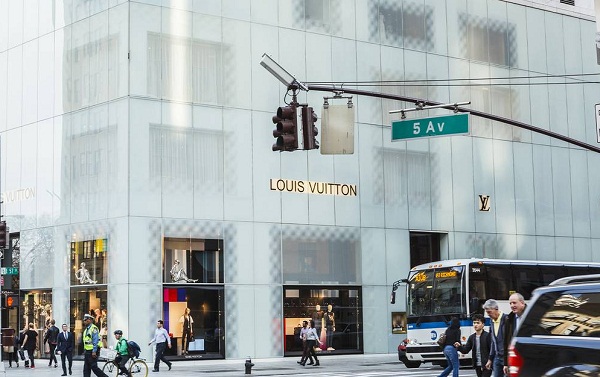
Though most luxury fashion brands shifted their focus to China in the last decade, US continues to be the world’s largest consumer market. In the last few years, many apparel retailers have made US their largest sourcing destinations. As per a Business of Fashion report, Zara parent Inditex stepped up operations in the US while Kering is recording strong sales in both North America and Asia. LVMH also recorded strong revenue growth in the US last autumn.
Low GDP growth, COVID surge sink China’s fashion market
In 2022, China expects GDP growth to sink to 5.5 per cent, lowest in over three decades. Even this target seems over ambitious for the country as unstable property market and strict COVID lockdowns threaten to curb consumption. China’s luxury sector witnessed a major upheaval last year as the government launched a campaign against wealth inequality. To contain COVID-19 spread across the country, China recently locked down some of its most important regions. All major shopping districts were deserted, though few brand stores continued to operate.
US gains on faster economic recovery and high-fashion events
All these factors helped drive luxury fashion brands back to America. Besides its economy has bounced back faster from the pandemic and brands like McQueen, Gucci, Bottega Veneta and Louis Vuitton are also staging high-profile events in the country. Louis Vuitton plans to stage its cruise show in California this May. Brands operating in the US are also looking beyond traditional fashion hubs of New York and Los Angeles to open new stores. They are expanding to cities like Miami, Austin, Charleston, Nashville and Atlanta. Kering plans to open stores in Nashville and Atlanta, as per Francois-Henri Pinault. Meanwhile, Prada aims to target Austin for future expansion.
And as Libby Callaway, Founder, The Callaway, a Nashville-based public relations firm says, more consumers are looking at spending their money in the US fashion market.
End of fiscal stimuli to impact spending However, this surge in US spending may prove to be short-lived as stimulus checks by the government have ended and are not expected to resume in 2022, as per Bank of America data. Consumers are less likely to spend at malls as indicated by the decline in retail sales to 0.3 per cent in February. Despite this, the US is fast merging as an ideal investment destination for luxury brands. The last two years have forced brands to diversify their supply chains. They are now looking at multiple markets instead of depending on a single destination and US is emerging as major beneficiary of this.
Itema showcases rapier R9500-2 weaving machine at Sitex
A leading global provider of advanced weaving solutions,Itema showcased a rapier R9500-2 weaving machine, in weaving width 3800mm and equipped with a Stäubli LXM 5376 hooks Jacquard shedding machineat Sitex. The machine on display in Stäubli booth wove a fabric traditionally produced in the mills of the Region and was configured to meet the local weavers production needs.
Sitexwas also the official launch of the partnership between Itema and the leading Italian circular knitting machines manufacturer CesareColosio for the marketing and distribution of the company highly innovative machines in India. With this partnership Itema expands its portfolio of textile products, thus creating a significant benefit for all the Indian textile companies that need both the Itema and the Colosio machinery, that share the same attention to innovation and excellence that Itema guarantees to its customers.
Itemaaims to lead the Jacquard market on account of growing for its technology due to the capability of its looms to weave even the most difficult styles and yarns, guaranteeing superior fabric’s quality; particularly, its skills in saree weaving and weaving of furnishing fabrics.
The company is the only manufacturer in the world to provide the top three weft insertion technologies: rapier, airjet and projectile, with an ample product portfolio and a commitment to continuous innovation and technological advancement of its weaving machines.Itema is a trusted partner of many Indian weaving mills, from large textile conglomerates to smaller textile manufacturers, providing the most advanced and user-friendly weaving technology and real-time assistance, from the initial negotiation stage and throughout the whole machine life cycle.
Target and Levi’s expand partnership for Red Tab products
Retailer Target and denim brand Levi’s are expanding the distribution of Red Tab products from roughly 500 Target stores to about 800 this spring.
Target has a history of distributing Levi’s products. The retailer first began selling Levi’s Red Tab products — some of the brand’s most premium products — in 2019 in just 50 stores. The number grew to roughly 500 one year later. Since then, Target has sold millions of pairs of Levi’s jeans across all price points.
The strategy included the Levi x Target limited-edition collection of home goods in early 2021, part of Target’s annual design program, which celebrated its 20-year run last year.
This spring, in addition to adding more points of distribution, Target will increase the breadth of its assortment, now offering more than 180 pieces, spanning both men’s and women’s denim styles. Product offerings will vary by store, but the entire collection includes tops, dresses, jeans and jackets.
The union allows Levi’s to expand its distribution, reaching more shoppers in the process, while Target further stakes its claim in the fashion world.