


FW
Welspun India forays into the mattress category
Home textiles major Welspun India has forayed into the mattress category under its home linen brand Spaces.
As per a Daily Pioneer report, the company has launched 'SpacesMatchress' with a variety of offerings on the back of extensive market research as an extension of its home wellness offerings.
ManjariUpadhye, CEO, of Welspun India, Domestic Business, says, the company's deep understanding of stated and unstated consumer requirements helps it to innovate and offer the most relevant products and solutions to the country's diverse and fast-growing consumer base.
The brand offers customizable, orthopedic, firm and fab mattress ranges for different consumer preferences. These mattresses are available with the benefits of an in-built mattress protector, odor-free and anti-pilling, 12 years warranty, among others, the company said.
Welspun India’s move to enter the mattress category highlights the brand’s aggressive focus on the domestic market and its aim to capitalize on emerging opportunities in this high-potential segment with innovative offerings.
Intertek discusses industry issues with BGMEA
A delegation of Intertek led by Sandeep Das, Regional Managing Director, South Asia discussed issues concerning the Bangladesh apparel industry with Farque Hassan, President, BGMEA.
As per a Business Standard report, they talked about how Intertek could play more important role in addressing consumers' need for safety and product quality in line with international and domestic regulations, read a press release.
They also discussed how Intertek could better support garment factories in Bangladesh to ensure their products adhere to the highest safety standards, and also remaining globally competitive.
Hassan invited Intertek to actively participate in the "Made in Bangladesh Week" scheduled to be held in Dhaka in November and join hands with BGMEA to promote Bangladesh's apparel industry globally. He also urged Intertek to share the industry's achievements, which they have found during their first-hand audit, with international buyers.
SAE-A adopts Coats Digital’s GSDCost for international standard time benchmarks
One of the largest apparel manufacturers in the world, SAE-A Trading Co., has implemented Coats Digital’s GSDCost solution in all 41 of its production facilities, across ten countries. The solution will enable the company to establish international standard time benchmarks, based on accurate Standard Minute Values (SMVs), to optimise processes, drive increased efficiency and productivity across its entire workforce, and enable SAE-A to provide increased transparency around its global labour costs to support its own -and its brand partners’ social responsibility goals.
Established in 1986, SAE-A, is one of the world’s largest fashion manufactures, operating in Korea, the USA, Indonesia, Vietnam, Guatemala, Nicaragua, Cambodia, Myanmar, Haiti and Costa Rica, and is headquartered in Seoul. From yarn-production through its fabric mills to retail operations in Korea, SAE-A continues to invest in technology and new innovation to become one of the few apparel manufactures able to capitalize on a complete vertical-integration of its supply chain. With a focus on high standards of quality and a first-in-class workforce, SAE-A is a key supplier to some of the world’s biggest retailers, including: Target, Walmart, Kohl’s, Gap, Mast and Carhartt. SAE-A holds itself to stringent environmental standards and actively supports sustainability, fair wages and educational/medical programmes across the local communities of its global operations.
Textile Fair registers 300 exhibitors at Autumn/Winter’22 edition
Held in Angel, north-west London from March 22-23 March, the Autumn/Winter’22 edition of the Textile Fair trade show was attended by around 300 exhibitors .
As per a Drapers Online report, the show welcomed 2,000 visitors on the first day – similar to pre-pandemic levels. However, the number of exhibitors declined from 480 during the pre-pandemic period.
John Kelley, Event Director, hoped the next edition of the event will be attended in full capacity. Currently, exhibitors are dealing with the increasing cost pressures due to increasing energy prices, he added.
Stephen Conway, Managing Director, Emblem Weavers, added, the increase in raw material prices has compelled manufacturers to increase product prices by 5 per cent. However, a few suppliers have increased prices by almost 25 per cent, he added.
Freight charges are escalating, added Ruth Mason, Marketing Manager, Harris Tweed Hebrides.
Sustainability was also a key focus at the event as several designers focused on finding sustainable solutions. For instance, Designer Jake Treddenicksearched for deadstock materials for his made-to-order menswear model Treddenick.
Rising energy, freight and raw material prices were a key concern for both suppliers and designers at the fair. Rising demand for sustainable fabrics is also fuelling cost increase, said suppliers.
Global RMG market to reach $1, 268.3 billion by 2027
Valued at $983.7 billion in 2019, the global readymade garments market size is projected to reach $1,268.3 billion by 2027. As per report by Allied Market Research Report, the market will grow at 8.8 per cent CAGR from 2021 to 2027. The outer clothing segment is estimated to grow at a CAGR of 8.8 per cent during the forecast period.
The demand for readymade garments is expected to increase during the forecast period, owing to change in consumer’s product purchase pattern. In addition, surge in concern among individuals about physical appearance has increased the spending on toiletries and clothing, thus boosting the sale of various readymade clothing throughout the globe. Furthermore, increase in frequency of direct to consumer advertisements and aggressive promotion by key players to push sales for clothing has significantly contributed toward the growth of the readymade garments market.
However, negative impact of garment manufacturing on environment and rise in cases of labor exploitation hinder market growth. Conversely, surge in demand for, functional sports apparel is expected to provide opportunities for readymade garments market growth for the market expansion during the forecast period.
UKFT, Livery to hold one-day conference on best sustainability practices
A one day conference will be held by the non-profit organisation UK Fashion and Textile Association (UKFT) and the textile group, Livery to share best practice on sustainability within the UK textile industry and discuss the future course of the industry. The conference is scheduled to be held on May 12.
Speakers from UK manufacturers, global brands and a variety of textile innovators will share experiences to help businesses and the wider industry to promote their own sustainable credentials,
Leaders from UK textile manufacturers will learn about sustainability ideas for various businesses and how these companies are addressing challenges by emphasizing on how the UK textile manufacturing industry can use sustainability to boost its competitiveness.
Delegates should be leaders from UK-based textile manufacturing companies, rather than fashion brands, retailers, garment manufacturers or others from outside of the UK textile supply chain.
Tax increase may surge business costs for Bangladesh exporters: BTMA
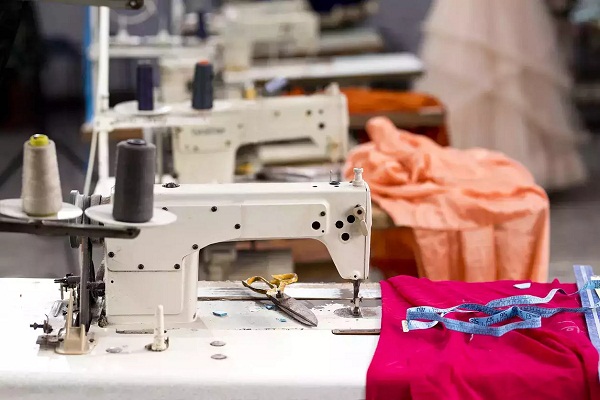
Acceding to the textile industry’s long standing demand, the National Board of Revenue (NBR) in Bangladesh has initiated certain reforms to simplify the harmonized system (HS) code used for importing various spare parts of textile mills. The Bangladesh Textile Mills Association (BTMA) has been complaining for long about the rise in import prices of spare parts due to the complexities in HS code. The association has sent a list of 122 electrical, electronic and mechanical items to the NBR needs to include in the list of HS codes to make imports cheaper.
Inclusion to ease exporters’ complexities
As per a Business Standard report, a HS code is used by custom officials to identify export-import goods. The NBR currently has a list of HS Codes for over 200 items that received reduced tariff rates. However, the list was prepared two decades ago and does not include the new equipment and spare parts required by textile factories, says Khorshed Alam, Former Director, BTMA and Chairman, Little Star Spinning Mills. Manufacturers have to pay over 26 per cent duty-tax for commercial imports of spare parts, he adds.
Moreover Mohammad Ali Khokon, President, BTMA points out, manufacturers are compelled to use third and fourth generation machinery as it has been almost 20 years since the inclusion of equipment and spare parts on the reduced rate list. Hence, including the machinery mentioned in NBR list would ease the complexity and harassment faced by exporters.
Boost to local MMF production
The revenue board also plans to lower VAT on raw materials imports for blended yarn and fabrics like polyester, synthetic, viscose and Lycra. Another initiative on the anvils is maintaining income tax rate for textile and spinning mills at 15 per cent till 2026. The board believes, these initiatives will help the Bangladesh textile industry grow local MMF production and reduce cotton import bills. The initiatives will also complement the upcoming National Industrial Policy that proposes to grant import substitute industries tax breaks and subsidies.
Ministry urges for lower tax rates
The textile ministry has also urged NBR to extend existing lower tax on textiles. This will benefit entrepreneurs involved in yarn production, dying, finishing, coning, fabrics production, fabrics dying, finishing, printing and other similar activities, it adds. The ministry has also demanded maintaining existing tax rates to enable the textile sector to add 2.5 million spindles with an investment of $2.5 billion within 2023.
Currently, the import tax rate for ready-made garments in Bangladesh is 12 per cent while the tax rate for the textile sector is 15 per cent. For entrepreneurs having a sustainability certificate, the tax rate is around 200 basis points lower. The corporate tax rate in the country for publicly listed companies is 22.5 per cent and 30 per cent for non-listed companies.
Mohammad Ali Khokon, President, BTMA highlighted, the industry imported over 5.52 lakh tons of woven fabrics in 2021 as local spinning millers could supply only 40 per cent of domestic demand. He feels, levying a huge turnover tax on imports is likely to increase exporters cost of doing business in the country.
Focus on sustainability, energy and labor issues can strengthen Pakistan denim industry

Pakistan’s denim sector has strengthened its position in the global market with the rise of hi-tech players like the Artistic Denim Mills, Siddiqsons Group, Naveena Denim Mills, Azgard Nine, Rajby Industries, etc Karachi, Lahore and Faisalabad. The industry offers locally made products of exceptional quality that give importers best value for money, says Juan Chaparro, Group Director-Supply Chain, Sourcing and Quality, Primark. This has given impetus to denim exporters like ADM even as COVID-19 dented global denim trade.
Changing style preferences helps growth
One major reason for the sector’s growth is the change in style preferences among some consumers that has led to upgradation of wardrobes. Consumers are stocking denims with looser fits and wider-leg silhouettes from global brands. Growing casualization trend is helping in increasing the popularity of denim in Pakistan, explains Jen Sey, Executive Vice President and President, Levi’s. As per an OTEXA report, between January and September in 2021 Pakistan saw the largest year-on-year growth rate of 63.4 per cent among the top five, denim apparel exporters to the US.
The country’s exports to the EU has also doubled from 2015-20, as per the 2021 CBI report. Exports benefitted with exodus from China, due to Xinjiang cotton issues, increased prices and supply chain concerns, says Muhammad Tariq Rafi, Chairman, Siddiqsons Group.
Increased networking for greater branding
The Pakistan denim industry mainly benefits from the medium-staple cotton grown domestically. Other advantages are the long-term build-up of investment and clustering of infrastructure, adds Faisal Ahmed, CEO, Artistic Denim Mills. Over the years, the industry has witnessed growth of a vast network of smaller manufacturers who are making inroads. However, the industry suffers from a lack of perception, say experts. The volatile political climate and negative image across the world, causes denim industry leaders to lose sales to competitors, adds Ahmed.
To improve Pakistan’s national branding across the sourcing industry, the country’s denim suppliers are visiting clients with large stocks of denim samples in tow to trade fairs around the world, says Sheikh Raza-ur-Rehman, Director-Marketing, Garatex.
Energy crisis and labor issuesv Manufacturers are also dealing with energy crisis, which is being resolved through privately-owned generators and gas supplies, adds Ahmed. The industry also suffers from labor rights issues. As per Fair Wear Foundation report published in 2021, Pakistan has ratified 36 out of 189 International Labor Organisation (ILO) Conventions to date. Also, only 28 per cent garment workers are women.
With a greater emphasis on sustainably sourced materials across the fashion industry, the denim supply chain in Pakistan is attracting greater scrutiny due to larger impact on environment. However, exporters are now adopting sustainability measures in the form of waterless technology, recycled materials and sustainable fibers. They can continue growing by improving their sustainability credentials and overcoming long-standing issues like labor exploitation and energy shortages.
Odisha to set up Textile Park under PM MITRA Scheme
The Odisha government has submitted a proposal for establishment of a textile park under the PM Mega Integrated Textile Region and Apparel (PM MITRA) scheme. In all, the Centre has received 17 proposals from 13 states for the establishment of textile parks.
Odisha plans to set up the proposed textile park at the special economic zone (SEZ) of Tata Steel at Gopalpur in Ganjam. Around 1,000 acres have been identified by state-owned Idco within the SEZ for the facility.
The parameters devised for selection of sites for PM MITRA parks include connectivity to the site, existing ecosystem for textiles, availability of utility services at site, state industrial/textile policy and environmental/social impact
Though initially the textile park was planned at Neulopoi in Dhenkanal district, the location was changed as it comes under an eco-sensitive zone.
More collaboration between academia and industry needed: President. BGMEA
Faruque Hassan, President, BGMEA has emphasized on the need for more collaboration between industry and academia to support the development of the RMG industry especially by identifying areas of improvement and capacity enhancement and providing with knowledge and skills required to address future challenges.
During a meeting with Peter Lund-Thomsen, Professor, Copenhagen Business School, and Gavin Bridge, a professor at Durham University, Hassan said, the RMG industry has made exemplary achievements in terms of workplace safety, environmental sustainability, and workers' well-being.
An industry-academia collaboration can play a vital role in documenting these success stories to create a counter-narrative of the industry which will not only help to remove misconceptions and negative perception about the sector but also inspire others to follow them, he added











