


FW
Reduce custom duty on polyester filament yarn urges Pakistan’s FPCCI
Suleman Chawla, Acting President, Federation of Pakistan Chambers and Industry (FPCCI) has urged the government to reduce customs duty on polyester filament yarn imports to 7 per cent from the current 11 per cent to enable textile manufacturers to use synthetic fibre during production. As per a report by the Tribune, Chawla urged the government to levy the same withholding tax at import stage for both manufacturers and commercial importers of polyester filament yarn.
Reduction in customs duty will encourage the industry to move away from cotton towards synthetic fibers, Saad Ziker, Analyst, Topline Securities explains. Chawla also emphasized on the abolition of 3 per cent value added tax at import stage on commercial importers of polyester filament yarn to make the raw material affordable for the textile industry. Ali Asif, Textile Analyst, Insight Securities termed duty reduction as an untimely decision as the government is trying to cut current account deficit. However, reduction in levies on synthetic fibre may boost textile exports in the long run, he added.
Relaxation in Shanghai lockdown relieves Ludhiana hosiery manufacturers
The relaxation in two-month long lockdown in Shanghai has relieved hosiery manufacturers in Ludhiana as they source over 80 per cent of their raw materials for winterwear production from Shanghai. Winter wear production in Ludhiana had halted to zero due to the lockdowns in Shanghai, says Sudarshan Jain, CEO, Apparel Manufacturers Association.
The lockdown also led to 25 per cent rise in winter wear costs in Ludhiana as manufacturers in the city are heavily dependent on Shanghai for raw material. The lockdown delayed raw material orders till July, hitting supply of the final product and increasing its prices. Shanghai imposed a city-wide lockdown on 25 million residents on April 1 to curb the COVID-19 spread. Authorities imposed harsh measures that caused widespread public anger over issues such as crowded quarantine centres, difficulties in accessing food and loss of income.
However, the two-month-long lockdown will be lifted from June 1, with private cars including taxis being allowed to ply back on to the roads and people being able to move freely in and out of low-risk housing compounds.
China to focus on new markets to boost textile and apparel competitiveness
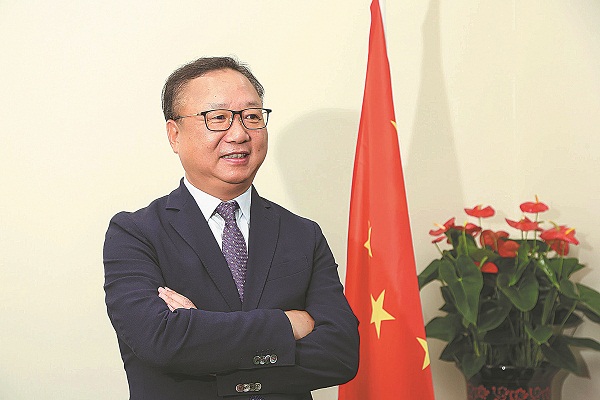
To maintain its competitiveness, China's textile and apparel sector plans to develop innovative fibers and focus on sustainable production while expanding its reach to markets covering the regions included in the Regional Comprehensive Economic Partnership agreement.
China’s textile and garment exports are currently under tremendous pressure owing to the ongoing Russia-Ukraine conflict. Uncertain global economic recovery and geopolitical issues have impacted growth, points out Sun Ruizhe, President, China National Textile and Apparel Council (CNTAC).
Recurrent COVID surges weakens consumer sentiment
Rising prices of commodities such as crude oil and cotton are impacting profits of MMF and cotton producers in the country. Recurrent COVID-19 waves and global divergence in prevention and control measures have weakened industrial production and logistics, affecting market confidence and consumer spending.
Covering 15 countries across Asia-Pacific, the RCEP agreement will facilitate a more comprehensive and deeper cooperation amongst industry leaders. It will protect the industry against the current economic and trade risks besides creating strategic value for the diversification of industrial and supply chains. Over 94 per cent textile and garment products from China will enjoy zero tariffs under the RCEP framework after a certain period. The number increases to over 95 per cent for textile and garment exports from other members to China.
Textile industry growth to slowdown in H1FY’22
China’s commitment to reduce tariffs, accumulative rule of origin and trade liberation and facilitation measures will enable it to strengthen ties with other countries such as Japan. The country reported 11.1 per cent rise in textile and garment exports to $72.25 billion in the first quarter, reveals CNTAC. Weak demand and supply chain issues will slowdown the industry’s growth in the first half of the year.
And as Sun Ruizhe, President, CNTAC says, the US Congress passed the H.R.6256 bill in December 2021 to prevent goods produced in China's Xinjiang Uygur autonomous region to be imported into the country, this move hit China’s cotton textile and garment exports.
New categories and brands emerge
CNTAC and its member companies have achieved significant breakthroughs in the development of new fibers, sustainable production and upgrading textile machineries. The rise in platform and content economy is leading to the development of traditional and new brands. Emergence of new categories is also facilitating the launch of new brands.
Besides integrating digitization in industrial development, China’s textile and garment companies will focus on developing new markets via new technologies and the country's dual-circulation development pattern.
Accounting for 54 per cent of China’s total exports, US, Association of Southeast Asian Nations (ASEAN), European Union and Japan were its four biggest export markets, reveal General Administration of Customs, China stats. Many domestic manufacturers benefitted from design, equipment and integration of the upstream and downstream industry chain despite facing fierce competition from rivals in Southeast Asia since the second half of 2021, affirms Deng Lijun, Chief Analyst, Northeast Securities.
Online retailers need to step up discounts without damaging brand equity
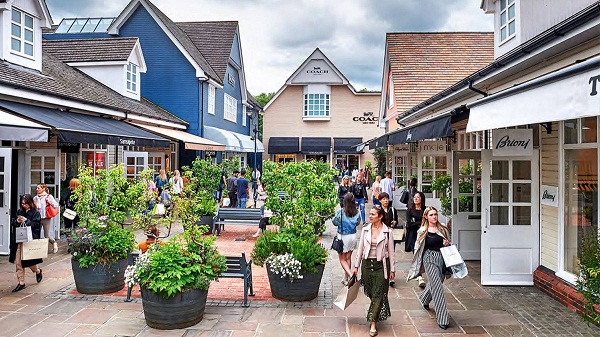
The need to preserve their image and drive full-price sales is encouraging major luxury players like Prada and Kering-owned Gucci to find new ways to control discounts offered to consumers. As per a Business of Fashion report, luxury players are slowly phasing out end-of-season sales in their boutiques. They are also staying away from discount-prone wholesalers. Luxury retailers Gucci and Kering are urging brands to either transform to a concession model or pull out altogether.
Bridge, premium and sportswear brands including Ralph Lauren, PVH’s Calvin Klein and Nike are also planning to limit their discounts. They are being increasingly pressured by consumers and government regulators in markets like France to end the practice of discounting and destroying unsold goods.
Sustainable disposal of excess inventory
Off-price sales of brands are on a rise currently as they help clear unsold inventory. These sales are expected to continue growing from 2025 to 2030, revealed an April report from McKinsey.
Discounts help brands sell excess inventory in a sustainable way, as per a report by McKinsey & Co. Further digitalization of retail segment is expected to boost discounts by brands in future. The report states, online discounts in Europe are expected to increase 13 per cent annually from 2021 to 2025.
One such emerging discounter in the online segment includes the Munich-based BestSecret which reported 53 per cent sales growth to €943 million ($1.02 billion) in 2021. The online brand is known for its investments in foreign markets under owner Permira, the private equity fund that also owns Golden Goose and Reformation.
BestSecret sells sneakers from Bottega Veneta loafers at 70 per cent discounts. Givenchy logo cardigans and Adidas workout gear are sold only to registered members having a unique referral code. None of the brands or products sold on BestSecret are tagged for Google and other search engines. Advertisements for the site also do not mention the brands that manufacture them by name.
BestSecret sources 95 per cent products directly from brands, says Jason Visse-Demortier, Chief Supply Officer. The company plans to transition major brands to a concession model to access a deeper range of items and sizes, Visse-Demortier says.
Physical retailers step up luxury investments
With more online retailers taking the discounts route, physical retailers are stepping up investments in the luxury segment. One such retailer, Value Retail, which faced a downfall in last couple of years, is on track to resurge to 2019′s pre-pandemic levels this year. The retailer’s physical outlets help prevent cannibalization of full-price sales, says Scott Malkin, Founder and CEO, Value Retail. They also help brands control prices, selection, and client’s shopping experience, he adds.
British brand Burberry has often been criticized for resorting to discounts to boost sales. The brand’s reputation as an online retailer complements its significant exposure to physical outlets, explains Aurélie Husson-Dumoutier, Analyst, HSBC. Looking at the advantages and disadvantages of both online and offline discounts, luxury brands need to explore both opportunities. They need to find new ways to increase online discounts — without damaging full-price offerings and brand equity.
NCTO urges government to uphold strong rules of orign
The National Council of Textile Organizations (NCTO), representing the full spectrum of U.S. textiles from fiber through finished sewn products, and the Central America – Dominican Republic Apparel and Textile Council (CECATEC), the main apparel and textile group in the region, sent a letter to Kamala Harris, Vice Presidentoutlining critical issues, such as upholding strong rules of origin in the US free trade agreement with the region and maintaining China 301 tariffs on finished apparel imports, ahead of the Summit of the Americas taking place in Los Angeles next week.
NCTO leaders thanked Harris for her leadership in helping drive more investment to northern Central America and for the Biden administration’s commitment to strengthening the economic partnership forged between the United States and the region, which supports 1 million collective textile and apparel jobs.
Fashion firms need to increase efforts to achieve climate goals: Business of Fashion
The 30 largest listed fashion firms must do more to hit Paris Climate Accord Targets and UN sustainable development goals, although some are improving their social and environmental credentials, says Sarah Kent, Chief Sustainability Correspondent, The Business of Fashion.
Fashion brands face increasing pressure from consumers, particularly younger ones, and governments to show they are doing better on environmental issues.
Though a few front runners are making small steps, however, the industry is largely underperforming, adds Kent.
In its second report, the Business of Fashion Sustainability Index 2022 analyzed publicly-disclosed information on environmental targets and policies, including workers’ rights, in three categories - luxury, sportswear and high street fashion.
Puma was ranked highest, scoring 49 points out of 100, followed Kering , last year's leader, Levi Strauss , H&M Group and Burberry.
The report said companies could lose their cultural relevance and destroy long-term value by failing to act.
The companies’ overall scored highest for progress in reducing emissions out of the areas assessed in the report, but they scored worst in reducing waste.
India’s textile & apparel exports reach $44.4 billion in 2021-22
India’s textile and apparel exports reached its heights at $44.4 billion in 2U21-22.
Also including handicrafts, India’s textile exports grew by 41 per cent and 26 per cent over corresponding figures in FY21 and FY20, respectively.
The US emerged as the top destination for India’s textile and apparel exports, accounting for 27 per cent share. It was followed by the European Union which accounted for 18 per cent of exports, Bangladesh, which accounted for 12 per cent and Bangladesh which accounted for 6 per cent of textile and apparel exports from India.
Cotton textiles were the top exported category with 39 per cent share registering a growth of 54 per cent and 67 per cent over FY21 and FY20, respectively.
Export of ready-made garments surged by 31 per cent over FY21 and 3 per cent FY20 to $ 16 billion with 36 per cent share
Man-made textiles exports amounted to $ 6.3 billion with a 14 per cent share, which shows a growth of 51 per cent and 18 per cent during 2021-22 over FY21 and FY20, respectively.
Export of handicrafts grew by 22 per cent over FY21 and 16 per cent over FY20 to $ 2.1 billion with 5 per cent share.
Kering sells entire stake in Sowind Group SA
Kering has completed the sale of its entire stake in Sowind Group SA, which owns the Swiss watch manufacturers Girard-Perregaux and UlysseNardin, to its current management, in accordance with the terms announced on January 24, 2022.
A global luxury group, Kering manages the development of a series of renowned houses in fashion, leather goods and jewelry such as Gucci, Saint Laurent, BottegaVeneta, Balenciaga, Alexander McQueen, Brioni, Boucheron, Pomellato, DoDo, Qeelin, as well as Kering Eyewear.
By placing creativity at the heart of its strategy, Kering enables its brands to set new limits in terms of their creative expression while crafting tomorrow’s luxury in a sustainable and responsible way. In 2021, Kering had over 42,000 employees and revenue of €17.6 billion.
Consumption exceeds production as cotton crop size in top nations decreases
The June edition of Cotton This Month shows, decreases in the crop size of some top cotton-producing countries — including India, Argentina and South Africa — have resulted in consumption outpacing production as the 2021/22 season comes to a close. They were closely aligned through most of the year but given these smaller-than-expected crops, consumption is expected to exceed production by about 265,000 tons.
To assess the impact of those figures on prices, the stocks-to-use ratio — which measures the available cotton stocks as a share of cotton mill use — can help quantify the relationship between cotton supply and demand. When supply is tight compared to demand, the ratio is lower. A lower stocks-to-use ratio could indicate higher prices. In contrast, when supply exceeds demand then the ratio increases putting downward pressure on cotton prices. Planted area also can have a major impact on prices.
Global luxury fashion market to surge again this year: GlobalData
Despite the ongoing pandemic, the luxury apparel segment is set to surge again this year, as per the latest GlobalData report.
Titled Luxury Apparel Market Size, 2020-2025, the report shows, the market grew 24.1 per cent last year as it recovered from the devastation seen during the first year of the pandemic. Major luxury conglomerates, particularly LVMH and Keringmade the most of the heightened consumer appetite for luxury goods as demand jumped when restrictions were loosened.
And that recovery is continuing with growth this year predicted to remain high at 10 per cent to reach a market size of $149.2 billion. That percentage figure is particularly important because it’s higher than the wider global apparel market that’s set to rise ‘only’ 8.4 per cent in 2022.
The performance will be driven by strong domestic demand in the Asia-Pacific region and the US, despite mounting economic difficulties.
APAC market will grow at a compound annual growth rate (CAGR) of 7.9 per cent from now until 2025, compared to 6.7 per cent for the total luxury market.











