FW
Handloom weavers want GST fixed at five per cent
India’s power loom weavers and business owners want the current GST rate for power loom trading to be retained at five per cent. They say, any change would negatively affect their bussiness. Instead the power loom sector hopes for more assistance and a stable tax rate. Many power loom manufacturers are small-scale businesses. Weaving units have also asked for release of funds under the Technological Upgradation Fund Scheme and say delay in release of these funds could hamper their expansion plans, which are meant at generating thousands of jobs.
The Powerloom Development and Export Promotion Council (Pdexcil) acts as a bridge between the government and the power loom industry. It organizes buyer-seller meet-cum-exhibition events in India as well as in places like China, Dubai, Sri Lanka as well as Germany. The participation of power loom entrepreneurs in these international events supports them in their export activity. Under skill development programs intended to provide skilled workers to the textile industry, Pdexcil has almost completed its target by successfully completing training of 1,297 candidates in the main phase and another 90 under the additional allotment for SC/ST candidates. Pdexcil also enrolled 223 power loom workers under the group insurance scheme and also facilitated exposure visits covering 977 weavers.
Vietnam’s textiles and apparel sector expects to gain from EU FTA
Vietnam's textile and garment exports to the EU could rise tenfold once the free trade agreement takes effect. The FTA will be signed after nine years of negotiations, and immediately afterwards 70.3 per cent of Vietnamese products exported to the EU would be free of tariffs. Textiles and garments are currently subject to an average tariff of 9.6 per cent in the EU, but it would gradually reduce to zero over seven years.
The EU is the second largest importer of Vietnamese textiles after the US and its imports from Vietnam are growing by seven per cent to ten per cent a year. Major textile companies of Vietnam will see orders increase dramatically when the trade deal comes into force. Some plan to link up with domestic suppliers in the yarn-forward supply chain in order to comply with proof of origin rules and take advantage of the trade agreement. The high quality standards that are mandatory under the deal are expected to boost Vietnam’s pace of reform and international integration.
However, grasping the opportunities arising from the FTA would not be easy since the tariff breaks are only for goods that meet quality standards and rules of origin. Domestic value must account for at least 40 per cent of the final product.
US brands continue to grow in Mexico
Between 2006 and 2016 exports of clothing from the United States to Mexico increased by 32 per cent. Due to Mexico’s proximity, and ease of business, US companies have focused on their southern neighbor to carry out their clothing exports.
US companies have also seen business opportunities in Mexico and have ventured to expand their network of stores throughout the country. Gap for example, has 69 stores, Nike, with 19 establishments and Levi’s, with 47 points of sale. One of the main partners of foreign companies in Mexico is the distribution company Grupo Axo, which operates almost 750 stores in Mexico, with PVH Corp as one of its main customers, through Calvin Klein and Tommy Hilfiger. Another of the companies managed by Grupo Axo in Mexico is Guess, with 53 stores open in the country. Abercrombie & Fitch, Victoria Secret and Coach are other brands of the group currently being managed in Mexico, as well as in Chile.
The dynamics in the rest of Latin America is totally different. While the business with Mexico has grown, exports of American clothing to the rest of the region have plummeted by 26.5 per cent between 2006 and 2016.
Saitex becomes the only apparel factory to be certified by B Lab
Saitex, the Vietnam-based denim manufacturer has become he only apparel factory headquartered in Asia with B Corporation Certification. As a B Corp company, Saitex will measure and manage the impact of its business on its workers, community and the environment and monitor its profits.
Companies receive the distinction of being a Certified B Corporation from B Lab, a non-profit organisation that measures best business practices, by meeting rigorous standards of social, environmental performance, transparency and legal accountability. Companies must meet B Lab’s 80-point bar for certification—a process that requires interviews, proof of documents and background checks. Certified B Corporations are also subject to random site reviews.
Saitex’s Ho Chi Minh City-based facilities achieved a score of 105.6. The LEED-certified and Fair Trade facilities produce an average of 18,000 pairs of jeans per day and with a $2 million recycling system on-site, the water consumption for each pair of jeans is greatly reduced from 80 liters to one. The entire facility is supported by renewable energy sources including wind and solar while minimising all waste products or reinventing them into building materials used to build orphanages in neighboring cities.
Reliance Chemotex sales up 37 per cent
Reliance Chemotex’s domestic sales have grown by 37 per cent year on year and now account for 44 per cent of its revenue. This growth was driven by a greater focus on value-added products in the domestic market. The focus on exports continues to remain an integral part of the company’s marketing philosophy. In value terms, Reliance Chemotex’s exports have witnessed a five per cent growth.
In an effort to further improve its performance, the company is planning to modernize two of its units, which will increase the production capacity by 13 per cent per annum. As part of this modernisation exercise, the company will also reallocate some machinery for research and development purposes which will help offer new and more value-added products. The modernisation project will be completed in two phases, and post the completion the company expects significant savings in power consumption and repairs and maintenance costs, which will further enhance profitability.
Reliance Chemotex, established in 1977, manufactures synthetic, blended yarn. It currently operates 53,280 spindles and a high temperature / high pressure fiber-dyeing plant. The company has been exporting yarn since 1987 and has a loyal customer base around the world. Its competitive advantage lies in its versatile product range and commitment to quality.
Monforts introduces eco friendly yarn dyeing
Monforts is introducing a revolutionary new system for yarn dyeing based on the Econtrol dyeing system for fabrics. Econtrol is a pad-dry process employed in Monforts continuous dyeing in which the reactive dyestuff is fixed to the cellulose fibers during drying and the CYD multi-color yarn dyeing system introduces a number of new concepts based on it, including the unique Eco Bleach process. This is the first bleaching system for yarn treatment available in the market and will be of particular interest to denim manufacturers. The Eco Bleach system is combined with washing units and the fabric is then dyed immediately, resulting in considerable savings in wastewater and chemicals. This latest CYD denim processing technology integrates new functions and processes into the weaving preparatory processes – spinning, direct beaming, warping and assembly beaming, followed by sizing and dyeing – in order to increase quality, flexibility, economic viability and productivity.
In its raw state, cotton has a light brownish/yellow tinge and bleaching is necessary to ensure its pure whiteness prior to dyeing. On conventional systems, this involves a separate process step, but with the CYD multi-color yarn dyeing system, it is now integrated into the Econtrol process for full dyeing pre-treatment.
Cotton USA Sourcing Fair to generate $115 million sales
The two-day Cotton USA Sourcing Fair in Macau, which included 2,300 meetings, is expected to result in $115 million sales in future. More than 200 participants from 18 different countries participated in the Sourcing Fair, an invitation-only event organised by Cotton Council International (CCI) to bring together yarn and fabric mills, as well as garment manufacturers and brands and retailers, to promote U.S. cotton throughout the global apparel supply chain.
Forty-one brands and retailers attended the Cotton USA Sourcing Fair, of which 63 per cent were attending a Cotton USA Sourcing Fair for the first time. The total estimated value of their future expected purchases of U.S. cotton products after the fair is $5.9 million. Sixteen yarn suppliers, 59 fabric suppliers and 33 garment suppliers attended the fair. The total estimated value of their future expected purchases of U.S. cotton products totaled more than $110 million.
CCI also hosted a general session highlighting U.S. cotton’s sustainability and quality. After the fair, 91 per cent of the participants agreed that U.S. cotton quality is better than cotton from other regions. U.S. cotton’s superior quality led 92 per cent of participants to report they are ‘very likely’ or ‘likely’ to purchase more U.S. cotton and U.S. cotton in the future.
Asia-Pacific to lead demand for women’s hosiery garments
The demand for women’s hosiery garments will continue to remain lucrative in the coming years as well, with substantial share expected to come from Asia Pacific excluding Japan. However, apparel manufacturers are also shifting their attention toward men and children. More importantly, the men segment is expected to rise at the leading CAGR in market over the assessment period of 2017–2022.
However, the demand for hosiery for men is anticipated to rise at more attractive CAGR over 2017–2022. The products in the economic price range are anticipated to garner the most attractive CAGR during 2017–2022. By the end of 2022, the opportunities in the hosiery market for economic price range products is expected to reach $9,200 million. This will be followed by mid-range and super-premium range hosiery.
Forever New sales up 11 per cent
Forever New’s sales rose 11 per cent in 2018. After a brand refresh late last year, when Forever New launched a new e-commerce platform, loyalty program and new store design, sales are growing between five per cent and eight per cent.
Australia-based Forever New, is a fast fashion brand with 200 stores overseas and 86 in Australia. It has a unique product offering, distinctive feminine aesthetic and a focus on quality at affordable price points, it offers a point of difference and value. Forever New opened 13 years ago. The first overseas store opened in 2009. Sales from brick and mortar stores in countries such as Canada, Singapore, China, India, South Africa and New Zealand, concessions in Singapore and the Middle East, and revenues from dedicated online stores and marketplaces now account for 40 per cent of total sales.
This retailer is not fully vertically integrated but sources from several suppliers in China and south-east Asia, designing separate ranges for the southern and northern hemispheres to overcome reverse seasonality challenges and emulating global retailers by dropping new stock into stores every week. It uses different suppliers around the globe. Right now the focus is on growing business. Since it is privately owned, it can focus on investing and growing the business for the long term.
Technology changing the face of global fashion industry
The fashion industry, a sector that has barely evolved in thousands of years, now faces a profound transformation. New consumption habits, the new socio-economic and geopolitical scenario, demographic changes and the eruption of technology in all daily tasks also have had an impact on the value chain of the sector.
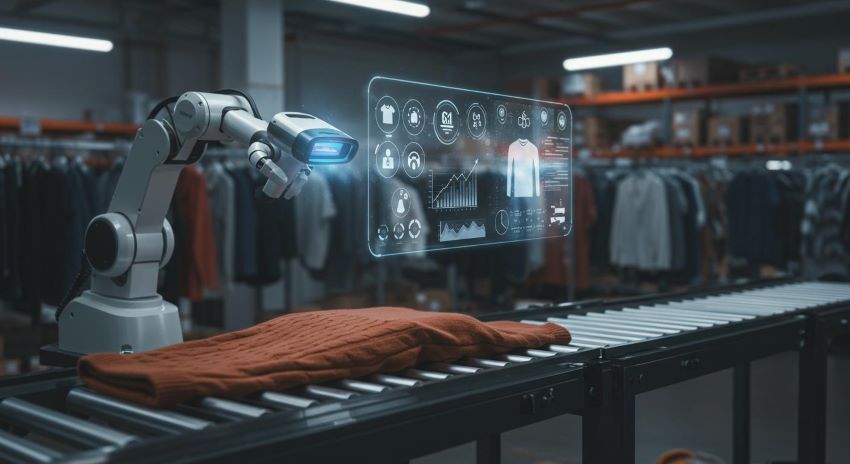
Robots that sew, stamping printers and self-managed factories are not science fiction but are the new fashion industry. Add to this processes that do not consume water, hardly any energy, or even chemicals and technology capable of recycling, regenerating and reintroducing. The new machines that the industry incorporates have completely transformed its image.
The textile industry is facing a new stage based on efficiency and savings with the introduction of new technologies. The first automated cutting and sewing systems have begun to appear. Digital printing is one of the new revolutions in the textile value chain. This technology replaces tinting, reduces labor and decreases the use of chemicals. Another technology is 3D printing. At the moment, these printers have begun to be used in specific areas, from the construction of pieces for the machinery of the industry to the construction of soles of sports shoes or glasses. Soon, 3D printing will also be introduced in the manufacture of clothing and accessories.