gateway

FW

FW

Denim brands want to offer consumers something opposite from perfect stretch jeans.

Naveena offers heavy marbling and salt and pepper effects through technology that twists the yarns in an untraditional way. Soorty’s Kiss Roll collection caters to demand for nostalgia. This product range aims at effortless chic vibes with fabrications suited for everyday denim essentials and upsized unisex designs. The retro-inspired mid shades can be updated with coatings or crispy weaves for more individual looks. US Group offers rigid options with bolder indigo textures and brighter twill lines. Panther offers denim with authentic bases and vintage-inspired dirty washes.

Some brands want to start having something new to put next to the racks of dark indigo and black denim. The new version is less destroyed. Winter whites are picking up momentum. Soorty has a wide range of mid to heavy weight ecru fabrications, which complement a line of soft muted military shades. The mill is also building up its selvedge assortment, adding an ecru selvedge to the mix. The additions reflect the growing popularity for cargo and wider silhouettes. Black and inky shades of indigo remain a staple in fall collections. US Group’s Magma collection is based on deeper, richer colors that require fewer dye dips.

Thursday, 18 April 2019 12:28

Gujarat hikes technical textile outlay

Technical textiles have grown over the past five years in Gujarat. Investments have jumped multifold during the period. In 2014, there were only 17 technical textile units with an investment of Rs 156 crores. Now there are 181 units and the total investment in the segment is pegged at Rs 1,775 crores. A specific credit-linked interest subsidy scheme to set up technical textile units has encouraged entrepreneurs. Some of them were already having traditional textile units in the state. The maximum investment of around Rs 475 crores came during the financial year 2017. In that year, as many as 51 new units were set up across Gujarat, especially in Ahmedabad and Surat – considered as major textile hubs in the country.

Technical textiles are significant for the growth of the entire textile industry as they are value added products manufactured primarily for technical performance and multi-functional properties with less intent on aesthetics and design. This sector is considered as a sunrise sector and it provides new opportunities to the Indian industry to have a long term sustainable future. Demand for this sector is rising due to many factors including rapid urbanisation, advances in medical technology, expansion in construction sectors, awareness on safety and environmentalism and increased spending on healthcare.

European Forum on Eco-innovation will be held in Austria on May 7 and 8, 2019. The forum will explore eco-innovation solutions and policies for improving circularity in the textile sector. It will bring together companies, public authorities, financiers, NGOs, innovators and researchers that are working on developing and deploying effective new technologies, innovative business and governance models, and policies that can deliver a circular textile economy.

The event will showcase companies and private and public sector initiatives in support of innovative solutions that make the textile sector more circular throughout the whole product lifecycle. The presentations and discussions will explore what has worked well and why, where the bottlenecks are, and how the enabling environment needs to change so that the right innovations are developed and put in place. An important objective of the event will be to formulate recommendations for future policy measures and instruments for the European Commission and public authorities at the national and local levels.

Among the issues in focus are: innovations that could lead to a more effective waste management, collection, recycling, shipment across borders; solutions for consumer engagement and awareness, including private consumers, supply chains and public procurement; and new business models that deliver circularity, including reuse, leasing, renting, sharing.

Home Expo India 2019 concludesHome Expo India 2019, a combination of three integral segments of Handicrafts sector i.e. Home-Textiles, Houseware and Furniture concluded here today at India Expo Centre & Mart, Greater Noida.

The premium expo, organized by the Export Promotion Council for Handicrafts (EPCH), registered visit of 556 overseas buyers as well as their representatives and buying agents and retail buyers to source their focused requirements from a diverse range of international quality products under one-roof showcased by more than 375 exhibitors said Shri Rakesh Kumar, Director General – EPCH.

Countries from where buyers came included traditional markets of USA and Europe and buyers from countries like Argentina,Home Expo India 2019 concludes successfully with bigger aspirations for April 2020 Brazil, Chile, Colombia, Germany, France, UAE, Lebanon, Kenya, Tajikistan, Russia, Taiwan, Singapore, Kuwait, Iran, Nigeria, Ghana, South Africa and Vietnam.

Shri Kumar further said that showcasing of product range through an event is a best tool to create awareness and market its potential. EPCH in India has always taken lead in promoting the Indian handicraft sector. With every step forward, the products package from India is becoming more diverse and tasteful amongst the overseas buying community. The efforts for organising product specific Home Expo India show for the last many have beard fruits by showing growth in exports of 27.13% in Furniture & accessories, in houseware and decorative 15.19% growth and in Home furnishing, flooring and home textiles 6.3% in last year.

A highly specialized and product-segmented triple show-- Home Expo India-- was the culmination of Indian Houseware and Decoratives Show , Indian Furnishings, Floorings and Textiles Show and Indian Furniture and Accessories Shows offered three opportunities to the visitors to source their requirements under one roof. Buyers also seen busy in finalising their orders on last day of the show.

The show in this edition, gave a valuable business platform to artisans and budding entrepreneurs of North Eastern Region and SC crafts of Northern India informed Shri Kumar.

EPCH is the nodal export promotion body for handicrafts in India and plays an important role of a catalyst between the exporters, buyers and the Government with the main objective of boosting handicrafts exports from the Country and also projects India’s image in the global markets as a reliable supplier of handcrafted exquisite and quality products.

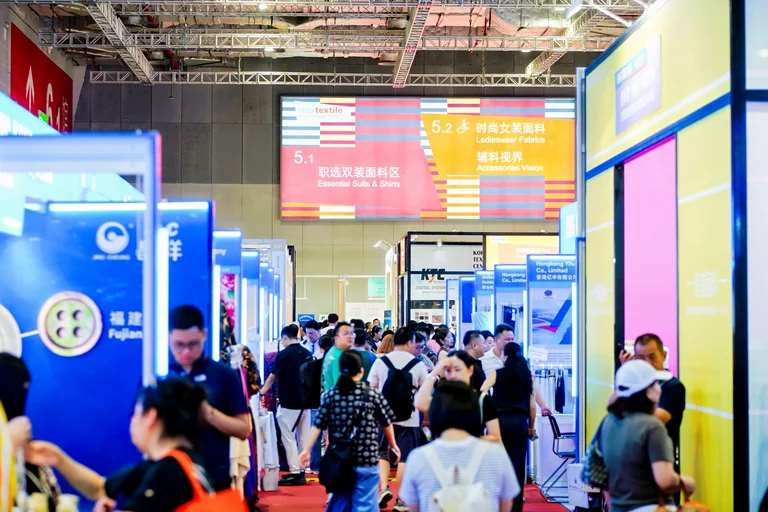
Garment Technology Expo (GTE 2019) was attended by over 280 companies including leading manufacturers and suppliers of garment machinery and accessories from over 22 countries, i.e. Germany, Japan, Taiwan, China, Korea, Turkey, Italy, the US and India, etc. The show attracted a large turnout of trade visitors including exporters and domestic manufacturers.

GTE 2019The 28th edition of India’s largest and much awaited garment technology trade fair, Garment Technology Expo (GTE 2019), was held at NSIC Exhibition Complex, Okhla, New Delhi. The four day show featured a right mix of technologies on garment stitching and processing by around 800 brands and companies. It was inaugurated by HKL Magu, Chairman, AEPC and Chief Guest of the event in the presence of Rajeev Dewan, Member, GEAR, Rajasthan, who was the Guest of Honor. They were joined by PNS Uppal from Okhla Garment. 

The welcome address, by Ricky Sahni, Jt. Managing Director, Garment Technology Expo, was followed by felicitation of Magu Inderjit Singh Sahni, CMD of Garment Technology Expo. Addressing the attendees, Magu highlighted the latest developments and policies in the garment industry.  Presenting mementos to the Chief Guest and Guest of Honor, the event concluded with a lamp lighting ceremony. 

Presence of national and international garment companiesGTE 2019 An opportunity to adopt world trends and technologies

Garment Technology Expo (GTE 2019) was attended by over 280 companies including leading manufacturers and suppliers of garment machinery and accessories from over 22 countries, i.e. Germany, Japan, Taiwan, China, Korea, Turkey, Italy, the US and India, etc. The show attracted a large turnout of trade visitors including exporters and domestic manufacturers as was evident from the record online registrations from cities like Jaipur, Surat, Ahmedabad, Mumbai, Indore, Tirupur, Chennai, Bangalore, Hyderabad, Ludhiana, Amritsar, Panipat, Meerut, Varanasi, Kolkata, Agra besides overseas nations such as Bangladesh, Sri Lanka, Nepal, Burma, etc.

Garment Technology Expo (GTE 2019) was attended by renowned companies from across the textile and apparel value chain exhibiting like, HCA, IIGM, Magnum, Mehala, ALT, Ramsons, Juki, Brother, Pegasus, Tukatech, E.H. Turel, Baba Textiles, Richpeace, INL International, Zoje Sewing Machines Co., Dürkopp Adler AG, Dhaval Colour Chem, Narinder International, etc

Featuring new technologies

The show displayed innovative technologies such as  CAD / CAM, spreading & cutting machines, sewing machines, knitting machines, embroidery machines, digital & screen textile printing, laundry machines, quilting machines, fusing machines, finishing equipment, , printing & packaging machines, hot air seam sealing machines, dyeing machines, dyes, fabrics, fancy yarns, non-woven bag making machine, software solutions, spares parts & attachments, accessories &trims, testing equipment, etc

Inderjit S Sahni, CMD, Garment Technology Expo noted that GTE for the last 18 years has been giving Indian garment manufacturers an opportunity to get acquainted with the latest world trends and upgrade their manufacturing processes by adopting the latest technologies in vogue internationally. Ambrish Chopra, Director, Garment Technology Expo, expressed his satisfaction about the improved infrastructure at the event. He also noted that the event is witnessing a sizeable increase in direct participation from leading manufacturers and suppliers of garment machinery and accessories from over 22 countries. 

"The not-so satisfactory 2018 results of luxury brands Tiffany, Ferragamo, Tod’s and Prada has not deterred them from maintaining a positive outlook for 2019. This is on account of improving brand sales. Ferragamo has already witnessed an improvement in its same-store sales. Similarly, Prada and Tiffany are still on a growth trajectory, despite a softening in recent trading. On the other hand, operating profit of luxury group Hermes crossed the €2 billion ($2.2 billion) mark, yet it failed to achieve 2017’s record level of profitability owing to higher input prices."


Brands ensure positive outlook for the luxury sector in 2019The not-so satisfactory 2018 results of luxury brands Tiffany, Ferragamo, Tod’s and Prada has not deterred them from maintaining a positive outlook for 2019. This is on account of improving brand sales. Ferragamo has already witnessed an improvement in its same-store sales. Similarly, Prada and Tiffany are still on a growth trajectory, despite a softening in recent trading. On the other hand, operating profit of luxury group Hermes crossed the €2 billion ($2.2 billion) mark, yet it failed to achieve 2017’s record level of profitability owing to higher input prices.

App to ensure customer satisfaction

Galeries Lafayette’s new flagship on the Champs-Elysées is revamping operations at its department store by focusing on stylesBrands ensure positive outlook for the luxury sector or trends, spanning gender and product categories. The store allows customers to book an appointment with one of 300 personal stylists who use an app to upload customer preferences besides recording their selections, photos of fittings and measurements.

The app can be used to talk to the stylist before, during and after the store visit. The retail group is also rolling out intelligent hangers which display the sizes of the garment that are in stock. The customer can click on their size and have it brought to the fitting room.

Beauty sector remains active with several transactions

There were several transactions in the beauty sector as well. Bain Capital acquired Maesa, a French beauty contractor and brand incubator, in a secondary buyout. Barcelona-based cosmetics group Puig made investments in emerging markets with the purchase of a minority stake in Kama Ayurveda, the leading Indian Ayurvedic brand, for some €12.5 million ($14 million), and Colombian beauty retailer Loto del Sur. Blog-inspired US beauty company Glossier also announced a $100 million Series D funding led by Sequoia Capital. The company, is now valued at $1.2 billion.

London based accessories company, ASHS, which trades under the Anya Hindmarch brand, was sold to the Marandi family, a UK investor with interests in property, hospitality and fashion. The Savigny Luxury Index (“SLI”) further solidified its gains in March as investors look forward to improving prospects for the sector in 2019; our index posted a 5.5 percent increase versus just over 2 percent for the MSCI World Index.

A threat to the industry

A study commissioned by Walpole shows, the UK’s luxury industry lobby group, a no-deal Brexit is estimated to cost the British luxury sector $8.9 billion Whilst it is clear that Britain in general and London are the prime losers of this saga, the rise of nationalism throughout Europe and the rest of the world could develop into a major threat to the luxury industry.

"The recent edition of Kingpins Amsterdam, held on April 10 and 11, 2019 attracted the attention of several top international denim, jeanswear and fashion brands. However, attendance at this event was significantly lower than previous editions. This was mainly due to the cost cutting measures adopted by many companies. Despite this, visitors noted several emerging fabric trends for f/w 2020-21 at the event."


Kingpins Amsterdam focuses on eco friendly fabrics
The recent edition of Kingpins Amsterdam, held on April 10 and 11, 2019 attracted the attention of several top international denim, jeanswear and fashion brands. However, attendance at this event was significantly lower than previous editions. This was mainly due to the cost cutting measures adopted by many companies. Despite this, visitors noted several emerging fabric trends for f/w 2020-21 at the event.

Emphasis on sustainable denim

Emphasising on the importance of sustainability, the show’s founder Andrew Olah announced his intention to henceforth accept only CSR-certified companies at the show. He offered a new environment-friendly technique that uses clay from the Haly’s river to age fabrics naturally without polluting waters. The clay, when mixed with bio indigo, produces new and different dusty blue hues on flat fabrics. Its application on denim fabrics can create new uneven surface effects.

Other innovations displayed at the show included aniline-free denims by Soorty and Advance Denim. BrandKingpins Amsterdam Albiate 1830 presented high-quality 100 per cent organic cotton denims, while Neela by Sapphire Fabrics offered pre-washed denims in two blue shades.

Bossa launched Organic Autumn Savefera, a denim made with organic cotton, recycled cotton and Refibra then treated with its Saveblue technology that reduces water consumption by 85 per cent. Tencel presented its Planet Rehab collection designed by Juan Carlos Gordillo using fabrics by Tejidos Royo made with Tencel and Tencel x Refibra fibers, dyed with Recycrom eco-friendly dyes by Officina+39 and finished by Tonello.

Iskur Denim presented its Earthsquad denim collection made with yarns obtained from recycling all the cuttings collected throughout Iskur Group’s facilities. Garmon Chemicals introduced White & Green, an alternative solution to dangerous products used in the industry. The range a guarantees a new discoloration process for achieving a high level of whiteness, superior bright shades, stylish vintage looks and high-level contrasts, while saving energy.

Fabric and color trends

Consumers prefer comfort over style as was evident from the display of unisex f workwear, overalls, all-in-ones, workers’ jackets and comfy cargo pants. Brands played with a variety of fabrics to achieve this new comfy-coolness. Amongst the most preferred fabrics were Tencel, fabrics from Lenzil, fabrics having a supper inner side from Soorty and the Eversoft collection from Bossa which offered a special blend of fibers.

As was evident at the show, denims in yarn-dyed color and flat fabrics are back in fashion. Green shades, bordeaux and reds, earth hues and also a vast range of ecru, most different whites and beiges are some of other trending denim colors.

Eco-friendly the new way for brands

Brands are introducing new eco-friendly concepts to minimise their impact on the environment. Jeanologia developed a new concept to recycle, reinvent and revamp old stocks and unsold pieces by adding new laser techniques creating different surface effects, graphic elements, handwritten decors and also abrasions and uneven effects and embroideries that give a new aspect–and life–to old pieces.

The new collection of indigo- and sulfur-dyed special knits by Arvind provide new jacquard effects on ribs, garments’ edges and placed decorations and can be laser-cut and thermo-sealed.

London-based The Vintage Showroom is launching TVS Images, a new digital archive for designers and creatives. This archive’s London collection offers vintage workwear and denims which it will start presenting by initially showcasing 25,000 unique images that will be updated quarterly.

"Most retailers are realising the importance of providing personalized services to their clients. Fashion Link, a distributor of European luxury women’s fashion brands, and Creative Concepts, the company’s sales branch, headquartered in Los Angeles’ The New Mart, noticed a visible expansion in its business whenever its store owners were present onsite."


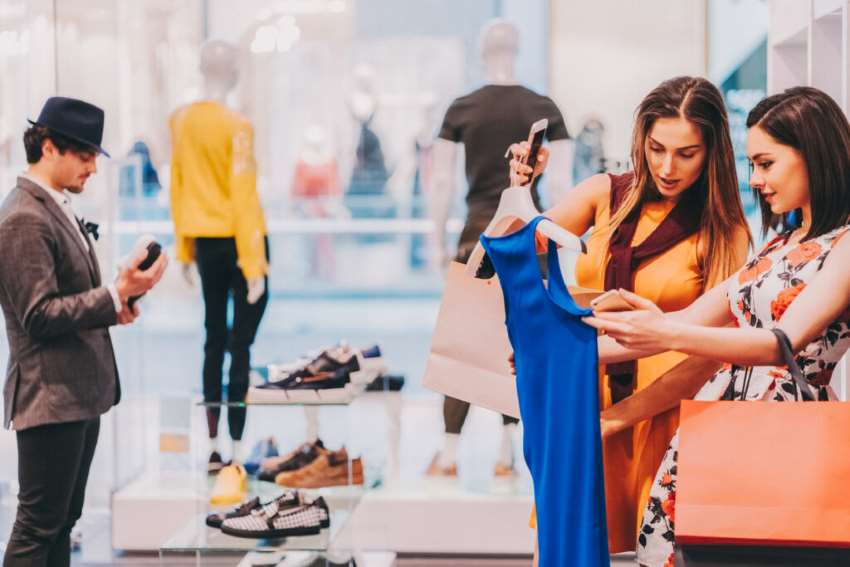
Small retailers stride ahead with personalised services e comMost retailers are realising the importance of providing personalized services to their clients. Fashion Link, a distributor of European luxury women’s fashion brands, and Creative Concepts, the company’s sales branch, headquartered in Los Angeles’ The New Mart, noticed a visible expansion in its business whenever its store owners were present onsite.

Small bricks-and-mortar stores require owners to develop a delicate formula of establishing personalised relationships with customers, knowing trends and employing a dedicated staff. Years ago, store associates were expected to learn the business under the guidance of their supervisors. This is no longer a reality for most employees in the retail space. Today, a lot of salespeople wait for customers to come see them as opposed to reaching out to the customer. Being present in-store not only establishes that invaluable connection with clients, but it also informs them about the decisions regarding the offerings stocked in the store.

Working on site also makes retail-business proprietors available for customer feedback regarding all facets, from in-stock inventory offerings toSmall retailers stride ahead with personalised services e com presence the arrangement of pieces.

Passion to succeed and local goods drive sales

A passion to succeed also drives sales at brick and mortar stores. Just like Marianne Reyes and Kim Holbrook are passionate about cultivating business at their store at Jade’s in Pasadena, California, the town’s central shopping-and-entertainment center. These women sell trend-driven and formal pieces that retail from $50 to $500 in sizes 2 through 20 from brands such as the Connecticut-based Commando, in addition to an in-house line, Ginger Los Angeles, which is designed by Holbrook and made locally in downtown Los Angeles. Another factor that drives their sales is goods created by local designers and domestic brands that are not available anywhere else.

Social media presence drives growth

Elisa Bruley’s Elisa B.boutique sells high-end labels including Alexander Wang, Phillip Lim, Tibi and the luxury sustainable brand Amur (A Mindful Use of Resources), which retail for $10 to $1,300, with an average cost of $150 to $500. Bruley recently developed her e-commerce and social-media presence over the last year, which has driven traffic to her store. The brands will operate both its e-commerce and offline presence simultaneously.

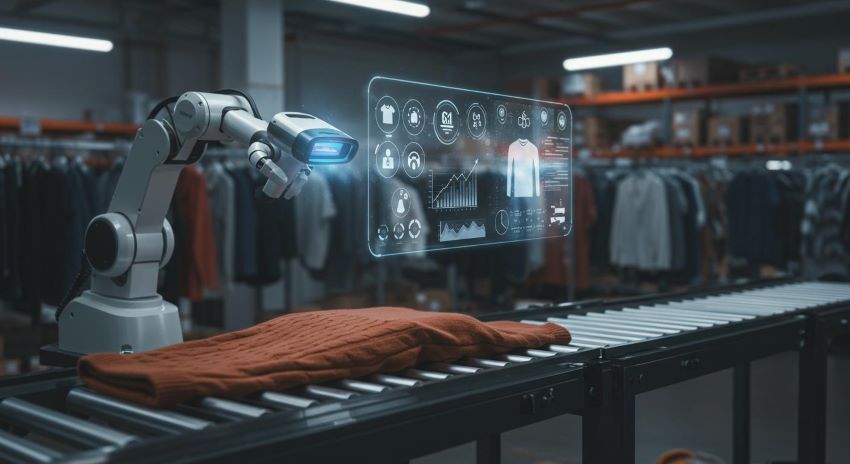
AI reinvents shopping experiences throughThe integration of fashion and Artificial Intelligence (AI) is significantly impacting the fashion industry as technology-driven innovations are reinventing not only customers’ interactions with garments but also their online and offline shopping experiences.

Application of AI by Indian designers

Fashion designers Gaurav Gupta and Falguni and Shane AI reinvents shopping experiences through innovationsPeacock are using artificial intelligence to create innovative garments. Gupta is the first designer to create an Indian sari gown by using IBM’s cognitive tool Watson. The designer, to create the first-of-its kind cognitive dress, used white fabric with integrated lighting that covered the entire dress. The AI technology in the lighting enabled the garment to change its color according on the mood of the person interacting with the wearer of the gown. This was achieved through IBM Watson’s tone and emotion gaging software.”

Desigers Falguni and Shane Peacock used IBM’s tool Watson to create a software that helped them browse through the history of fashion weeks within seconds. Apart from this, it also helped the duo improvise their work by providing relevant themes and sketches. The tool not only prevents sartorial copies but also brings about transparency in the design process.

Improving shopping experience

Another tool chatbots aids luxury brands like Burberry and Tommy Hilfiger to address the grievances of their users 24/7. Farfetch’s augmented retail vision Store of the Future uses data to improve the experience of a shopper, is another instance. It provides ultra-personalised experiences to its customers both in their real and digital lives. The platform improves retail productivity by capturing consumer data and enhancing interactions between consumers and sales associates, both in store and when the consumer interacts with the retailer or brand online.

Classifying buyers into two categories, designers Falguni and Shane Peacock have launched an interactive online shoppable video which enables the consumer to have a closer look at a product worn by a celebrity, and also helps put together a look specifically for them. Gupta’s tool also makes purchase simpler for the consumer.

Visual recognition, purchasing recommendations and customised options are other benefits of AI in online fashion retail. Online platform Findow uses advanced AI to help buyers discover nearest fashion designers, retail stores, brands and boutiques. The website and app updates on the latest trends and keep track of events and sales happening around them.

Benefits galore but negative impact on employment

AI allows designers to construct, de-construct ideas and create something new altogether. It encourages creativity by presenting new ideas on the benefits of technology and how it can it be incorporated in their work.

AI offers many benefits that can be beneficial across the fashion supply chain. It increases the speed of brands in delivering their collections. Besides its ability to store and read a large size of data helps them to recognise a consumer’s wants and needs. Artificial Intelligence also aids in creating new jobs. However, it can also lead to loss of jobs as automated processes make human labor redundant.

"A major source of environmental contamination, the global fashion industry, emits 10 per cent of the greenhouse emissions annually. Due to its long supply chain and energy-intensive production, the industry consumes more energy than aviation and shipping combined. As most of the clothing manufacturing is now undertaken in India and China, coal-fired power plants and GGEs predominate while employee rights are ignored."


Fashion industrys environmental impact brands team up to chalk way forwardA major source of environmental contamination, the global fashion industry, emits 10 per cent of the greenhouse emissions annually. Due to its long supply chain and energy-intensive production, the industry consumes more energy than aviation and shipping combined. As most of the clothing manufacturing is now undertaken in India and China, coal-fired power plants and GGEs predominate while employee rights are ignored. Though the western companies outsourced jobs by moving their production to these companies, they also increased the impact of pollution and environment in these countries, threatening the health of local people.

As per Natural Resources Defense Council (NRDC), textile factories in China, which makes over 50 per cent ofFashion industrys environmental impact brands team up the world’s clothing also releases three billion ton of soot every year by burning coal, contaminating the air leading to respiratory and heart disease. Textile mills generate 20 per cent of the world’s industrial water pollution and use 20,000 chemicals, many of them carcinogenic. Textiles are the largest source of synthetic fibers in the oceans, micro-plastics get into the water system every time garments are washed; the UK House of Commons Environmental Audit Committee on fashion reports that “a single 6kg domestic wash has the potential to release as many as 700,000 fibers.”

Fast fashion causes immense damage

Different fabrics impact the environment at different levels. Synthetic fibers like polyester, made from crude oil (fossil fuel), produce higher levels of GGEs compared to natural materials. However, it can be recycled, is more stain-resistant, can be washed in cold water and dries quickly. Conventional cotton causes deforestation and loss of biodiversity, and is responsible for 18 per cent of all pesticides and 25 per cent of insecticides. Cotton also consumes around 2,700 liters (715 gallons) of water to make a single t-shirt.

The material also uses huge amounts of water for its dyeing process. According to the World Resources Institute, globally 5 trillion liters (1.3 trillion gallons) of water are used each year for fabric dyeing. The most polluting area of the apparel industry, fast fashion, produces 50 ‘cycles’of clothing every year. Increasing consumerism, this fad has led to huge amounts of waste and cause immense environmental damage. It needs to be stopped urgently.

Creating a holistic experience

The fashion industry, since long has been advocating strong measures to stop its damaging effects on the environment. Last year a group of organisations, under the umbrella of the United Nations Climate Change, created the Fashion Industry Charter for Climate Action (FICCA), launched at COP24 in Katowice, Poland, in December. The FICCA aims to reduce greenhouse gas emissions by 30 percent by 2020 and achieve zero emissions by 2050. Its 43 founding companies include brands like Adidas, Burberry, Esprit, Guess, Gap, H&M, Kering, Levis, Puma, PVH and Target.

To reduce the catastrophic impact of fashion, brands plan to review their production methods and water use, curtailing demand, moving from conventional to organic cotton and from virgin polyester to recycled polyethylene terephthalate (PET), collecting and recycling unwanted garments. In addition to these brands, governments should also introduce public information policies to make people aware of the environmental impact of living a certain way and introduce maintenance classes in schools. All product-based companies should make their consumers aware about the environmental impact of their products and methods, as well as the human cost. They also need to regulate their advertising campaigns.

To address this environmental catastrophe, brands need to create social justice and a holistic life experience in their countries. They also need to eliminate competition and conformity from their society, reject its focus on brand image and also curtail the tendency to imitate. The challenge of environmental pollution can be overcome by moving away from a life based on desires and cultivating the natural world and the art of living harmlessly. Brands also need to pressurise the government to halt this catastrophe before it gains mammoth proportions.