FW
AATCC renames International Conference as Textile Discovery Summit
The AATCC International Conference has been renamed as the AATCC Textile Discovery Summit. Name change will not affect the event’s nature and it will continue to serve as a valuable opportunity for the textile community to connect, share, and learn.
To be held from November 16-18, 2021 at the Sheraton Imperial in Durham, NC, the event will include educational presentations, networking receptions, interactive breakout sessions, special onsite activities and resources, an exhibitor showroom, a poster session, the Herman & Myrtle Goldstein Graduate Student Paper Competition, and the awards luncheon.
The event also provides tabletop exhibits and sponsorships to share news about products, services, and processes directly with attendees. This year’s exhibitor and sponsorship package also includes new offerings and opportunities.
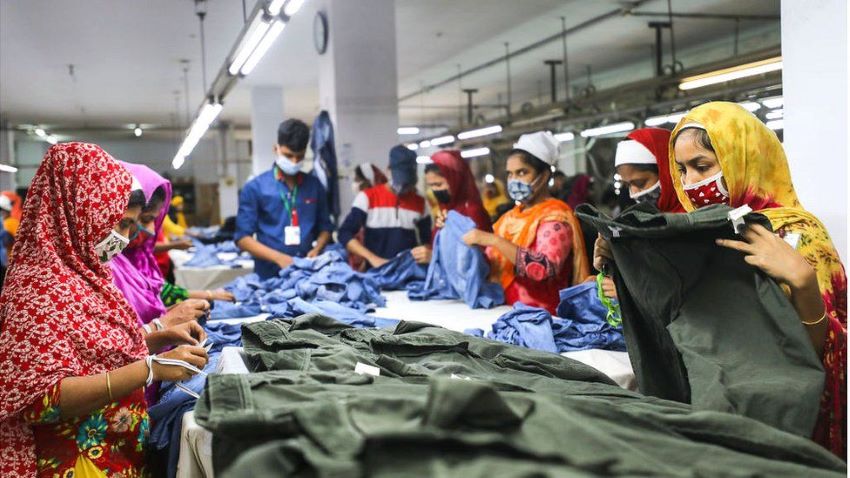
COVID-19 crisis demands more initiatives for Bangladesh garment workers
 The impact of COVID-19 on the world’s second largest RMG exporter, Bangladesh was much more devastating than that on the rest of the world. As per reports, the country lost an estimated 357,000 jobs between January and September 2020 as brands cancelled over $3 billion worth of orders. Brands such as Topshop, Hema and TJ Maxx failed to pay for completed or in-production orders, says the Workers’ Rights Consortium’s COVID-19 Tracker.
Jobless workers face poverty and hunger
Garment workers who lost their jobs did not receive any outstanding pages or severance pay despite the government rolling out a $ 590 million stimulus package in March 2020. Workers who managed to retain their jobs faced reduced work hours resulting in reduced pay. This resulted in extreme poverty for workers who died more of hunger than the disease.
Female garment workers in Bangladesh are often underpaid and overworked. Many of them are financially responsible for their family members both back home and in the city. Many workers returned to their villages last year after losing their jobs due to the pandemic while others remained in the cities, struggling to make a living.
COVID-19 reveals workers’ anxieties
As per a recent study of 610 garment and textile factories conducted by the Centre for Policy Dialogue and Brac University’s ‘Mapped in Bangladesh’ project, over 357,000 garment workers lost their jobs in 2020. Over the years, Bangladesh garment industry has witnessed some of the worst industrial disasters. On November 24, 2012, a fire broke out at the Tazreen Fashions garment factory, killing around 17 workers. On April 24, 2013, the Rana Plaza factory building in Dhaka collapsed, killing some 1,134 people and thousands more injured. This incident alerted the whole world about the appalling working conditions of the Bangladesh garment workers.
The COVID-19 pandemic has further demonstrated the incredibly difficult lives of garment workers. As per a July 2020 study, many of workers are battling anxiety over the possibility of catching the virus, meeting daily expenses and returning to old factory jobs. These workers earn approximately $96 in wages, which is almost half of the prescribed living wage.
Benefactors’ aid to rescue
This leaves garment workers at the mercy of aid provided by different benefactors, including trade unions, NGOs and donor agencies. They receive staples including rice, potatoes, cooking oil, onions and pulses from these benefactors, and are likely to soon receive a welfare fund worth €113 million from the European Union and Germany.
One of the trade unions that have been helping jobless garment workers, Akota Garments Workers Federation also donates things like food, masks and hand sanitizers. However, Kamrul Hasan, General Secretary, believes Bangladesh garment workers need more initiatives to deal with social and financial consequences of COVID-19.
VF Corp’s brands launch apprentice program with Pensole Academy
The Timberland, Vans and The North Face brands of VF Corporation have launched an integrated partnership with Pensole Academy™ called DiverCity x DESIGN.
This new corporate apprenticeship program will provide unique access to professional design experience and empower Black, Indigenous and People of Color (BIPOC) students as they learn, create, and build a career in the footwear industry. The mission of the partnership iscreate a program that ensures diversity of thinking and experience.
The immersive curriculum was developed in partnership with PENSOLE™, a Portland-based footwear design academy, which provides students with the knowledge and experiences required to become well-rounded professional footwear designers. DiverCity x DESIGN will equip students with footwear design principles, product creation process, hands-on experience, professional development training and brand engagement. The top performing students will be granted career mentorship with cultural experiences at each of the brand's headquarters.
Fashion Pact launches initiatives to curb sector’s impact on biodiversity loss
The Fashion Pact has launched a series of initiatives geared at curbing the sector's impact on biodiversity loss after securing a $2million grant from the Global Environmental Facility.
The sustainable fashion coalition said the funding would go towards developing and sharing best practices geared at cleaning up supply chains, improving agricultural practices, decreasing deforestation, and minimizing pollution and natural resource extraction.
The funding, which will be co-executed by the Fashion Pact's technical partner Conservation International, will go towards providing signatories with a "foundational understanding" of the environmental impacts of fashion supply chains, with a focus on the production and extraction of raw materials such as gold, cashmere, and leather.
It will also be spent on identifying existing projects and opportunities that could enable the fashion industry to lessen its immediate and long-term impacts on biodiversity, according to the update.
Funding will be channeled into creating specific analyses that form the basis of action plans for the industry geared at addressing issues related to the intersection of climate change and biodiversity loss, the Fashion Pact said.
The grant money will also be spent on providing the Fashion Pact with tools it needs to track, measure, and monitor progress towards its sustainability goals.
Rieter sales fall by 25% in 2020
Sales for spinning machinery leader Rieter fell by 25 per cent in 2020 as a direct consequence of the COVID-19 pandemic.
As per Innovation in Textiles, the company’s 2020 sales were CHF 573.0 million, compared to CHF 760 million in 2019. Due to the low sales volume, a net loss of CHF 89.8 million was recorded and order intake was 31% down on the previous year.
With the exception of Turkey and Africa, all regions were affected by the low demand. In Turkey, Rieter benefited fro a willingness to invest, with sales up by 83% to CHF 122 million and in Africa a year-on-year increase of 11% was recorded.
The company now expects an order intake in the first half of 2021 exceeding that of the previous half year of CHF 389.5 million. Thanks to improved capacity utilization, Rieter is planning short-time working in only a few areas in the first half of 2021, but still anticipates that sales in the first half will be below its break-even point/ It does, however, expect to achieve an operating profit for the full year 2021.
L Brands’ FY2020 sales decline by 8.3%
US based fashion retailer of women's intimate and other apparel L Brands has posted 8.3 per cent sales decline to $11.8 billion in its complete fiscal 2020 ended on January 30, 2021 compared to the sales of $12.9 billion in the prior fiscal. The company's net income for the year jumped to $844.4 million compared to the net loss of $366.3 million in FY19.
The retailer’s gross profit during FY20 rose to $4.6 billion while operating income increased to $1.5 billion.In FY20, sales of Bath & Body Works grew 20.1 per cent to $6.4 billion. However, Victoria’s Secret sales slipped 27.9 per cent to $5.4 billion.
Looking forward, the retailer aims to remain focused on delivering compelling merchandise and experiences to its customers while maintaining a safe environment. It also plans to continue moving ahead in its plans to separate its two businesses.
E-commerce boosts Salvatore Ferragamo’s China sales
E-commerce has helped lift China sales of Italian luxury goods group Salvatore Ferragamo, said Michele Norsa, Deputy Chairman. Norsa said, he expected sales in China to keep growing by double-digit percentage. Asia being the company’s largest market, accounts for half of the group’s revenues. In the first nine weeks of 2021, there has been a 86 per cent jump in digital sales with China and Korea both performing strongly.
The company’s Earnings before interests and taxes (EBIT) recorded a €62 million ($74 million) loss in 202 due to impairment charges booked on assets such as property and machinery. Analysts had on average expected a €64 million EBIT loss for 2020 in a Refinitiv consensus forecast.
Luxury goods high-end retailer Salvatore Ferragamo S.p.A was founded by the namesake Italian shoe designer who established a reputation for his innovative footwear in the 1930s. He was known for his experimentation with materials including kangaroo, crocodile, and fish skin for his shoes.
Yarn Expo Spring to focus on sustainability
International and domestic suppliers at the upcoming Yarn Expo Spring will focus on sustainable products. The fair will now be held from March 17-19, 2021, a week later than its original scheduled date. International suppliers of organic and regenerated cotton at the exhibition will include Hengbang Textile from Vietnam which will showcase recycled cotton yarn and Xiamen Naseem Trade from Pakistan that will showcase organic / BCI yarn, 100 percent cotton single and double yarn.
Yarn Expo Spring will also be held online. Exhibitors will now also be online to connect with buyers through its AI-driven business matching platform. The online show will also allow ‘hybrid exhibitors’ to display their products onsite at the dedicated showcase area for buyers to examine in-person. Yarn Expo is a leading sourcing platform to both exhibitors and visitors. Suppliers from Asian and European countries showcase their latest collection of natural and blended yarns including cotton, wool, flax/regenerated flax, and man-made fibers and yarns, as well as specialty products including elastic, fancy and blended yarns.
Outland Denim enters ready-to-wear segment
Outland Denim is expanding operations by foraying into the ready-to-wear segment. As per Sourcing Journal, the B Corp-certified company has launched its Spring/Summer 2021 capsule collection known as Reset. Defined by luxurious fluid shapes with a subtle edge, the collection has been designed using Maeka Standard, a set of guidelines established by the label that include providing a living wage and education for garment workers, ethical sourcing and more.
The collection includes 100 per cent Tencel slip dresses, cotton button-down shirts and linen A-line skirts. Its swing dresses and shirt dresses are made from a blend of organic cotton and linen. The brand made its fabrics using handlooms sourced from sustainable clothing manufacturer Five P. The color palette of the collection includes neutrals and faded rose punctuated by stripes and blue leopard print.
The Reset capsule collection is now available exclusively on Outlanddenim.com and retails for $135 to $295.
ITMA Asia +CITME 2020 begins online registrations
ITMA Asia + CITME 2020 have started registrations for online visitors. To be held at the National Exhibition and Convention Centre (NECC) in Shanghai, the fair will offer special rates for visitors who purchase their badge at www.itmaasia.com and www.ctme.com.cn.
Show owners and organizers will work closely with authorities, such as the Joint Prevention and Control Mechanism of the State Council and the Shanghai Convention and Exhibition Industries Association (SCEIA), to implement preventive and social distancing measures to enable the combined exhibition will be held safely.
Ernesto Maurer, President, CEMATEX urged visitors to purchase their badge online to avoid onsite queues and allow better and smooth entry process. Wang Shutian, Honorary President, China Textile Machinery Association said, the association is organizing a combined exhibition looking at the needs of the industry. The pandemic has created pent-up demand for quality machinery for sectors such as nonwovens and technical textiles as less sales and marketing opportunities last year. Therefore, machinery manufacturers are eager to reconnect with the market.
The seventh edition of the combined exhibition is expected to feature a gross exhibition space of 170,000 sq m. Till-date, the exhibition has attracted the participation of 1,500 exhibitors, including many established machinery manufacturers from 24 countries.