FW
New COVID-19 variants threaten recovery in global trade: WTO report
As per the latest Goods Trade Barometer released by the World Trade Organization, though global trade has rebounded from the deep decline in the third quarter, prospects for 2021 and beyond are uncertain as new variants of COVID-19 have appeared.
The barometer’s current reading of 103.9 is above both the baseline value of 100 for the index and the previous reading of 100.7 from last November, signalling a marked improvement in merchandise trade since it dropped sharply in the first half of last year”, the report pointed out.
While all component indices are either above trend or on-trend. Furthermore, the indicator may not fully reflect the resurgence of COVID-19 and the appearance of new variants of the disease, which will undoubtedly weigh on goods trade in the first quarter of 2021, the report added.
The two most reliable wind direction indicators of global trade, the export order index (103.4) and the auto product index (99.8) have both peaked recently. In contrast, the container shipping index (107.3) and air transportation index (99.4) are still rising. Both the electronic component index (105.1) and the raw material index (106.9) are steadily above trend and rising, possibly due to inventory stockpiling.
JAAF expresses concern over government’s target for the industry
TulliCooray, Secretary General, Joint Apparel Association has expressed reservations over achieving the $ 6 billion export target set by the Sri Lankan Government for 2021 given the challenges, and insisted that focus should be to revert to pre-COVID performance.
Cooraysaid that it was difficult to achieve such an ambitious target with very strict health protocols in place due to the pandemic. The industry has not set any targets, but they at least want to achieve the numbers pre-COVID to recover the apparel sector, he added.
In 2020 apparel exports declined by 21 per cent to $ 4.4 billion after posting a 5.1 per cent growth in 2019 from 2018. Last year’s decline reflects the industry’s struggle given the COVID-19 impact globally and locally. Prior to the pandemic the industry forecast was a 6 per cent growth in 2020.
Apparel industry was one of the key export sectors which was severely hit by COVID-19 due to partial or full shutdown in major markets as well as domestically whilst the pandemic also impacted the employees.
Cooray said they are yet to hear from the Government regarding the national Covishield vaccine program, to give priority to vaccinating their labour force. He warned that Sri Lanka was facing stiff competition from other countries that had been able to meet orders, despite having higher COVID-19 patient numbers.
He also said that the demand for global apparel has declined by 30 per cent and thereby posing a greater challenge for the industry and economy at large
Increase in PSF prices cut by 50% post Spring Festival Holiday
The increase of 2000yuan/mt for PSF May contracts before and after Spring Festival holiday has been cut by over 50 per cent. As per CCF report the spot direct-spun PSF price was also dragged down by selloff of spot-futures traders, but it moved down more slowly and has been cut by about 40 per cent of previous increase.
The active transactions were seen in on-call trades of spot-futures traders. Sanfangxiang sources were mainly traded at 7,000-7,300yuan/mt by on-call trades. The basis also strengthened from minus 450yuan/mt~minus 400yuan/mt to minus 300yuan/mt. In addition, the stocks of spot-futures traders at hand have declined to about 70kt after underselling.
Some spot-futures traders were also reluctant sellers, and some even purchased further at current low price. They were optimistic to the return of basis, and had confidence to later increase in factory warehouses of traders and direct-spun PSF plants.
Currently direct-spun PSF plants and traditional traders were waiting spot-futures traders to sell out and futures market to stabilize after large volatility. The normal adjustment also needs more time to restore.
EAC urges British Government to set up Garment Trade Adjudicator
The Environmental Audit Committee (EAC) has urged the British government to set up a Garment Trade Adjudicator to ensure retailers treat their supplier factories fairly
Fast fashion brands such as Boohoo were criticized by the committee last July following media reports that factory workers in Leicester, central England, were paid as little as 3.50 pounds ($4.40) an hour, well below the legal minimum wage.
The government has since set up a multi-agency task force to probe conditions in the sector and Boohoo has promised reforms but textile factories have come under pressure during the coronavirus pandemic with brands delaying or canceling orders.
The British Retail Consortium has proposed a licensing scheme to stop rogue firms from accessing the market and undercutting legitimate fashion manufacturers.
The EAC said the adjudicator could investigate brands' purchasing practices and supplier relationships, issue recommendations, name offenders, and impose fines.
Cotton yarn market remains hazy despite rise in prices
Though the ZCE Cotton Futures and cotton yarn futures surged successfully on the first trading day after Spring Festival holiday, the market remains hazy.
Most downstream weavers will restart from February 21, so the transactions of cotton yarn are sparse in spite of price rise. Weavers did not see obvious increase in new orders during the holiday and they still focused on delivering pre-holiday orders.
On the other hand, traders restocked at a large amount before Spring Festival holiday. Their offers were adjusted up due to the rise of ZCE cotton futures, but no transaction was done. If the market does not perform as expected in March, they may quicken the sales, pressuring the price.
The inventory was also much lower than previous years. If the peak season comes as expected in Mar.-Apr., tight supply and hot demand of cotton yarn will sustain.
In general, cotton yarn market welcomes a good start after Spring Festival holiday with price up 500-1000 yuan/mt, but few trades are done. It is expected to see more transactions until Feb 26, but it is still uncertain whether orders could achieve expectation to peak season.
In short run, traded price of cotton yarn is likely to move up compared with that before the holiday supported by the cost and tight supply. If the orders do not meet the expectation, the increase in price may be discounted. There is still large uncertainty in traders.
Upcoming Curve show to be held in New York
Raphel Camp, CEO, Eurovet Americans, which hosts the intimate apparel and swimwear trade show Curve said, the upcoming edition of the show will take place in New York City between August 1 and 3.
As per a Womens Wear Daily report, Curve produces trade shows in Paris, Montreal, Los Angeles and some parts of China, in addition to shows at the Jacob K. Javits Convention Center in Manhattan twice a year. The last two in-person New York shows (in September 2020 and February 2021) were canceled in response to coronavirus concerns.
In lieu of the live events, Curve launched Curve Connect, a virtual lingerie trade show. The digital platform showcases an array of innerwear and swimwear brands and enables retailers and buyers alike to continue networking, schedule virtual one-on-one meetings, view new collections online and listen to panel discussions.
In the post-pandemic world, as trade shows evolve into a combination of live and digital events, Camp said Curve Connect users will still be able to access the digital tools.
Reopening trade with Pakistan will boost India’s cotton yarn prices
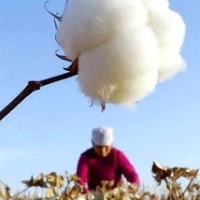 Currently, India’s cotton yarn exports are under intense pressure due to high prices. As per CCF Group, this pressure can ease if Pakistan allows traders to import cotton yarn from India. Participants along the textile industrial line have requested the Pakistan government to allow cotton yarn imports from India as high consumption rates and transfer of orders have tightened supply chains in the country. Apparel exporters argue, increase in raw material costs is also leading to a delay in delivery of overseas orders.
Cotton gains with high consumption, geographical proximity
Till the second half of 2019, India-Pakistan had close trade relations. Pakistan was the major export destination for Indian cotton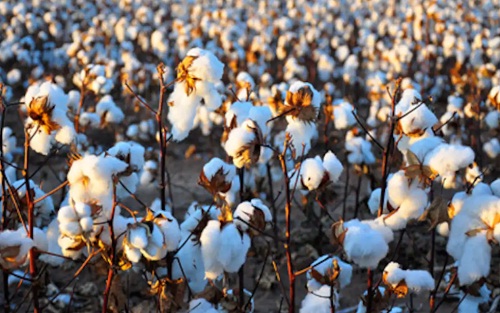 yarn with India exporting around 4.62 per cent or 24.5kt of cotton yarn to Pakistan. India’s cotton exports to Pakistan increased every year from 2012-2019. From 7kt in 2012 it reached 68kt in 2018, accounting for 5.6 per cent of the country’s total cotton yarn exports. Its share in the Pakistan market reached its peak in 2017 when Indian cotton yarn had a 7.4 per cent share. Since 2016, Pakistan has also been one of the top three export destinations for India and the country depends on Pakistan due to its favorable consumption capacity, and geographical proximity.
Reopening and its impact on cotton market
Supported by a surge in raw material and downstream demand, prices of Indian cotton yarn increased after the Chinese Spring festival. This, despite ICE cotton futures plummeting and a decline in May contracts. The operating rate of Indian local spinners remained high with inventories averaging at less than one week, says the CCF Group report. Most spinners pre-sold their March and April orders pushing traders to maintain high prices despite stocks in hand. By March 5, no Indian cotton yarn producer had reduced prices to adjust to the volatile downward cotton price. This uncertainty in trade environment masks commodity and price trends in India. If trade with Pakistan is allowed, it will boost India’s cotton yarn exports and support its prices.
Resale rather than rental finds favor for luxury brands
 Popularized by the cost conscious Gen Z and millennial consumers, who according to the Boston Consulting Group will account for 60 per cent of all luxury spending by 2026, the sharing economy model is being endorsed by two of luxury fashion’s biggest brands: Kering and Ralph Lauren. As a Business of Fashion report suggests, French conglomerate Kering recently led a €178 million ($215 million) funding round in Vestaire Collective which led it to acquiring a 5 per cent stake in the company. The deal valued the luxury resale platform at over $1 billion, signaling the growing interest of luxury brands in the second-hand luxury market.
More consumers prefer second-hand luxury
One major trend catching luxury brands’ attention is: clothing rentals. American mega-label Ralph Lauren recently launched ‘The Lauren Look,’ a $125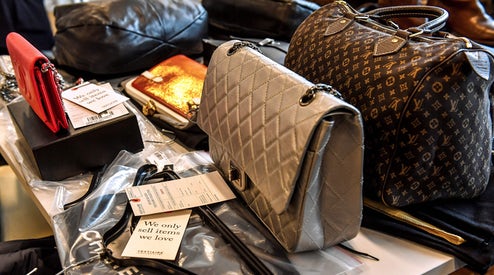 per month subscription service powered by Caastle that allows consumers to rent items from its lower-priced Lauren Ralph Lauren line. Of the two, the resale trend is being favored more by luxury players as there is significant interest amongst consumers for second-hand luxury goods. However, secondary market also encourages sale of new goods by boosting perceived affordability, says Bernstein analyst Luca Solca,
So far, luxury houses have stayed away from the secondary market due to their fear of brand dilution. However, the market provides a significant revenue opportunity that they cannot afford to ignore. Secondary market players can help convince shoppers to view their luxury goods as assets rather than consumables, says Max Bittner, Chief Executive Officer, Vestiaire Collective.
Kering, whose Gucci and Alexander McQueen labels have already forayed into the second-hand market, expect its products to retain value over time. The retailer hopes to launch these products before a wider audience in order to bring greater trust and order in the secondary market
Rise in rental services
Nowadays, more consumers are opting for renting clothes. They are increasingly turning to monthly subscription services like Spotify or Zipcar which help luxury brands serve a wider audience besides giving insights into the changing consumer behavior and product design.
However, rental forms a negligible percentage of overall fashion market which the pandemic has further crushed. In future too, the percentage of rentals in consumers’ closet is likely to remain minute as they are likely to prefer a mix of seasonal and customized pieces alongwith wardrobe staples.
Lenzing Group weathers the crisis year 2020
In 2020, the Lenzing Group successfully responded to the extremely difficult market environment due to the COVID-19 crisis by implementing a broad package of measures and remains fully on track in terms of its strategy. The measures focused on protecting Lenzing’s employees and partners and on safeguarding its operations. Lenzing flexibly adjusted production volumes and was able to offer its customers the usual delivery service at any time. In addition, Lenzing also intensified measures for structural earnings improvement to mitigate the effect of the pressure on fiber prices and demand for fibers, and reduced its operating costs.
The immediate effects of the COVID-19 crisis increased the pressure on prices and volumes in the textile fiber segment, in particular in the second quarter of 2020. The recovery of demand in the second half of the year, primarily for wood-based specialty fibers such as TENCEL™ Modal and LENZING™ ECOVERO™, had a positive impact on the revenue and earnings development, but could not compensate for losses. Revenue declined by 22.4 percent to EUR 1.63 bn in 2020. The earnings development was supported by measures for structural earnings improvements in all regions. EBITDA (earnings before interest, tax, depreciation and amortization) fell by 39.9 percent to € 196.6 mn. The EBITDA margin decreased from 15.5 percent to 12 percent. Net loss for the year amounted to €10.6 million.
Nike reveals sustainability progress and targets in FY29 Impact Report
Sportswear giant Nike has published its FY20 Impact Report in which it reveals its progress against sustainability - and other - targets and sets ambitious new ones to achieve by 2025.
Entitled 'Breaking Barriers', it reveals mixed progress on sustainability with the company meeting its target to source 100 per cent of its cotton more sustainably but failing to reduce its average product carbon footprint.
Nike also reduced freshwater use in textile dyeing and finishing by 30 per cent - smashing its 20 per cent target - and managed to divert 99.9 per cent of footwear manufacturing waste from landfill.
Other examples of successful progress included increasing the use of more sustainable materials in apparel from 19 to 59 per cent since 2015, and increasing the use of renewable energy in owned or operated facilities in the US and Canada to 100 per cent.
However, Nike made no progress at all towards its target of reducing by 10 per cent its average product carbon footprint, and managed to reduce energy use in its key operations by just three per cent against a 25 per cent target.
Nike's new sustainability targets, outlined in the planet section, include a 70 per cent reduction in greenhouse gas (GHG) emissions in owned or operated facilities through renewable electricity and fleet electrification.
At the same time, it pledges that GHG emissions from key suppliers’ manufacturing and transportation operations will remain at or below 2020 levels despite anticipated business growth.
And it aims to save half a million tons of carbon emissions by increasing its use of environmentally preferred materials to 50 per cent.