FW
Allow duty-free cotton imports to avoid production and job losses, urges SIMA

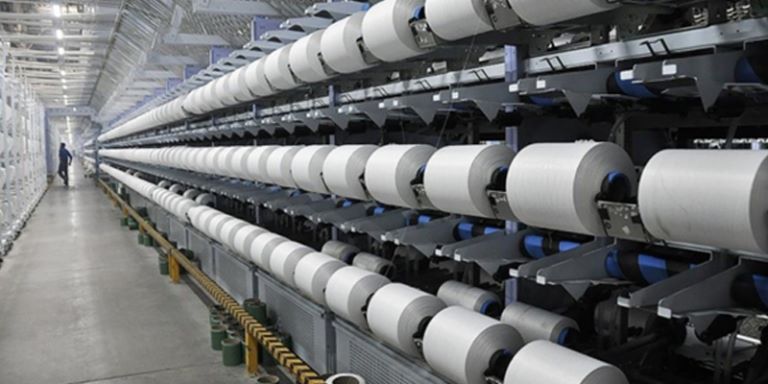
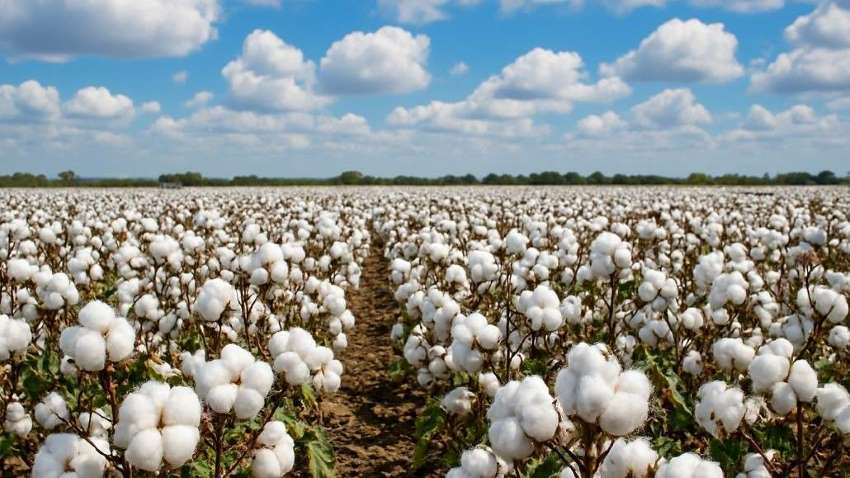
At a recent press meet of the association, Ravi Sam, Chairman, The Southern India Mills’ Association (SIMA) appealed to Prime Minister Narender Modi to allow duty-free import of 40 lakh bales of cotton to avoid stoppage of production and job losses due to cotton shortage during the end of the season.
Cotton yield to decline in current season
From April 2021 to January 2022, India’s exports of cotton yarn, fabrics and made ups increased 63 per cent from $7775 million to $12,681 million, Sam informed. India also witnessed 1.15 per cent acceleration in domestic cotton consumption during the current cotton season with the industry requiring 360 lakhs, surpassing the available crop size for the first time in the history. In 2021-22, India’s cotton yield is expected to decline by 7.2 per cent to 350 lakh bales against the requirement of 360 lakh bales due to a reduction in cotton acreage and crop damage in certain cotton growing states, Sam said.
India’s cotton supplies may reach 437 lakhs bales during the current season he estimated. Domestic cotton consumption estimates may reach 360 lakhs bales while exports may be 50 lakh bales, he added. India would have only 27 lakhs bales of closing stock, resulting in a shortage of 40 lakhs bales of good quality cotton to meet the industry demand and sustain its growth rate, he added.
TMC 2.0 to ensure clean cotton
To overcome shortage, Sam urged the government to implement the Technology Mission on Cotton 2.0 (TMC 2.0) to boost cotton production. As recommended by the Ministry of Textiles, TMC 2.0 will ensure technology development, technology transfer, clean cotton and branding Indian cotton and its textile products. The TMC 1.0 and Bt technology, has already boosted India’s cotton productivity from 275 kg per hectare to 585 ks per hectare, he added.
TMC 2.0 will benefit not just the existing 6.5 million cotton farmers but also several lakhs of new farmers in India. It will also create over 20 million new jobs in the country by increasing the total area under cotton cultivation, he added.
Telangana and Texport Industries team up for an apparel factory
The Telangana state government and Texport Industries have teamed up to set up an apparel manufacturing factory on plug-and-play mode in the Sircilla Apparel Park. The factory will be set up with an investment of Rs60 crore
The company will initially install 800 machines and employ 1,600, and later expand to 1,000 machines to create more jobs over three years.
TIPL manufactures woven as well as knitted garments. It produces 1.6 million garments a month from 19 directly-owned facilities across the country. It employs more than 15,000 now and has an annual revenue of around Rs620 crore.
Paris Fashion Week makes a comeback with live runway shows
Two years on from France's first pandemic lockdown, Paris Fashion Week is returning to live shows.
The women's autumn-winter week commenced with Off-White, presenting the final collection by its founder Virgil Abloh.
Off-White retuned to the catwalk for the first time since the Covid-19 pandemic struck along with 45 other brands including Dior, Chanel and Hermes holding live catwalk shows.
Saint Laurent, which had dropped out of the official calendar during the pandemic, vowing to set its own schedule, returned to the regular line-up.
Others are presenting a mix of online films and in-house collections for buyers and press -- a concept that was devised during the pandemic and has remained popular with several houses such as Japan's Issey Miyake.
Before these shows, students from the French Fashion Institute will make a digital presentation focused on fashion for the metaverse.
Bangladesh may lose its most promising export destination, warn entrepreneurs
Entrepreneurs have warned that Bangladesh may lose one of the most promising apparel export destinations if various Russian lenders are excluded from the SWIFT messaging system in response to the country's invasion of Ukraine
Western nations announced a harsh set of sanctions to punish Russia for its invasion of Ukraine, including blocking some banks from the SWIFT international payments system.
SWIFT (Society for Worldwide Interbank Financial Telecommunication) is the global financial artery that allows the smooth and rapid transfer of money across borders.
If the ban becomes effective, local exporters will face difficulties in receiving payments from Russian importers.
Russia is a growing export destination for Bangladesh's apparel items. In the July-January period of the current fiscal year, the country sent garment items worth $415.47 million, registering a 36.47 per cent year-on-year growth, data from the Export Promotion Bureau (EPB) showed.
Bangladesh shipped apparel items worth $593.66 million to Russia in the last fiscal year, comprising $373.25 million worth of knitwear items and $220.41 million worth of woven items.
The BGMEA has instructed its members not to accept any new work orders from Russia to avoid any hassles in payments.
Mohammad Hatem, Executive President of the Bangladesh Knitwear Manufacturers and Exporters Association, said they are worried about the payment problem due to the uncertainty over the use of SWIFT in Russia.
Adidas, Gucci launch first joint collection
German sportswear brand Adidas and Italian luxury fashion house Gucci have collaborated to launch the Adidas x Gucci collection that combines the tradition and design language of both brands. They have also shared a co-branded logo for the upcoming collection.
Some of the pieces from the upcoming range were unveiled at Gucci’s Autumn/Winter 2022 runway show at the Milan Fashion Week.
Adidas AG is a German multinational corporation, founded and headquartered in Herzogenaurach, Bavaria, that designs and manufactures shoes, clothing and accessories. It is the largest sportswear manufacturer in Europe, and the second largest in the world, after Nike.
Gucci is an Italian fashion house started in 1906 by Guccio Gucci. In 1938, Gucci grew bigger, and opened a small shop in Rome. Guccio Gucci designed many of the company's famous clothes. In 1947, Gucci made the bamboo -handle handbag. In the 1950s, it also made the striped webbing and the suede and metal moccasin shoes.
Nike promotes Lucy Rouse as new VP and GM of SNKRS app
Lucy Rouse has been promoted the new vice president and general manager of Nike’s new innovative sneaker app SNKRS. She currently leads the brand’s women’s business in Europe, the Middle East and Africa along with its sportswear business. Rouse replaces Ron Faris who has been promoted as the Vice President and General Manager of the Nike Virtual Studios –Archivo. Rouse will assume the role of Vice President and General Manager of Nike’s prestige neighborhood sneaker boutique partners, SNKRS Launch, and S23NYC.
Employed with Nike for the last 16 years, Rouse has started her journey with the brand as an account executive in Australia in 2005. She went on to helm Nike's sportswear business in Europe, the Middle East and Africa, before leading its women’s business in the same region, according to her LinkedIn profile.
The appointment reshuffle comes after the Portland, Oregon-based company acquired RTFKT, a virtual sneaker design company and a studio for (NFTs, in December last year.
Workplace safety makes Bangladesh a preferred choice for garment buyers: BGMEA
ShahidullahAzim, Vice President, BGMEA said, world-class workplace safety along with remarkable achievements of the RMG industry in the area of sustainability has made Bangladesh a preferred choice of global buyers for sourcing garments.
Azim was speaking as a special guest at the launching ceremony of the 8th International Fire and Safety and Security Expo 2022 organized by the Electronic Safety and Security Association of Bangladesh (ESSAB) in Dhaka on August 27.
Brigadier General Md Main Uddin, Director General of Fire Service and Civil Defence, attended the program as chief guest, reads a press release.
Azim said the apparel industry in the country has overcome extraordinary challenges that came its way and bounced back even stronger every time.Alongside workplace safety, Bangladesh has the highest number of green garment factories with 167 factories LEED certified by the US Green Building Council (USGBC), he added. Azimemphasized on the production of safety equipment in Bangladesh maintaining international standards.
He said,ESSAB has consistently organized the international Fire Safety and Security Expo as it brings safety equipment suppliers, professionals and users under one roof for fruitful interactions.It plays a significant role in showcasing the latest fire safety equipment and knowledge to the industries, thus raising awareness among the industries, he further said.
The 8th Fire Safety and Security Expo will be held from November 24 to 26 at Bangabandhu International Convention Center (BICC) where world-famous safety equipment brands will participate.
China remains world’s largest apparel exporter despite conflicts with the US

Defying global slowdown, the textile and apparel manufacturing sector has been growing at a steady rate. The sector has emerged as one of the most well-established industries across nations. The top 10 highly prospective apparel exporters in 2022 according to Textile Today were:
China: Despite rising conflicts with the US and other Western countries, China still remains top apparel sourcing destination for the world. In 2020, global imports from China increased 31.6 per cent. Despite garments and accessories’ exports declining 8.6 per cent to $137.4 billion in 2021, China’s national apparel retail market has slowly recovered and reached a positive year-on-year growth. Published data by China’s Ministry of Industry and Information Technology (MIIT) shows, the combined operating revenue from China’s apparel exports grew 7.7 per cent year-over-year from January-November 2021 to $209.48 billion.
Bangladesh: The second-largest apparel exporting country in the world, exported 30.30 per cent more RMG products during the July-January 2021-22 period, as per Export Promotion Bureau (EPB). The country’s RMG exports totaled $23.99 billion during these six months. Knitwear dominated Bangladesh’s RMG exports and grew 32.89 per cent to $13.27 billion during this period. Export of woven items grew 27.23 per cent to $10.71 billion. In January 2021, Bangladesh’s RMG exports reached its highest ever single month growth of 42.71 per cent to $4.08 billion. Both knitwear and woven sectors grew over 40 per cent year-over-year. The results reflect efforts and diligence of Bangladesh’s apparel entrepreneurs and workers. It also reinforces the confidence of the global brands in the country.
Vietnam: Data from the General Statistics Office shows, hit by the pandemic, Vietnam’s apparel export earnings dropped to $32.75 billion in 2021. The country mainly exported RMG and textile products in 2020 as it lessened dependence on agriculture. The country offers cheap labor compared to competitors China and Mexico. On the other hand, Vietnam’s garment exports depend on imports of cotton, fiber, yarn and textiles as it does not have adequate local supply. This threatens the country’s clothing manufacturing industry. Vietnam’s government is emphasizing on the development of raw material supply chain for the textile, garment, leather, and footwear industries.
Turkey: The value of Turkey’s RMG exports grew to $13.36 billion in 2021 from $10.63 billion in 2020, says Turkish Statistical Institute and the country’s Ministry of Trade. Mustafa Gültepe, Head, Istanbul Apparel Exporters’ Association (IHKIB) affirms, the value of Turkey’s RMG exports is likely to surge to $20 billion in 2021 as European countries step up imports. However, with a surge, Turkey’s textile industry is being increasingly pressurized by price, value addition, and quality issues. The country has a wide range of manufacturing skills including those required for producing basic garments.
Mexico: From January-October 2021, Mexico’s exports of apparel and clothing accessories declined to $2.30 billion from $3.32 billion in 2020. The country’s strict rules of origin help limit the use of non-US-Mexico-Canada Agreement (USMCA) inputs. The agreement not only encourages US investment in Mexico’s garment industry but also allows Mexico tariff-free exports to the US market.
Morocco: Apparel constitutes a major percentage of Morocco’s industrial exports. In 2019, Morocco exported apparel worth $3.6 billion. The Moroccan government has launched expansion plans to boost the sector by 2025. It has also launched a capacity-building program for the fast fashion, knitwear and denim sectors over the next few years,
Egypt: Having boosted marketing services by introducing e-marketing tools for RMG exporters, Egypt has boosted its RMG exports 41 per cent in 2021 to $2.49 billion. The country has a medium-sized textile and garment industry with the EU and the US-listed as its major export markets.
El Salvador: RMG products worth $1.5 billion were exported in the 2019 calendar year. Its RMG exports constituted 30.6 per cent of total exports with main focus on efficiencies in cut, make and trim. Having shifted focus on high-end apparel products such like athleisure El Salvador mainly manufactures synthetic fibers and fabrics The country imports high-tech machinery for the production of both fabrics and cut-and-sewn.
Peru: Known for its strong locally grown quality cotton, Peru has shown rapid advancement in production of textiles and clothing. Peruvian fibers are known for their highest combined production process. Peru also offers tariffs benefit, lead time and its vertical integration to source materials.
Thailand: An expert in fabric, sportswear, casualwear, kidswear and womenswear manufacturing, Thailand exported seven million clothing pieces for boys and men by January 2021. One of the few countries having all features from production, design and sale to home textiles, Thailand also boasts of eco-friendly finishing, dyeing, and printing services that meet global standards. The country faces raw material shortages and other challenges that prevent it from maintaining its competitiveness in the global market.
Fashion industry curbs environmental pollution by shifting to more sustainable options

Accounting for upto 10 per cent of the world’s total, fashion industry emits more carbon dioxide than combined emissions of international flights and the shipping industry, as per the United Nations Environment Program. The industry also accounts for one fifth of the 300 million tons of plastic produced globally each year. Since 2000, its annual production of garments has doubled, as per the estimates from consulting firm McKinsey and the World Economic Forum. Cheaper replicas of garments are produced by high-end brands at a fraction of the cost. Most of these clothes are made with new and emerging fast fashion brands, says Minh-Ha T Pham, Associate Professor-Media Studies, Pratt Institute, New York.
The industry currently recycles only a 13 per cent of the garments it manufactures while 87 per cent are either incinerated or sent to a landfill. A Bloomsberg report shows, the United States throws away around 70 pairs of trousers and footwear per person each year
Annual polyester production to increase 47 per cent
Ending years of cotton dominance, Polyester has emerged as the main textile fiber of the 21st century. Currently valued at $106 billion, the global market for polyester yarn is projected to grow to $174.7 billion by 2032. The annual production of polyester is projected to increase by 47 per cent in the next 10 years to over 92 million tons. Data collected on 15,000 pieces of apparel sold by Chinese e-retailer Shein between November 1-15, 2021 shows, almost every piece of clothing on the platform is made from polyester. Similar results were seen from the data collected on 10,000 women’s clothing styles from Asos, Missguided, Boohoo and PrettyLittleThing for Bloomberg by UK-based The Royal Society of Arts. The data shows, around 85 per cent of 1,000 women’s new clothing styles launched on Shein every day are made from polyester while 95 per cent of styles are made with at least some plastics-based material, either from polyester, nylon, acrylic or elastane.
Hazards of synthetic materials
The environmental hazards of these synthetic materials in clothing are wide-ranging. Not only do these materials like polyester consume more energy but also shed tiny pieces of plastic with every wash and wear. Known as microplastic fibers, these tiny plastic particles pose greater dangers to human and animal life as they pollute the oceans, freshwater and land. Around 71 per cent of microplastics found in river water originate from fibers, estimates the S Geological Survey. Similarly, around 35 per cent of the microplastics found in oceans come from textiles, shows a study from England.
Shifting to sustainable options
Around 65 per cent of the 10,000 Gen Z and millennial consumers surveyed by the Swiss global investment group Credit Suisse expressed concerns about the environment and 85 per cent said, they plan to buy as many sustainable products as possible. Most of these consumers plan to opt for secondhand clothing to curb waste. In the first quarter of 2018, they bought about $177 million of clothing and accessories from Poshmark, an online marketplace. Their sales increased by 75 per cent to $309 per cent during the same period in 2020. v Incentivizing textile resuse
Companies like Ambercyle are working to develop scalable technologies to convert textile waste into new fibers. The Los Angeles-based six-year old start-up puts old garments through a series of processes to separate the fibers out at a molecular level, and recover them to make new yarn, informs Shay Sethi, Co-founder and CEO. This helps the company incentivize reuse and prevent millions of tons of clothes from being thrown away in the landfills, he adds.
IHKIB to launch fashion platform at Istanbul Fashion Connection
The Istanbul Ready-to-Wear and Apparel Exporters' Association (IHKIB) in cooperation with the Istanbul Chamber of Commerce is launching an international fashion platform with a biannual rhythm for Turkish and international manufacturers at the Istanabul Fashion Connection. The event will take place from August 24-26, 2022.
The aim of the event is to develop Istanbul Fashion Connection into one of the most important international fashion and textile platforms and the indispensable meeting place for the international fashion industry and fashion trade.
More than 25,000 visitors from about 100 countries attended the kick-off event of Istanbul Fashion Connection. Over 600 companies presented their collections on more than 35,000 square meters of exhibition space and provided information about their creative collections and production capacities in the areas of womenswear, menswear, kidswear, denim, shoes, leather and fur, lingerie and bridal and evening wear.
Despite the pandemic, Istanbul Fashion Connection registered more than 25,000 visitors from over 100 countries like Russia, Ukraine, UK, France, Germany, Poland, and further EU countries, Middle East and North Africa, USA etc.
The new fashion collections, combined with the ideal near shore capacities, experienced high demand and contributed to excellent business activities. For trade and industry, Istanbul Fashion Connection was a unique opportunity for a face-to face meeting on an international platform. All trade channels were represented at the fair, from large shopping mall and department store groups to wholesales and international retail chains or online platforms.