FW
Gildan Activewear’s Q4 sales increase by 14%
In its fourth quarter ended January 2, 2022, Gildan Activewear’s sales increased by 14 per cent over prior year to $784 million and 19 per cent above the fourth quarter of 2019. The company delivered another quarter of strong adjusted gross margin and SG&A performance, which together drove adjusted operating margin of 20.4 per cent, up 510 basis points versus last year and 630 basis points above the fourth quarter of 2019. Strong sales and margin performance translated to record earnings for the quarter with GAAP diluted EPS of $0.89, and adjusted diluted EPS of $0.76 which increased by 69 per cent over last year and 85 per cent from the same quarter in 2019. Free cash flow in the quarter totaled $116 million, bringing the total for the year to a record level of $594 million.
Net sales for the fourth quarter ending January 2, 2022 increased by 14 per cent over previous year to $784 million Activewear sales increased by 17 per cent to $627 million while sales in the hosiery and underwear category increased by 3 per cent to $157 million
Gildan Activewear’s gross profit increased by 48 per cent to $229 million in the fourth quarter while adjusted gross profit increased by 35 per cent to $240 million over the prior year, driven by our growth in sales and strong margin performance. Gross margin increased by 670 basis points to 29.2 per cent in the quarter over 2020. The strong improvement over 2020 was primarily due to higher net selling prices and manufacturing efficiencies stemming from our Back to Basics initiatives, which more than offset inflationary pressures on raw material and other manufacturing costs, as well as unfavourable product-mix compared to the same quarter last year
Class Ecohub hosts new generation exhibitons at Milan Fashion Week
Class Ecohub in collaboration with Lineapelle and Orietta Pelizzari hosted a new generation, engaging and accessible exhibition from February 22-24, 2022 during the Milan Fashion Week. The exhibiton presented an evolved, contemporary and futuristic idea of sustainability. It showcased a selection of leather, textile materials and technologies from the perspective of responsible innovation. It also featured open-source research tool and a top-notch contemporary collection which focuses on the new values that contemporary consumers are looking for.
Giusy Bettoni, CEO and Founder , CLASS, says, for this season this international eco-hub was included in a dedicated space at Filo - the international exhibition of yarns and fibers - to share its knowledge on the subject together with key partners including Bemberg™ by Asahi Kasei, Circular Systems™, Ghezzi, ROICA™ by Asahi Kasei and Supreme Green Cotton ® by Varvaressos. On Feburay 23, Giusy Bettoni also organized a talk titled “Responsible innovation for the contemporary consumer.
Together with White & Marco Poli, CLASS. Presented inside WSM "Unveiling The Fashion Backstage, a docu-event that shed light on how essential, intriguing, fascinating and technologically advanced the world of responsible and innovative companies, materials, accessories and processes can be, related to the creation of a valuable and contemporary fashion wardrobe.
At WSM, CLASS Icon 2021 Duarte was under the spotlight, presenting its brand new AW 22/23 collection.
Sustainable production to drive growth 2022, say textile machinery makers

Precipitated by the pandemic in 2020, focus on sustainable textile production will continue in 2022, say textile machinery manufacturers across the world. The industry will revive with the help of numerous international exhibitions organized during the year, they add.
Focus on digitization and optimization
Digitization and optimization will be the main focus areas in 2022, says Erwin Devloo, Marketing Communications Manager, Picanol. Machinery manufacturers will introduce many new and innovative solutions during the year, he adds. Devloo says, manufacturers faced many challenges during the last two years. Supply chain disruptions, fluctuating demand, high raw material costs and market uncertainty led to new business models. Sustainability gained importance as brands allocated more resources in this area.
Companies to introduce new machines
Focus on sustainable production will continue in 2022 as manufacturers will introduce new equipment and solutions, says Devloo. Currency fluctuations will not affect business, he adds. Fritz Legler, Global Head-Marketing, Sales and Service WPS (Weaving Preparation Systems Division), Staubli Textile agrees, in Turkey Lira depreciation will not restrict the company’s activities in the country. The company registered strong demand for weaving machines in 2021. Its SAFIR drawing-in machines were also in high demand while TIEPRO warp tying machines gained market share in this period.
WPS plans to participate in various exhibitions in 2022 to meet players including customers and partners in the weaving and knitting world.
Weaving machinery registered strong demand in 2021, says Nichole Croonenbroek, Marketing Manager, Monforts. The sector emphasizes on sustainable production and savings of energy, water and raw materials. It is seeing an increased demand for latest innovations like Monex starters for heat recovery and energy optimization. During the last 18 months, it witnessed increased demand for machinery for special textiles and expects the pandemic-led obstacles to recede in 2020 and market for Monforts machines to stabilize.
Machinery supplies to improve
Trützschler has been witnessing increased for latest spinning preparation machinery solutions since the last quarter of 2020. The company’s market recovered in 2021, especially in Turkey, says Gerhard Wienands Regional Sales Manager. Though they faced shortages of certain parts in 2021, Wiehands hopes the situation will improve in 2022. He also expects focus on sustainability to continue in 2022 with the company driving its intelligent technologies in textile recycling, especially its card TC 19i for recycling.
Order intake to improve
Baiancalani not only reached its preliminary targets in 2021 but also acquired new customers and market segments during the year. It launched the new AQUARIA® open-width washing range. The pandemic encouraged the company to explore new possibilities and new ways of thinking, affirms Michele Gabarra, Regional Sales Manager. The company aims to adopt a different business model in 2022 besides participating in important international trade shows such as ITM Istanbul, ITMA Asia and Techtextil North America, he adds. Year 2022 will also be one of the best years in terms of order intake, says Sivakumar Narayanan, Executive Vice President-Product Development, Marketing and Business Development. The steep increase in demand post 2020 disruption is helping the industry recover and create new employment opportunities across the world, he adds.
Narayanan expects continuing demand to drive business growth in the first half of 2022. However, the growth may stagger to an extent due to COVID-19 related challenges, he adds.
Fashion for Good launches project to convert agricultural waste into natural fibers

Global platform for innovation, Fashion for Good has launched a project to expand technologies used for transforming agricultural waste into sustainable textile fibers. ‘Untapped Agricultural Waste Project’ the project has been launched in consortium with Adidas, Bestseller, Vivobarefoot and Birla Cellulose, and six innovators. It will be funded by the Laurdes Foundation and review the technical features of natural fibers created using agricultural wastes such as rice husks, hemp, wheat straw, banana and pineapple.
As per the report titled ‘Unlocking The Trillion-Dollar Fashion Decarbonization Opportunity’ by Fashion for Good, South and Southeast Asia continue to face significant challenges due to rising agricultural waste. India alone is known to burn upto 92 million tons of agricultural waste annually. The country also suffers from greenhouse gas emissions due to extraction and processing of virgin, conventional fibres such as cotton and polyester in the textile supply chain
Displace virgin fibers from unsustainable materials
The 18 month project aims to repurpose agricultural waste into new fiber blends through new technologies. These fiber blends will displace virgin fibers derived from unsustainable materials such as oil. Mapping agricultural waste in eight countries across South and Southeast Asia, the project will highlight the untapped opportunities in agricultural waste streams including rice husks, wheat straw, banana and pineapple production.
It will focus on the development of a new variety of nature fibers and fiber blends by the six fibre innovators: AltMat, Bananatex, Chlorohemp, Agraloop by Circular Systems, HempTex India and 9Fiber. These innovators will trial the highest percentage of agricultural waste to achieve the necessary performance requirements. They will collaborate with Birla Cellulose to develop and prepare new fibers for wider application in the fashion supply chain. The fibers will also be further expanded by participating project brand partners
Building a responsible feedstock
With the first phase concluding in December 2022, the second phase will encourage the production of agri-waste fibers in larger quantities for use in commercial facilities. This phase will facilitate new agreements and financing for the expansion of these fibers. Expansion will drive both agriculture and textile industry towards a net-zero effect, says Katrin Ley, Managing Director, Fashion for Good.
The project will help build a more sustainable and renewable feedstock system by reducing the environmental impact, land and water use, explains Camilla Skjønning Jørgensen, Sustainable Materials & Innovation Manager, Bestseller
Alleviate pressure on virgin resources
The use of unutilized agricultural waste based fibers in apparel applications can reduce pressure on virgin resources and help bring down GHG emissions in the fashion industry supply chain, says Kalyan Ram, COO, Birla Cellulose. The project will address two critical areas. First, it will accelerate the process of launching new materials made from agricultural residue; second, it will call for great commitment to increase the use of these materials, sums up Shikha Shah, Founder and Director, Altmat.
United Colors of Benetton opens new store in Metaverse
The Italian fashion brand United Colors of Benetton opened its new Corso Vittorio Emanuele flagship store in the metaverse during the upcoming Milan Fashion Week. As per a Spin Off report, the company aims to create the same emotional ecosystem in its virtual store as in physical store. Customers entering the physical store in Milan were able to immerse themselves in a cross between physical reality and digital connection, says Massimo Renon, CEO, Benetton Group.
Visitors to United Colors of Benetton's store in the metaverse participated in gaming experiences to accumulate QR codes to make purchases in the physical store. This enabled the brand to create an additional touchpoint with the consumer in the brand's omnichannel strategy.
Through this ominchannel strategy, the brand aimed to offer a dimensional bridge between the present and future, real and virtual, through an immersive brand experience says Antonio Patrissi, Chief Digital Officer, Benetton Group.
The virtual store offered a mirror experience to visitors as the physical store The Milan flagship store was also reinterpreted and painted entirely in pink during the Milan Fashion Week to emphasize the shades of Benetton’s garments.
The temporary installation was accompanied by the #playchange project. From February 21-23, 2022 February, five talents revealed their personal stories of change with Benetton, telling of those moments in life when they had to change their skin and approach in order to move forward.
China’s spandex price to rebound
The limited production of spandex by downstream buyers before the Spring Festival holiday and the extension purchase of spandex by downstream plants may surge Spandex prices this month. New spandex plants started trial production during the period while the existing plants increased their operating rate to 80 per cent, says a report by the CCF group. Suppliers sold and grabbed the market share with moderate profit.
Spandex prices had dropped after the Spring Festival holiday. Stocks of Spandex plants mounted as more downstream plants shut down for Spring Festival holiday than spandex producers. This led to a 5.4 per cent decline in spandex prices from February 07. However, a few spandex plants that had suspended production due to the Spring Festival holiday or the XXIV Olympic Winter Games resumed operation after holiday. By February 22, the operating rate of spandex plants rose by 9 percentage points to 91 per cent compared with early-Feb. Most plants in Middle China and West China ran at full capacity and plants in East China ran at above 87 per cent of capacity now.
Price of upstream BDO rebounded after holiday. Demand for PTMEG apparently recovered in February and may improve further. Price of PTMEG is expected to have very small downward space in end-Q1 and early-Q2, not ruling out to rise.
Indonesia’s garment industry to grow 10.44 per cent in H1 FY2022
Indonesia’s garment industry is likely to grow 10.44 per cent in the first half of the 2022, as the upcoming Ramadan festival will drive demand, estimates Elis Masitoh, Director- Textile, Leather and Footwear Industry, Ministry of Industry. Production volume of the apparel industry could grow 10.44 per cent on an annual basis in the first quarter of 2022. However, demand is likely to rebound to only 75 per cent of pre-COVID levels, adds Masitoh.
In Q2, FY2022, the volume of Indonesia’s garment industry production is likely to slow to 10.15 per cent on an annual basis, adds Masitoh. In Q4 FY2022, growth in the garment industry declined to 0.16 per cent. However, in 2022, Indonesia’s garment industry will grow 5.84 per cent on an annual basis. The textile industry or the garment raw material industry is projected to decline by 1.02 per cent in Q4 FY2022. The textile industry will start growing from July 2022 while the garment industry will have two surges of demand in 2023.
The realization of the textile industry production growth was in the red zone in the Q2 and Q3 of FY21, notes Redma Wirawasta, Secretary General, Indonesian Filament Yarn and Fiber Producers Association (APSyFI) However, the improvement in demand in the fourth quarter of 2021 will make textile production throughout 2021 better than the 2020 achievement.
Demand improvement witnessed in Q4 FY2021 will continue this year also, says Wirawasta. He expects demand to rise by 40 per cent under normal conditions. However, textile demand is expected rise by only 15 per cent in the first semester of 2022
E-P Summit to facilitate dialogue between supply and demand of digital innovations
A Pitti Immagine event dedicated to the relationship between fashion and the digital world, E-P Summit aims to facilitate a dialogue between supply and demand of digital innovations. The next edition of the event will be held on May 4-5, 2022 in Florence, under the theme "Shaping the digital future of Fashion". As per a Spin Off report, the event will be led by a new scientific director Rinaldo Rinaldi, Professor, Department of Industrial Engineering of the University of Florence, who has been working for many years on the relationship between the major fashion and luxury brands and ICT (Information and Communication Technologies) for the digital transition of the entire supply chain. He, alongwith a comprising university professors, experts and high-level executives of fashion and luxury companies will select the themes and contents of the next editions of the eve
The theme is the digital development of creative and production processes underlying the new collections, with particular attention to artisan manufacturing; the new supply chains; the digital transition in support of ecology and the circular economy; integration between traditional distribution and e-commerce channels; strategies for social media; consumer customer engagement and analysis models; the Internet of Things; Artificial Intelligence and Machine Learning; use and protection of Big Data and the Cloud; the Blockchain; the Metaverse and the creation, exchange and fruition of NFTs, etc.
South African garment industry impacted by COVID-19 disruptions: Report
As per ResearchAndMarkets.com’s new report titled, ‘The Clothing Industry in South Africa,’ the garment industry in the country has been deeply impacted by COVID-19-led disruptions. With lockdowns and supply chain disruptions dealing a massive blow, Companies across the value chain decided to reduce their reliance on imported goods and increase local sourcing. Retailers in the country committed to increasing locally-made clothing ranges in their stores from around 50 per cent currently to 65 per cent by 2030.
The value/discount fashion segment recorded a relatively robust performance as customers flocked stores offering cheaper products. Online retail sales surged as people cut back on in-store shopping. Retailers prioritized cash preservation against new store openings in 2020. Focusing on clothing manufacturing and retail, the report includes comprehensive information on the state and size of the sector, notable players and their performance, developments and corporate actions, and factors influencing the sector including the effect of the pandemic on sales and the increase in online sales.
The report profiles 89 companies including major players such as Pepkor, Truworths and Woolworths, manufacturers such as Prestige Clothing and specialist companies such as Ubunye.
To repatriate or not is the question for luxury brands post pandemic
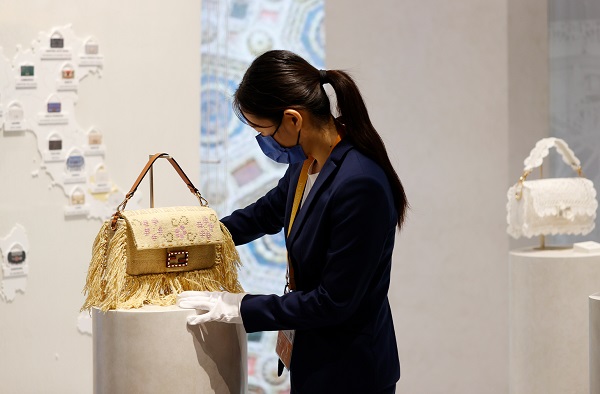
The upmarket stores across Asia had expanded rapidly in response to luxury brands increasing their footprint to capture domestic demand with travel corridors having shut down during the pandemic years. All the way from Thailand to South Korea, the quick shift toward domestic consumption made Western brands rethink their global retail footprint and distribute their investment in new ways. However, as the pandemic ebbs out, the same Western brands are now trying to figure out how best permanent repatriation can be made in the Asian market as the stakes get higher.
Experts feel, by 2025, Asian consumers are expected to account for more than half of the global luxury goods market. The proportion of spending that each nationality makes at home compared to the proportion they make abroad needs to be focussed on. Global consultancy company, Bain & Company forecasts now with a dip during the pandemic, Asians will make up between 55 and 64 per cent of total spending, up from 43 per cent in 2019. While the Chinese and Japanese will remain the two biggest spending nationalities, others too are on the rise. The luxury fashion industry’s collective efforts to rope in Asian customers in their own country have accelerated with premium brands pulling out all stops to make this work.
Local high-profile events help domestic consumption
Hosting fashion shows and having famous local celebrities and models endorsing products are some of the ways to keep the buzz going. French luxury fashion house recently cast Asian models on the runway and its creative collaboration with Thai film director Sivaroj Kongsakul lured high-profile Thai celebrities such as Urassaya Sperbund and Mario Maurer as well as South Korean actor Park Bo-gum to the red carpet at the mall. Christian Dior’s also had its first fashion show in South Korea in April, to forge new powerful ties with this country. Dior also recently presented events in Ho Chi Minh City, Vietnam, and Bali in Indonesia. Not to be outdone, Burberry took its TB Monogram pop-ups on tour, hosting events at holiday destinations in South Korea and Singapore.
As Thailand’s Chadatip Chutrakul, CEO of Siam Piwat Group points out, during lockdowns, demand from affluent local customers helped compensate for most of the loss of international shoppers. The decline in tourists made them change strategy to focus on local customers’ needs and requirements, allowing them to build a robust domestic market. The Siam Piwat Group owns high-profile shopping centres in Thailand, where the overall luxury market sales are on a meteoric high. Churakul says, over the past two years, there has been no decline in luxury spending — only a triple-digit increase, as the result of the consolidation of local Thai spending in the domestic market.
Although in India, the effects of repatriation is yet negligible, Mukesh Ambani , the chairman of Reliance Industries is building at least one new luxury mega-mall, Jio World Plaza, which is expected to include dozens of premium label boutique stores from Louis Vuitton to Gucci, to cater to the growing demand for premium brands. With local stores in the big cities across Asia having evolved to very high standards of fit-outs as well as offering a varied global product portfolio of the latest trends, the apparel repatriation game is going to be a tricky one.