FW
Alashair Wilis roped in as the new Chief Creative Officer of Adidas
Alashair Willis has been appointed as the new Chief Creative Officer of sportswear giant Adidas
As per a Fashion Network report, in this role, Willis will be responsible for the creative direction of the global brand and its three major labels – Performance, Originals, and Sportswear – to deliver a unified Adidas brand experience.
Willis has been involved with Adidas since 2005, most notably through his role in the concept and development of Adidas by Stella McCartney in partnership with Stella McCartney. He is responsible for building a strong understanding of the company’s consumers, brand, labels, and categories through his work on a number of projects.
Willis was earlier employed as the creative director of British fashion heritage brand, Hunter. He was responsible for transforming the small single product business into a multi-category global fashion brand, and as co-founder of the trailblazing Wallpaper* Magazine.
Rising shipping costs, geopolitical issues drive US fashion companies to Latin America
The importance of manufacturing in fashion was reemphasized in the last two years as the pandemic and US-China trade war disrupted production in China and other parts of the world. Virus flare ups continued to disrupt production across countries like Italy and Vietnam. Besides, manufacturers in countries like Ukraine are also contending with geopolitical tensions.
Brands diversify sourcing to nearby
To deal with these issues, fashion brands are increasingly adopting the nearshoring. They are diverting supply chains to countries like Mexico, one among emerging popular sourcing destinations for US brands. Manufacturer of intimate clothing Gelmart sources not just from Mexico but also Columbia and Brazil, says Levy Limpert, Chief Marketing Officer.
Brands are also plagued by rising shipping costs from China which has skyrocketed to $18,000 for a single shipping container, says Raine Mahdi, Founder, Ziplox a logistic company. Shipping costs from Mexico to the US have remained constant at only around $5,000, he adds. Moreover shipping times from China to the US have also doubled to 60 days compared to Mexico that remained constant at 5-10 days. Imports from China also attract 25 per cent tariffs while imports from Mexico comes free due to the FTA between the US and Mexico, adds Mahdi.
Apparel imports from Mexico rise to $7 billion
With more US companies seeking closer manufacturing hubs, imports from Latin America are likely to rise, says a report by the Women’s Wear Daily. US’ apparel imports from Mexico are likely to rise to $7 billion with knitwear, T-shirts, polo shirts, lingerie, underwear and socks’, dominating the export basket, explains Raul Garcia, Mexico WTC.
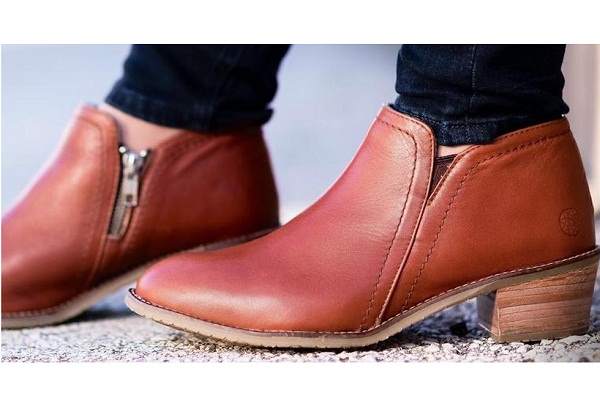
Realizing the benefits of nearshoring, manufacturers in Mexico are setting up production bases closer home, points out Eugene Furman, Chief Marketing Officer, Xena, a workwear brand. The brand manufactures shoes in Mexico and plans to stay as close to North America as possible. Manufacturers are also relying on more than one production base. They are diversifying production to countries like India to remain unaffected by local issues, adds Fuman
American Eagle Outfitters H1 revenues to decline
The H1 FY2022 revenues of American Eagle Outfitters Inc are expected to decline due to a surge in freight expenses and fading of benefits from federal stimulus.
The apparel chain faced uneven inventory flow in its high –margin Aerie leggings during the latter half of 2021 despite using pricier air freight to circumvent factory closures in Vietnam.
However, American Eagle expects earnings to improve in the second half of this year as it does not plan to use elevated air freight.
The company also plans to discount more in the spring season after historically low levels last year, when the roll-out of federal stimulus checks enabled customers to spend more on its clothes and accessories.
In the fourth quarter ended January 29, total net revenue increased by 17 per cent to $1.51 billion, in line with expectations, according to IBES data from Refinitiv.
American Eagle's namesake division posted a 11 per cent rise. Its Aerie line, which makes activewear, swimsuits and bralettes, recorded a 27 per cent jump.
The US retail industry has been wrestling with soaring freight prices for several months, and major logistics operators are expecting congestion, tight capacity and high freight rates to persist well into 2022. Rival Abercrombie & Fitch Co has also warned of weaker margins in 2022.
Puma signs Emma Kimiläinenfor 2022 Season
Sports company Puma has signed Finnish driver Emma Kimiläinen for the Puma W Series Team in 2022.
In 2021, Puma Motorsport tailored racewear specifically for female drivers for the very first time. As part of the company’s women’s platform, She Moves Us, PUMA will continue to supply bespoke racewear during W Series’ third on-track season. PUMA, which is a partner of some of the most successful names in motorsport, has supplied high-performance, flame-retardant racewear for W Series’ drivers since the inaugural season in 2019.
Emma Kimiläinen has won two races in her two seasons with W Series. Her victory at Spa-Francorchamps in Belgium last August kicked off a run of four consecutive podium finishes, which saw the 32-year-old end the season in third place in the championship.
She will now look to take her excellent form into the 2022 W Series season, which consists of support races at eight Formula 1 Grand Prix weekends, starting in Miami, US, in May. The PUMA W Series Team finished sixth in last year’s inaugural teams’ championship and Emma’s team-mate will be announced in due course.
Puma’s campaign “She Moves Us” wants to empower girls and young women through sharing stories and joint efforts to impact girls and women’s rights globally.
Over 25,000 visitors attend inaugural Istanbul Fashion Connection
More than 25,000 visitors from about 100 countries attended the kick-off event of Istanbul Fashion Connection. Over 600 companies presented their collections on more than 35,000 square meters of exhibition space and provided information about their creative collections and production capacities in the areas of womenswear, menswear, kidswear, denim, shoes, leather and fur, lingerie and bridal and evening wear.
The collections of the suppliers were presented in a clearly structured manner in booths with showroom design in eight halls of the exhibition center. Leading representatives of the apparel industry for men and women such as Cross, Climber BC, Lee Cooper and In City, Tugi for kids, Ferelle, Armofur and many more for leather & fur garments exhibited in Halls 2, 4 and 8 with shoes and accessories such as La Pinta and Bay Şapkacı which also complemented the product range.
The bridal and occasion wear area was concentrated in Halls 1 and 3, top lingerie and hosiery companies were presented in Halls 9-10 and 11. EKOTEKS, the official institute in Turkey for the development and awarding of internationally valid sustainability certificates also attended IFCO, holding seminars on sustainability and environment in addition to its booth area.
Despite the pandemic, Istanbul Fashion Connection registered more than 25,000 visitors from over 100 countries like Russia, Ukraine, UK, France, Germany, Poland, and further EU countries, Middle East and North Africa, USA etc.
The new fashion collections, combined with the ideal near shore capacities, experienced high demand and contributed to excellent business activities. For trade and industry, Istanbul Fashion Connection was a unique opportunity for a face-to face meeting on an international platform. All trade channels were represented at the fair, from large shopping mall and department store groups to wholesales and international retail chains or online platforms.
Lenzing Group’s inaugurates second supply chain solutions hub in Surat
The LenzingGroup, inaugurated its second supply chain solution center – The Lenzing Hub in Surat. The hub will serve as a nerve center for textile manufacturers and traders located in Gujarat and neighboring states, allowing them easy access to Lenzing’s supply chain and product solutions. The initiative will fortify Lenzing Group’s presence within India’s textile capital and link the supply chain and brands looking to adapt sustainable fibers that are need of the hour.
Located in UdhanaDarwaza of Surat, the hub is spread across 850 sq. feet and is equipped with a team of commercial and technical experts. The hub will display Lenzing Group’s specialty fibers solutions, it will house the products and innovations created using TENCELTM branded lyocell and modal fibers, Lenzingtm Ecoverotm specialty viscose fibers and carbon-zero Tenceltm branded fibers to attract both buyers and supply chain experts. The hub would also display product samples that have been made in collaboration with top designers and brands across India and the globe, seen at key fashion events, on a regular basis. This platform will bring forward global innovation capabilities to help to build on Lenzing’s ongoing conversation on sustainable fashion in the Indian Textile industry. Additionally, the hub would cater as an information and support center for textile suppliers, garment makers, designers and traders to enable quick solutions.
The hub will play a pivotal role in offering cost effective supply chain solutions for yarns in coordination with Lenzing’s spinning partner mills as well as technical guidelines and solutions creating value added fabrics & end products. Further, creative and innovative fabric mills widen their presence through having their fabrics promoted on to Global Platforms using Lenzing’s worldwide network.
Messe Frankfurt suspends events by Russia subsidiary
The management of Messe Frankfurt has decided to suspend events of its subsidiary Messe Frankfurt RUS until further notice.
The Russian invasion of Ukraine poses an unprecedented threat to peaceful coexistence in Europe. Messe Frankfurt supports all sanction measures of the German government. Against this backdrop, the Messe Frankfurt Board of Management decided to suspend events of its subsidiary Messe Frankfurt RUS in Russia until further notice.
Messe Frankfurt is the world’s largest trade fair, congress and event organiser with its own exhibition grounds. The Group employs approximately 2,300* people at 30 locations around the globe.
The organizer has been active in the international trade fair business, both in Frankfurt and worldwide, for some 800 years. From automotive to logistics, from textiles to music, from energy efficiency to security, from homes to beauty – Messe Frankfurt’s program of trade fairs, congresses and other events is extremely comprehensive. It meets highest quality standards and create global interfaces between the industry, commerce, politics, services and consumer goods sectors.
Lenzing completes expansion of lyocell plant in Thailand
World’s leading supplier of wood-based specialty fibers, Lenzing has completed its key lyocell expansion project in Thailand. The new plant, with a nameplate capacity of 100,000 tons per year, started production on schedule and will help to even better meet the increasing customer demand for TENCEL™ branded lyocell fibers.
The construction of the plantstarted in the second half of 2019 and proceeded largely according to plan, despite the challenges arising from the COVID-19 pandemic. The recruiting and onboarding of new employees has been successful. Investments (CAPEX) amounted to approx. EUR 400 mn.
Lenzing will continue to expand its production capacity for lyocell fibers in line with its sCore TEN strategy, which aims to generate 75 percent of its fiber revenue from eco-responsible specialty fibers such as TENCEL™, LENZING™ ECOVERO™ and VEOCEL™ fibers by 2024. The Thailand site offers space for several production lines. The investment in the first phase already includes general infrastructure that would benefit future expansion. However, Lenzing will continue to look for opportunities to expand lyocell production in other parts of the world too.
H&M Group defers all sales in Russia
H&M Group has decided to temporarily defer all sales in Russia. The group has temporarily closed all stores in Ukraine to ensure the safety of customers and colleagues.
The group is continuously monitoring and evaluating the situation. Representatives of the company are in dialogue with all relevant stakeholders.
H&M Group also regularly donates clothes and other necessities to Save the Children and to UNHCR.
Founded in Sweden in 1947, H&M’s offers fashion and quality at the best price in a sustainable way. In addition to H&M, the group includes the brands COS, Monki, Weekday, & Other Stories, H&M HOME and ARKET as well as Afound. The H&M group has 54 online markets and approximately 4,800 stores in 75 markets including franchise markets. In 2021, net sales amounted to around SEK 199 billion.
Automatex supplies automatic fitted sheet systems to European customers
Automatex, a member of TMAS, the Swedish textile machinery association, has recently supplied a number of its latest Industry 4.0-enabled automatic fitted sheet systems to customers in Europe.
The Automatexmodel FDC-77735-B90D-EC system enables the full production and folding of six fully-fitted sheets per minute – approaching 3,000 an average shift – overseen by a single operator and eliminating many of the repetitive cut and sew operations of the past. Elastics insertion – usually a highly complex labour-intensive task – can be on all four sides of the sheet, two, or simply within the corners, depending on customer specifications.
Fabric is fed directly from the roll, with precise edge guiding and tension control, into a length-wise hemming and elastics insertion section with adjustable tension devices, before being measured and cross cut in an accumulator. It is then transferred to the cross hemming section, again with elastics insertion.
A side drop forming unit pre-forms the sheet before it is transported by a multi-axis clamp conveyor system to the corner sewing section, consisting of left and right overlock sewing heads. Here, the corners are robotically sewn at 90 degrees and labels are also attached when specified. Further customized systems for folding are also supplied as required