FW
Shein to sponsor 2022 Stagecoach Festival in California
Global fashion retailer Shein will sponsor the 2022 Stagecoach Festival that will be hosted at the Empire Polo Club in Indio in California. The Shein Saloon will offer signature Sheglam Beauty and Freckle Bar for glam touch-ups, Cowboy Karaoke, wild rides on Shein’s Bedazzled Bull, and a Customizable Rhinestone Cowboy Hat Station. Attendees will also be able to enjoy themed cocktails at the bar in partnership with Desert 5, one of Los Angeles' favorite watering holes.
Maxine Silva, Senior Director- US Brand PR, Shein says, the e-commerce company will offer a unique shopping experience at the biggest country musical festival in the nation. The SHEIN X Stagecoach gear is available for fans across the US after the festival.
Shein has launched a collection in collaboration with the Stagecoach Festival that can be purchased on us.shein.com. The collection features the hottest trends in western fashion such as cowboy boots, floral dresses, denim shorts, graphic tees and more.
Mimaki to showcase latest printing solutions at ITM 2022
Leading brand of wide-format inkjet printers and cutting plotters, Mimaki Eurasia will showcase its latest and most preferred printing solutions at ITM 2022 to be held at Tuyap, Turkey from June 14-18, 2022. As per a Textile Value Chain report, the brand will showcase four textile printers at their booth. These are: TS100-1600 sublimation transfer printer, TS55-1800 sublimation transfer printer, Tx300P-1800B direct-to-textile printer and TS330-1600 sublimation transfer printer.
Mimaki’s TS55-1800 sublimation transfer printer reduces operating costs thanks to the new 2 litre Sb614 inks and increases productivity with a single pass printing speed of 140 sq m per hour. TS100-1600 is sublimation transfer printing solution for the entry segment. Reaching print speeds of up to 70 sq m per hour, TS100-1600, is equipped with all the necessary functions for low-volume print production on demand. TS100-1600 uses a media take-up system that supports rolls up to 45 kg and has the power to enable mass production at the same time.
The TS330-1600 sublimation transfer printer will also be presented at the Mimaki Eurasia booth. This innovative printer in the 330 Series can reach speeds of 135 sq m per hour. It gurantees error-free color reproduction and superior color and print quality with its innovative Mimaki Weaving Dot Technology (MWDT). Mimaki will also showcase the Tx300P-1800B direct-to-textile printer at its booth.
This blanket printer enables printing of high-quality large volumes on flexible fabrics with a printing speed of up to 53 sq m per hour. The printer can work with sublimation, disperse, reactive, acid and pigment dyes and is preferred for dozens of different applications from fashion and clothing products to upholstery fabrics, from bedspreads to curtains.
Mimaki will also showcase the textile products produced on these printers in the special exhibition area at the booth.
4th Denimandjeans to be held in Bengaluru
After a three-year gap, the fourth edition of Denimsandjeans will be held in Bengaluru on June 8-9, 2022. The theme of the show is: Greenable, a term originating from the amalgamation of two words ‘Green’ and ‘Comfortable’, as a response to adoption of sustainable practices by global brands and raising the bar for sustainable productions in their supply chain.
Indian brands are monitoring the operations of their supply chain partners. Along with that a more sedentary lifestyle has caused changes in consumer habits that also reflected itself in the request of more comfortable clothes. Such different needs also caused an increased request for fibers, weaves, sewing and finishing that reduce the wear stress on the body.
Major corporates joining the show are: Arvind, Bhaskar, LNJ, Ginni, Hyosung, Nandan, Jeanologia (from Spain), Global Wash House , VAV, KG Denim, Spectrum, Lenzing, Oswal Denim, Jindal, Raymonds, SF Dyes, Blu Connection, Siyaram, Anubha, WEKO (from Germany), Ultra, Deridesen (from Turkey) , Nandan, Kemin, Fashion Accessories, Ramsons, Suryalakshmi, Fibro Organic, Lion Fabrics, Officina39 (from Italy), Texenzyme, Synergies Bangladesh, The Lycra Company, Vinod Denim, etc
Columbia Sportswear to expand Kentucky distribution center
An innovator in active outdoor apparel, footwear, accessories and equipment, Columbia Sportswear Company (CSC), plans to expand capabilities at its Robards, Kentucky distribution center. As per a Textile World report, CSC plans to add 175 full-time associate jobs and supervisory opportunity at the facility with an investment of approximately $4 million.
The new jobs will pay highly competitive rates and benefits, and are expected to average approximately $24 per hour, inclusive of benefits. CSC’s continued investment in Kentucky is a testament to the company’s commitment to the people living in the state, says Jonathan Dixon, State Representative.
Alonzo Plater, Vice President, Global Distribution adds, investment in this area will help the company achieve its goal to deliver products to customers in time.
Third SAF to showcase responsible financial solutions for Bangladesh fashion industry
The third edition of the Sustainable Apparel Forum (SAF) aims to showcase responsible financing solutions for the Bangladesh fashion industry. As per a Spin Off report, government ministers and advisors, the European Union, UN bodies, brands, global fashion campaigners, brands, manufacturers and industry leaders will participate in the Forum. They will discuss ways for the second-largest garment exporting hub in the world, Bangladesh to bring about a real change in the world and become one of the most responsible apparel sourcing destinations.
The forum will be attended by senior representatives from globally renowned recycling and renewable energy companies. They will highlight issues like climate action, environmental social and governance (ESG) and green finance, purchasing practices, circular economy, and regulatory reforms. The initiative will provide a platform to more than 50 top speakers, as well as 20 sustainable technology players exhibiting at the event, from 20 countries. Speakers include Tawfiq-e-elahi Chowdhury, Bir Bikrom, Advisor to the Prime Minister of Bangladesh; Salman F Rahman, Member of Parliament, Adviser to the Prime Minister of Bangladesh on Industry and Investment; Tipu Munshi, Commerce Minister, Bangladesh; Begum Monnujan Sufian, State Minister for Labor and Employment –Bangladesh and Saber Hossain Chowdhury, Chairman, Parliamentary Standing Committee on Ministry of Environment, Forest and Climate Change of Bangladesh, etc.
Continue RCET and other support policies for the textile industry, urges APTMA
APTMA has urged Pakistan’s new Prime Minister to continue the Regionally Competitive Energy Tariff (RCET) for the textile industry with RLNG price set at $6.5/MMBTU and electricity at 7.5 cents/ unit, immediate provision of gas connections to the new units, extension of load for enhanced capacity, revival of sick units, and reaffirmation for export sector priority in gas allocation.
As per a CCF Group report, APTMA has also urged the Prime Minister to ensure cotton support price for this season was fixed at Rs 8,000 maund. It also demanded a review of duty on Polyester Staple Fibre and removal of anti-dumping duties to enable Pakistani export products to compete internationally. Implementation of a weighted average cost of gas in letter and spirit, enabling uniform and rational gas or RLNG prices across the country, were the some of the other demands of APTMA.
APTMA says, recent 61 per cent growth in textile exports was enabled by the implementation of Regionally Competitive Energy Tariff (RCET), investment of over $5 billion in expansion and establishment of 100 new textile units, resulting in enhanced export capacity of $ 500 million per month.
Irfan Iqbal Sheikh, President, Federation of FPCCI, believes, the decline in the country’s cotton production is threatening its economic security. To make its textile products more competitive, Pakistan needs to produce the entire raw materials within the country. It needs to divert cultivation from other crops like sugarcane. This will enable Pakistan to produce an additional five million bales per year and save $5 billion, opines Sheikh.
‘Bangladesh wants to cooperate and collaborate instead of competing with India,’ BGMEA President
Bangladesh apparel industry has bounced back from the pandemic with order books full and deliveries happening across the globe. Expecting to touch $41 billion in apparel exports in fiscal 2021-22, the country is looking to regaining its position as the No 2 apparel exporter in the world. Faruque Hassan, President, BGMEA, speaks to Sanjay Chawla, Global Convener, FashionatingWorld about how the industry coped with the pandemic and future challenges as it graduates to becoming a developing country.
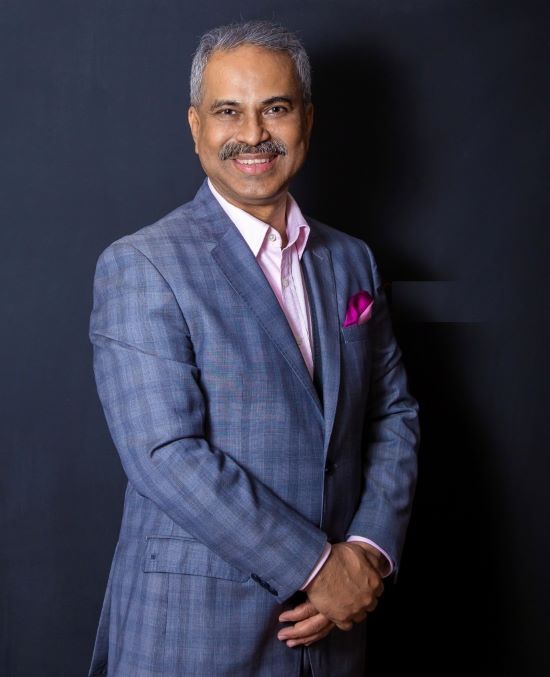
Please throw some light on Bangladesh garment industry?
Bangladesh apparel sector faced many difficulties during the pandemic with massive supply chain disruptions, lockdown in various countries, order cancellations worth over $3.6 billion among others. However, we have bounced back and are working closely with all brands and developing partnerships with government.
Bangladesh financial year is from July to June. In fiscal year 2018-19 we exported apparel worth $34.13 billion which reduced below $28 billion in 2019-20, a fall of over $6 billion due to Covid. In fiscal 2020-21 our exports climbed up $3 billion and touched $31.43 billion. In fiscal 2021-22, we expect to exceed $41 billion. In fact, we have already crossed $33 billion in the past nine months and in the tenth month we are looking to reach $41 billion.
We have received good orders but the only challenge is high freight cost across the world. We are addressing issues at Chittagong other ports, talking to shipping companies and buyers.
Meanwhile, we are diversifying our products. As our garments are predominantly cotton-based, we looking to increase cotton export. With India, we can collaborate more as I strongly believe India has a strong position in yarns, fabrics, chemicals, dyes and machinery. Hence, Bangladesh wants to cooperate and collaborate instead of competing with India. The idea is to complement each other and grow together.
We expect investments to increase as Bangladesh is a good sourcing country and we have duty free access to Europe and other developed countries. India can take full advantage and export their goods through Bangladesh so that they can convert their fabrics and yarns into garments and add value. Indian fabric suppliers, yarn and fabric manufacturers should visit Bangladesh more frequently for marketing as there are no Covid related restrictions here. We would like to buy more yarn and fabric from India.
During Covid, when Bangladesh faced order cancellations and non payment of dues, what was BGMEA’s role in the industry?
We collected information on dues and contacted buyers through our government and embassies. We have recovered most payments and cancelled orders were placed once more, deliveries were made. Yet, some buyers went completely bankrupt and their issues have not yet been settled. We are helping factories recover their payment but one has to work as per bankruptcy laws. Some BGMEA members have lost a lot of money because of this. We are more careful now, most of these incidents happened during the first Covid wave. The second and third wave was managed better.
When these problems cropped up, there was talk of addressing these issues in future business contracts. Is there any progress on that front?
We have discussed the issue with WTO, European Union and met the President and senior members of American Apparel and Footwear Association. Things are changing and supply chain is improving. In Bangladesh, we are setting up backward linkages so that we do not suffer in future.
Recent UN and WTO reports say Vietnam is now the second largest apparel exporter, ahead of Bangladesh, your take?
From March 25 to May 15, 2020 almost for 45 to 60 days factories in Bangladesh were closed due to lockdown. Therefore, in 2020 Vietnam export figures were higher than Bangladesh. However, 2021 statistics are yet to be released by WTO, it comes out in July. We believe we are much ahead of Vietnam. In fact, only for three to four months our exports were lower than Vietnam but we bounced back.
What are the major challenges Bangladesh garment industry is facing today?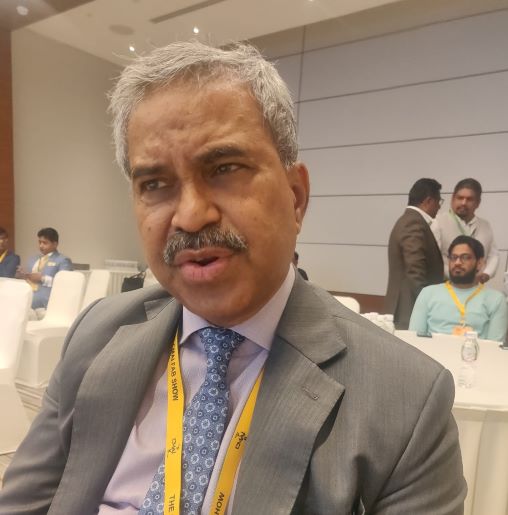
As we grow, we are building our infrastructure. Like every supply chain, we are working on our port facilities, container depots etc. The government has taken up many initiatives and the difference will be seen in 2022. Mega infrastructure projects like the Padma bridge, metro rail, Karnaphuli underground tunnel etc, will be operation in the next few years this will increase our competitiveness.
Numerous warehouses are coming up in collaboration with India in metro pole borders. We are also looking at three to four border points to boost trade with India, this will increase business for both countries. The other challenge is freight rates have increased abnormally. Also, cotton prices rise have impacted yarn and fabric costs.
India and China are Bangladesh garment industry’s biggest business partners. In future, will India gain more market share or will China grow bigger?
India is of our closest neighbours, so they can take advantage of their proximity. Bangladesh has a limitation as we don’t produce petrochemicals and India can take full advantage of that. Also, India has strong technical expertise in design development. Both countries can collaborate in yarn and fabrics by bringing it from India and converting it for export in Bangladesh thereby increasing export market share. Together, they can develop designs and make higher value products. Bangladesh is focusing on non cotton items. We had sent an 11 member delegation to Surat to procure man made non cotton fabrics. These companies can take full advantage and India will double market share.
Bangladesh raw material consumption from China has increased. Why has India not been able to increase its market share?
India has advantage but border trade needs to be more efficient. India has to be more price competitive. We want to give priority to India because they are our closest neighbour. Delivery from China is done either by ship or air but with India it can be done through all means of transport. So, we want to give priority to India. Year 2022 is important for us. We can increase our volume in 2023 and take it forward in 2024. We can increase our business with India and eventually India can cross China’s market share.
What impact will EU’s latest sustainability legislative have on Bangladesh exports to the EU?
We are taking it seriously because EU is our largest export destination. Export to the EU along with UK is 61 per cent, without UK it is 51 per cent. We hope to address this issue properly. Earlier too Bangladesh had handled it well. Hopefully, EU will give us enough time for transition
With cotton prices increasing in last few six months, how has exports been affected? Are manufacturers/buyers willing to pay higher prices to absorb escalating raw material costs?
Generally buyers are not ready to pay higher prices but this time they are paying for the increase in cotton price. But this is not sustainable. The abnormal high price of cotton is not good for the long term. Some price increase is good for the labour on the field; farmers too need better prices so that they are motivated to cultivate and harvest more cotton. But that doesn’t mean price rise should continue, otherwise demand and consumption will both fall. At the end, price rise will affect both farmers and manufacturers. At the same time, I am not for prices reverting back to original but there should be optimization. Then in the long term the business will be good for everybody.
How has Bangladesh industry adopted digitalizing in garment industry?
We are working on this aspect with automation and machinery upgradation. We have invested a lot of money on new technologies. This will help us reduce manpower as wages are increasing. We will be more competitive and efficient. We have developed many training processes for human resources which will help us in the long run.
What are BGMEA’s new initiatives?
BGMEA has started its apparel diplomacy. Two years ago, when I took over the as the President, the main focus was to run the industry and business smoothly with pandemic spread. We have overcome that and bounced back. Since last September, we have started overseas travel as a part of apparel diplomacy. I went to America and Canada and met brand partners and diplomats. I also went to Europe and UK because Bangladesh will graduate from least developed country to a developing country, so there are a lot of challenges and opportunities that we need to tap.
A mega event ‘Made in Bangladesh Week’ will be held from November 13 to 18, 2022. For this, we are visiting top customers. This event will coincide with IAF’s 37th Annual Fashion Convention in Dhaka. This year, IAF commemorates 50 years and the celebrity summit is being held in Dhaka. An Apparel Expo is also on the cards during the same time integrated with awards ceremonies.
An interesting feature we noticed during the pandemic is we were unable to do online sales from Bangladesh. We are looking at how to take this forward. This needs amendment in our customs and the financial regulations. We are working on it so that in future we can sell online and deliver goods across the globe.
Tamil Nadu announces plans for mega textile and apparel park
R Gandhi, Minister for Handlooms and Textiles announced plans to develop a mega integrated textile and apparel park over 1,000 acre in Virudhunagar district of Tamil Nadu.
The ministry will sign anMoU with the National Institute of Fashion Technology to create 500 new designs per year at a cost of Rs 50 lakh, to boost sales of handloom products. Skill development training will be provided to 50 handloom weavers through the National Institute of Design at Rs 50 lakh.
To improve productivity of Tamil Nadu, zari renovation work will be undertaken for Rs 2.50 crore. To ensure quality of handlooms, a TN Handloom Authenticity Body will be established at a cost of Rs 1 crore. To enhance capacity of power looms, 50% subsidy will be given to install electronic panel boards, for which `6 crore will be allocated.
Measures will be taken to provide geo-tagging for handlooms and power looms at a cost of Rs 10 crore. Besides, the department is trying to get GI tags for Negamum saree, VeeravanallurChedibuttasaree, Woraiyur cotton saree and other unique handloom varieties.
An exclusive showroom ‘Handlooms of India’ will be established for Rs 10 crore, while Rs 1 crore will be allocated to prepare a detailed project report to establish a textile city in Chennai. A technical advisory committee will give suggestions for improvement of textile industry. To preserve and protect traditional handloom products, the department has proposed to digitalize and electronically document such products.
Sitip presents latest innovations in embossing at Performance Days
At Performance Days this year, Sitip presented its latest innovations focusing on the embossing technique, a particular system of mechanical processes that now can also be used on the recycled items from the Native Sustainable Textiles line, a technology that is applied to fabrics produced with recycled yarns and chemicals with low environmental impact, implementing the GRS standard (Global Recycle Standard), result of the journey towards sustainability implemented by the company.
The collection of embossed designs combines performance, style and sustainability: thanks to special mechanical processes that combine heat and pressure, the fabric is embossed with geometric and design motifs for a more structured and palpable texture perfect for fashion and athleisure.
The fabrics displayed by Sitip included Native-Cosmopolitan Oslo, afine gauge circular fabric made with post-consumer recycled yarns, 4-way stretch, gives UV protection, skin comfort, no-see-through effect and perfect fit. Native-Cosmopolitan Belfast, a fine gauge 4-way stretch and double-knit fabric made with post consumer recycled yarns, no-see-through effect and soft hand and Native-Cosmopolitan Paris Gz Design Carreaux/Seersucker/Gale, a back brushed fabric in fine gauge made with post-consumer recycled yarns and chemicals with a low environmental impact, 4-way stretch, no-see through, comfortable on the skin and easy care.
Pure London launches new campaign and website
To be held from July 17-19, 2022 at the iconic Olympia London, Pure London has launched a vibrant new campaign and website on the eve of its first trade showcase of fashion brands, creative minds, and inspiring trends in over two years.
Pure London will showcase its Spring/Summer 2023 collections in London with a campaign reflecting the show’s vibrancy and confidence. Color blocking, static electricity effects, and an electrically charged color palette of dragon fruit pink, clear day blue, yolk yellow and absinthe green contrasts with striking black and white photographic imagery from historic Pure London catwalk shows.
Visitors to Pure London will discover a new floorplan edit with five destinations: Womenswear, Footwear, Accessories and Pure Jewel with Design Lab across these destination areas showing the newest and most innovative collections, and Pure Origin. A host of brands will showcase their Spring/Summer 23 Collections including One Hundred Stars, Brodie Cashmere, Onjenu, Lily & Me, My Doris, Meraki Beach, Bl^nk, Jayley, Alpe, Sonatachic, JokoEdu, ArtLove, Vilagallo, Envy Jewellery, ShanShan, Tale The Label, Italian Closet, Asiana, etc.