


FW
Lenzing Group’s Q1 FY22 revenues grow by 25.7 per cent
In the first quarter of 2022, the Lenzing Group was significantly affected by the extreme developments in global energy and commodity markets. Its revenue grew by 25.7 percent year-on-year to reach € 615 million in the first quarter of 2022, primarily due to continued high demand for wood-based biodegradable specialty fibers and higher fiber prices. Specialty fibers’share of revenue currently stands at 73.3 percent.
The earnings trend reflects trends in energy, raw materials and logistics costs, although the company’s continued focus on measures to improve structural earnings in all regions mitigated this negative effect. Earnings before interest, tax, depreciation and amortization (EBITDA) decreased by 7 percent year-on-year to € 88 mn. The EBITDA margin reduced from 19.3 to 14.3 percent. Net profit for the quarter grew by 14.3 percent to €34.1 million, while earnings per share amounted to € 0.87 (compared to €1.06 in the first quarter of 2021).
Gross cash flow increased by 2 percent to €86 mn in the first quarter of 2022, mainly due to the earnings trend. Cash flow from operating activities decreased by 28.5 percent to €79.7 milllion. Free cash flow amounted to- € 102.9 million (compared to - €99 mn in the first quarter of 2021, particularly due to investing activities in connection with the projects in Thailand and Brazil. Capital expenditure on intangible assets, property, plant and equipment and on biological assets decreased by 13.6 percent to € 182.7 million, of which approximately 44 percent was financed from cash flow from operating activities.
R&B Denim’s profits surge in 2021-22
BSE listed R & B Denims reported Rs 2,844 million turnover in FY 21-22 with the Profit before Tax (PAT) growing 97 per cent Y-o-Y to Rs 280 million. The yearly PAT rose 108 per cent YoY, to Rs 217 million.
In FY 21-22, R & B Denim participated in Gartex Denim Show at Delhi as well as in Cairo that helped them add to current customer base and an increase in demand for products in overseas and domestic markets. The company’s exports grew 225 per cent from 220 million in FY 20-21 to 720 million in FY 21-22.
In domestic market, the company’s selling price increased from Rs 140 in FY 2020-21 to Rs 165 mainly due to selling premium quality denims and increase in profitability. Efficient inventory management helped the company increase sales, maintain prudent working capital and increased productivity. The company increased the proportion of premium products thereby strengthening margins.
Florence hosts two-day e-P summit for the first time
Launched by Pitti Immagine more than decade ago, e-P summit is being held in Florence, Italy for the first time. The event is on at the Stazione Leopolda from May 4-5 under the leadership of a new scientific director, Rinaldo Rinaldi, Supply Chain Management Professor, University of Florence. Sponsored by four leading tech players, Accenture, Google, Meta and mobile carrier Tim, e-P’s theme is: ‘Shaping the Digital Future of Fashion.’ It is hosting 20 meetings over the course of two days, including presentations, panel discussions, and direct dialogue between the fashion and luxury industries with startups.
The event addresses topics ranging from digital development in the creative and production process to the shift towards a digital and eco-friendly environment, as well as the use of artificial intelligence, data and the cloud to analyze consumer behavior. It will also focus on social media strategies, the integration between e-commerce and traditional distribution, and opportunities of blockchain technology, NFTs, and the metaverse.
The summit brings together a number of fashion executives and leading tech companies such as Max Mara, Pinko, Loro Piana, La Rinascente, 3rand Up Solutions, Assyst, Besight, Crea Solutions, Dyna Brains, Hyphen - Group, Joor, Lectra, etc.
India’s RMG exports grow 16.42 per cent in April
India’s RMG exports increased 16.42 per cent to $1,510.77 million in April 2022, compared to 1,297 million in the corresponding month last year. Exports of cotton yarn, fabrics, made-ups, handloom products, etc went up 5.05 per cent in April to $1,119.02 million as against $1.065.20 million in April last year.
India’s merchandise exports rose by 24.22 per cent to $38.19 billion in April this year against $30.75 billion in April last year. Merchandise imports increased by 26.55 per cent in April to $58.26 billion over $46.04 billion in April 2021. The trade deficit in April was $20.07 billion, according to the Ministry of Commerce and Industry . Value of non-petroleum exports grew 12.32 per cent in April 2022 to $30.46 billion over $27.12 billion in the same month last year.
Petroleum products exports grew by 113.21 per cent, electronic goods exports increased 64.04 per cent while chemicals exports increased by 26.71 per cent in April this year. The value of non-petroleum imports grew by 9.87 per cent to $38.75 billion in April, t over similar imports worth $35.27 billion in April last year.
Kearney ranks Patagonia, Levi’s, The North Face in 2022 Circular Fashion Index
Kearney’s 2022 Circular Fashion Index names Patagonia, The North Face and Levi’s as the most committed brands to fashion circularity. As per a SGB Media report, the study says, only 7 per cent brands regularly use recycled materials, 54 per cent of companies use them for select items or product features, while 39 per cent use non-recycled materials.
Patagonia, Levi’s and The North Face improved their scores from 2020 to 8.50, 8.20 and 8.05 respectively. The improvement can be attributed to Patagonia’s equipment rental program and enhanced use of recycled fabrics. Levi’s launched a rental-only capsule collection of up-cycled denim made with vintage jeans under the Ganni brand. The North Face slightly improved its share of recycled fabrics.
Esprit was ranked fourth on the index followed by OVS, Gucci, Gant, Coach, Lululemon Athletica, and Lindex. The highest three newcomers tracked in this year’s ranking were Coach at #8, Lululemon #9 and Columbia Sportswear, which made it to the top quarter.
Lululemon ranked third in the sports and outdoor segment, following Patagonia and The North Face. The other companies ranked in this segment included Columbia, Decathlon, New Balance, Adidas, Nike, Mizuno, and Merrell.
Online apparel prices grow faster than offline in the US
Online apparel prices are rising faster than offline apparel prices in the US. In March 2022, apparel prices increased 16.3 per cent Y-o-Y and 0.3 per cent M-o-M, reveals online inflation data by Adobe. Reversing longstanding pattern of seasonal discounts impacting online apparel prices, they outpaced the Consumer Price Index (CPI) in March.
Over the last 12 months, apparel has consistently outpaced CPI, which captures prices that consumers pay for goods offline. In February, apparel prices rose 11.0 per cent in the Digital Price Index (DPI), compared to 3.1 per cent in the CPI (indexed to 2014).
Powered by Adobe Analytics, the Adobe Digital Price Index analyzes one trillion visits to retail sites and over 100 million SKUs across 18 product categories. In March, 14 of the 18 categories tracked by the DPI saw YoY price increases, with apparel rising the most.
The DPI is modeled after the CPI, published by the US Bureau of Labour Statistics, and uses the Fisher Price Index to track online prices. The Fisher Price Index uses quantities of matched products purchased in the current period (month) and a previous period (previous month) to calculate the price changes by category. Adobe’s analysis is weighted by the real quantities of the products purchased in the two adjacent months.
Smaller brands will lead reshoring trend in the US
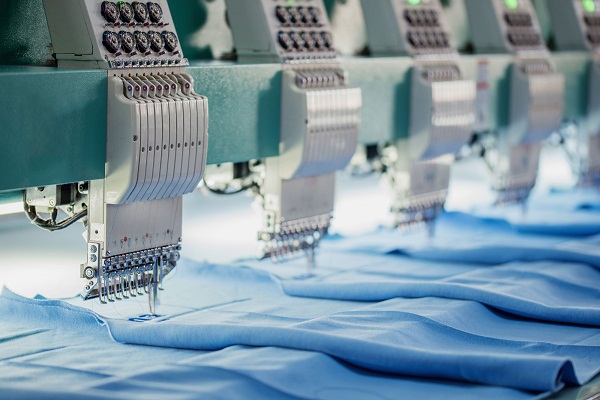
Intensified by the pandemic, supply chain woes are offering US brands new opportunities to bring apparel production back to the country. Many apparel makers had shifted production overseas in the 1990s mostly to China and few Asian countries that offered cheap labor, raw materials and lower operating costs. Now, with apparel manufacturing becoming more technically advanced and environmentally and socially conscious, manufacturers plan to reshore production back to the US. However, for this, they first need to reevaluate and renovate their supply chains. And as per a Fortune report, companies that seem most capable to achieve this are smaller, independent brands as they are better positioned to shift production back to the US.
Raw material shortage, high costs make reshoring unviable
Around 24 per cent of US manufacturers plan to reshore operations by 2025, says a ThomasNet report published in July 2021. However, they are incapable of reshoring as of now because of non availability of raw materials like fabric, zippers, and buttons within the country. Labor costs and overhead expenses too are an added burden which makes goods less competitive and profitable.
Covid outbreak has led to US apparel supply chains being completely destroyed and big companies are still struggling to find real-time solutions. The pandemic-induced factory and textile mill lockdowns, shipping disruptions and shifts in consumer buying patterns highlighted brands’ dependence on overseas production.
What’s more, big companies operating in the US cannot alter their production schedules as they produce millions of pieces at a time. However, smaller apparel companies can flow their products from as far as China. These brands also manufacture goods in smaller quantities to avoid using excess inventory. This enables them to sell more easily.
Innovation-key to reshoring by US brands
US brands cannot reshore production without innovating their products and processes. They are introducing innovative concepts like make-to-order and limited-edition goods to start reshoring. Brands are also digitizing fashion by using 3D designs for quicker and more efficient production. Automation is being done with made-to-order production and leveraging new technologies from innovators like Lectra, Shima Seiki, and Twine.
Innovations allow small brands to introduce pre-sale or limited-edition collections despite the small-batch production being more expensive. Product innovations enable them to build an emotional connect with consumers and highlight the benefits of slow fashion.
Smaller brands uphold their brand’s environmentally and socially conscious values by operating in small factories. Big brands consider reshoring only by engaging smaller US factories for prototyping, made-to-order goods, limited edition offerings, and upcycling, or leaning into digital experimentation, like NFTs and Web3.
Building own brands can help Sri Lanka’s apparel makers penetrate metaverse

Metaverse is emerging as the hottest trend in the Sri Lankan fashion industry with brands creating outfits existing either partially or completely in the virtual space Financial services company Morgan Stanley predicts, metaverse would add nearly 25 per cent to Sri Lanka fashion industry’s total earnings by 2030. It would be almost ten times Sri Lanka’s earnings from apparel exports in 2021.
Brands Dolce and Gabbana sold nine Non-Fungible Token (NFT) pieces worth $5.7 million while popular online game ‘Second Life’ held the first ever Metaverse Fashion Week on Valentine’s Day 2022.
Virtual apparels and ads on metaverse
Fashion brands are profiting through the metaverse by producing virtual apparel for digital avatars. In some cases, the items exist in metaverse but in others, they have a Real Life (IRL) counterpart. Fashion brands are also benefitting by advertising designs through metaverse equivalent of a retail outlet. They are organizing fashion shows like Decentraland’s Virtual Fashion Week, that allows one to virtually attend fashion shows and live music sessions at branded after-parties and buy and wear digital clothing directly from catwalk avatars
Enhancing Sri Lanka’s industry value
Yohan Lawrence, Secretary General, Joint Apparel Association Forum (JAAF) believes, metaverse may shape the next decade of fashion with Web 3, 5G and the Internet of Things, virtual and augmented reality, and NFTs and blockchain technology leading to entirely novel business models in fashion. Led by domestic multinationals like MAS, Brandix, Norlanka etc, the Sri Lankan apparel industry has grown into a high-value, highly complex industry within the global apparel supply chain. Science and technology have enabled Sri Lankan brands to produce more complex products such as the ‘Second skin’ E-knit range of intimates and athleisure lines, and more recently fem-tech and recovery wear, says Gihan Philip, Director Technology Commercialization, MAS.
These products were created after a considerable amount of research and development. However, brands are expanding their design capabilities with new investments in digitalization. It may also opt for creating fashion for the metaverse next, adds Philip.
Both brands and apparel manufacturers plan to collaborate for launching virtual collections with new and improved technologies, Phillip. says M&S has been engaged in scanning, imaging and simulation of materials. This enables the brand to generate authentic digital twins for its designs and make changes accordingly, he avers.
Metaverse facilitates social media involvement
Jeevith Senaratine, Director-Operations, Star Garments (Director of operations), points out, metaverse allows brands to simply scan a model and combine it with apparel designs to showcase them entirely virtually. Brands can also explore the benefits of social media to analyze consumer responses to particular designs, and alter their design accordingly.
Hirdaramani has benefitted from virtual designs and made significant investments in latest 3D-Fit software systems like: CLO, Browzwear, and Tuka Tech. This has increased its capabilities.
Brandix has installed advanced capabilities at its factory. It has introduced advanced motion sensing and seamless haptic actuator integration designs. Powered by Artificial Intelligence, these designs can measure the framework of an individual’s physique. Such technologies can create new applications in sports and fitness by integrating with virtual worlds, says Hasib Omar, Non-Executive Director, Brandix. v Another Sri Lankan apparel company Norlanka is adopting an asset-light business model. Owner of a few manufacturing facilities, the company, buys most of its capacity from SME partners. Currently, it develops only digital products for few of clients but is looking for opportunities to increase efficiency and add value for customers. Involved in digital sampling project, Norlanka has been able to clearly showcase every facet of a range to partners and buyers. It can produce both purely digital and hybrid designs for the metaverse, says Buddhi Paranamana, Chief Innovation Officer. These designs can also be used as NFTs in metaverse.
Currently, the world of metaverse is being explored mostly by high profile brands that are capturing most up-front value. To penetrate further, apparel makers need to build own brands and designers first.
Bangladesh agents illegally selling cotton meant for importers
On the pretext of supply delay caused by container shortages, a section of local agents of international suppliers have allegedly been selling cotton to parties other than original importers they have sales contracts with.
Despite the opening of LCs, local spinning mills are now facing a cotton crisis owing to an untimely supply of cotton as a number of local agents, through whom they placed the cotton import orders to international suppliers, have reportedly sold the key clothing raw material to others.
Spinners are not getting cotton shipments even though 3-4 months have gone past since deadlines ended. They are now trying to reach out to international suppliers, but in most cases, there is hardly any response.
To cope with the situation, some spinning mills are having to source cotton locally at higher prices. Cotton price has now increased to $1.65 per pound from $.95 six-seven months ago.
Bangladesh mainly imports cotton from Louis Dreyfus Company, Olam International and Cargill Cotton.
BTMA is planning to make separate rules for cotton imports says, MdKhorshedAlam, Chairman - Standing Committee on Development for Local Spinning, Weaving, Dying and Printing Mills.
Bangladesh imports about 9 million bales of cotton annually, which meets 98 per cent of its annual demand. There are more than 1,500 BTMA member textile mills in the country. Of them, 433 are yarn manufacturing mills.
United States’ kids clothing imports rise 21.34%during Jan-Feb’22
United States imported 21.34 per cent more children’s clothing to $485.48 million in January-February of this year. As per an Apparel Resources report, the country increased imports from China, India, and Vietnam dramatically, while those from Bangladesh increased very little.
During January-February this year, US kidswear imports from China increased by 24 per cent Y-o-Y to $119.74 million, while imports from India increased by 24.81 percent Y-o-Y to $76 million. Combined, India and China accounted for roughly 41 per cent of US kidswear imports in the first two months.
Following a 10 per cent drop in children’s clothing shipments to the United States in January of this year, the United States’ imports of children’s apparel from Vietnam increased by 20 per cent to $69 million in January-February of this year. During the same year, Bangladesh’s exports to the United States increased by 4.37 percent to $50.39 million.











