FW
Increasing demand from the West boosts India’s fashion exports
Increasing demand from UK and US is leading to a surge in exports of fashion and lifestyle products from India, says Sanjay Jain, CEO, PDS Multinational Fashions, a supplier to brands including Zara, Walmart, Mango and Superdry. He expects pent-up demand and increase in online sales to further drive exports. Exports are doing well despite problems related to migration of workers, adds Rahul Mehta, Chief Mentor, CMAI. However, order volume, is nowhere close to the pre-pandemic level as brands want to mitigate risk, he adds. Brands expect the ongoing vaccination to drive shoppers back to stores who until now relied on -commerce for most of their sales.
Worth $1.9 trillion in 2019, the global textile and apparel market is projected to reach $3.3 trillion in 2030. The market is likely to be dominated by Europe and the US who contribute about 30 per cent to the total apparel market.
Australian wool supply to grow for 5 years: ANZ
Latest ANZ Agri Commodity Report says, overall supply of Australian wool onto the market is forecast to grow for at least the next five years. This report builds on the ABARE predictions from earlier in the year, saying wool's fortunes had bottomed out and were rebounding.
Madeleine Swan, Associate Director- Agrobusiness Research, ANZ, says the reason for optimism was based on demand in the Nhemisphere which will drive the Australian wool industry in 2021. While short to medium term wool demand will be dependent on global economic conditions, the overall supply of Australian wool onto the market is forecast to grow for at least next five years, Swan adds.
She expects demand for Australian wool to climb by a marginal 1.7 per cent in 2020/21 to 288 thousand tonne, despite a five per cent fall in the number of sheep shorn
Wool production is expected to rise by 20 per cent by 2025/26 which could lead to a build-up of stockpiles again, she added
Abit plans next International Conference in October
Brazilian Textile and Apparel Industry Association (Abit) plans to organize the next edition of international conference from October 27-28. 2021. Like last year, the event will be held in a digital format, and its theme will be ‘Transition in the global fashion system.’
As per Texbrasil, the event will connect the most influential players in the industry, as well as opinion leaders from Brazil and around the world. It aims to address transformations in the global industry’s production network and provide entrepreneurs with the latest concepts about innovation, design, technology, sustainability, and compliance”, explains Fernando Pimentel, President, Abit. Panel discussions and lectures at the event will focus on the adjustments and adaptations that the production networks, post-sales, the consumer, and other aspects of the industry are currently going through.
An annual Abit conference, International Conference has been promoting interaction and networking between textile entrepreneurs, clothing manufacturers, fashion retailers, and national and international specialists since 2016. The event usually gathers more than 300 people in capital cities like São Paulo, Rio de Janeiro, and Minas Gerais. However, last year, it was held digitally due to the pandemic.
Post Brexit apparel prices vary between the UK and EU
 Brexit has not just changed the way fashion business operates but also brought certain discrepancies in apparel pricing across the EU and UK regions. As per a report by the Edited, tops and outerwear are being sold in the same price range in the EU and UK. However, prices of footwear and bottoms in these two regions vary. Bottoms in UK are currently priced higher in the range of £40-60 while footwear in the EU is priced between €30-40 and between t, £10-30 and £80-90 in the UK market.
Price differences post Brexit
Online British luxury brands have increased their prices both in domestic market and across Europe. Boohoo has increased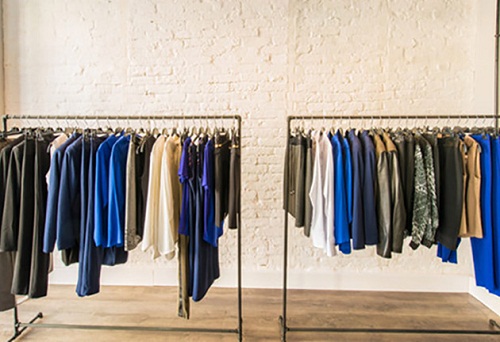 prices in the European market on an average €3.41 compared to prices in the UK at £1.01. Similarly, Marks & Spencer has increased prices by £1.01 in the UK, while prices in EU are on par YoY. Spanish brand Mango has maintained prices in Europe while its UK prices have increased almost £2.00. Vero Moda's UK prices have increased nearly £0.60 YoY while prices in the EU have declined by €1.06. Prada’s UK prices have increased by an average of £149.29 than last year compared to those in the EU, where prices have increased by only €82.82.
Prices in the EU-based markets started increasing from the third week of 2021 while the UK market has seen some noticeable price increases since the start of the year. For instance, the prices of & Other Stories' have increased by 3.4 per cent while those of Esprit have increased by 2.8 per cent and Massimo Dutti by 2.6 per cent.
No change in free shipping policy
While prices across categories vary between the EU and UK, minimum orders for free shipping remains the same pre and post-Brexit in both markets. In UK, orders worth £60 from Jack & Jones are eligible for free shipping, while EU customers can avail free delivery on orders worth €50 DE). The figures for Mango are £30 UK / €30 across regions, Vero Moda products are priced at £60 in the UK while they cost €50 DE in the EU.
Brand COS offered free deliveries between January 13-17, 2021 on all orders to compensate for Brexit delivery delays.. Deliveries by Massimo Dutti are priced at £100 in the UK and €80 in EU. & Other Stories charges a minimal amount for shipping. United Colors of Benetton has introduced free shipping on orders over £40 over Christmas. It has maintained these prices post Brexit to reassure its shoppers and encourage shopping.
Mercedes-Benz Fashion Week Russia concludes in Moscow
The spring season of Mercedes-Benz Fashion Week Russia took place in the Museum of Moscow. Fashion shows were arranged in Russia’s capital and 6 other cities, including Milan. Italian brands Hand Picked, Collini, Daniela de Souza, Vuarnet and others introduced their new collections at the Milan-based Sari Spazio Showroom. Other venues were St. Petersburg, Nizhny Novgorod, Kazan, Sochi and Chelyabinsk. Designers from Argentina, Belgium, Chile, Cyprus, France, Germany, India, Israel, Mexico, Netherlands, Nigeria, Peru, Poland, South Korea, Spain, UK, USA, and Japan showcased their new collections as video presentations.
Right during this season, Mercedes-Benz Fashion Week Russia became the winner of Tagline Awards, a major competition in digital for the Eastern Europe, as the Best Art/Culture/Entertainment Campaign. The Jury awarded the 2020 fall season of MBFW Russia (having taken place in October 2020) with the golden award.
Mercedes-Benz Fashion Week Russia was live streamed at 100+ websites of the global media websites and social networks. Recorded streams are still available in VK, the largest social media in Russia and the CIS.
In this season, the key subject for Mercedes-Benz Fashion Week Russia was conscious consumption. In collaboration with Vtoroe Dykhanie Fund, Russian Fashion Council started a sustainable fashion project - every day, secondhand clothes were accepted in the Museum of Moscow to be used in creation of new collections. Russian brands RigRaiser and VINA sticking to upcycling methods are going to use some of the turned in garments to make their new collections for the new MBFW Russia season scheduled for October in Moscow. The Fund will save the unclaimed pieces for recycling.
The upcycling concept found support at the venues of MBFW Russia, too. In this season, MBFW Russia decided not to make new brand clothing for volunteers and organizers, totaling to 300+ people. Instead, Moscow-based VINA brand made customized uniform for the Fashion Week staff, using secondhand clothes for that.
The new season of #MBFWRussia welcomed 14 brands that follow certain sustainable guidelines - upcycling, recycling, and slow fashion. Emerging designers Mesew Butenko, Tkachuk, Icone, and Arina Georgieva in collaboration with Laska (Henkel company) presented their NOT NEW Collection of 20 exclusive looks, specially designed from the garments showcased during previous Mercedes-Benz Fashion Week Russia seasons. The underlying concept in this collaboration is #RethinkFashion that supports and promotes reasonable consumption.
Guess retains top spot in Lyst Index
Guess held on to its top spot in the Lyst Index for Q1, while Nike jumped nine places joining the top 10 in second spot. And Dior joined the index for the first time at number three with Louis Vuitton at number seven.
Balenciaga and Moncler declined by two spots, while Prada and Bottega Veneta slipped one spot each, Saint Laurent dropped three places and one-time index leader Off-white down six.
The ranking comes from the millions of searches made via Lyst and other data, and with online shopping being key in Q1 due to further lockdowns internationally, it’s an even better reflection of what luxury shoppers are thinking and doing than usual.
Gucci saw strong demand from online shoppers, and was able to create brand moments which resonate with digital audiences. Nike in second place was buoyed partly by seasonal demand for fitness wear, but also by newsworthy moments, such as the launch of its first hands-free shoes. The Go FlyEase racer found broad appeal and was among the Lyst Index’s hottest products.
YKK launches new business policy
Zipper and fastening products manufacturer YKK has launched a new business policy ‘Sustainable Growth under the New Normal’ that emphasizes on digitalization, sustainability, and diversity. As per Textile World, YKK has created a new, enhanced R&D division called the Technology Innovation Center (TIC) that will focus on developing entirely new technologies, materials, and new business. The company will invest 2.5 billion yen in this division to establish a Digital Business Planning Department. The company also plans to enhance its collaboration with customers through partnerships with digital platforms.
Over the next four years, YKK will invest an additional 2.5 billion yen in sustainability initiatives such as eco-friendly product development, solar power generation, and energy-saving measures. Additionally, YKK will continue to focus on human rights and diversity, the fifth pillar of its Sustainability Vision 2050. Under the plan, the company has committed to becoming more diverse and inclusive and improving work environments throughout its supply chains, and will continue to implement the YKK Global Criteria of Compliance audit, a comprehensive standard based on the ISO26000 guidelines.
Uster introduces new fabric inspection system
Uster has introduced a new fabric inspection system known as Q-Bar 2. The system monitors the fabric additionally at the earliest point with automatic, in-line inspection. Q-Bar 2 is best described as a formation monitoring system, because of its ingenious positioning directly at the interface of warp and weft threads. That allows rapid response as soon as a defect appears, avoiding long-running or repeating faults. Alarm and stop signals alert the operator to correct problems immediately – and early detection reduces second quality and material loss, as well as minimizing the need for post-production checks.
Uster Q-Bar 2 provides different algorithms to identify specific defects and their causes. This inbuilt knowledge can prevent defects within the weft insertion cycle.
Its enhanced detection position in the fabric formation zone means the warp is monitored even before it is traversed by the weft – a truly unique benefit. It allows detection of incorrect warp positions, missing warp, loose warp ends and even pattern irregularities.
By monitoring each inserted weft in the formation area, Q-Bar 2 primes users to react to weft irregularities at the earliest possible stage. At this point, it can detect weft-related defects such as double picks, broken weft or slubs and loops.
Reduce consumption of new clothes, urges TRA
Alan Wheeler, Director, The Textile Recycling Association (TRA) has urged the sector to reduce consumption of new clothes. He spoke on the eve resources charity WRAP formally unveiling its voluntary Textiles 2030 on April 26. Textile 2030 vision aims to slash the impact that textiles have on the environment over the next decade. To achieve this, the sector needs to collect more used textiles, without losing financial viability of the industry.
Instead of supporting jobs in textile production, governments need to support new jobs in the textile recycling industry, added Wheeler. New production houses need to use recycled fibers in their new textile products, he added. The Textiles 2030 comes after WRAP’s SCAP 2020 program missed its target for waste reduction.
While targets were met for reducing water consumption and carbon, the amount of textile waste being sent to landfill or incineration fell by 4 per cent since the 2012 launch, WRAP said, against a target of 15 per cent.
US’ T-shirt imports decline 10.70% during Jan-Feb’21
T-shirt imports by the US declined by 10.70 per cent to $ 2.92 billion in the January-February ’21 period from $3.27 billion in the corresponding period of 2020. As per Apparel Resources, import volumes declined 8.04 per cent to 83.68 million dozen during the period.
All major apparel shippers recorded a dip value-wise in T-shirt exports to the US, except China. China’s exports grew 5.37 per cent Y-o-Y to $ 403.87 million. It exported 13.51 million dozen T-shirts, a 17.58 per cent yearly growth. Bangladesh’s exports grew 2.87 per cent on a yearly basis to 5.35 million dozen, which valued $ 129.10 million and declined by 3.52 per cent in the January-February ’21 period.
India’s exports declined both in terms of quantity and value. The country clocked $ 140.42 million in January.-February. ’21 to ship 4.21 million dozen of T-shirts and noted a marginal drop of 0.06 per cent on Y-o-Y basis during the period.