


FW
Vietnam hopes export earnings from garment-textiles to rise to $45.7 billion
Vietnam expects to earn $45.7 billion from garment-textile exports this year amid good results recorded since the beginning of this year and positive market developments.
As per the General Department of Vietnam Customs, as of mid-July, garment-textile was one of the four sectors posting the highest export revenue, with a record growth of 19.7 per cent totaling $20.4 billion.
Garment-textile was also among the six groups whose export value increased by over $1 billion USD, according to the authority.
Some 14,000 businesses are operating in the sector, with combined capital of over 1.1 quadrillion VND (46 billion USD) and net profits, nearly 1 quadrillion VND. They are employing about 200,000 laborers.
Vietnamese garment-textile products were shipped to 55 countries and territories worldwide, including 17 markets with a turnover of more than 100 million USD each.
The US, Japan, the Republic of Korea (RoK), Canada, China, Germany and Cambodia were major buyers of the Vietnamese products.
SpydaSilk representatives attend SaigonTex
Representatives of KraigBiocraft Laboratories, Inc’s apparel brand SpydaSilk attended Vietnam's premiere textile and garment industry exhibition, SaigonTex.
The SpydaSilk team attended the Expo as part of its efforts to grow its network of suppliers. The team is working quickly to identify and partner with industry leaders capable of creating one-of-a-kind customer yarns and fabrics built upon Kraig Labs' recombinant spider silk technologies. These new exclusive yarns and fabrics will be the foundation of SpydaSilk's brand identity.
Since 1990, SaigonTex has brought together the largest collection of producers, suppliers, and buyers from Europe and Asia in the textile, fabric, and garment industry. Last week's exhibition marked the event's first return since 2019 after two years of COVID-19-related cancellations.
The company expects to release the second video in its behind-the-scenes series taking viewers inside its spider silk production facilities next week. This episode will bring you inside the R&D labs at Kraig and Prodigy as the team works to create tomorrow's super materials and monitors the performance and quality of current Dragon Silk production.
ReshaMandiforays into the global market
India’s largest farm-to-fashion natural fibre digital ecosystemReshaMandi is foraying into the global markets. The company offers a wide range of natural fabrics while adhering to sustainability, fair trade and ethical sourcing norms. ReshaMandi’s vision is to build a new world of textiles and transform the industry by providing accessibility, availability, and affordability for businesses and consumers looking for sustainable solutions.
ReshaMandi has provided more than 10 million meters of fabric in natural fibres to 500-plus domestic producers of fabric, apparel and home furnishings. Among, over 200 are exporters providing products to well-known brands across geographies. As fabric serves as the basic material for clothing and home furnishings, ReshaMandi currently supplies a variety of these essential goods to both the domestic and global markets. These include silk, cotton, viscose, bamboo, hemp and other natural fibres. ReshaMandi also sells textiles produced from materials like milk, soy, and other such natural sources.
According to the third annual Material Change Index from theglobal non-profit Textile Exchange, fashion brands are now using 50 per cent preferred materials — up from 44 per cent last year — curbing greenhouse gas emissions by 5 per cent and saving 1.9 million tons of COշ equivalent emissions.
Continue with the GSP plus preferences, urges JAAF
YohanLawerence, Secretary General, JAAF urged authorizes to continue with the GSP plus preferences that enable sectors including apparels to help sustain the country’s level of exports and ensure that it has an uninterrupted inflow of foreign currency.
The apparel association forum has been warning Sri Lanka could lose its competitive edge and risk about US$580 million worth of exports if the GSP+ concessions are withdrawn. The GSP Plus trade concession scheme is offered by the EU to encourage development and good governance by offering tariff cuts to developing countries.
Accounting for approximately 6 per cet of Sri Lanka’s Gross Domestic Product (GDP) and almost half of all merchandise exports, the apparel sector serves as a bulwark of the nation’s economy.
While the sector continues to face significant limitations from continuing disruptions in energy supply and logistics, cumulative export earnings from the sector increased by 16 per cent Y-o-Y to $2.2 billion during May 2022.
Despite unprecedented domestic volatility, unstable global market conditions and escalating raw material and logistics costs, Sri Lanka’s apparel sector has provided extraordinary support to the national economy, including direct surrender of export proceeds to the Government.
Despite the ongoing crisis, the outlook for Sri Lankan apparel is still considered positive, as evidenced by the continuing Foreign Direct Investment (FDI) inflows to Sri Lanka which have mirrored upward trends in export performance, recording 17 per cent Y-o-Y growth up-to June 2022. At present, $73 million worth of investments have been committed for expansions in the apparel sector in 2022, out of a total apparel investment pipeline of $94 million.
House of Anita Dongre to open first flagship store
House of Anita Dongre will soon open its first flagship store showcasing premium brands – AND, AND Girl, Globaldesi, Globaldesi Girl and the newly launched Itse.
As per an India Retailing report, situated in the InOrbit Mall, the store is spread across 4,056 sqft and offers an incredible range of stylish, comfortable and easy designs for women and girls in western and Indian wear
Redefining fashion since 1995, House of Anita Dongre (HOAD) has time and again set new standards in fashion. The brand has a workforce of over 2,800 associates. It is spearheaded by Anita Dongre, MeenaSehra and MukeshSawlani.
Giving appropriate attention to Indian craftsmanship, House of Anita Dongre creates exquisite ensembles and handcrafted jewelry. A versatile brand, HOAD offers its customer designs for every day and special occasions, which they will love and wear for many years.
MAS Holdings launches new venture with BAM Knitting
MAS Holdings has launched a new venture by acquiring the assets of BAM Knitting, a leading fabric manufacturing and finishing operation in Sri Lanka. MAS Holdings takes the majority stake in the new venture, with BAM Knitting as its joint venture partner.
The new joint venturewill benefit from the technical resources and expertise of MAS, following the appointment of MAS specialists to key roles in the company, as well as MAS’ vast global experience in apparel and textile manufacturing. Significant synergies are expected from the acquisition, including production capacity enhancements and collaborations on new product developments.
SurenFernando, CEO, MAS Holdings, says, the acquisition enables MAS to increase the verticality of its Sri Lankan operations and mitigates the increasing volatility of global supply chains and costs of logistics while increasing the overall value added by MAS. It also highlights our continued confidence in Sri Lanka as a sustainable and competitive destination for apparel manufacturing, despite the ongoing economic challenges.
This new investment also serves as an endorsement of MAS’ continued confidence in the Sri Lankan apparel industry, especially at a time the island nation is undergoing many economic challenges,” Fernando adds
Amandha Fernando, CEO, BAM Knitting, who will be at the helm of the new organisation, adds, the acquisitionby MAS will undoubtedly elevate the capabilities that were developed at BAM, and MAS’ lean manufacturing processes, product development expertiseand the strong people-centric ethos will surely transform the existing operation into a truly world-class business.
Homeboy Industries partners with Guess for a new upcycled collection
Homeboy Industries has partnered with American clothing brand Guess to launch a new upcycled collection.
The new upcycled collection is being launched by Guess in collaboration with Homeboy Recycling, a social enterprise branch of Homeboy Industries.
By partnering with Guess, Homeboy Recycling has expanded from exclusively electronics recycling into the world of textiles and apparel.
According to both companies, the new collection will help both companies support environmental sustainability, facilitate creativity, create new jobs, and uplift the community.
No two pieces in the Upcycled collection are alike as transforming recycled clothing yields distinctly unique pieces. The collection features tote bags, patchwork denim, bustiers, and throw pillows among other things.
The Upcycled collection is designed with the hope that each piece can give purpose to a member of the community who can learn the skills needed to turn discarded merchandise into desirable, commodified items with an eye to the fashion set.
Columbia Sportswear Company’s ESG report highlights progress across 2021
The 2021 Environmental, Social, and Governance (ESG) Report by American sports brand Columbia Sportswear Company highlights the brand’s progress throughout 2021 in the three pillars of its corporate responsibility strategy — empowering people, sustaining places, and responsible practices.
The report highlights work accomplished by its four primary brands — Columbia, SOREL, Mountain Hardwear, and prAna. In 2021, Columbia Sportswear Company finalized one Carbon Leadership Project program and one Clean by Design programwith two cohorts of manufacturing partners at the Tier I and Tier II levels to help the partners reduce their environmental impact.
The company also introduced the Coalition of Asian & Pacific Islander Employee Resource Group, bringing the total number of employee resource groups to seven. Two new water towers in supply chain locations were also built to bring clean water to manufacturing partners and their employees with the Planet Water Foundation, bringing the total number of water towers built to 24. COVID-19 community vaccine clinics in Portland, Oregon were coordinated and an educational campaign encouraging all employees to get vaccinated was launched.
The company has also released a Sustainability Accounting Standards Board (SASB) Index, which discloses the Company’s ESG efforts in accordance with SASB industry-specific standards.
Adidas adjusts guidance for FY2022 as recovery in China slows
On July 26, adidas adjusted its guidance for FY 2022 due to the slower-than-expected recovery in Greater China since the start of the third quarter resulting from continued widespread covid-19-related restrictions. adidas now expects currency-neutral revenues for the total company to grow at a mid- to high-single-digit rate in 2022 reflecting a double-digit decline in Greater China.
In the second quarter, adidas’ currency-neutral revenues increased 4 per cent as the brand s continued to see strong momentum in Western markets. This growth was achieved despite continued challenges on both supply and demand. Supply chain constraints as a result of last year’s lockdowns in Vietnam reduced top-line growth by around € 200 million in Q2 2022. In addition, the company’s decision to suspend its operations in Russia reduced revenues by more than €100 million during the quarter.
Revenue growth in the second quarter was driven by Western markets despite last year’s lockdowns in Vietnam still reducing sales, particularly in EMEA and North America, by€ 200 million in total. In addition, the top-line development in EMEA was also impacted by the loss of revenue in Russia/CIS of more than € 100 million. Nevertheless, currency-neutral sales grew 7 per cent in the region. Revenues in North America increased 21 per cent during the quarter driven by growth of more than 20 per cent in both DTC and wholesale. Revenues in Latin America increased 37 per cent while Asia-Pacific returned to growth.
The company’s gross margin declined 1.5 percentage points to 50.3 per cent. .Other operating expenses increased by19 per cent to €2.501 billion. Net income from continuing operations slightly declined to € 360 million.
Fashion for Good’s first India report highlights textile recycling initiatives
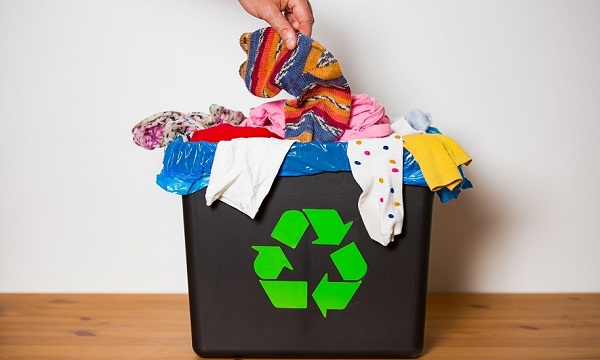
To reduce dependence on virgin resources and decarbonize operations, the fashion industry needs to introduce, new textile recycling technologies, says Katrin Ley, Managing Director, Fashion for Good that recently released its most comprehensive report on textile waste recycling in India. Titled, ‘Wealth in Waste: India’s potential to bring textile waste back into supply chain’, the first-of-its-kind report highlights India’s initiatives to leverage its infrastructure to emerge as world leader textile recycling technologies.
Initiate actions against rising textile waste
Commissioned by Fashion for Good, the report is a part of the ‘Sorting for Circularity India Project’. It was launched in collaboration with Sattva Consulting, Saahas Zero Waste and Reverse Resources, specialist organizations in strategic impact, waste, resource and data management, and the scaling of textile recycling infrastructures. The report attempts to provide the required data in India’s textile waste landscape. It aims to a build a better coordination between those engaged in managing domestic post-consumer waste, pre-consumer waste and imported waste in India. The report aims to help industry players to initiate actions, devise solutions and mediate accordingly.
Improve access to textile waste
India accumulates up to 7,800 kilo tons of textile waste annually. It produces around 8.5 per cent of the global textile waste. However, only 59 per cent of textile waste is recycled with only a small percentage being reused in the global supply chain. India lacks strict rules and traceability systems. Also, technological infrastructure is limited to processing only certain type of wastes. The study highlights sustainable materials that have the best potential to recycle textile waste.
The report also outlines the potential for collaborative and systemic interventions to strengthen sustainability in the Indian textile waste industry. It recommends the industry to improve visibility and access to waste, explore the potential of textile recycling in India and establish the required infrastructure and laws for waste management.
Expedite implementation of recycling technologies
Launched in November 2021, ‘Sorting for Circularity: India’ is a project initiated by Fashion for Good and supported by Laudes Foundation as catalytic funder, PVH Corp., adidas, Levi Strauss & Co, Tesco, Primark, Arvind Limited, Birla Cellulose and Welspun India, and technology partner Reverse Resources. A framework conceived by Fashion for Good, the project aims to expedite the implementation of new textile recycling technologies. Through this project, Fashion for Good aims to launch several industry-wide, precompetitive projects that focus on the recycling of man-made cellulosic fibers and polyester.
Supporting disrupting innovators
A global platform for innovation, Fashion for Good has launched the Global and Asia Innovation program to support disruptive innovators in providing practical project management, access to funding and expertise, and facilitate new collaborations between brands and manufacturers
Fashion for Good has launched the world’s first interactive museum to promote sustainable fashion and innovation. The museum encourages people across the globe to initiate positive change. The initiatives are supported by: Laudes Foundation, Founding Partner, William McDonough, Co-Founder and adidas, Bestseller, C&A, Chanel, Inditex, Kering, Levi Strauss & Co, Otto Group, etc.











