


FW
Can collabs in luxury fashion be long term trend?
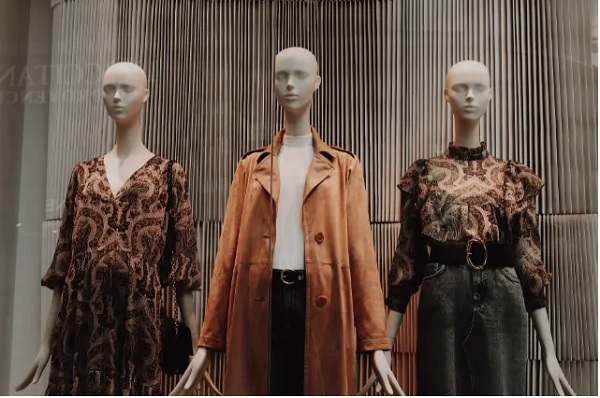
2021 was the year collaborations between luxury brands and popular brands helped refresh the luxury fashion scene and 2022 is turning out to be a bigger year for these fascinating fashion collabs as a host of them have been announced. From Balmain teaming up with Barbie and Dior’s entry with Technogym into the world of fitness or Prada’s recreating of Adidas classics; these limited- edition launches are setting the world of fashion ablaze. Of course, these provides fillip to both the collaborating brands, but can such collaborations be sustained for the long term or are designed just for one time experiences, remains to be seen.
Adidas by Prada
What could be more favored than one of the most popular sports brand teaming up with the cutting edge Italian luxury brand? Their cooperation has been such a success story that they've just unveiled their third portfolio. This time the focus has shifted - it isn’t just about trainers this time as the collab will be releasing their first ever capsule collection of co-branded apparel and accessories, centered forcefully around sustainability. Reimagining luxury sportswear with a sustainable outlook, all nylon will be removed out for Prada’s signature Re-Nylon fabric, which is made from recycled plastic waste collected from abysses. The 21- piece range will feature sportswear including tracksuits and anoraks, as well as bucket hats, bags and a reinvented, Prada- ingrained interpretation of Adidas’s Forum trainers.
Balmain x Barbie
Another traffic stopping, attention grabbing collab is the heritage French haute couture brand and the most popular doll in the world sashaying into the world of fashion. This is a sporty limited- edition collection, with the emphasis totally on fun. When there’s Barbie, there's plenty of her signature pink, with Olivier Rousteingusing a colour palette that ranges from the palest of blushes to bold fuchsia across over 50 pieces. Several of Balmain’s hand bags have been blended with Barbie packaging to produce quirky hybrids, while badges, t- shirts and hoodies have been designed to combine the doll’s distinctive aesthetic with the maison’siconic outlines. The genderless range was inspired by Barbie’s beau, Ken, too, and alongside the ready- to- wear pieces there will also be a series of Barbie and Ken NFTs that will be auctioned off online.
Charles & Keith x Shushu/ Tong
Accessories brand Charles & Keith had already partnered with famed Danish developer Cecilie Bahnsen in 2020. Charles & Keith just launched a new capsule collection with popular Gen Z brand Shushu/ Tong. The limited- edition collection consists of two bags and two pairs of shoes, all featuring Shushu/ Tong’s distinctly edgy style and centered on the rose. The iconic pieces are the square- toed patent leather Mary Janes in red and black, which feature distinctive rose detailing on the straps. Alongside these sit a classic box shoulder bag in red, with the distinctive rose print, while a black pair displays a single rose.
Dior Vibe and Technogym
Luxury French fashion house and fitness brand Technogym become collaborators for the Dior Vibe line. Excitement is in the air as Dior is all set to launch a series of pop- up stores to show their sleek and shiny new range of sportswear. From Dior’s Étoile and Oblique prints across leggings, sports bras and anoraks, the collection also includes accessories, shoes and bags. And Technogym inspired series limited edition workout equipment including drill bench to an exercise ball, printed with the Dior star.
Times are changing as heritage luxury and haute couture brands refresh themselves with collabs that the new Gen Z and late millennials can relate to. As their purchasing power impacts the sector, further brands will look for similar collabs to stay seductive and applicable.
To get better prices, B’desh needs to upgrade

Buyers pay lower prices to apparel suppliers in Bangladesh than they do to some of the country’s competitors.
In fact they often pay prices that are below factory costs whereas Vietnam, Indonesia, Turkey and Mexico are given higher than the average rates.For instance, men’s woven cotton trousers made in Bangladesh are sold for $7.01 per piece in 2020, which is 9.20 per cent below the global average of $7.72.Vietnam receives $10.76 per piece while Sri Lankan and Indian exporters get $8 and $8.41, respectively, for the same product.
Similarly, men's cotton jeans made in Bangladesh are sold at $7.81 apiece, again 7.20 per cent down from the global average of $8.41. Vietnam receives $11.55 by selling a similar item.Only two products -- women's cotton trousers and men's cotton T-shirts – manufactured in Bangladesh brings home a price that is slightly higher than the global average.
Made-in-Bangladesh women’s cotton trousers are sold at $6.43 per piece up 23 per cent from the world average of $5.22.Turkey takes home the highest, at $15.84, a staggering 203 per cent higher than the global average.Men's cotton T-shirts fetch $1.47 per piece for Bangladesh, which is 23 per cent higher than the global average of $1. Peru nets $8.46, the highest among suppliers around the world.Woven cotton jackets bring $10.10 per piece, which is 0.70 per cent below the global average. Thailand receives $48.86 and Mexico gets $34.11.
A bra made in Bangladesh from manmade fiber is sold at $3.19 per unit, which is 18 per cent below the international average. Vietnam gets $6.06.
Possible reasons
One reason prices of garment items made in Bangladesh are priced lower than the average world price is that manufacturers in Bangladesh are still strong in basic garment items. For instance, 80 per cent of Bangladesh's garment items are still confined to five cotton-made items and it has the problem of over-capacity.So, a hidden unhealthy competition has also kept the prices of the items lower. Because of excess capacity in the denim segment, prices are falling.
Competitors’ strengths
Garment manufacturing has evolved from a simple manufacturing operation into a complex service industry.The actual cut and sewing operations are the simplest and least remunerated tasks.First-generation garment producers in Asian cities such as Hong Kong, Singapore and Seoul have transformed from simple product makers to multinationals and they operate globally and invest in engineering, advanced information technology and cutting-edge technology.Yet most small and medium-sized garment manufacturers in developing countries, and especially least-developed countries, have not adapted to this changing industry and they remain focused on simple cut and sewing operations, provide few services and produce commodity-type garments.
Turkey holds textile symposium
A National Textile Machinery and Systems Symposium will be held in Turkey, October 20 and 21, 2022.
The aim is to create a platform that will contribute to the development of Turkey’s textile machinery and systems manufacturing industry. The symposium will bring together machinery manufacturers, the textile and apparel production industry and academics. Among the topics to be discussed are automation systems and digitalization, software and ERP systems, technical textiles and special purpose textile machinery and auxiliary systems, finishing machines and auxiliary systems.
Turkey’s dyeing and finishing machinery alone realizes 80 per cent of the country’s exports. Developing countries such as Central Asia, South Asia and the Arab countries stand out among the main markets of the sector. While the textile and apparel industry and the technical textiles industry are making progress in Turkey, the country continues to import the machinery, software, auxiliary equipment and systems. A competitive position is yet to be attained in fields that require high technology and knowledge such as yarn, weaving and knitting.
Turkey has a target of becoming one of the top three textile exporting countries in the world. The country is already one of the top five textile exporting countries and overtook countries like South Korea and Italy to claim the fifth spot.
Texworld Evolution in February
Texworld Evolution will be held in France, February 6 to 8, 2023.
Several new features will mark this edition. A red thread will be used to guide visitors along a route that links all the main attractions of the trade fair: the Elite area, the Denim zone, the major national pavilions, the Trend Forum and the Agora, where all the events and content created by the Texworld Evolution team will be gathered. Also new, the sustainable sourcing itinerary has been revised.
A single logo will now make it easier for buyers to identify companies that are taking steps towards social and environmental responsibility. The conferences and round tables proposed during this February edition will deal with subjects and themes linked to the evolution of the textile value chain.
This edition, accompanying the recovery of international business, anticipates a participation close to pre-crisis levels for most of the major sourcing countries.The signs of recovery of the major Asian countries are very positive.
As far as China is concerned, the gradual lifting of health constraints on travel is encouraging the already strong demand from exhibitors and manufacturers from this key international sourcing area. More than a hundred Chinese companies will be present. Turkish manufacturers will be strongly represented. India, absent last February due to the pandemic, will be making a comeback, as will Indonesia and Taiwan.
Portugal holds textile convention
Portugal held a textile convention on October 13 and 14, 2022. Nearly 250 entrepreneurs attended from all over Europe and discussed the current challenges of the European textile industry and set the grounds for a bright future, based on some strong foundations like innovation, creativity, quality and sustainability.
There was an assessment of the geopolitical and macroeconomics changes and how this would impact on the future of the textile industry. Related topics were nearshoring and friend-shoring, independence from foreign gas through the use of European sustainable energy as well as circular and automated production lines.
A panel addressed the issue of greenwashing and the role of brands in communicating about sustainability. It looked at how the new European Commission regulations on eco-label, digital product passport and product environmental footprint would create a new framework. Another panellooked at the cost of sustainable investments, and how this cost should be managed within the entire supply chain, including brands and retailers.
Workshops addressed the themes of extended producer responsibility in textiles, digital product passport, recycling textile waste and labeling textiles. As these initiatives will be rolled out in the coming years – as part of the EU textile strategy – participants got a better understanding of the future framework for the industry.
Will sustainable, cost efficient 3D printing make headway?

It was just a matter of time that the fashion sector would embrace 3D printing technology as the way forward with textiles, samples, embellishments and accessories. The advancement in 3D printing and 3D scanning are set to usher in huge changes in the production process of the fashion and textile industry. These sectors have quickly noticed the advantages and fashion designers and textile manufacturers are on an experimental run. 3D printing technology has opened up endless possibilities hitherto unexplored by both, designers and textile manufacturers - different shapes and geometries that can generate amazing outfits and prints.
Sustainability is a driver
As consumer trends indicate their preference for sustainable clothing and accessories, the efficiency and wastage-saving features of 3D printing are winners. Whether it is creating prototypes and samples to bespoke haute couture, 3D printing technology cuts down on fabric wastage enormously. This is a badge fashion labels can proudly proclaim – from runway to store with minimum wastage. Look at it this way – water usage in the manufacturing of textiles and fabrics has become a worldwide debate, wasted fabric from creating outfits is another topic fashion brands are grappling with and emissions from textile plants is also on the hit list of unsustainable production processes as are dyes used as colorants that are chocking vast numbers of water bodies. Enter 3D printing and it seems poised to drive fashion and textile industries towards a greener methodology. Additionally, 3D printing technology has another clear advantage – speed to market with garment lines being printed within 24 hours and ready for shipping.
Designers’ dream
3D printing has enhanced the limitless possibilities in terms of not only designing patterns for textiles but also for garments. Fusion of legacy and contemporary design elements can be achieved in minutes and embellishments added to textiles in a matter of hours. This is a great advantage for creating unique rolls of fabrics and outfits, making the art of bespoke much less time consuming and drawing board nightmares.
Is 3D knitwear the most environment- friendly?
Whilst 3D printing does impact on wastage, can it be said to be truly environment-friendly? 3D printing mostly uses plastic and metal and therefore is not the best green solution. Moreover, plastic and metal are not flexible enough. 3D knitwear is something that may provide a better solution for not only the textile manufacturing sector but also for fashion designers. Researchers are looking into viable options as knitwear machines can produce a 3 dimensional garment in a single pass by uniting threads one after another. It eliminates the usage of plastic and metal filaments by staying on course with natural fibres.
From concept to commercial
The concept of 3D printing to revolutionise the manufacturing of textiles is still at a very inchoate stage with commercial mass production in the distant future. Many R&D wings of major companies such a Teflon, 3M and Dupont are working below the radar at the moment to find out cost-efficient and greener filaments that can actually live up to the sustainability element of 3D printing of textiles. One emerging process that has proven to be successful in this regard is the 3D panel printing on textiles. It well may be that collaborations between textile manufacturers and innovation companies will speed up the process for mass production soon.
Kelheim partners with TextileGenesis
Kelheim has partnered with TextileGenesis. Kelheim is a viscose specialty fiber manufacturer and offers a range of specialty viscose fibers allowing the specific properties of fabrics to be enhanced, generating added value in the textile chain.
The company, based in Germany, focuses on innovative high-quality fibers. These fibers are used in diverse applications as fashion, hygiene and medical products, specialty papers and in the nonwovens industry.Textile Genesis is an award-winning traceability platform that creates radical transparency from fiber-to-retail and ensures authenticity and provenance of sustainable textiles. TextileGenesis uses blockchain technology to track and verify the use of sustainable fibers all the way from fiber to garment. A digital fiber coin ensures transparency and reliability throughout the entire production line and beyond.
Wood-based fibers are an environmentally-friendly basis for sustainable textiles but consumers often don’t know what’s behind their garments. But they need to know it’s in their hands to minimize the ecological footprint of the textile industry. Transparency and traceability are the foundation that enables consumers to make informed decisions. The fashion and textile value chain is undergoing major transformation driven by sustainable materials, shifting consumer demand for sustainable products, and increasingly stringent regulations on transparency.
September Indian T&A exports down 26 per cent
India’s textile exports fell by 31 per cent in September 2022. Apparel exports declined by 18 per cent in the same period. Cumulative exports of textiles and apparel decreased by 26 per cent.
During April 2022 to September 2022, Indian textile exports went down by 16 per cent while apparel shipment rose by 11 per cent. Cumulative exports of textiles and apparel during this period decreased by six per cent. The share of textiles and apparel in India’s total merchandise exports declined to seven per cent in September 2022 compared to ten per cent in September 2021. The share fell from nine per cent to seven per cent in April 2022 to September 2022. So India’s textile exports declined in September this year, even as the other textile-exporting countries continue to perform better than India.
Indian exporters are losing in the international textile market as the currencies of competing countries registered a deeper fall against the dollar compared to the Indian rupee.Indian exports are underperforming compared to the other countries. Indian exporters are unable to compete against other countries and are losing export orders as they are not able to offer competitive prices to their importers. The fall in the Indian rupee against the dollar is not really benefiting Indian exporters as currencies of other competing countries have fallen deeper.
SAC inducts Lee and Nadia
Sustainable Apparel Coalition has appointed Lee Green as senior director, marketing and communications. Nadia York is chief of staff.
Lee will be responsible for overseeing all the communications and marketing activities to ensure SAC’s work is effectively communicated to all stakeholders and the organization continues to affirm its position as a critical partner for transforming the industry to positively impact people and the planet.
Lee has experience working with a member-based organization and has a compelling track record of delivering impactful communications strategies and events.Prior to joining SAC, he was the director of communications at The Consumer Goods Forum for ten years.
Nadia will work closely with the leadership team and the board of directors to provide strategic support and create synergy within the organization to ensure teams are working effectively and efficiently in support of the organizational objectives and priorities.Nadia has extensive experience in project management and translating strategic enterprise-wide projects and initiatives into action across departments.Before joining SAC, Nadia worked as the chief of staff for the UK ambassador in Paris. By combining their distinct backgrounds, expertise and experience, SAC hopes to grow and help accelerate its collective action efforts to enable positive social and environmental impact at scale.
Italy to host E-P
E-P will be held in Italy, April 18 and 19, 2023.This is an event dedicated to the relationship between fashion and the digital world.
Among the topics on the agenda there will be, for instance, new strategies for personalizing and measuring the effectiveness of marketing campaigns in the light of new cookie policies; the potential of 3D for business operations; control of digital distribution in retail; social and hybrid commerce; new KPIs for stores; Web3 evolution: new business frontiers and brand protection between metaverse, NFT and blockchain; challenges and potential of the new tool for traceability,the European digital product passport,; recycling and durability;and designing sustainability. The event’s topics have been vetted by university professors, experts and senior executives from industry companies.
There will be a broadening of the topics addressed, both in the keynote speeches and in the scheduled round tables. Issues related to the protection of intellectual property of brands will be taken up. The sustainability debate will look both at the adoption of the digital product passport, by manufacturing companies and all supply chain actors, and at new challenges in extending the product life cycle. And there will be no shortage of reflections on customer experience and the digitization of retail models to meet new consumer needs.











