


FW
Drop in Vietnam exports by 27 per cent
Vietnam’s textile and garment exports decreased by 27 per cent in September 2022.
Exports to China, South Korea, Japan, the US, and Europe showed a steep drop because of weaker purchasing power due to rising inflation and uncertainties especially the Russia-Ukraine conflict and material price fluctuations. The exchange rate is expected to continue to drop in the second half of 2022, negatively affecting businesses, particularly those with high expenses calculated in dollars.
As of now Vietnamese enterprises are seeking ways to diversify material supply sources as well as export markets because when material sufficiency is ensured, they can boost shipments to many markets, thus helping guarantee production stability, supply chain, and sustainable exports. The value of Vietnam’s textile and garment exports in the first nine months of 2022 was up 21 per cent over the same period last year.To achieve the result, textile and garment enterprises made great efforts to cope with the challenges of the market. They did not depend on the five traditional export markets, the US, Europe, Japan, South Korea and China, but also expanded exports to Russia and some other countries.In Europe, they not only focused on a few large export markets such as Germany, France, Spain and the UK, as in the past, but also expanded exports to other countries in the EU.
Dickson uses Monforts stenter
Dickson-Constant’s new plant in France has been equipped with a highly-customised Monforts Montex 8500 stenter.
The seven-chamber Montex stenter for drying, heat-setting and polymerizing applied resins has a maximum working width of 2.2 metres. It is installed in line with the washing compartments and is equipped with special entrance and exit fabric accumulators to enable non-stop processing during batch changes, in addition to an integrated vertical infrared dryer and exhaust air cleaning. Two Mahlo weft straighteners also ensure maximum regularity of fabric batches at strategic points in the line.
Monforts is a German machine builder. Dickson-Constant is a French sun protection and outdoor upholstery fabrics specialist.The latest advanced technology, including the Montex stenter, has equipped Dickson-Constant to maximize its resource savings and face the current market challenges with confidence. The oldest weaving operation in France, with roots dating back to 1836, Dickson-Constant specialises in woven acrylic fabrics. Its Dickson-branded solar protection and flooring materials and Sunbrella home upholstery and market-leading marine industry fabrics are renowned for their quality and durability.With many new weaving machines, the new plant increases the company’s overall manufacturing capacity by 50 per cent while providing the flexibility to accommodate more medium-sized orders and meet requests from certain customers for full exclusivity in respect of specific performance fabric ranges.
Bangladesh garment exports in Oct drop by 18%, fall to continue
Bangladesh’s garment exports fell by 18 per cent in the first 20 days of October 2022.
Among the reasons are the war-related crisis, the global economic turmoil, and a record inflation affecting retail businesses.A number of global brands are suffering from a decline in sales and unsold stocks, compelling many to halt current orders and production at the manufacturers’ end. Domestic issues like power rationing, load shedding and a severe gas crisis have also impacted the sector.The downtrend is expected to continue for the coming months as the global retail market is disrupted by many challenges like the anticipated recession in the global economy, which is halting retail sales and demand for clothing. If the ongoing Russia-Ukraine war prolongs, the global economic situation is feared to further deteriorate.
Rising fuel prices and inflation have cut consumers’ purchasing power in European countries and decreased the demand for clothing products.The inflation rate in the European Union (EU), the largest destination of Bangladesh’s apparel items, reached nine per cent in September 2022. Consumers may to cut their shopping expenses during Christmas.European shoppers are expected to reduce their Christmas purchases by up to 22 percent, which will disallow the top brands, importers of Bangladesh’s apparel products, to clear their whole stock.
Alterist uses upcycling to tackle textile waste
Alterist is a new upcycling marketplace. Its mission is to reduce textile waste and it showcases upcycled garments. Alterist is a marketplace that unites a community of upcycle designers who are using creativity to drive change, transform fashion culture and make a positive impact on the planet.
Alterist sees upcycling as a way to create one of a kind, iconic pieces while also keeping these materials out of landfill. Alterist is about altering the world’s perception of fashion and what is considered to be textile waste, about challenging social norms, being experimental with style. It’s about altered vision.
Alterist’s next step will be working with brands to help them creatively utilise their excess materials. Alterist will be providing a space for designers and brands to participate in the creativity and expression of fashion but through a more sustainable lens.
The sustainability market is booming. However, the majority of the market is still focused on creating new products. Despite the significant increase in awareness, knowledge and technologies within the fashion industry surrounding sustainability, levels of environmental impact have shown no net reduction.
The most common processes of garment recycling rely on the use of chemicals or mechanical procedures to break down fibers to be made into new fabrics. Upcycling utilises discarded clothing, objects or materials in their current form, creating new and unique products.
EU’s strategy to combat environmental damage by fast fashion
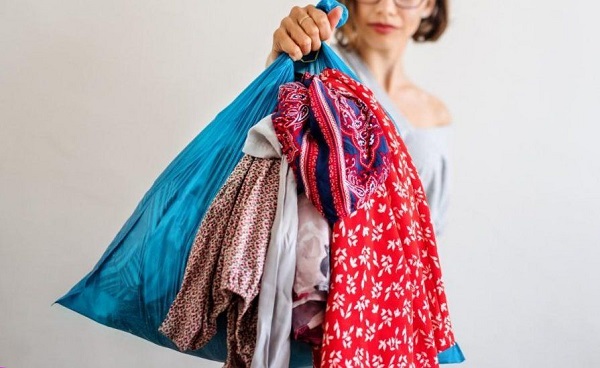
The global fast fashion market size is expected to grow from $91.23 billion in 2021 to $99.23 billion in 2022 at a compound annual growth rate (CAGR) of 8.8 per cent. The fast fashion market is expected to grow to $133.43 billion in 2026 at a CAGR of 7.7 per cent. Whilst the numbers look very attractive, it is actually an indication of how this sector can drastically affect the planet with harmful effluents and emissions. Major players in the fast fashion market include Zara (Inditex), H&M Group, Fast Retailing (Uniqlo), Gap, Forever 21, Mango, Esprit, Primark, New Look, and River Island. Western Europe was the largest region in the fast fashion market in 2021. Asia Pacific was the second largest region in the fast fashion market. This is what the EU is afraid of.
Policy initiatives to curtail hazardous substance
The European Commission has finally acted on their concern. The EU strategy for sustainable and circular textiles was unveiled in March 2022. The strategy defines the way forward to combat the hazards of the fast fashion industry and help achieve the environmental goals the EU has set for itself, by 2030. The strategy covers key areas that when streamlined will make the production of fast fashion responsible and green.
The first mechanism of the strategy is to move forward with smarter product design and circular business models. As demand for textiles grow, the need of the hour is to impose rules that enable the longevity of textiles. The second mechanism is the circulatory business model that demands textiles to increase their durability, reusability, repairability, fiber-to-fiber recyclability and mandatory recycled fiber content.
Furthermore, hazardous chemicals in textile products will be subject to new rules requiring producers to minimize or even substitute them in clothes and footwear. Ecodesign for Sustainable Products Regulation has been proposed together with the Textile Strategy and the EU is clear that this regulation will be binding for all manufacturers.
The strategy includes the phasing out of microplastics and synthetic fibres as these two represent a hugely toxic element of the fashion industry. The initiative addressing the unintentional release of microplastics from textile products is to be adopted in 2022, with binding requirements to be applicable to companies indicatively in 2024 or 2025.
The Digital Product Passport is an innovative mechanism to fulfill this strategy. An electronic tool that registers, processes and shares information about the product across the whole supply chain – from manufacturers to consumers, other businesses and competent authorities. Apart from submission of genuine data for their product digital product passports, companies will be scrutinized closely if they have green label claims.
A huge step forward is the complete ban on the destruction of unsold textiles. The EU plans to work closely with manufacturers to initiate digital precision technologies that will monitor and report high wastage items which then can be discontinued. As the EU marches forward to their bit of greening the planet, they are serious about reigning in on the fast fashion industry that seems to leave in its wake a lot of polluting debris.
Rise in US’ apparel imports ring in cheer among sourcing countries
The pandemic rang in bad tidings for apparel exporters in South and Southeast Asia as the dip in US’ imports was significant. Compared to imports worth $111.033 billion in 2019, year 2020 recorded a dip to $89.596 billion. The trend took an upward turn in 2022 as The US Department of Commerce released figures for the first half of the year. The import figures indicate that US economy is witnessing fast recovery, and the world’s largest economy is continuing to support economic recovery in developing countries.
Upswing in textile imports
The import of textiles and apparel by the US continues to grow at high rate and rose 30.97 per cent to $66.308 billion in the first six months of 2022, compared to $50.626 billion in the same period of 2021. With 26.80 per cent share China continued to be the largest supplier of textiles and clothing to the US, followed by Vietnam with 13.87 per cent. As per Major Shippers Report, apparel constituted the bulk of textiles and garments imported by the US in January-June 2022, and were valued at $49.578 billion, while non-apparel imports accounted for $16.729 billion. In contrast, import of apparel to the EU experienced a dramatic drop of 80 per cent.
Man-made fibers constituted the largest chunk at $33.4 billion, with cotton at second place at $29.5 billion. Products from silk and vegetable fibers accounted for $1721.6 million whereas wool products stood at $1648.5 million.
China continues to lead
China retains its pole position as the largest exporter to the US. The US textile and apparel imports volume from China in July 2022 reached 3.21billion m2, down 9 per cent year-on-year. Import value reached $3.59billion, up 26.7 per cent year-on-year. US apparel imports value from China in Jul 2022 toppled $1.27 billion, up 22.7 per cent year-on-year. The textile industry of China is the largest manufacturer and exporter in the world with an export turnover of $266.4 billion. Low-cost production, raw material quality, industrial structure, modern high-tech machinery, label development and work process in domestic consumer and global market contribute to China’s unshakeable leadership in this sector. The output volume of China textile industry accounts for more than half of the global market.
Other gainers were Bangladesh up 60.3 per cent, Indonesia up 60.27 per cent, India up by 57.2 per cent, Cambodia which recorded a rise of 52.5 per cent and Pakistan grew 50 per cent year-on-year. The non-apparel sector also experienced a growth surge as Cambodia’s exports rose by 73 per cent, Vietnam 29 per cent and Italy 27.5 per cent. Turkey was the only nation that lost ground by nearly 8 per cent. However, with all figures released, the ASEAN countries collectively experienced the best in this growth surge whilst India and Bangladesh did not.
It should be noted that US apparel imports enjoyed a decent growth but started to face softening demand. Thanks to consumers’ spending, in the first half of 2022, US apparel imports went up 40 per cent in value and 24 per cent in quantity from a year ago. However, the US economy remains highly uncertain in the medium term and it might see many US fashion companies to turn more conservative in placing orders.
Reusing garments will save carbon emissions: Study

According UPC’s INTEXTER, an innovative study to get an accurate reading has revealed that reusing a mere kg of cloth saves 25 kg of CO2 emission. The global clothing sector is responsible for anywhere between 2-10 per cent of global carbon emissions.
The study was conducted by analyzing 550 kg of clothes from the Formació i Treball Foundation clothing bins. This innovative research was the first of its kind to characterize the fibers that make up T-shirts, shirts, coats, trousers, jackets and other kinds of clothing that are dumped in textile collection bins. The innovative initiative was based on crushing garments and standardizing the mixture by means of two steps: first, automatic carding; second analyzing the resulting webs using the standardized chemical methodology. The result allows for the determination of the composition of textile products, including the standard moisture regain of every fiber.
Study highlights
Results revealed that out of all the clothing in the dumping bin, 62 per cent are reusable and 37 per cent are recyclable. The study concludes that the most common fiber is cotton, with 50 per cent in recyclable clothes and 60 per cent in reusable clothes. Polyester follows, with 30 per cent in both types. Therefore, cotton and polyester account for about 80 per cent in recyclable clothing and 88 per cent in reusable clothing. The study pointed out that acrylic fibers account for a much lower percentage. Therefore, a large difference between recyclable clothing (12.4 per cent) and reusable clothing (3.1 per cent) emerges, because clothing made from these fibers deteriorates easily. INTEXTER Director Enric Carrera says, "In light of the analysis, we can say that the recycling strategy of post-consumer textile waste should focus on recovering and reusing 80 per cent of the predominant fibers, namely cotton and polyester."
Popular fast fashion brands, Zara, H&M, C&A and Mango were a part of the research. T-shirts, jumpers, jeans, underwear, socks and shirts being retailed through these brands’ e-commerce sites were analyzed for their fiber composition. 66.8 per cent of the garments analyzed contained mixed fibers, which significantly limits their recycling potential. Only 37.3 per cent of the garments studied were 100 per cent made with a single fiber. Studying home textiles from Ikea, Zara Home, H&M Home, 10xDIEZ and Carrefour revealed a different fact as bed sheets, towels, curtains and tablecloths are usually manufactured from a single fiber.
Carrera says, "If we could double the lifespan of garments, we would be reducing the fashion industry's greenhouse gas emissions by 44 per cent. Extending the active life of clothing by just nine months would already reduce carbon, water and waste footprint by 20-30 per cent. An increase of 10 per cent in second hand sales could save 3 per cent of carbon emissions and 4 per cent of water, according to data from the report Valuing Our Clothes: the cost of UK fashion, published by WRAP in 2017."
A recent study published by Labfresh found that 57.1 per cent of fashion waste from 15 countries across the EU ends up in landfills. This is a clear indication that the way forward is to reuse and recycle. The EU has been championing the cause by imposing stringent regulations for the fast fashion industry, setting achievable goals that manufacturers have to comply with.
US is biggest importer of African clothing
The US was the largest market for apparel exports from African nations during January 2022 to June 2022.
Apparel exports to the US in the first half of this year were 22 per cent of their total exports. Spain is the second biggest market for African apparel. Exports to Spain amounted to 20 per cent of total apparel exports from African countries. France is the third largest market for African apparel with a share of 14 per cent. Italy and Germany are the fourth and fifth largest markets for Africa apparel. UK accounted for five percent of African apparel exports, Netherlands two per cent, UAE two per cent, South Africa two per cent and Belgium one per cent. Northern countries of Africa have an edge in the European market due to their proximity to the continent. Jordan, Kenya, Lesotho, Mauritius, and Ethiopia are prominent apparel exporting countries in Africa.
Africa hopes to have a thriving apparel manufacturing industry. The continent is poised to take on more production in the midst of global trade wars and rising wages in China. Africa is equated with cheap manufacturing. Some labels, however, are seeing an opportunity that goes beyond mass production. They are working with local artisans, offering community groups a consistent, sustainable income, while showcasing local expertise.
Shein accused of double standards
Fast fashion company Shein has irked environmental activists by launching a resale program to address the ongoing issue of textile waste on the same day a documentary about the fast-fashion company’s labor practices was released.
Since its creation in 2008, the Chinese-owned e-commerce store has exploded in popularity, and its fast-rate production has made rivals unable to keep up. At Shein’s many factories in China workers regularly put in 16-hour days with quotas of 500 garments a day. While the clothing retailer has steadily fed the appetite for super trendy, budget-friendly threads, the true cost of the fast-fashion giant has led activists to criticize its business model and call for change.
The company has pitched its resale program as an opportunity to better promote mindful consumption and says it is just one of its various initiatives designed to put sustainability on the agenda. Over the past two years, nearly 100 brands have launched some version of a resale platform, designed to extend the lifespan of their clothing.But, according to activists, fast fashion is barely sturdy enough to wear once.
Shein has a capacity to produce more than 1000 new designs every day but is accused of feeding into overconsumption by pushing several microtrends simultaneously.
Pure London to be held in February
Pure London will be held in the UK, February 12 to 14, 2023.
This is the United Kingdom’s leading trade fashion buying event and will present the best of the new season’s must-have collections, showcase the latest trends, exclusive business insights, and an unrivalled opportunity to network with a global platform for women’swear, accessories and shoe brands and designers to meet with buyers.
The event is bringing together some of the industry’s leading brands and creative minds to discuss the biggest issues facing the fashion industry in a series of pioneering podcasts and articles available on the Pure London website. Pure London launched the Power of One initiative back in 2018 to raise the conversation around sustainability in the fashion industry and continues to champion this through the event and in this content series.
It champions the belief that the number one way a business can become more sustainable, or even more mindful and conscious in its practices, is to look at the amount of waste going out. Within the fashion industry the amount of textiles that go to landfill or are burnt is approximately a truck full every second.
The fashion industry has also been at the center of the conversation surrounding body positivity and faces many challenges as diversity has become an integral consideration to consumer purchasing decisions.











