FW
Fall in Bangladesh cotton imports
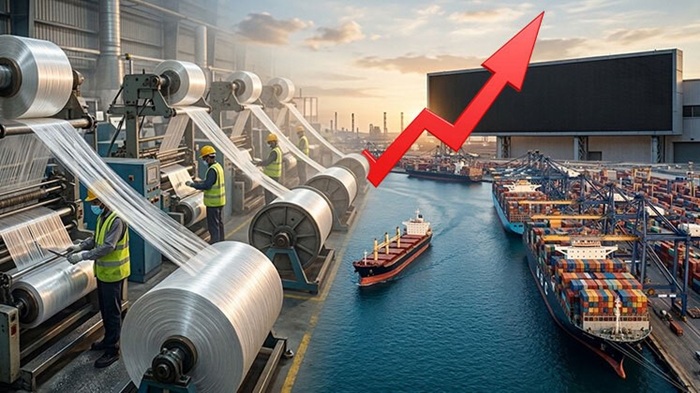
Bangladesh’s imports of cotton may decline this marketing year. Contributing reasons are rising global raw cotton prices, decreased apparel production as a result of the energy crisis in Bangladesh, global economic slowdown and high inflation.
Bangladesh is the world’s second largest garment exporter and is highly dependent on imports to make yarn.Among the major suppliers of cotton to Bangladesh, India is on the top, followed by Benin, Brazil, Burkina Faso and the US.
As of October 2022 raw cotton imports amounted to 7.1 million bales, lower than 7.5 million bales of the same period of 2020.Total cotton cultivation in Bangladesh covers only 0.55 per cent of the country’s arable land.Domestically produced cotton accounts for less than two per cent of total cotton consumption in the country.
But the garment industry in Bangladesh is currently facing numerous challenges, including gas and electricity shortages, increased fuel prices, and high levels of inflation.Most readymade garment factories are not able to fully operate due to significant load shedding. In addition, some European and American brands are deferring shipments and canceling work orders due to ongoing economic issues and high inflation at home. Garment purchase orders slumped approximately 20 per cent to 30 per cent in June and July this year due to the global economic turbulent situation.
Chinese cotton demand falls
China’s consumption of cotton has fallen. Slowing global economic growth has hurt the demand for textiles.China’s cotton consumption in the 2022/2023 crop year that began in September 2022 was 7.5 million tons, 2,00,000 tons lower than the forecast.
Growing enthusiasm by farmers to sell corn ahead of next month’s Lunar New Year holiday as well as easing Covid restrictions on movement have boosted supply of the grain, pressuring the market.
An expected increase in consumption and willingness to replenish stocks may help corn prices stabilise at a high level. China’s position as the top global cotton importer is weakening. Cotton shipments are flowing into flourishing textile industries in competing countries. Soon after China joined the World Trade Organization in 2001, its textile manufacturers became the world’s leading importers of cotton. However, following years of rising production costs, volatility from government intervention in the market, and government caps on the volume of imports, China’s cotton imports dropped from their peak of 24.5 million bales in 2011 to 4.4 million bales in 2015, although they rebounded to 9.5 million bales in 2021.
Over the same period, competing countries such as Vietnam, Pakistan, Indonesia, Bangladesh, and Turkey have expanded their textile industries and boosted cotton imports, which combined now exceed those of China.
Sustainable footwear coming in to its own as demand grows: Report
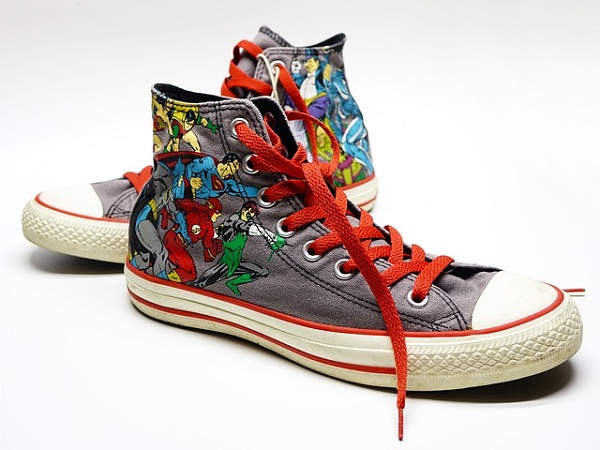
Sustainability is the new mantra in the world of fashion and mostly associated with apparel. However, this movement also applies to footwear as consciousness seeps into consumers and manufacturers, and legislations in parts of the world. As per Future Market Insights study, footwear’s contribution is 20 per cent to the negative environmental impact created by the fashion industry. The footwear sector worldwide generates 700 million metric tons of CO2 as a byproduct of its raw material sourcing and production. The statistics states on an average, it takes anywhere between 30 to 40 years for a pair of shoes to fully decompose in landfills and 300 million units are being discarded every year.
For this sector, just like its apparel counterpart, socially conscious consumers are driving the change towards sustainable sourcing of raw material, manufacture and reduction of wastage. An NPD data revealed that 36 per cent individuals with Gen Z and millennials have shopped in the recent past to support a brand’s social position on sustainability and environmental consciousness. This has triggered brands to take a more future-first approach through an ecologically sustainable and socially responsible business. The good news is the footwear sector has taken note and is trying to change to more accountable shoe manufacturing. Since 2019, usage of recycled material in footwear increased by 70 per cent year-on-year as conscious startups led the way.
Footwear makers face sustainability challenges
As footwear jumped on to the socially responsible bandwagon later than apparel, it is facing certain challenges to overcome and carry forward a sustainable manufacturing process. Fully-sustainable footwear requires deep investment in terms of technology and talent, two things that are not easily available for the sector at the moment. The complexity of manufacturing footwear, the size of the markets, and unpreparedness in terms of recycling and waste management are the major roadblocks and the fact that sustainable raw material is expensive isn’t helping either.
As consumers step out of the Covid-19 break and return to purchasing footwear, particularly in sports shoes and casual footwear, manufacturers will soon come out of their self-imposed curb on investing for sustainable footwear which they had decided during the uncertain Covid times. Since 2019,
Asia Pacific leads in sustainable footwear
Fashion for Good is a global initiative to inspire change and drive the collective movement to make fashion a force for good. It has been working hard to transform manufacturing processes at a structural level throughout the apparel and footwear supply chain through funding initiatives towards sustainable solutions in hubs like India, Vietnam and Bangladesh. Consequently, it is APAC brands that are leading this conscious change towards sustainable footwear.
The European Commission is also trying to promote sustainable footwear and apparel by doing its bit. In 2020, the European Social Innovation Competition aimed to enhance eco-friendly and socially responsible products for its markets. The competition is seeking creative solutions that promote sustainable production, usage and adoption of fashion, as well as the shelf life of fashion products. The EU has the largest number of conscious consumers for eco-friendly and socially responsible fashion products and is driving not only awareness but also manufacturers to continually innovate as shareholders take note of this growing demand.
Committed footwear brands
Brands that have started rolling out sustainable footwear include the Adidas Group, Native Shoes, Tropicalfeel, Nike, Rothy’s, Veja, Reformation, Nisolo, New Balance, Matisse Footwear, Amour Vert, and Threads 4. Adidas has pledged to only use eco-friendly materials by 2024 and is testing footwear made from 100 per cent recyclable material. Reebok is soon to introduce plant-based instead of petroleum-based materials. The brand Reformation uses water-based instead of chemical-based adhesives and bio-materials for the heels rather than plastic.
Bangladesh RMG faces price-point woes as competitors score higher: ITC report

A International Trade Center (ITC) report ‘The Garment Costing Guide’, shows Bangladeshi suppliers are getting the rough end of the stick in the buying price-points they receive compared to fellow nations that supply readymade garments to the international market. This revelation corroborates the complaints that the nation’s garment exporters have been complaining about for the longest time about their products consistently being placed at lower points than others. ITC connects small businesses in developing and underdeveloped countries to international markets, offering the former to seek profitable exporting opportunities worldwide. It has a joint mandate with the World Trade Organisation (WTO) and with the United Nations through the United Nations Conference on Trade and Development (UNCTAD).
Comparing apples with apples
Bangladesh has established its pole position as one of the leading exporters of readymade garments, second only to China. In fact, in 2022, it overtook China in the EU market and further strengthened and increased its market share in the US. Then why is Bangladesh fetching such low prices? As per the ITC report, retailers and buyers choose to pay anywhere between 32 and 83 per cent less for Bangladesh- manufactured garments, than they pay for the same products from other countries they buy from.
While Bangladesh has the company of Pakistan and Cambodia in fetching much lower prices than other supplier countries, this is no consolation for the world leader in garment exports. Vietnam, Indonesia, Turkey and Mexico are consistently given higher than the average rates.
The report went into specific examples based on purchasing price-points in 2020: A men’s woven trouser from Bangladesh fetched $7.01 per piece, which was 9.20 per cent below the global average of $7.72. For the same product, Vietnam received $10.76 per piece and Sri Lanka and India received $8 and $8.41 respectively. Similarly, a bra made from man-made fiber in Bangladesh received only $3.19 per piece, 18 per cent below the average global price but Vietnam pulled in $6.60 for the same unit. Although jeans from Bangladesh are considered world-class, the prices they fetch are anything but. A pair of jeans manufactured in Bangladesh got $7.81, 7.2 per cent less than the global average. On the other hand, a pair of jeans manufactured in Vietnam secured $11.55.
Bangladesh needs to catch up to global trends
Looking into reason for Bangladesh’s poor price-point performance, ITC’s report points out the new hubs of garment manufacturing such as Hong Kong, Singapore and South Korea have transformed the manufacturing model from simple and basic products to creating global brands that retail globally, and invest heavily in engineering, contemporary IT and cutting-edge technology.
Unfortunately, under-developed countries like Bangladesh, Pakistan and Cambodia did not catch on to this trend in manufacturing and did not invest in product modernization. They remain stuck to simple cut and sew operations, producing vast quantities of commodity-type clothing which cannot command a premium. The report advices manufacturers in these under-developed nations to consider upgrading their production technology and IT to catch up and fetch prices they deserve. Another factor that affects Bangladesh’s low price-points is its aggressive strategy to secure Western orders for which it is flexible to lowering prices that has created a situation where international buyers are aware that they can manipulate price negotiations.
ITC advised Bangladeshi manufacturers to first assess the global market and reflect the demand for value-added goods such as garments made from technical textiles, sportswear, leisure wear, etc. The advice suggests realigning their business model and manufacturing lines to a modern and automated line that is digitally enabled to manufacture style-enhanced products.
India’s textile, apparel sector needs $100 bn investment to reach its potential by 2030: Wazir Report
The just published report ‘The US $100 bn Investment Opportunity’ by Wazir Advisors highlights that for India’s textile and apparel sector to realize its potential of $350 billion by 2030, investments worth $100 billion would be required. This growth will see increased demand across the value chain of textiles in India – fiber, spinning, weaving and knitting, dyeing, washing, printing, finishing, made ups and retail. The potential target of $350 billion by 2030 should result in ad additional $197 billion in market value – the domestic market value will contribute $140 billion whereas exports will add a further $ 57 billion.
Investing to increase production capacity
The Report points out the numbers. It says, investments will be required to increase spindle capacity of 23 million spindles by 2030, which is an increase of nearly 40 per cent of the current number of spindles available. In weaving process, around 63,000 extra shuttle-less looms have to be introduced while in knitting process, 45,000 machines are required. 4.2 million sewing-machines will have to support garmenting and made ups segment to reach its target and older machines would need replacement annually.
The $100 billion worth of investments will ensure the increasing market demand can be catered to and replacement of old machinery. This investment includes the entire project cost including land, building, machinery, miscellaneous fixed assets, pre-operatives, etc.
From a socio-economic prospect, by 2030, with this kind of investment, the Indian textile and apparel manufacturing sector will employ an additional 15 million people. The readymade garment sector will attract the lion’s share of this investment as India is tapping the huge global opportunity it represents as well as the prolific rise in domestic demand that has kept it buoyant so far. Technical textile is another niche that India is paying attention to as demand in the domestic market as well as on the international ones surge. Further corresponding investments in the value chain in spinning, knitting, weaving, and processing will be required to balance the supply chain.
Machinery investment worth $50 billion
Out of the projected $100 billion investment by 2030, half will be on machinery – new and replacements. Whilst investment in adding new machinery would be around $40 billion; $10 billion would be used to replace old ones. Here technical textile machinery would be around $11 billion, spinning $10 billion, processing $9 billion, garmenting around $7 billion, man-made fibers $6 billion, weaving $3 billion, knitting at $2.6 billion and made-ups at $1.3 billion. The highest investments in machinery are expected in the technical textiles, spinning, and processing segments as they are more capital-intensive than garmenting where the higher investments will be in buildings and miscellaneous assets.
The projection has a lot of significance. For domestic and international investors, the buoyancy of the textile and apparel sector is an opportunity for higher returns on investments made. For textile and apparel machinery manufacturers, it represents an increase in production and whilst domestic manufacturers can increase their plant capacity, international ones can open operations in India. Furthermore, they can take advantage of the Indian government’s PLI schemes that is being supported through tax holidays and easy processing of starting manufacturing processes.
Inventory, production crises in Bangladesh, Pakistan textile and apparel sector

Year 2022 turned out to be one of exceptional challenge for the textile and apparel sector in Bangladesh and Pakistan. The challenge has started taking political overtones in Bangladesh as the country’s next general election is in 2023, adding pressure on the current government’s leadership as the main opposition rams into the electorate with the issues of inflation, high rates of unemployment and weakening of the economy. As Pakistan is in an internal political turmoil with no clear sight of the next election, the issue may not have become electioneering slogan but is hitting the fragile economy hard.
For Bangladesh all eggs in a basket
Bangladesh was the poster boy of an underdeveloped nation that dramatically turned its fate around by focusing on exports of RMG products worldwide, to the extent of displacing China as the number one exporter to Western markets. Such was its success in turning things around that its economy took off and it started the formal transition from being an underdeveloped to a developing nation. Well thought out investments were made to further strengthen their dominance in textile and apparel exports and Bangladesh was sitting pretty. Global buyers actually preferred relying on Bangladesh for an undisrupted supply during the pandemic-induced lockdown as it was one of the few nations that had its factories operating during Covid-19.
However, from mid-2022, things took a sharp turn and not in a good way. Bangladesh’s traditional export markets are experiencing a shift in purchase patterns of clothing – the prolonged war between Russian and Ukraine has had severe consequences in Europe and the UK. Devastating hike in energy prices as winter has set in, crippling mortgage and interest rates and overall high inflation in essential commodities. The early 2022 scenario that reflected the end of pandemic and saw enthusiasm in apparel purchase in the UK and the EU, has dropped significantly as consumers have deprioritized non-essentials.
As a spokesperson of the Bangladesh Garment Manufacturing Association (BGMEA) points out, clothing budgets in afflicted economies has been squeezed, leading to the slowing down or outright cancellation of orders to Bangladeshi apparel manufacturers. Some international retailers have asked for production to be delayed by at least three months or stop manufacturing all together. This has hit local manufacturers hard as they had already invested in fabric and on completion their inventories are rising, filing up warehouses with clothes that can’t be exported any more.
The beleaguered nation had a good run between June 2021 and 2022 as it exported RMG worth $42.6bn and textiles worth $2.6bn. The silver lining in this critical time is that it secured a $2.3bn credit facility from the IMF and another $1.3bn from its Resilience and Sustainability Facility, meant to help poorer countries address climate change and other long-term challenges. Of course, Bangladesh is not currently facing a liquidity crisis like Sri Lanka and Pakistan but its foreign exchange reserves are depleting against the strengthening dollar and the country is facing energy and essential commodity price crisis, leading to power outages affecting production as well as paying higher prices for raw material.
Bangladesh has realised that whilst it may be the second strongest exporter of apparel to the world, its vulnerability has been exposed because in the realm of textiles and apparels, any slight change in economies affects non-essential products first and the most.
Pakistan sees an addition to general woes
The thriving textile export sector in Pakistan is in the doldrums in this highly volatile and foreign exchange strapped economy, having experienced a major low for 17 months since May 2021. The sector experienced an 11 per cent drop in October this year with textile exports valued at $1.36 billion compared to September’s $ 1.53 billion. Year-on-year, the statistics show a 15.2 per cent drop from $1.6 billion in the same month last year.
The reason is the same as the one Bangladesh is facing but worsened due to extraordinary devaluation of the Pakistani currency, leading to very high energy and raw material costs. At this time, factories are closing one by one as they don’t have continuous supply of electricity to operate production lines, the energy bills are staggering, pushing up cost of production and the inability to source raw material as not only is it expensive but many banks are refusing to issue LCs to importers in the country.
Morocco to host textile show
MIM will be held in Morocco, December 14 to 16, 2022.
This international trade show for textiles and garments has been the meeting place for fashion and textile professionals in Morocco since 2003 and is a strong platform for professional meetings by offering a diverse and inclusive experience. The show will focus on innovation and environmental sustainability to highlight Moroccan textile and apparel industry knowhow. The edition will bring together the entire textile and clothing industry in one place for three days under the theme dayem, which means sustainable in Arabic. The Moroccan textile and apparel industry is engaged in a process of sustainable development which integrates environmental, economic and social aspects throughout the value chain.Morocco is becoming a growingly attractive destination for global textile companies. Several brands from the European Union, the UK and the US have been sealing deals with Moroccan companies in the textile industry. The world’s leading textile groups are migrating from traditional Asian manufacturers to closer markets offering favorable conditions, such as Morocco.Logistical costs, the downturn caused by the pandemic and the increase of salaries in China have induced western textile giants to look for more favorable partners. Distributors who used to buy exclusively in Asia are now shopping in Morocco.
US apparel imports up 30 per cent
From January 2022 to October 2022, America’s apparel imports grew by 30 per cent.
Imports so far in 2022 have been the best of all time surpassing previous best figures that were witnessed during the same period in 2019.With a substantial rise in import values, all Asian apparel exporting countries experienced increase in their shipment to the US during January 2022 to October 2022. Imports from Bangladesh grew by 48 per cent. Imports from China grew by 20 per cent. Imports from Vietnam grew by 18 per cent. Imports from India were up by 45 per centwhile shipments from Indonesia to the US were up 47 per cent.The US is the largest export destination for Bangladesh.There are three reasons for Bangladesh’s export growth to the US market. One is the shifting of orders from China to other manufacturing countries and another is increasing demand for knitwear products on the market. Also orders are being shifted from China. US buyers are shifting their orders from China in large volumes and Bangladesh is getting a portion of the orders. Apart from Bangladesh, some other countries, including Vietnam and India, are getting a share of the orders being shifted from China. Before the pandemic, Bangladesh’s export item to the US was mainly woven garments, but the demand for knitwear has increased on the market for the past two years.
US jeans imports up 24 per cent
From January 2022 to October 2022 jeans imports into the United States increased by 24 percent.
As retailers and brands brought in goods for their final fourth-quarter push, women’s and girls’ blue denim trouser shipments slightly surpassed men’s and boys’ jeans imports. Imports of women’s jeans rose by 25 percent while imports of men’s jeans were up 24 percent. In women’s and girls’, imports from Bangladesh increased 36 percent while Vietnam’s shipments rose 19 percent. Imports from Pakistan were up 37 percent, shipments from Cambodia jumped 35 percent, shipments from Sri Lanka increased 23 percent and imports from Macau were up 40 percent. Imports from Mexico increased 37 percent, Egypt’s shipments jumped 79 percent and imports from Turkey were up 20 percent. In men’s and boys’ jeans, imports from Mexico rose 17 percent, imports from Bangladesh rose 46 percent. Imports from Pakistan rose 33 percent. Imports from Vietnam were up 19 percent, shipments from Cambodia rose 47 percent and imports from India increased 46 percent. Imports from Nicaragua rose 25 percent, shipments from Egypt increased 21 percent and imports from Lesotho were up ten percent.
French fashion show in January
Who’s Next will be held in France, January 21 to 23, 2023.
The fashion show is dedicated to ready-to-wear, footwear and accessories. It's an opportunity to present brands that are more present in northern European markets. The Neonyt trade show will be part of the January edition.On the Who's Next side, this offer reinforces the 40 or so exhibitors already announced at Impact, with strong French players like Panafrica or 1083 but also newcomers like the Spanish Ecoalf and Alohas. Neonyt has been a player for over ten years, it is a reference and it reinforces Who’sNext’sresponsible offer, which has expanded compared to last season. The WSN teams will market the Neonyt Preview, Impact and Neonyt spaces, keeping their respective specifications.In September, Who's Next will occupy Hall 1 of the Porte de Versailles. The Salon internationale de la lingerie and Interfilière will be held in Pavilion 4, with a new scenography designed by the ATO Agency, which worked the last few seasons on the Premiere Classe shows, and also with a new approach for the fashion shows.For the rest of 2023, WSN Développement has already planned to bring its public event DRP, whose first edition took place last spring in the Grand PalaisEphémère, closer to Who's Next. The event mixing sports, fashion, sneakers and pop-culture will take place at the same time as Who's Next from September 1 to 3 at Porte de Versailles, Who's Next being planned from September 2 to 4.