FW
Better Cotton advocates for updated guidelines on environmental marketing claims
Better Cotton, the world's largest cotton sustainability initiative, has provided feedback to the United States Federal Trade Commission (FTC) regarding its Guides for the Use of Environmental Marketing Claims (Green Guides).
The FTC, a bipartisan federal agency focused on protecting American consumers, introduced the Green Guides in 1992 to ensure that companies' claims about product sustainability are accurate and supported by evidence. The Guides are periodically updated to align with contemporary standards.
The Green Guides offer comprehensive guidelines applicable to all environmental marketing claims, including insights into how consumers interpret specific claims, methods to substantiate those claims, and ways for marketers to qualify their assertions to prevent consumer deception.
Better Cotton has participated in this ongoing review process to ensure that the FTC's guidelines acknowledge the agricultural aspect of cotton production and recognize progress at the field level. Notably, one of the key components of the Better Cotton Standard System (BCSS) is its Claims Framework, which assists eligible members in effectively communicating their commitment to Better Cotton in a transparent and credible manner.
Better Cotton supports the FTC's endeavor to establish a common framework, outlined in the revised Guides, that enables US companies to communicate their sustainability efforts in a credible, verifiable, and accurate way. This framework fosters a fair competitive environment for businesses and empowers them to set and communicate ambitious sustainability goals to an increasingly eco-conscious consumer base.
However, Better Cotton suggests that the FTC enhance the existing guidance by including examples of substantiation using various methods, rather than limiting substantiation to a single standardized methodology. The organization argues against establishing one standard methodology, such as lifecycle analysis (LCA) or product environmental footprints (PEF), for substantiating claims. It asserts that no universally applicable methodology covers all relevant impact categories for every product type.
Moreover, the implementation of a single methodology like LCA poses challenges when applied to an agricultural context. If the revised Guides adopt this approach, it would effectively prevent some of the most trusted and widely used sustainability schemes and their labels from providing environmental marketing claims for their members.
Japan markets encourage high-quality RMG exports from Bangladesh

Japan is emerging a strong market for Bangladesh readymade garments (RMG) industry with a healthy growth of over 42 per cent to cross the billion-dollar mark in the first nine months of 2022. And this trend is continuing in 2023 as well. Although the US and Europe are the largest export destination as most apparels with the ‘Made in Bangladesh’ tag, due to their easier terms and conditions, the Japanese market is now far more accessible than in earlier. In FY22, Bangladesh RMG sector had contributed around 9.25 per cent to the country’s GDP and with around y 4,000 factories employing around four million workers, the RMG sector has always played a critical role in the country's economy.
Stringent Japanese quality control hampers import
Bangladesh, exported RMG worth $1.2 billion in the first three-quarters of 2022, up from $84,964 million during the same period of 2021 when the pandemic was still not over. If handled well, Japan holds a lot of promise in post-pandemic years when people cannot afford to spend as much as they did earlier. As per a CCF group report Japan's textile and apparel import has grown in March 2023, as it imported 232kt of textiles and garments, up 0.1 per cent year on year and 41 per cent month on month. Imports from China alone were a massive 125kt, up 1.9 per cent year-on-year and 64.4 per cent month-on-month proving that Japan's textile and garment import growth has rapidly picked up in the post-pandemic days.
However, exporting to Japan is not easy for small countries like Bangladesh as their quality control is exceptionally high and products not reaching the mark are rejected. Many Japanese retailers have a third-party expert to double-check individual pieces of garments from shipment as sample products before accepting the goods. Japanese retailers are definitely not going to lower their standards to help Bangladeshi companies so the ball is in Bangladesh’s RMG segment to achieve a higher a level of efficiency and quality and incur low wastage by-product rejection to penetrate the Japanese markets
Meanwhile, Bangladesh has worked on making its RMG industry more high-tech as the country’s economy depends on that. Many factories are now environmentally friendly and offer world-class manufacturing processes, to compete with China which currently has a 53 per cent stake in the Japanese market.
Trade shows to promote exports
Just like the US and other countries, Japan too is reducing its dependency on China in sourcing RMG products due to the alleged low quality of products, human rights issues and territorial conflicts involving China, and other reasons. However, Bangladesh has still not managed to get into the most favored import nation status for Japan, in spite of all its efforts. Meanwhile, Bangladesh and Japan hope to sign a Free Trade Agreement (FTA), which would give the apparel industry much-needed boost and a stronger footing.
The apex group of apparel manufacturers BGMEA (Bangladesh Garments Manufacturers' Export Association) is taking steps to increase their footprint in Japan. From events to showcase their RMG’s strength to importers to trade delegates the Association is taking numerous steps to boost business. The need of the hour is to get duty-free access for all textile and clothing products to Japan and other countries, to make the sector economically viable and achieve diversification and better quality in both export markets and domestic product lines. Indeed Bangladesh is now on a mission to increase its global RMG trade to be on better terra-firma this fiscal year.
Russia-based North Korean garment companies experience surge in orders, struggle with quality concerns
Russia-based North Korean garment companies are facing a substantial increase in orders from local clients, leading to a surge in production, but concerns about quality persist, reports Daily NK. Production at North Korean garment companies in Irkutsk and Krasnoyarsk during the first quarter of this year doubled compared to the same period in 2022.
During the COVID-19 pandemic, these companies had suspended their onsite operations and assigned small teams of workers to perform various odd jobs at construction sites and elsewhere. However, the recent flood of orders from Russian clients has kept the companies busier than ever.
Interestingly, Russian businesses, which previously ordered military clothing in large quantities, have shifted their focus to construction overalls and ordinary clothing. The manufacturing of military clothing is generally more profitable than producing clothing for the general public. However, workers at North Korean garment factories no longer possess the needlework skills necessary for high-quality military clothing, prompting Russian clients to commission work clothes for construction sites or clothing for everyday use instead.
While North Korean garment companies are striving to meet the demands of their Russian clients, the need to improve worker skills and ensure quality remains a pressing challenge.
Hometex: Turkey's home textile fair opens on May 16
Hometex, one of the prominent fairs in the home textile industry, is gearing up to open its doors on May 16 at the Istanbul Expo Center.
The event is organized by the Turkish Home Textile Industrialists' and Businessmen's Association (TETSIAD), under the management of KFA Fairs, a subsidiary of the Bursa Chamber of Commerce and Industry.
Last year, Hometex brought together national and international players in the home textile sector. More than 650 domestic and foreign companies showcased their new products, attracting visitors from 126 countries
Design Wind at Hometex will be a prominent feature of the fair, attracting nearly 850 companies as exhibitors this year. The fair will also host purchasing committees, providing new export and cooperation opportunities for companies. With the participation of buyers from Europe, the Middle East, Africa, Asia, the USA, and the Turkish Republics, the fair aims to make a significant contribution to the sector's exports. Furthermore, renowned designers will incorporate manufacturers' products with their own interpretations, showcasing them to the visitors.
Cambodia's GFT sector faces steep decline in exports, raises concerns for jobs and economy
Cambodia's garment, footwear, and travel (GFT) goods, the country's largest export sector, continued to experience poor performance in the fourth month of 2023. Trade data released by the General Department of Customs and Excise (GDCE) revealed a decline of 24.63 percent in earnings from January to April compared to the same period in 2022.
In the first four months of this year, Cambodia exported GFT goods worth $3.10 billion, a significant drop from the $4.11 billion recorded during the corresponding period last year. The decline in exports intensified in April 2023, with a 30.42 percent decrease compared to April 2022, marking the largest monthly decline so far this year. March saw a decline of 14.60 percent, followed by declines of 24.54 percent in February and over 28 percent in January, all compared to the respective months of the previous year.
Analyzing the GFT sector, knitted apparel articles earned $1.39 billion till April 2023, representing a 28.5 percent decline compared to the $1.95 billion earned during the same period in 2022. Non-knitted apparel articles generated $754.72 million, an 18.1 percent decline year-on-year from the $922 million earned last year. Travel goods contributed $515 million until April this year, compared to $672 million during the same period last year, resulting in a decline of 23.3 percent. Footwear exports amounted to $436.91 million in the first four months of 2023, reflecting a decline of 23.4 percent compared to the previous year's $570.64 million.
Overall, Cambodia's international trade experienced a 14.1 percent decline from January to April 2023 compared to the same period in 2022, totaling $15.16 billion, as indicated by GDCE trade data. The sustained decline in GFT export earnings since the latter half of the previous year has raised concerns about factory closures and job losses. The GFT sector, which constituted 11 percent of Cambodia's economy, is the largest source of employment in Cambodia, providing jobs to over 750,000 people, with a majority being women. While the sector accounted for 41 percent of the country's exports until the end of April this year, it constituted 53 percent during the same period last year, highlighting the alarming downward trend.
Industry experts attribute the declining exports to excess or unsold stocks held by retailers in Europe and the US from previous seasons, resulting in reduced demand.
Reports indicate that as of February this year, more than 70 factories have closed in Cambodia, leaving 32,023 workers unemployed, of which 26,055 are female.
EU member states rally behind ban on destruction of unsold clothing
EU member states have shown their support for a ban on the destruction of unsold clothing in an effort to combat waste in the textile industry, which is responsible for one-fifth of the European Union's greenhouse gas emissions. Currently, nearly 6 million tonnes of textiles are discarded annually by EU citizens, with only a quarter being recycled. The proposed ban aims to strengthen the EU's environmental stance, but concerns have been raised by industry leaders and politicians who fear that excessive environmental regulations could hinder European economies. French President Emmanuel Macron recently called for a "regulatory pause" on new environmental measures, advocating for a focus on implementing existing laws.
Last year, Brussels introduced a plan to promote recycling and reuse across the EU, acknowledging the growing environmental issue resulting from the destruction of unsold consumer products, particularly due to the surge in online sales. EU member states have now taken a more stringent approach, supporting a specific ban on the destruction of "apparel or clothing accessories." France, Germany, and the Netherlands were among the countries advocating for the inclusion of this proposal in the EU's new "ecodesign requirements." While proponents of the ban argue that it aligns with the EU's environmental and recycling goals without imposing significant burdens on businesses, some diplomats express concerns that recycling or processing clothing to prevent destruction could result in higher prices for consumers.
The ban would exempt small businesses, while medium-sized businesses with up to 249 employees and an annual turnover below €50 million would be granted a longer adjustment period. The proposal still requires approval from EU ministers and the European Parliament before it can become law.
Double-digit decline in US imports for products in home textile category
Both the sheeting and terry towel in home textile category, experienced a significant double-digit decline in import orders for spring 2023 arrivals in the January-March period compared to the previous year, reveals New data from the U.S. Department of Commerce.
Within the sheeting category, the decline was more pronounced than in the terry towel category. Import volumes of man-made fiber (MMF) sheets plummeted by over 25% in terms of U.S. dollar volume. Notably, China, the largest contributor to these imports, shipped 25% less in terms of dollar volume and 19% less in terms of units.
Pakistan, on the other hand, made gains in both metrics but accounted for only slightly over 3% of total MMF sheet shipments to the U.S. during Q1. The decline in the cotton sheet category was even steeper, with a 33% decrease both in U.S. dollar volume and units. Pakistan emerged as the primary source of cotton sheet imports to the U.S., representing 40% of units imported, surpassing India (36%) and China (16%).
In contrast, cotton terry towel imports experienced a milder decline compared to the sheet categories. The total imports by U.S. dollar volume dropped by less than 4%, while units decreased by 13%. Pakistan surpassed India with a 37% share of units imported into the U.S., while India followed closely with 36%. China's share was 14%.
Guatemala's Garment Source Fair, showcases a thriving textile sector
The Garment Source Fair, now in its thirtieth edition, is set to showcase the vibrant and thriving garment and textile sector in Guatemala. As a key player in the country's export market, this sector has experienced remarkable growth, with projected exports reaching an impressive US$2,258 million in 2022, accounting for 16.8% of Guatemala's total exports, according to the Bank of Guatemala.
The fair is the most significant annual opportunity for companies to unveil their latest innovations, new products, and unique offerings. Exhibitors from diverse sectors within the industry, including textiles, services, machinery, screen printing, and sublimation, will participate in this highly anticipated event.
Attendees will have the opportunity to witness the latest technological breakthroughs, such as water-based inks, high-productivity printing technologies, and modern machinery. Workshops and seminars will also be conducted, focusing on leveraging these new technologies to maximize the value of garments.
Guatemala takes pride in its position as a leader in the Central American region, with the highest added value in clothing production, currently standing at an impressive 52%, as confirmed by departmental data. The country's strategic location, with access to both coasts of the United States, makes it an ideal destination for nearshoring production orders, further enhancing its attractiveness to the industry. The thirtieth edition of APSS is also aligning with sustainability efforts by aiming to be a zero-waste event. Through collaboration with Recicla Gt, waste segregation and recycling initiatives will be promoted throughout the fair.
For over three decades, apparel trade fairs have played a pivotal role in promoting the industry, creating new business opportunities, and boosting exports. APSS stands out as the sole regional exhibition in Central America, attracting companies from various sectors including spinning, textiles, apparel, machinery, and accessories.
Global menswear market to reach USD 988.24 Bn by 2032, fueled by fashion consciousness and e-com boom
The global menswear market is anticipated to achieve a valuation of USD 988.24 billion by 2032, exhibiting a strong compound annual growth rate (CAGR) of 6.20% during the forecast period. The market, which was valued at USD 575.1 billion in 2022, is expected to witness significant growth fueled by increasing fashion concerns among males and the widespread adoption of e-commerce platforms, according to a recent report by Market Research Future (MRFR),
The modern consumer class, propelled by rapid development and urbanization, has experienced a surge in disposable income, leading to a growing interest in contemporary fashion. Consumers, particularly millennials, are inclined towards investing in trendy clothing, including occasion-specific outfits and sleepwear. The desire for a luxurious lifestyle has also influenced the purchasing power of individuals, enabling them to opt for high-end fashion brands.
One of the key drivers of the menswear market is the expanding reach of the internet and e-commerce platforms, which has enhanced fashion awareness and made luxury brands and unique products more accessible to consumers. Market players have recognized the growing purchasing power in emerging markets such as China and India and shifted their focus towards men's apparel. Companies are leveraging various marketing techniques, including celebrity endorsements, promotional discounts, and seasonal sales, to attract customers and boost sales in the industry.
The convenience, time-saving benefits, and ease of online shopping have resulted in an increase in the volume of online transactions and the average amount spent by users. Luxury brands are forming alliances with technology companies to enhance the online shopping experience and cater to the evolving preferences of their customers. This trend contributes to the overall revenue of the menswear market.
Regionally, the North American menswear market is expected to dominate, driven by the rising demand for luxury items, strong purchasing power, and celebrity endorsements. The Asia-Pacific region, particularly China and India, is projected to witness the fastest growth in the menswear market. The expansion of the menswear industry in these countries can be attributed to the increasing economic development, rising urban middle-class consumers, brand awareness, and the preference for high-quality garments. China holds the largest market share, while India's menswear market is experiencing the highest growth rate in the Asia-Pacific region.
Premium jeans market on a high, projected to touch $12 bn by 2027: Study
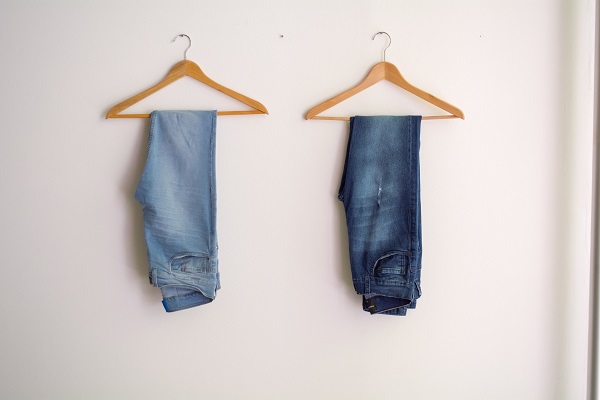
Premium jeans are more a statement than the standard pair of denims. As Claire Dupuis, Senior Product Trend Forecaster at Cotton Incorporated and a denim specialist explains, the basic difference between a premium and a regular pair is the price with the lowest starting point being $100 for the former. It’s all in the brand, Dupuis emphasizes.
A recent report ‘Premium Denim Jeans Market: Global Industry Trends, Share, Size, Growth, Opportunity and Forecast 2022-2027’ by the IMARC Group forecasts the market for 2022-27. The premium denim jeans market valued at $8.5 billion in 2021 and is expected to reach $12 billion at the end of forecast period that is 2027. The CAGR is expected to be around 6 per cent. That the of premium jeans category has been gaining popularity is evident from brand launches and collaborations. For example, popular denim brand Levi’s has collaborated with San Francisco-based designers to launch the trendy and premium jeans portfolio labeled MistakesAreOk.
Consumers love the durability
Representing the highest quality available in denim wear, premium jeans are preferred because they stand for quality and durability. The enhanced quality of denim used is softer, more comfortable and better styled. Compared to budget jeans, premium ones are not only more durable but also stand out in aesthetic. Premium jeans come in all standard styles and are available across all retail platforms including e-commerce. Other criteria that women considered in labeling a jean premium is the fabric or fiber, the feel or texture, the color or wash, comfort, trendiness and stitching, indicating that the premium designation is both personal and individual choice. Chad Jackson, a spokesperson for Evisu, a leading denim label, points out premium denim must boast of a specialty that the wearer can see, feel and appreciate, and for every woman, that’s something different.
Market and growth trends
Major factors contributing to the growth of premium denim jeans are an increase in the number of retail chains, and a shift in lifestyles and better purchasing power. Increase in e-commerce retail market providing special discounts and availability of a wide range of products in different colours and shades is fuelling demand for premium denim jeans.
Vendors are constantly attracting consumers with innovative designs that are more comfortable, making them flexible to compressions and stretches, moisture management, thermoregulation, and UV protection. In line with this, the development of online retail portals that provide a hassle-free shopping experience while offering several products is acting as another significant growth-catalyst.
Women drive premium jeans growth
The women segment is expected to dominate through. As denim jeans for women acquire a three-fifth market share, it is expected to grow at 3.3 per cent CAGR through the forecast period. Around 34 per cent of sales are to women consumers. Men and children combined to hold 41 per cent market share which is expected to grow at 2.1 per cent CAGR through the forecast period. Europe and North America hold around 60 per cent market share in the men’s segment.
Asia Pacific region is expected to dominate the premium denim jeans market and it is one of the fastest-growing regional markets. North American region is expected to show gradual growth due to the affordability of fabric and durability of denim material. Whilst India is emerging as one of the largest markets globally for all kinds of denim jeans, the premium jeans category is still in its nascent stage and limited to urban elites.