


FW
Apparel e-commerce becomes the norm as shoppers turn to online channels
 Though apparel retail took a major hit due to the COVID-19 pandemic with sales declining by 16.4 per cent it, consumers continued to flock the online channels as they have now gotten acclimated to shopping online. Recent data provided by Quantum Metric, a SaaS platform, during this week apparel retailers generated an average weekly revenue growth rate that was 69 per cent higher than the same week in 2019. The number of orders also increased 79 per cent even though the average order value decreased by 60 per cent. The on average, weekly conversion rates also trended 29 percent higher versus the same week last year.
Linking physical with digital
Efrat Ravid, Chief Marketing Officer of Quantum Metric attributes this success to retailers timely shift to digital channel. Ravid believes, in future when retailers begin opening their stores again, they will have to adjust to this growing quantum of online shoppers and adapt their new in-store experience to an even more digitally savvy audience. Linking physical products with digital experiences will be one of the major challenges that retailers will face.
Ravid notes retailers will have to continue to fight this challenge over the course of their journey especially as more shoppers are likely going to turn to online shopping for their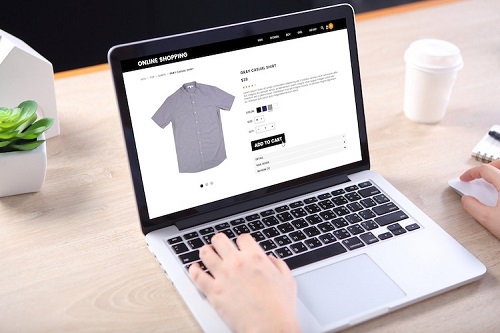 future apparel purchases.
Dealing with load time and checkout issues
One way retailers can counter this challenge is by elevating their online experience in kind. For this, they first need to deal with the issues of long load times or clunky checkout experiences that have plagued retailers since long. Retailers also need to have as much visibility of their customers as possible. This will help them determine areas where they are experiencing friction and how to prioritize issues to individual customer to ensure they have a really smooth experience.
As shoppers adapt to the pandemic, other recent studies have also been bullish on apparel sales growth. For instance, Fintech service provider ViaBill, which offers no-interest buy now pay later shopping experiences to consumers, expects fashion sales to increase by 106 per cent which is well ahead of the 50 per cent increase in computer and accessories sales and 34 per cent increase in health and wellness category.
Also expecting a growth in fashion sales is Klarna, an online shopping app, whose most recent demographic data shows that from May 3 through May 9, Gen Z and millennial app users increased their share of spending on apparel, footwear and accessories for the fourth week in a row. With more states and municipalities lifting stay-at-home orders, the retailer’s app-enabled sales at stores selling women’s accessories grew by 12 percent week over week in the week ended May 9, suggesting a revival of female shoppers.
Johnny Coca named as the new director of Louis Vuitton
Paris-based Spanish designer Johnny Coca has been named the director of women’s fashion leather goods at Louis Vuitton after his stint at British brand Mulberry.
Coca will become one of the primary creative linchpins for the luxury brand alongside Virgil Abloh, director of menswear and Nicolas Ghesquiere. Johnny will oversee the handbags, bespoke orders, eyewear and luxury leather products for women.
He has had a long history working with LVMH, starting his career with a professional contract during his years of education, followed by his work at the Celine design studio where he did notable work with Phoebe Philo. He was serving as the creative director of Mulberry up until 2 months ago and the company is reinforcing their creative outlook by onboarding an experienced veteran of the luxury world.
LVMH has ramped up its efforts to help the pople deeply impacted by COVID-19. Several brands under the conglomerate have participated in the charity auction organised by Fashion Journalist Laurence Benaïm’s, which benefited the ‘SOS EPHAD’ initiative launched by the Fondation Recherche Alzheimer. The funds will be used to support nursing homes, which have been greatly impacted by the health crisis.
Canadian inventor develops anti-viral clothing
Canadian inventor Giancarlo Beevis has partnered with Youngdo Kim, CEO of Okyung International to develop anti-viral clothing to protect against the coronavirus outbreak. The product is being developed in cooperation with the EPA at Intelligent Fabric Technologies North America (IFTNA) and is called PROTX2 AV. In lab results the product is said to have destroyed 99.9 percent of COVID-19 within 10 minutes, with residual killing power for 24 hours.
The product will perform in a similar manner to the company's antibacterial line, PROTX2. It claims to inhibit bacterial growth while retaining fabric's natural characteristics. Companies across the globe are rushing to capitalize on this new technology, considering applications of this antiviral chemical on PPE, military clothing, travel wear, and everyday items, too.
It is unclear whether clothing will all have the substance pre-applied, or whether treatments will mirror an early discussion about antiviral laundry additives, but it's likely both options will eventually become available. One example we can draw some conclusions from is that of Scotch Guard, which is applied as a spray. No matter how it gets to us, antiviral clothing has the makings of big business. The antimicrobial textile market is on track to surpass $20.5 billion by 2026.
Indian government to hire textile consultant soon
As India is losing its competitive edge in global textile and apparel sector, the government has decided to engage a consultant to improve the county’s performance. The Textiles Ministry will hire a consulting firm to identify new opportunities for market expansion, maintain a database on international tariffs, trade data, growth trends, impact of international agreements and free trade agreements, installed capacity, production and employment in the sector.
It will also provide inputs for promotion of foreign direct investment especially in textile parks, and intellectual property rights issues including geographic indications in textiles and handicrafts. Besides it will assist the ministry in sensitising Indian industry of the global market scenario and emerging trends to help identify new opportunities for market expansion.
Indian garment workers receive wages due to international pressure
A section of garment workers in India have received wages thanks to pressure from the US and EU-based international agencies on apparel brands that have outsourced production to garment factories in India.
Organizations such as United Students Against Sweat Shops and the Workers Rights Consortium have brought intense pressure on leading global brands to ensure that workers are paid in factories in Bengaluru, said the Garments and Textile Workers’ Union (GATWU), which has worked on similar lines in the past to improve working conditions. Not only are factories being forced to pay wages, international agencies have ensured that leading apparel brands do no cancel their orders, which in turn could harm the factories finances’ to pay wages.
With three factories in Bengaluru having closed already in the past month, workers in the garment sector are going through anxious times. While the current work is related to previous orders, fresh orders for the city’s garment sector, whose peak season starts from July, are still to come in.
Punjab apparel makers divert to PPE manufacturing
Punjab apparel industry leaders are set to fulfill the shortage of PPE kits in the country by diverting their production to manufacturing the much needed protective gear worn by health and sanitation professionals to minimize exposure to the deadly infection.
Around 58 PPE suit manufacturers in Punjab, 54 of which are based in Ludhiana, have obtained certification from South India Textiles Research Association (SITRA) or Defence Research and Development Organisation (DRDO) for the manufacturing of these kits.
These 58 manufacturers already have orders for lakhs of PPE kits and their existing capacity is more than the requirement in India. Hence, the Punjab industries minister Sunder Sham Arora has urged Union minister of commerce and industry Piyush Goyal to allow the exports of these kits to other countries.
A significant landmark, India produces one crore PPE coveralls
The textile ministry recently says total number of PPE coveralls produced in India has crossed 1 crore which is a significant landmark towards the vision of #AatmaNirbharBharat.
According to the government, India has become the world’s second largest manufacturer of personal protective equipment (PPE) body coveralls within a short time span of two months, the government had said last week.
China is the world’s leading producer of PPE body coveralls, crucial to safeguard against COVID-19 infection.
LSA, NITMA protest against anti-dumping duty on Acrylic Fiber
Ludhiana Spinners Association (LSA) and Northern India Textile Mills Association (NITMA) have protested against the issue of anti-dumping duty (ADD) on raw material of acrylic fiber (AF). Senior representatives of both associations met various government officials and ministers in this regard. Just a few months back, they had meet Piyush Goyal, Union Minister of Commerce & Industry, and Ravi Capoor, Secretary Textiles.
Recently in a detailed press release, Northxern India Textile Mills Association (NITMA) claimed large numbers of its workforce, associated with hundreds of units that are producing items made by acrylic fiber, are being affected by the imposition of anti-dumping duty on these fibers.
As per sweater and shawl manufacturers of Ludhiana, the imposition of this duty increases their cost while only three companies of India are in gain due to this policy. Out of these three companies, two themselves are spinners and consume their own fiber. Acrylic fiber is also known as the common man’s wool, and Ludhiana, the leading textile and knitting hub of India, is the main producer of shawls and sweaters in the country.
Due to such policies, countries like China, Vietnam, and Bangladesh are benefitting of India’s lack of competitiveness with their low cost and lesser price. Apart from NITMA, other trade bodies of the Ludhiana such as Knitwear Club, and Knitwear and Apparel Manufacturers Association of Ludhiana (KAMAL) are also in the favour of removing ADD on AF. But no luck so far, and it looks like Ludhiana’s struggle will continue.
With growing demand for manufacturing in the US, government needs to step in
 COVID-19 has forced brands across the world to strike a complicated balance between stocking sufficient inventory for future needs and avoiding surplus to cut waste. Most brands in the US could achieve this easily by shifting manufacturing locally. However, fashion brands suffered on account of the high costs and low standards of their production processes. The US does not have high-end manufacturing processes like China does.
Secondly, employment in the country’s apparel manufacturing sector declined from 28 per cent to 8 per cent in 2017. Contrary to this, apparel manufacturing in China grew by 5 per cent every year from 2014 to 2019. Also, Chinese factories were able to bring in more than $380 billion in annual revenue.
Shortening lead times
However, the outbreak of COVID-19 has led to many brands questioning their reliance on China and demanding resurgence in American manufacturing which they believe would lead times and require less inventory, thus avoiding big losses during a crisis.
As Kristen Fanarakis, Founder of contemporary brand Senza Tempo points out, manufacturing in the US enables brands to pivot faster. It also reduces manufacturing lead times which can take up to three months in China. This can be seen from the example of Haverhill Leach, founder of jewelry brand Haverhill Collection, who relocated her manufacturing bringing home a giant order of finished components including silver and stones. She assembled and finished these pieces from home and their sales have tripled in the last two months, being able to offer much shorter turnaround times just in time for Mother’s Day.
Need for a robust infrastructure
But to manufacture in America, brands need to have a robust infrastructure like China and Italy. Also, there’s a limit to how much brands can produce in the country. If they want to manufacture on a small scale or are making something simple like T-shirts, they can easily get it made by someone else. However, apparel factories in the country cannot offer the kind of volume or intricacy of product that massive Chinese factories can.
For manufacturing in the US to take off, the government needs to incentivize it. Currently, manufacturing in the country does not receive any cost or tax incentives. The government needs to pay attention to this.
India’s cotton exports to rise by 12%: CAI
As per Cotton Association of India (CAI) estimates, cotton exports by India are likely to rise by 12 per cent from previous estimate to 4.7 million bales in 2019-20 as a fall in the value of the rupee has made shipments competitive. This could further add pressure on global cotton prices, which are trading near their highest level in more than two months.
Indian could also limit its shipments to rivals such as the United States, Brazil and Australia and divert them to key Asian buyers such as China, Bangladesh and Vietnam. The country sells its cotton at around 62 cents per pound on a cost and freight basis (C&F) to these Asian buyers such as Bangladesh. The country is expected to produce 33 million bales in the marketing year ending September 30, 2020.











