FW
CFW launches new digital platform to live stream events
Organizers of Copenhagen Fashion Week (CFW) have unveiled its new digital platform, CPHFW72H, designed to stream this season’s 72 hours of shows, talks, and events.
The spring/summer 2021 edition of Copenhagen Fashion Week will feature 32 shows and presentations including Ganni, Stine Goya, Holzweiler and Rixo, kicking off with a digital show from Swedish brand Whyred aired at 10 am CET on Monday, August 10, while Henrik Vibskov will officially close fashion week with a physical presentation to be live streamed on August 12.
All showcases, whether physical, digital or a combination of the both will be presented on Copenhagenfashionweek.com , where organizers have stated that they have shared a “no rules dictating show format” and that has resulted in a range of pre-produced and live presentations – including adapted runway shows, presentations, films, exhibitions, and installations.
Brands scheduled to hold a physical catwalk show, presentation, exhibition or event, include Berlin-based MalaikaRaiss, sustainable Danish fashion brand Designers Remix, Mark Kenly Domino Tan, activewear label 7 Days Active, Copenhagen-based Soulland, Ganni, Danish designer Soeren Le Schmidt, luxury ready-to-wear label Munthe, Samsøe and Samsøe, Danish designer Stine Goya, Rains, Remain Birger Christensen, Copenhagen-based Lovechild 1979, Baum und Pferdgarten, Danish sustainable fashion brand Skall Studio, Helmstedt, menswear label Mfpen, Bestseller brand Selected, By Malene Birger, Henrik Vibskov and Copenhagen-based outerwear brand Saks Potts.
Copenhagen Fashion Week is quick to stress that while it is able to host physical events, this edition of fashion week will “naturally be adapted in compliance with the COVID-19 health and safety measures.
Coats launches new range of protect yarns
Coats, the world’s leading industrial thread company has launched Coats Armoren™, a range of cut protect yarns engineered for both protection and comfort in gloves and which offers game-changing solutions to the hand safety industry.
Coats Armoren uses a pioneering engineered yarn technology developed by Coats that incorporates cutting edge innovation for hand safety. New generation stretch fibres and high quality core yarn coverage create laser-fine gloves that are comfortable and have ultimate tactile dexterity. The proprietary helical core construction provides the power of extreme cut resistance; multi-risk and arc flash protection; and high contact heat resistance – even at fine knitting gauges.
Armoren Ultracut has proprietary reinforced core constructions to meet extreme laceration hazards. Armoren Ultralight has extra-soft fibres engineered which provide yarns for laser-fine knitted gloves that offer ultimate dexterity and protection.
Also being brought under the Coats Armoren range are two existing products. Armoren X13 incorporates the latest fibre and spinning technology to provide superior cut resistance and high durability. Armoren X14 has a special fiber blend with cooling technology that wicks moisture and reduces body heat.
H&M suspends employees for using racist language
Fashion giant H&M has suspended a few of its employees for using racist language to describe the name of a hat to be sold at stores of its & Other Stories brand.
In 2018, the Swedish company was forced to apologize for an advert that was perceived as using racist language.H&M acknowledged that it had challenges with the diversity of some of its own teams.
It said it would also take further measures including specific targets for boosting diversity in its major markets by the end of 2020 and the creation of an external advisory council to consult on its business direction.
H&M's & Other Stories has 70 stores in 17 markets in Europe, the United States and Asia.
J Brand launches Limitless Stretch
Fast Retailing-owned J Brand has launched Limitless Stretch, a fabric created at the company’s Jeans Innovation Center in Los Angeles. Available exclusively in its new Sophia skinny fit, the fabric is able to stretch to twice its size and retract without any sagging. The fabric features 30 percent more stretch than other premium denim fabrics on the market
The brand predicts the fabric to be an immediate customer favorite, as it’s an update to its signature skinny fit that helped launch the label 15 years ago. The super skinny silhouette features a mid-rise waist and a slightly longer inseam than other J Brand styles, and will be available for Fall 2020.
To accompany the launch, J Brand is rolling out a black-and-white campaign that pays homage to the updated classic and underscores the “effortless beauty” of the J Brand customer.
J Brand’s Limitless Stretch fabric also checks off another box on the list of consumer demands increasing in light of the pandemic: sustainability. The new denim is washed using J Brand’s Eco Wash water-saving process. By the end of the year, the brand will incorporate sustainable technologies into 100 percent of its washed denim.
Kontoor records improved performance in Q2
Kontoor Inc., with a portfolio led by the Wrangler and Lee brands, has strengthened liquidity and improved its financial position in the second quarter, even as the economic crisis that resulted from the global pandemic brought down sales and earnings.
The company ended the quarter with $256 million in cash and equivalents, and approximately $1.1 billion in long-term debt. It repaid $175 million against the revolver in conjunction with the closing of the amendment to the credit facility in May.
Due to the company’s strong cash generation, in June it made an additional discretionary repayment on its revolver of $75 million. As of June, Kontoor had $225 million of outstanding borrowings under the revolving credit facility and $273 million available for borrowing against it.
Inventory at the end of the second quarter of 2020 was $433 million, down $105 million or 20 percent compared to the prior-year period.
Revenue for the second quarter ended June 27 decreased 43 percent to $349 million. Kontoor said the revenue declines were primarily the result of COVID-19-related wholesale and owned-door closures, and stay-at-home orders, as well as an approximate $33 million timing shift of shipments from the second quarter to the third. Revenue on a year-over-year basis sequentially improved each month as the quarter progressed.
Multi-designer store Curato to launch online operations
Curato, a Mumbai based multi-designer store exclusively for men is all set to launch their E-commerce website to provide as the part of seamless shopping experience to its patrons. Curated by Tanisha Rahimtoola Agarwal, the website features a plethora of Indian designers across athleisure, occasionwear, experimental to classic wear.
The website showcases a finely curated collection of designers across categories, stocking everything from apparel, footwear, and accessories. For contemporary silhouettes, it has brands like Antar-Agni, Rajesh Pratap Singh, Kunal Rawal, Rohit Gandhi & Rahul Khanna; They have a host of designers who also represent athleisure wear such as Nought One & Gully; For quirky Silhouettes, they have Sahil Aneja, Noo-Noo & Shivan & Naresh. With the festive season around the corner, the newly launched portal offers a repertoire of ethnic, timeless Indian wear by leading names like Payal Singhal, SVA, among many others. The e-commerce website will offer a seamless shopping experience to the shoppers.
New report highlight high rate of dismissal of union workers
A new report, from the Business and Human Rights Resource Centre (BHRCC), portrays an “emerging and widespread pattern of supplier factories appearing to target unionized workers for dismissal.
The report highlights nearly 5,000 job losses it argues are linked to union membership at nine factories in Myanmar, Cambodia, Bangladesh and India. Workers say they have been disproportionately targeted due to union membership and organizing.
Among the cases mentioned in the report are a supplier in India making clothes for H&M that sacked 1,200 workers in June citing lack of orders because of Covid-19. Meanwhile, the supplier’s other factories remained open. Workers and unions claim the closed factory was the supplier’s only one with a union, and was targeted for this reason.
As production slowed in the garment sector in Asia as a result of plummeting sales caused by the pandemic, factories began to make thousands of workers redundant across the region.
By early April, in Bangladesh a million garment workers had been sent home without pay or had lost their jobs after western clothing brands cancelled or suspended £2.4bn of existing orders.
The report looks in detail at several ongoing disputes between unionised workers and managers in factories in India, Myanmar, Cambodia, Bangladesh and India. In every case it is alleged that big name brands should have been more active in ensuring workers were not punished or targeted for being union members.
Walmart Labs launches new global identity
Walmart Labs, the technology arm of the US retail giant, has launched its new global identity as Walmart Global Tech. Subsequently, the Indian entity will now be known as Walmart Global Tech India.
Walmart said the main objective behind the move is to capture the brand’s energy as a human-led, tech-empowered innovator that positively impacts the lives of millions of associates and hundreds of millions of customers globally.
The launch of Walmart Labs’ new global identity comes at a time when e-commerce firm Flipkart recently strengthened its wholesale presence with the acquisition of Walmart India, which operates the Best Price cash-and-carry business.
Walmart Global Tech has a team of over 15,000 software engineers, data scientists, and service professionals within Walmart, delivering innovations that improve how its customers shop and empower its 2.2 million associates.
Its teams at Walmart Labs India are using technology to deliver leading-edge innovations for the retailer. These innovations help in ensuring a seamless experience for 275 million customers per week, across 11,300 stores under 58 banners in 27 countries and e-commerce websites in 10 countries. The teams work on the innovations to define the Walmart experience everywhere across the world - from brick-and-mortar stores to apps to online.
Ensuring investment security, profitability through rightsizing
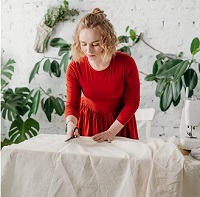 Bigger may not be better in case of the textile and apparel industry; especially during the current unprecedented times. And as Md. Eousep Novee argues in the article ‘Rightsizing the textile and apparel industry to make business sustainable’ published in TextileToday, the industry needs to tame its desire for expansion and focus on rightsizing its businesses to combat the current critical situation, say experts. In the last 10 years, many textile and apparel factories in Bangladesh have fallen into the ‘capacity expansion trap. Lured by the desire to expand production and manpower capacity, these once profitable factories are now incurring excessive fixed costs and executing orders at loss only in a bid to survive.
Many of these factories also failed to pay their monthly installments with high interest rates of interests. Even those who did not borrow from banks suffered due to the existence of bank burrowers as they had to take orders with the minimum price to counter competition. Over 90 textile and apparel companies burrowed money from the stock market in the last 10 years. Most of these companies now face losses as their expansion plans failed miserably.
Timing investments wisely
Companies fall into the bad expansion trap as an unscrupulous increase in production capacity proves counterproductive and increases their production costs instead of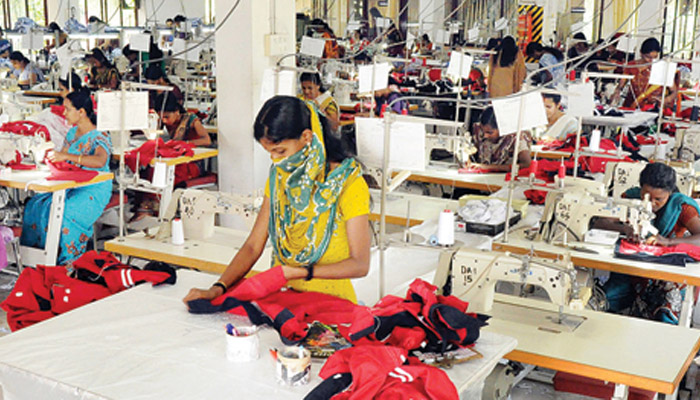 decreasing them. Also, the proportion of returns from additional capacity is quite variable. Hence, factories need to be compact rather than composite in their pattern of expansion.
A case in point is the US-based Boston Market Franchise, which was compelled to close 200 of its 900 stores in 1998 due to poor sales. To ensure positive returns, factories, need to time their investments wisely. They should avoid investing once the rate of increase of their returns starts diminishing.
Poor management leads to expansion failure
Some of the earlier capacity expansion decisions were taken with a view to improve the efficiency of their supply chains. Companies believed that adding allied and related production units could boost their efficiencies.
However, their decisions failed to fetch positive outcomes as their expanded units required independent supply chains. They needed new factories to produce accessories which in turn required a separate supply chain for procuring raw materials.
Managing an expanded business requires rightsizing to make it more sustainable Factory owners and management CEOs must adopt rightsizing to ensure investment security and profitability of their businesses.
Aligning business with changing values to help sportswear brands ensure sustainability
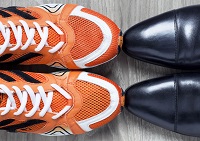 It’s common to see people wearing suit with casual shoes, leggings with heels, or yoga pants at work. Growing interest in health, recycling and environmental protection is compelling consumers to mix sports and fashion and create new style trends. Sportswear brands are adapting to this new reality by combining technical features and design with a new sports aesthetic or ‘athleisure’. Brands are segregating their products according to customers’ needs. They are also segmenting sales on the basis of consumers’ growing in interest in healthy living and well-being.
The biggest market for sportswear in the world is the United States while Germany is the biggest sportswear market in Europe followed by France, Spain, Italy, and the United Kingdom. France and Italy are Europe’s largest athlesiure markets while Japan is frequently visited by design teams from major brands across the world.
Creating new looks for every season
To succeed in these new growing markets, sportswear companies need to align their business with new values. They need to create more athleisure trends for both men and women of all ages. They also need to keep an eye on millennials, who in five years will account for nearly 50 per cent of the workforce.
Another challenge for sportswear brands is to create attractive looks for each season. The sportswear trend is currently being driven by specialized personal shoppers only in the US. However, growth will finally be determined by global affluent consumers who will ultimately decide whether a look is good. For such customers, brands need to combine their luxury sportswear with expensive technical items from good brands.
Sportswear brands also need to maintain their identity to sustain longer in the market. They should be well-aware of customers’ choices and emphasize on personalizing their products. They should explore innovative designs and materials to attract customers.
Managing limited editions like resale
The trend of launching limited edition collections was started in 1980 by American brands. Since then, the trend has spread across the globe with many sportswear brands launching limited editions targeting sneakerheads. Some of these top brands have also opened stores specializing in limited-edition products.
As limited editions collections symbolize the status and exclusivity of sportswear brands, the industry must manage this rising phenomenon like a resale business. It should resell limited-edition collections by adverting about them on the social media and through well known personalities. Sportwear brands must also be careful while segmenting products. They should separate each group of customers to offer right items. They should also introduce a sales model where each sell products associated with consumer profile.
Brands must be careful to ensure the sustainability of business. They should be attentive to demand but should not lose their roots. They should let their customers decide whether they want to buy purely technical sportswear or trendy garments that can be mixed and matched for a fashionable look.