


FW
GOTS to set stricter ecological and social criteria
Released in March 2020, the new GOTS version 6.0 is to set stricter ecological and social criteria while maintaining relevance of the Global Organic Textile Standard. GOTS defines worldwide recognized requirements that ensure third party certified organic status of textiles with full traceability from field to finished product. With this aim in mind, key requirements such as certified organic fiber content, the general ban on toxic and harmful chemicals, conventional cotton and virgin polyester as well as the social compliance management have been maintained, while several other criteria became stricter.
The new version withdraws the relaxation for the additional regenerated and virgin synthetic fiber content for socks, leggings and sportswear. Additionally, product quality standards for colorfastness and dimensional stability are now mandatory. Specific new requirements for tampons and food contact textiles have been included.
Regarding GOTS social criteria, GOTS included more dynamic elements: Certified entities will now have to calculate the gap of actually paid wages to ‘living wages’ (according to recognized calculation methods). Furthermore, they will be encouraged to work towards closing this gap. Specific references to OECD Due Diligence Guidance and Good Practice Guidance for Social Criteria and Risk Assessment as well as Ethical Business Practices have been explicitly included.
Global cotton fabric exports decline by 17.95%
The global export of cotton fabrics has decreased 17.95 per cent to $32,990.56 million in the year 2019 compared to $40,206.37 million in 2017. Whereas, total exports slipped 18.17 per cent in 2019 over the previous year. Further, the exports is expected to move up to $34,925.72 million in 2022 with a rate of 5.87 per cent compared to 2019.
The global import value of cotton fabrics was $19,189.97 million in 2017, which dropped 13.27 per cent to $16,643.85 million in 2019, according to Fibre2Fashion's market analysis tool TexPro.
Total imports plunged 16.48 per cent in 2019 over the previous year and is expected to rise to $17,121.28 million in 2022 with a rate of 2.87 per cent from 2019.
China ($20,770.82 million), Pakistan ($2,050.20 million) and India ($1,942.07 million) were the key exporters of cotton fabrics across the globe in 2019, together comprising 75.06 per cent of total export. These were followed by Italy ($1,036.42 million), Turkey ($909.16 million) and Hong Kong ($645.09 million).
FESPA to postpone FESPA Eurasia
FESPA has decided to postpone FESPA Eurasia, originally scheduled to take place from December 03-06 December 2020. The exhibition, which is hosted in partnership with FESPA’s Turkish Association ARED, will now take place from December 02-05, 2021 at the Istanbul Expo Centre in Turkey.
The move reflects the ongoing uncertainty and business disruption caused by the global COVID-19 pandemic, and FESPA’s focus on safeguarding the health and safety of exhibitors, visitors and contractors.
The postponement of FESPA Eurasia follows the announcement that the next FESPA Global Print Expo will now take place at the RAI Exhibition Centre in Amsterdam The Netherlands, from 9 – 12 March 2021.
Founded in 1962, FESPA organizes the leading exhibitions and conferences for this community. Since its inception, FESPA has been supporting the print community via successful exhibitions, events and publications, providing education and networking opportunities.
CFDA releases schedule for New York Fashion Week
The Council of Fashion Designers of America (CFDA) has released its schedule for New York Fashion Week, featuring 60 designers who are lined up to present their spring 2021 collections digitally.
CFDA will focus on its Runway360 digital platform, which allows brands the flexibility to show their collections in a variety of formats, such as look books, videos, movies, livestreams of fashion shows, and at a time that works for them. The platform has been developed to engage domestic and International press, consumers and retailers, most of whom are unable to travel to New York during this time.
NYFW will kick off on September 13 with Jason Wu, who will host live fashion show for an audience of 25 to 30 people for his contemporary collection on the roof of Spring Studios that will be streamed. It will be followed by Harlem Fashion Row’s virtual fashion experience featuring several designers of color, such as Kimberly Goldson, Kristian Loren and Rich Fresh.
Among the returning women’s designers and brands participating are Alabama Chanin, Alice + Olivia, Anna Sui, Badgley Mischka, Bibhu Mohapatra, Carolina Herrera, Chromat, Claudia Li, Dennis Basso, Eckhaus Latta, Jonathan Simkhai, LaQuan Smith, Marchesa and Marchesa Notte, Naeem Khan, Nicole Miller, Veronica Beard, and Zero + Maria Cornejo. Fifteen are new to the schedule, including Aknvas, Anne Klein, Colleen Allen, Our Doux, Duncan, Frère, Imitation of Christ, Oak & Acorn, Venicew, Wiederhoeft, and Wolk Morais.
Easybuy partners with Amazon
Landmark Group-promoted value fashion brand Easybuy that retails affordable fashion apparel in India's small towns and cities has partnered with online retailer Amazon to sell specially curated inventory and online-only brands on Amazon.
Over the next six months, the offline collection will be brought online through a store fulfillment program. Amazon will sell Easybuy’s tops, t-shirts, dresses, jeans, trousers, shirts, kids-wear priced between Rs 69 to Rs 699.
Easybuy was started in 2017 by Dubai-based Landmark Group to sell fashion to India’s value-conscious shoppers and has close to 100 stores in India. Landmark Group also owns value retailer Max in India, apart from Lifestyle department stores and Home Centre.
Cantiba launches three denim fabric ranges
Fabric manufacturer Cantiba has launched three new denim fabric ranges. The manufacturer announced the launches during the “Canatiba Denim Experience”, which took place online on August 19. Gathered in four technological groups, the fabrics provide an answer to the demands of a consumer market searching for clothing with comfort, safety, respect for the environment and economic performance.
The ‘Smart Denim’ line is focused on fabrics with functional properties. The innovation is due to the antimicrobial technology, applied to the “Molly” model, which reduces the need for washing and extends the life of the clothing.
‘Tecno Comfort’ invests in form with technology that offers comfort and a perfect fit to the body. The “Megaflex” line brings together stretch fabrics that provide comfort in the most diverse shapes and pieces in denim.
Finally, “Éko” invests in sustainability, with fabrics produced through ecologically responsible processes, with a mix of sustainable, recycled and certified fibers in their design. Among the line launches is Madruga Streech Éko, with ecological dyeing, free of aniline.
In addition, the company expanded the color palette of its best-sellers, fulfilling customer orders.
Sustainability to lead fashion industry’s recovery post COVID-19
 COVID-19 has compelled the fashion industry to focus on the environment. In the last few months, the industry has set up several standards-setting bodies and working groups like Sustainable Apparel Coalition, Leather Working Group to improve its carbon footprint. However, these groups are likely to make a bigger impact if the industry agrees to certain common goals, says Brian Ehrig, Partner-Consumer Practice, Kearney.
The three goals for a green recovery include: redefining sustainability to allow for its objective measurement; amplification of R&D capabilities for material innovation and circular capabilities; and the adoption of digital-first practices across the value chain. Unfortunately COVID-19 has affected many fashion innovators. A study by Fashion for Good says, the pandemic has affected business development and financing of fashion innovators. It has halted many pilot projects, with 54 per cent innovators facing financial constraints.
Maxine Bédat, Founder, New Standard Institute, advises the industry to solve its sustainability problems by disclosing the carbon footprint of suppliers, setting public targets for reduction and reporting on progress.
A unified vision to circular economy
For long, industry groups have been uniting stakeholders across the apparel and footwear industries. However, these groups have separate visions for achieving a circular economy post COVID-19. The Sustainable Apparel launched the Policy Hub in May 2019 in partnership with the Federation of the European Sporting Goods Industry and Global Fashion Agenda, it aims to soon submit its final proposal for a green recovery plan to the EC and member states, after drawing on responses from organization members and interested individuals.
Before the pandemic, there was a year-on-year improvement in measurable sustainability progress of more than 500 facilities, reveals Higgs Index. However, COVID-19 impacted through canceled or suspended orders, said a SAC and Boston Consulting Group report in April. According to Amina Rava, CEO, SAC, two key needs that have emerged from the pandemic are: access to funding to reinforce sustainable practices, and an opportunity to integrate sustainability as a foundational part of rebuilding the industry.
In response to an appeal by EU environment ministers for the European Green Deal, a “green recovery alliance” was formed in April with 180 signatories across sectors, including fast-fashion giant H&M Group, furniture retailer Ikea Group, consumer goods company Uniliver and, nonprofit think tank The Ellen MacArthur Foundation. The informal initiative is led by Pascal Canfin, a member of the European Parliament’s committee on environment and public health. The campaign calls for making the fight against climate change the core of economic strategy with emphasis on resilient, protective, sovereign and inclusive principles.
An end to green-washing
The campaign also calls for the establishment of green recovery investment packages at local, national and EU levels that would help a country transition to a climate-neutral economy protect biodiversity among other things. In these campaigns, the EU plans to include a comprehensive strategy for textiles and sustainable products that will strengthen extended producer responsibility and clear up strategy on the unintentional shedding of microplastics.
The proposed initiative will also end green-washing by stepping up EU’s regulatory and non-regulatory efforts. It will also empower businesses to promote sustainable textiles to consumers and offer reuse and repair services. Over 1.2 million citizens globally have joined campaigns advocating a green recovery in Europe, says the European clean transport campaign ‘Transport and Environment’. April research from Kearney also shows that 48 per cent of consumers are now more concerned about the environment than they were at the start of the pandemic.
Specialized zone, product innovation to boost Bangladesh sportswear exports
 Sports apparel has gained a lot of traction in Bangladesh with increased health awareness and fitness activities among consumers. Growing demand for trendy and fashionable sports apparel both among adults and kids is expected to drive future growth of the sportswear market in Bangladesh. Leading sportswear brands in the country are developing suitable and comfortable products like jersey, trouser, sneakers, sweatshirts, jacket, coat, hoodie, jogger, shorts, sports bra, leggings, etc. Shoppers’ demand for eco-friendly options is driving Nike, Adidas to use recycled leather, plastic, and plant-derived materials in making sportswear items. Bangladesh also outsources sports attire. The country has been selling good quality sports apparels at cheap rates to global buyers for the last 30 years.
Grabbing a slice of the pie
Besides jersey, Bangladesh supplies several types of high-end functional sports and activewear for different renowned football, cricket,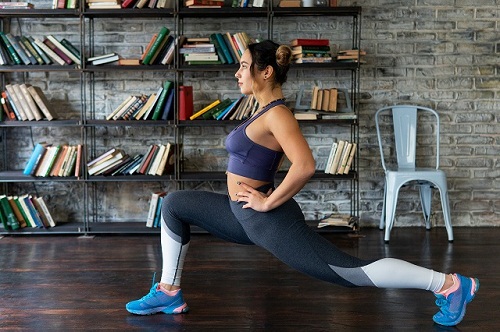 badminton, golf clubs in the USA, EU and other countries. As per BGMEA, the country exported about $100 million worth of goods for the 2018 World Cup football. Recently, Mondol Group exported 20,000 pieces of jerseys for a Hummel buyer. The group is currently negotiating for 1.5 lakh sports item order worth at $1 million for Tottenham supporters, said Mahadi Hasan, Assistant Merchandise Manager, Alim Knit BD (Mondol Group).
Similarly, the Envoy Group has invested Tk 500 crore in Gazipur on 50 bighas of land to produce specialized garment items, including sportswear, wind jackets, swimwear. DBL Group, Youngone Group, Viyellatex Group, Epyllion Group, Windy Group, AJI Group, Mondol Group and hundreds of millers in the country are vying to grab a share in the country’s sportswear market. In 2019, leading German sportswear brand Puma entered Bangladesh in collaboration with the DBL Group. Sportswear brand Decathlon has also set up an outlet in Dhaka. To increase incomes of local citizens, Bangladesh industry experts are encouraging more foreign brands to open outlets in the country
Addressing the shortcomings
Advanced technology and relevant technical skills make Bangladesh a leading sportswear market. However, the country needs to improve its product innovation and design. Also, it has huge textile mills for manufacturing different types of woven and knit fabrics. However, they lag due to insufficient synthetic thread supply. As BTMA reveals, Bangladesh has 425 spinning mills but only 5-6 of its spinners can produce synthetic yarn. Hence, the country is forced to import synthetic yarns and fabrics, especially from China.
To reduce import-dependence, Bangladesh needs to set up more manmade yarns and fabric mills by using existing set up of the latest machines and manpower with proper training. Even though Bangladesh is the second-largest garment exporter, it has little presence in global sportswear market. On the other hand, China and Vietnam continue to dominate the market. The Bangladesh government needs to take up a project to build a specialized sportswear making zone in the country.
UKFT to represent industry on TAG
The UK Fashion & Textile Association (UKFT) has been asked to represent the industry on the new trade advisory group (TAG) to the Department for International Trade (DIT) for British Manufacturing and Consumer Goods. UKFT will provide knowledge and insight of the needs of the UK fashion and textile industry to inform the UK negotiating position.
This assumes significance as UK's trade talks with countries including Japan, the US, Australia and New Zealand are likely to intensify in the coming days. Separately, UKFT is also representing the industry to the group negotiating with the EU. This will bring business closer to the negotiating table and help secure the best possible deals that deliver jobs and growth across Britain. UKFT’s talks with Japan, the US, Australia and New Zealand are entering their crucial latter stages. Hence, it needs to step up engagement with vital industries to utilise their technical and strategic expertise.
UKFT is preparing its own updated guidance for members on trading with Europe after the end of the transition period, covering changes to tariffs, import and export documentation, labelling and more.
Taiwan Excellence showcases latest technologies in functional fibers
The Taiwan Excellence Functional Fabric Online Press Conference showcased the latest technologies in functional fibers and eco-friendly solutions. Hosted by the Taiwan External Trade Development Council (TAITRA), the event featured presentations from five of Taiwan’s leading functional fabrics companies – including Singtex Industrial Co, Sun Own Industrial Co (ATUNAS), Asiatic Fiber Corporation, Toung Loong Textile MFG and BenQ Materials Corporation.
The winners of the Taiwan Excellence Award demonstrates excellence in R&D, design, quality, and marketing. The symbol of Taiwan Excellence was established in 1992 by Taiwan’s Ministry of Economic Affairs and the Taiwan Excellence Selection was launched the following year. The selection is based on the specific criteria of R&D, quality, design, and marketing. Products that have been selected for the Taiwan Excellence Awards serve as exemplars of domestic industries and are promoted by the government in the international market in an effort to shape the creative image of Taiwanese businesses. This year marks the 28th selection, making the Taiwan Excellence symbol a prestigious distinction for enterprises in Taiwan to strive for and be recognized by, as it is highly thought of around the world.











