


FW
Kenya’s Nguo Yetu to expand global distribution footprint
Nguo Yetu, an apparel company from the Kenyan export processing zone (EPZ) plans to engage Kenyans working abroad, including the United States to expand its distribution footprint. With 300 employees, the company plans to enter partnerships with foreign companies in strategic markets.
The company plans to take advantage of trade agreements like African Growth Opportunity Act, which guarantees entry for Kenyan apparel into the US market duty free and quota free, said Sheila Muirara, CEO. The main objective is to create opportunities for Kenyans as well as project Kenya as a hub for manufacturing globally, added Muirara.
Economic Survey estimates Kenyan textiles and apparels exporters to the United States under AGOA to have earned a combined Sh46 billion in 2019. According to data from the Export Processing Zone Authority (EPZA), 24 companies operate at the EPZs and employ 49,000 Kenyans last year.
Californian senate to present bill for worker wage protection
Introduced in February this year by Californian Senate, the SB1399 bill will be presented on the Assembly floor next week. The bill aims to eliminate the piece rate system and ensure multilateral accountability to prevent wage theft through layers of subcontracting. Known as the Garment Worker Protection Act, this bill explicitly authorizes the Labor Commissioner’s Bureau of Field Enforcement to conduct workplace-wide investigations and issue citations on behalf of all the workers.
The bill benefits the workers and companies follow the rules, said Matthew DeCarolis, Co-sponsor and Staff Attorney, Bet Tzedek Legal Services. It builds upon Assembly Bill 633, which was written in 1999. AB 633 created a Garment Restitution Fund that supported workers who had their wages stolen.
Passing SB 1399 would be a major victory for garment workers and they believe that these problems can be solved is if workers’ experience, stories and knowledge are heard.
Human rights campaigners urge US to ban cotton imports from Xinjiang
Human rights campaigners are urging US authorities to ban all imports of cotton from the Chinese province of Xingjiang after allegations of widespread forced labor. The campaigners have filed two identical petitions with US Custom and Border Protection, citing substantial evidence that the Uighur community and other minority groups are being forced to work in the region’s cotton fields.
Rahima Mahmut, Spokeswoman, World Uighur Congress, one of the campaign groups spearheading the petitions, hopes the economic impact of a ban could cause Beijing to rethink its prison labor policy. Since 2017, more than a million Uighur Muslims have been moved to high-security de-extremification camps, where they are forced to produce industrial and agricultural goods for export, campaign groups maintain.
In April, Global Legal Action Network (Glan), co-sponsor of one of the petitions, submitted a 57-page petition to HM Revenue & Customs in the UK requesting a similar ban. In a separate attempt to pressurize the UK government, the World Uighur Congress plans to launch a nationwide campaign later this month.
The campaign will call for a public boycott of any products produced by Uighur forced labor or by companies facilitating Uighur suppression. It will also call on companies importing cotton and other goods from Xinjiang to investigate their supply chains.
In July, a coalition of more than 180 campaign groups issued a similar call to action urging high-street brands to guarantee that their supply chains are not directly or indirectly linked to abuses of Uighurs or other persecuted minorities in China.
The Better Cotton Initiative, which runs a sustainable certification system for cotton producers, reported earlier in the year that it was concerned about reports of forced labor in China and has commissioned a third-party investigation into the claims.
Sustainability demands more efforts from small innovators and investors
 The latter half of the 20th century brought about a revolution in the fashion industry with the rise of big, well known brands, high streets and shopping malls, and the emergence of the middle class. As per Trista Bridges and Donald Eubank’s book ‘Leading Sustainability: The path to Sustainable Business and How the SDGs Changed Everything’, all these factors converged to create an ideal market environment for retailers and fashion groups across the world. The book attributes growing popularity of fast fashion models to consumers’ increasing desire for latest and greatest fashion.
The book highlights, success in fashion is often determined by brands that have the most efficient and cost-effective supply chains, and quickly move to rapid prototyping, quick materials sourcing, fast production, and seamless and swift distribution. However, this causes an immense burden on the environment and communities in emerging markets.
Globalization forced apparel production to move eastward. This shift was further accelerated by a WTO policy that limited textile and apparel imports from certain emerging markets. Introduced in 2005, the quota system established contract manufacturing as the new operational norm. However, it also caused several challenges for the sector. For example, In 1990s, Nike was accused of several labor onslaught and environment scandals. Since then, the brand has made a dramatic turnaround to being a role model of sustainability
Leading the sustainability movement
Driven by bold sustainable fashion innovators and an evolving consumer mindset, the fashion industry is entering a period of reflection and reinvention.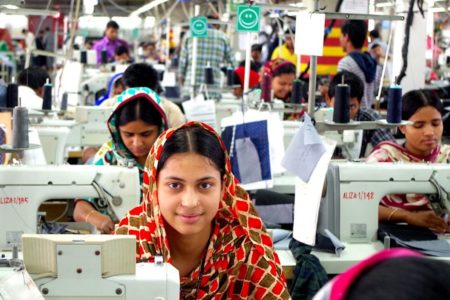 Global fashion and apparel groups are beginning to invest in fashion tech startups and innovations. Foremost amongst these is the H&M Group which has introduced several sustainability initiatives since the last decade. The group is known to ensure fair wages at its factories by encouraging its manufacturing partners to implement wage management systems.
H&M has developed systems to isolate and remove wage costs from any price negotiations The brand produces 67 per cent of its product volume in factories that implement improved wage management systems, well exceeding their initial 50 per cent target. In the long term, H&M aims to change wage setting systems for the whole industry and, ultimately, entire countries. It also aims to adopt full circularity in its production and operations.
Using technology to adopt circularity
Fast fashion brands need to realize the dangers of climate change related supply disruptions on operations, says Hendrik Alpen, Sustainability Engagement Manager and Team Leader, H&M Group. They should adopt circularity through new technologies such as the Global Garment Collection Program. The ‘recycle-reuse-rewear’ approach can enable these brands to reuse 40 to 60 per cent of reclaimed materials with remaining materials being used for other applications such as making housing and car insulation, etc
H&M is also investing in a recycling technology launched by the Holy Grail of fashion. The group is collaborating with other companies and stakeholders to support their development. Two such companies are Worn Again Technologies, a polymer recycling startup, and HKRITA, whose full-loop hydrothermal method for recycling cotton and polyester blends is able to maintain the structural quality of the materials, a difficult feat to achieve.
Though the efforts of big brands like H&M are creditworthy, the sustainability movement can be successful only when small innovators and like-minded investors participate in it.
Fast fashion continues to attract as sustainability takes backseat post COVID-19
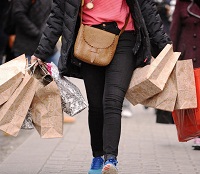 Kate Nightingale, Founder and Head-Consumer Pyschologist, Style Psychology says, consumers are socially conditioned to love everything that’s new. This explains the relentless popularity of fast fashion across the globe. Even though environmentalists have repeatedly warned about the hazards of fast fashion, its popularity continues to soar.
COVID-19 accelerates fast fashion popularity
The pandemic is likely to further accelerate the popularity of fast fashion. As the crisis has plunged many countries into recession and increased unemployment levels across the globe, consumers are likely to shift focus to affordable garments rather than sustainable ones. Even before the pandemic, consumer interest in sustainability was limited. Only 7 per cent of respondents to Global Fashion Agenda’s Pulse of the Fashion Industry report 2019 had said sustainability is the key deciding factor in their fashion purchases. Rather, they focused more on quality, value for money and the impact the garment made on the wearer’s appearance.
Though the lockdown has badly hurt fast fashion players that do not have a strong online presence but sales of big e-tailers have soared. For instance,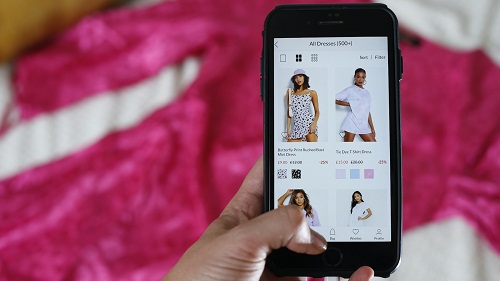 Boohoo investors have increased their bet on the company even though the company has been accused of labor rights violation during the coronavirus outbreak in Leicester. Its largest independent shareholder Jupiter Asset Management increased its stake in the company from 9.6 to 10.1 per cent. Adam Cochrane, Analyst, Citibank expects Boohoo to successfully recover about half of its share price decline in the near term
Social media impact
The fast fashion model was established by brands like Zara and H&M in the 2000s. The entry of social media and online-only players elevated this model to new heights as ultra-fast fashion players, such as Boohoo, Fashion Nova and Missguided started offering influencer-led trends at dizzying speed.
One reason for the sustained popularity of fast fashion brands is their agility in adapting to new reality, opines Joaquin Villalba, Founder and Chief Executive Officer, Nextail. These brands have swiftly tapped into powerful networks of influencers and micro-influencers to create a highly engaged community of shoppers.
Regulating the fashion business
Despite all this, there is a growing opportunity for big brands to market sustainable fashion. They are increasingly launching capsule collections featuring organic cotton, carbon offsetting and textile recycling. Their growing experiments in resale, fabric innovation and automation are an indication of their efforts towards remaining relevant and on the right side of consumer sentiment.
There is also growing push for a regulation to incentivize brands for their sustainability efforts. Along with over 90 retailers, 50 British MPs and other organizations, the British Retail Consortium issued a letter to Priti Patel, UK Home Secretary, urging the government to protect employees from exploitation. Despite these efforts, the resilience of the fast fashion industry is often attributed to its business model which represents an entire price point that consumers are accustomed to.
Global apparel manufacturing drops by 3%
The year, there has been a 3 per cent drop in global apparel manufacturing with cancelled events forcing fashion retail stores to cancel orders from their manufacturers. Over 40 billion dollars’ worth of goods have been dumped into the landfills, says Ayesha Barenblat, founder of Remake, a nonprofit organization advocating for the rights of fashion manufacturing workers.
This is impacting individuals who have already spent hours making these garments as they are being left unpaid. s most of these workers live in developing nations, there aren’t many avenues of work available. While it is these large-scale companies that are making the error by relying on fast cheap fashion, it is the garment worker that pays the price.
Not only this, but human rights are not upheld by the working conditions in many of these factories, says Clare Press, ethical fashion activist and owner of the Wardrobe Crisis podcast. Women of color have been hit hardest by this issue. But the resounding issue of this financial crisis has finally reached the ears of these large-scale corporations. In March this year, over 200 000 signatures were collected by a Remake lead petition for fashion companies to pay their workers.
From this, 18 global brands have joined the movement, such as Zara and H&M. There is now a push to reuptake local production, as Australian regulation ensures a fair wage and treatment of workers. Perhaps now that these companies are taking action, this frontier may be a possibility.
VF protects business integrity, suppliers’ livelihoods
VF Corp is working to protect the financial integrity of its business while also helping to protect the livelihoods of its suppliers and the workers they employ. The company is paying its suppliers for all orders that have already been produced. It is honoring all valid purchase orders with a factory release date before June 1, 2020.
In some cases, VF is delaying shipment dates to manage the flow of goods into the destination country. When shipment must be delayed, the retailer engages with its suppliers to determine if the shipment delay will create a cashflow challenge for its supplier, and works with the supplier to support their financial needs through a variety of potential solutions.
The retailer has asked its suppliers to pause work on any open purchase order with a release date on or after June 1. This will allow it to reassess projected consumer demand so it can better understand the appropriate timing for the delivery of these orders. It has asked all suppliers with paused orders (those for release after June 1) to provide details of their liabilities resulting from ordered raw materials and work completed in relation to these open purchase orders.
To help manage this situation in partnership with its suppliers, VF is not issuing new purchase orders until it has better visibility of consumer demand and production needs.
The retailer believes these steps will demonstrate its commitment to maintaining strong working relationships with its suppliers and its shared interest in maintaining open channels for ongoing dialogue and discussion. It is working with its peers across the apparel and footwear industry, as well as with multi-stakeholder organizations to identify additional opportunities to support apparel factory workers during these uncertain times.
COVID-19 impacts Bangladesh’s sweater exports
Coronavirus issues have started impacting Bangladesh’s sweater segment as almost 80 percent of man-made sweater yarns are imported mostly from China, said Mostafa Sobhan Rubel, Managing Director of Dragon Group, a leading sweater exporter.
The lockdown in China had slowed down the import process of raw materials into Bangladesh. Bangladesh sweater exporters are in a dilemma as from November till February which is an offseason period for the sweater factories and usually, Bangladesh exporters export below 50 percent capacity of their installed capacity,
However, peak seasons which start from March till October changes that trend completely as during this period our factories are running on 100 percent capacities with many factories engaging 2 or 3 shifts or even subcontracting from authorized and approved factories.
But just as they were approaching the peak season with huge orders booked till June and July, then suddenly this virus stopped the entire world where its sweaters are exported, said Rubel.
Due to the global shutdown some buyers are asking these exporters to keep the goods on hold and some are even canceling orders, which were placed earlier. According to Export Promotion Bureau (EPB) data, in the fiscal year 2018-19, Bangladesh earned $4.25 billion from sweater export, which is 15.82 per cent higher compared to $3.67 billion the FY18.
Talking to Textile Today, sweater manufacturers and trade analysts have opined that technological upgradation has contributed a lot to increase the export earnings, while extended winter expedites the growth.
According to the BKMEA leader almost all sweater factories have installed the automated machine. The sweater industries need to be incubated immediately by the government through favorable policies for at least the next 6 months so that it can come out of this imminent crisis, sector leaders opined.
Macy’s to elaborate on survival strategies during COVID-19
In its second quarter results to be published soon, Jeff Gennette, CEO, Macy’s will elaborate on current consumer shopping trends. Macy’s Inc managed to work through another COVID-19 spike to post stronger sales in the second quarter by addressing the safety aspects and shifting to new trends such as curbside pickup. The retailers’ digital business has been strong and there has been an increase in its customers.
In the past, the retailer’s urban stores provided a sizable sales contribution to its brick-and-mortar component given the denseness of the communities. However, with international travel suspended, its apparel sales have slowed. Its formal clothing line has been affected due to the lockdown. With ready-to-wear no longer being in vogue, Gennette will disclose how Macy’s is adjusting its mix to reflect footwear and accessories in its new casual collection.
BooHoo in spotlight for violating labor rights
Ultra-fast fashion brand BooHoo came under spotlight recently when a news journal published investigations showing workers at its Leicester’s factory working throughout the lockdown earning as little as £3.50 per hour which is way below the UK National Minimum Wage of £8.72. The investigations revealed that workers were forced to work despite being infected and contract violations were widespread.
BooHoo responded by declaring it will stop working with the accused factories. However, experts believe, the brand will have to survive the situation and repeat somewhere else. With fabric price, trim price, their marketing budgets, head office salaries and insane management bonuses; it is simply not possible to have anything else, but cheap labor.
Most consumers have no idea where their clothes are made. While sustainability advocates may want to pressure brands to label their products, most customers don’t even check the label on the clothing while browsing. Hence, brands sell their clothes at price points that are set by the market. BooHoo managed to capture the space for ultra cheap, ultra fast fashion and serve what the consumers wanted, experts believe. Hence, to change the buying habits of an entire generation of consumers, the industry needs to combine price regulation with education. Till then such scandals will continue to break and grab headlines.











