


FW
Artificial Intelligence, Internet of Things to be the future of fashion
 Artificial Intelligence has become an integral part of the fashion industry in the last few years. As per a TechParker report, designers and brands are embracing latest AI technologies like chatbots and touchscreens to push up production and marketing limits
Time and inventory with AI tools
Some of the most profitable AI avenues for customers include trend forecasting and supply chain management tools. These tools help brands save time and manage their warehouses more efficiently. Combined with inventory tracking, these tools give a significant competitive advantage by providing instant access to data. The automated wardrobe planning tool launched by the British Fashion label Finery introduces women customers to a virtual wardrobe by using analytics. The platform also allows women to customize their wardrobes by choosing from over 10,000 shops.
Another brand Trufit, helps users find appropriate brands and styles through its online fit engine while Stylumia uses images, user behavior data, textual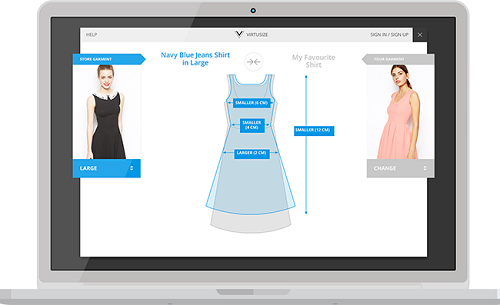 descriptions from social media and other sources to make its future decisions. Similarly, Intelligence Node allows users to track trends on a AI driven discovery platform where customers can track exact matches to products by entering specific keywords, user navigation patterns, price points, etc.
E-commerce platforms that connect with shoppers with sellers through live videos are leading the way in 2020. Videos can be livestreamed using new media formats on 5G that allow customers to try on their garments before purchasing them. New methodologies like Heuritech helps predict future trends by applying image recognition technology to social media pictures.
Smart clothing with IoT technologies
There has been significant development in smart clothing, wearable spaces, multi-functional designs and responsive sportswear in recent years. The rapid expansion of technologies like Internet of Things (IoT) has helped brands create apparels with digital capabilities including smart clothing, wearable spaces, multi-functional designs, responsive sportswear, etc. For instance, Nadix has developed a range of pants that have built-in sensors to correct users' posture by vibrating as they move through yoga poses. Similarly, Fuseprojects has launched power suits help the elderly suffering with muscle dystrophia to walk, stand and stay active for longer periods of time. San Francisco-based textile company Loomia creates soft flexible circuits that can be embedded into textiles for heating, lighting, sensing or data-tracking applications.
Monitoring data with new software tools
Internet and new software tools available help brands and factories receive real-time feedback and alerts from companies about defects or damaged goods. This not only saves their money but also help them eliminate waste and deliver adequate products at the right time. Enterprise resource planning (ERP) software IQMS can be used for monitoring and collecting the production data in real-time, as products are being made. Similarly, Cloud computing allows factories and companies to access relevant data, making for a faster and more effective way of communicating. Likewise, Techpacker’s cloud-based software allows its design teams and factories to learn about changes in tech packs in real time.
Mobile commerce to be next big opportunity
One of the fastest-growing sectors in ecommerce, mobile commerce or m-commerce is expected to reach $284 billion by 2020-end, predicts Insider Intelligence. Digital wallet options like Apple and Andriod Pay that constantly innovate with new technologies like fingerprint and facial recognition are poised to become the preferred payment for retail purchases.
A combination of ecommerce growth with mcommerce and social media can help brands remain in their customers' list of favorite channels and provide more opportunities for sale. Some of the companies that are combining their Augmented Reality with Virtual Reality include Obsess which allows brands and retailers to create to serve 3D 360 shopping experiences on their websites, mobile apps and social channels via a 3D Commerce Cloud; Avametric which enables brands to render real clothing virtually in 3D and also to customize them on digital body models for web, mobile, and AR which enables online fashion retailers to virtually illustrate the size to find the accurate fit for the products their customers choose.
Picanol launches new TerryPlus-i machine
Picanol has launched the new TerryPlus-i machine based on the OmniPlus-i which was introduced at ITMA Barcelona in 2019. This TerryPlus-i airjet machine was developed with four design principles in mind: smart performance, sustainability inside, driven by data, and intuitive control.
The unique pneumatical pile backrest ensures optimum loop formation regardless of fabric design. The rigid yet extremely light construction ensures a highly dynamic behavior, guaranteeing perfect loop formation for even the most complicated terry designs – be it very light towels or heavy bathmats. Put simply, this is by far the best pile compensation system ever!
Special attention was given to ease of use thanks to a completely new human-machine interface. The new display measures 15.6 inches and it is equipped with all of the functionalities you are familiar with from your smartphone: touch, swipe, and the latest connection possibilities: ethernet, USB, Wi-Fi, Bluetooth, and Near Field communication (NFC – this is the technology we use when making contactless payments).
The TerryPlus-i comes with two possible prewinders: the Blue 22 and the Blue 11 (the one with separate windings). Both are equipped with the easy set function which manages all settings electronically through the display. Consequently, there is no longer any need for tools or special keys to tune the prewinders. And all of this can be done without having to stop the machine, which enables you to optimize and reduce the waste length to an absolute minimum.
SAC, ZDHC, Textile Exchange, Apparel Impact Institute collaborate
Sustainable Apparel Coalition, ZDHC Foundation, Textile Exchange and the Apparel Impact Institute unveiled new partnerships to drive new efficiencies for the industry
This announcement came on the third day of the annual SAC global member meeting, which brings together brands, retailers, manufacturers and academia. Each organization declared its roles and commitments in letters of intent over four areas like program and tools, impact management and funding, global implementation and administration and infrastructure.
Regarding the first area, the organizations will specifically aim to connect complementary frameworks, like the Higg Facility Environmental Module and ZDHC’s Roadmap to Zero program and the Higg Brand and Retailer Module and TE’s Corporate Fiber and Materials Benchmark.
Although it is vague what exactly co-funding and resource sharing will look like, they are expected to be defined more concretely by year-end. As nonprofit search engine Guidestar showed, the SAC alone reported $3.7 million in net assets, a year prior to the Higg Co. technology business spin-off in 2019. Retailers like C&A are major contributors.
This latest alliance is one of many that aims to ward off naysayers. In August, all four organizations were revealed as part of “Fashion Conveners,” which is described as a global coalition “working individually and collectively to accelerate action through high-level partnerships, developing strategies and initiatives across the various sub-sectors of industry.
Rebound in garment orders revives Bangladesh economy: Report
As per a Hindustan Times report, a rebound in garment orders after demand crashed during spring shutdowns is helping to revive the Bangladesh economy.
Remittances from Bangladeshi workers employed overseas have also recovered, helping to relieve pressures from a pandemic quasi-shutdown during the spring. The Asian Development Bank is forecasting the economy to grow at a robust 6.8 per cent annual pace in the fiscal year that ends in June if current conditions persist.
That’s a much brighter outlook than in April-May, when global clothing brands suspended or cancelled orders worth more than $3 billion, affecting about 4 million workers and thousands of factories.
According to BGMEA, Bangladesh’s garment exports rose by 0.6 per cent to $3.9 billion in July, after plummeting 83 per cent to $520 million in April. Imports, which are reported on a quarterly basis, began recovering earlier, rising 36 per cent in May-June.
In August, exports rose 4.3 per cent from a year earlier, to $2.96 billion, mostly driven by apparel shipments, according to the government’s Export Promotion Bureau. Garment shipments totaled $5.7 billion in July and August.
Wrangler launches new regenerative jean
Spearheaded by the Ellen McArthur Foundation, Wrangler has launched a new jean as a part of it’s the Jeans Redesign initiative. This initiative has established guidelines on the minimum requirements for durability, material health, recyclability, and traceability of denim jeans, with over 40 denim experts providing insight.
Wrangler has also committed to source 100 per cent sustainably grown cotton by 2025. The brand will achieve this joining the EMF’s Make Fashion Circular Initiative, which exists to drive collaboration between apparel industry leaders to ensure that clothes are made from safe, renewable materials, that new business models increase their use, and that old clothes are turned into new.
These new commitments will help Wrangler build a more resilient, regenerative cotton supply. Farmers planning to participate in Wrangler’s ‘Regenerative Jean’ collection have to submit evidence of improvements to soil health and the resulting environmental benefits of adopting regenerative agricultural systems. The submissions will be reviewed by the Soil Health Institute which will look for benchmarks like improvements in soil carbon, soil physical properties, biological properties and ancillary benefits to the environment.
US bans cotton imports from China
To prevent goods suspected to have been made with forced labor from entering the US, the US Customs and Border Protection has issued ‘Withhold Release Orders’ to all its six Chinese entities. These goods are likely to be seized and destroyed if their origin cannot be proven as not being produced by forced labor, says Customs and Border Protection. The organization has classified goods produced at five companies or industrial parks in Xinjiang and one company in eastern Anhui province as WRO. One of Xinjiang's vocational skills education and training centers has also been named in the order. The import ban by Customs and Border Protection will cover entire supply chains for cotton, from yarn to textiles and apparel, as well as tomatoes, tomato paste and other regional exports.
However, according to an article in the New York Times, any move to block cotton imports could have huge implications for global apparel makers. Xinjiang is a major source of cotton, textiles, petrochemicals and other goods that feed into Chinese factories. Many of the world’s largest and best-known clothing brands rely on supply chains that extend into China, including using cotton and textiles produced in Xinjiang, in the country’s far west. About 85 per cent of China's cotton is produced in Xinjiang.
RICCO, FICCI to organize Vastra 2020
RIICO & FICCI will jointly organize the 7th edition of Vastra 2020 on a virtual platform from September from 23-27, 2020. The exhibition is expected to be attended by over 100 exhibitors. They will use new innovative features like downloadable soft copies of business cards, product literature, product videos, look and feel of products in the screen, video calls and chats.
This would be an all-encompassing trade fair on textiles and apparel and help revitalize existing business ties and forge new business relations. It will also provide opportunities to explore new locations for setting up businesses in India, disseminate technology and interaction with experts and R&D Labs for a solution in technology and latest trends.
The virtual expo will enable exhibitors to speak to customers through one-to-one audio/video calls, share informative material like e-brochures, visiting cards or any other document digitally with customers. Over 100 Indian prominent exporters from textile & apparel fraternity will participate with fully digital virtual stalls. The show will have over 800 buyers from more than 50 countries. They will be able to navigate virtual stalls, network with exhibitors on video and exchange business cards, download products profile and participate in B2B webinars.
Both men, women to increase fashion expenditure in Europe: IFM study
A study conducted by the French Fashion Institute (IFM) found that despite the pandemic and a climate of global uncertainty 13.7 per cent of women and 17.1 per cent of men in Europe plan to increase their spending on fashion.
The study was conducted on 5,000 consumers in France, Germany, Italy and UK to understand their consumption outlook for the second half of 2020. It revealed 64.1 per cent of Europeans want to buy items made from eco-responsible materials and 30.1 per cent are even willing to spend more for them.
Further the study finds, majority of consumers will continue to pay close attention to labels. In Europe, 60 per cent will look to see where an item was manufactured, and 58.5 per cent will favor local manufacturing. Among 18-34 year olds, 33.1 per cent are even willing to boycott certain products made abroad.
The report concluded that though in the short-term, consumers favor a more thoughtful consumption, they remain attached to their fashion purchases. The outlook may even turn out to be positive once confidence is restored.
Extend the moratorium period for exports, urges TEA
Raja Shanmugam, President, Tirupur Exporters Association has urged the government to extend six-month moratorium on exports, reports Textile Focus. According to him, this will help increase India’s garment supply to international brands post COVID-19. P Nataraj, CEO, KPR Mills, also expects India’s garment and textile exports to increase from last year. SP Apparels has asked Carter to produce new fabrics as it aims to move its production from China to India. Similarly AEPC has collaborated with Taiwanese and Korean entities to develop fabrics from manmade fibers.
During the year ended March 2020, exports by Tirupur garment exporters declined from Rs 26,000 crore to Rs 25,000 crore as COVID wiped away most exports in March. The city had originally aimed to export clothing worth Rs 28,000 crore clothing. Its domestic sales too remained flat during the year.
China to account for 50 per cent global luxury market by 2025: Bain & Co
Consultants Bain & Co project China will lead the way in luxury recovery and Chinese consumers will cement their status as crucial drivers of the industry, accounting for nearly 50 per cent of the market by 2025. The Chinese domestic market saw a strong rebound recently as lifting of lockdowns and travel restrictions led to big splurge on luxury products by consumers. Upscale cosmetic group Estee Lauder attributed its gradual recovery primarily to this remarkable rebound in China. In fiscal year 2020 ending June, Estee Lauder registered a double-digit growth in China on almost every channel and across all product categories for almost every brand, the company reported in late August.
Luxury skin care brands like La Mer also recorded double-digit growth on the Chinese mainland, whose iconic facial cream was priced at a somewhat prohibitive 2,500 yuan ($370).
Likewise, sales in China for most of LVMH's brands turned positive compared with a year ago in the second half of March, said Jean-Jacques Guiony, Chief Financial Officer, LVMH Group.
It's unsurprising to see a gradual pickup of the luxury market in China as people lack conventional retail channels for luxury purchases, such as duty-free shops and outbound trips, said Peng Yanyan, head of the China consumer sector at UBS Securities, which remained rosy about the sector's performance in the country.











