


FW
US government’s Xinjiang cotton crackdown to extensively effect retail
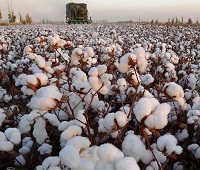 US government’s recent order to seize cotton and cotton products from the Xinjiang country would have far-reaching ramifications for US apparel retail industry, says the Worker Rights Consortium. As stated in a Quartz report, the order is likely to impact the supply chains of virtually every major apparel retailer in the country—from Amazon, to Target, to Zara.
The order directs US Customs and Border Protection to detain incoming products suspected of using XPCC cotton. It is by far the most wide-reaching customs ban on US imports, say Laura T Murphy, Professor, Sheffield Hallam University and Rian Thum, Senior Research Fellow, University of Nottingham. Given China’s status as one of the world’s largest cotton producers, the order is likely to affect 500 million US imports containing XPCC every year.
Already, there is confusion amongst US companies over the implementation of the order, states Steve Lamar, President and CEO, American Apparel &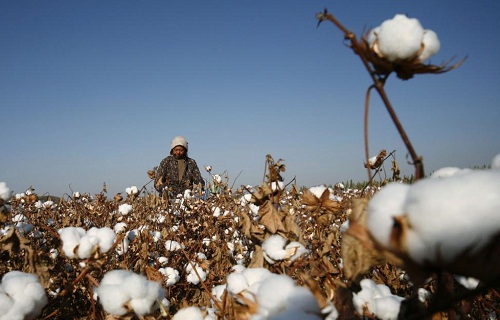 Footwear Association (AAFA). The order applies not only to products made with cotton produced by XPCC, but also to those made by its subordinate and affiliated companies. However, the order does not elaborate on its definition of subordinate or affiliated entity. XPCC is a quasi-milatary organization that has around 86,000 subordinates. The US government has not clarified on these which had created a lot of confusion amongst industry leaders.
Lack of clarity
Moreover there is lack of clarity over the implementation of the order, says Nate Herman, Senior Vice President, AAFA. The Customs and Border Protection (CPB) department has not revealed how it will enforce action, and does the order apply only to products coming from China, or other countries as well, etc. CBP has also not provided additional clarity on the language in the order or how it intends to identify products made with cotton from XPCC or any affiliates
In response to the order, AAFA and other trade groups, have released a joint statement that pointed out forced labor can be kept out of member supply chains by forming a coalition of stakeholders and countries. Companies should have zero tolerance for forced labor in their supply chains, says Lamar. However, labor and human rights groups hold apparel companies responsible for materials that go into their products. Omer Kanat, Executive Director, Uyghur Human Rights Project says, international companies that import goods produced by the XPCC, are complicit in human rights crimes.
Each level of a globalized supply chain is shrouded in a level of obscurity. For instance an American brand that places orders for 100 shirts with a Bangladesh factory, may not be aware of its raw material suppliers. To trace the origin of its cotton, it needs to trace each level of its production process. Often, long-staple cotton used by apparel manufacturers is grown in Xinjiang, India, the US, Brazil, and elsewhere. This raw cotton is processed by factories in China that often employ forced labor these practices. Lack of supply-chain transparency often leads to human rights abuses in the fashion industry.
For the last few years, companies have been tracing their supply chain partners. AAFA’s member companies have also been mapping their supply chains in Xinjiang to avoid any direct links to the organization. As China has 20 per cent of the world’s cotton production, it may be difficult for fashion companies to avoid Chinese cotton. However, they can avoid abetting forced labor by tracing its origin.
For a more responsible supply chain, industry demands an end to union busting
 The aim of any country’s government is to develop an export-oriented fashion industry that earns sufficient forex besides maintaining healthy trade balance. Growing their tax base and providing employment is also an important goal of governments. This is achieved by offering citizens reliable product in a stable business environment. The biggest factor that enables governments to achieve this is cheap labor. However, often governments turn a blind eye to labor issues and do not allow workers to form unions.
Respecting workers’ rights
IndustriALL Global Union, an affiliate of 50 million workers in 140 countries urges the industry to respect workers freedom of association and fight against union busting. This can be achieved by making a systemic change, says a report by IndustriAll. Though brands like H&M and Inditex are working on this, their efforts are inadequate. A recent example of this is the protest by a Uyghur solidarity campaign outside Zara in Oxford Street, London, over alleged slave labor in their cotton supply chain. Zara was unable to control this protest as it did not address the underlying issues.
Global unions should respect the rights of workers at the bottom of the supply chain. They need to carry out factory inspections as per the directions of the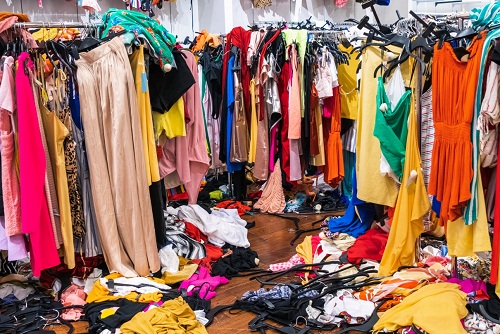 labor inspectorate. Also, working conditions should be negotiated by local trade unions, not set by the brand police.
Achieving the balance of power
The best way to achieve a balance of power between employers, unions and governments is by industry-wide collective bargaining. Unions must negotiate with representatives of all factories rather than negotiating with individual ones. This would help them raise workers’ conditions and improve industry quality. Also, global brands need to stay committed to their current country even if it introduces collective bargaining. IndustriALL has signed joint declarations with Inditex and German brand Tchibo through the ACT initiative which encourages brands to secure constructive relations between employers and workers. The organization has introduced a multifaceted strategy for changing the sector. It aims to defend workers’ rights, by campaigning against violations when they happen.
IndustriALL also creates company networks, and builds national structures to unify unions as they confront employers. It fights for job and wage security in the sector. It campaigns brands that violate workers’ rights. It promotes sustainable industrial policies like the ILO Call for Action to create a more resilient garment industry. Though the organization has started making a difference in the industry, to make the sector more responsible towards supply chain, it needs to support collective bargaining and unionization.
EU to contribute €100 million to Bangladesh welfare program
As per a Reuters report, EU countries will contribute over €100 million to a Bangladeshi welfare program to aid thousands of garment workers hit by job losses and pay cuts during the coronavirus pandemic.
The EU is the biggest market for clothing made in Bangladesh, which saw billions of dollars in orders cancelled or put on hold as fashion brands shuttered stores earlier this year - taking a heavy toll on garment factory employees.
Under Bangladesh’s new social protection program, workers in the garment, leather and footwear industries will initially be given monthly cash aid of 3,000 taka ($35.30) for three months. Germany and the EU - which provided emergency aid to garment workers in Myanmar earlier this year – will provide €13 million to the Bangladeshi scheme. Cancelled clothing orders have caused wage losses of up to $5.8 billion among garment workers worldwide, according to pressure group Clean Clothes Campaign.
Bangladesh - the world’s second largest clothing exporter - has recovered some orders in recent months, but factory bosses have said the second wave of COVID-19 infections in many key markets is slowing orders and leading some brands to defer payments.
About four million people work in Bangladesh’s garment industry, most of them women, and the sector is a motor of the national economy.
Karl Mayer‘s Stoll acquisition merges North American subsidiaries
Karl Mayer Group’s acquisition of Stoll earlier this year has integrated the two company’s North American subsidiaries. Stoll America’s operation in New York City will be integrated into Karl Mayer’s Greensboro, North Carolina location. This process started in October 2020 and will be completed by the end of the year.
The Stoll core team in its new location will include business and technical management, textile design and product development, Stoll machine programming, and customer service. Some team members will relocate from New York and others will be new. The team’s focus will be twofold - serving the needs of the Stoll machine market with innovative machines, spare parts and technical service and equally important, innovation support services to customers, brands, incubators, start-ups and educational institutions. These support services include textile product design and development, sample, prototype and small collection production and training.
For these new activities, Karl Mayer is making a major investment in the Greensboro building, adding a state-of-the-art textile development and visitor centre. The centre will have customer collaboration and training areas with end-product samples, Stoll machines for demonstration, training and production purposes, and a prototype finishing and assembly operation. The new centre will offer similar collaboration opportunities for industry partners working with other Karl Mayer technologies. It is planned to be completed in March 2021.
Burberry unveils new initiative with BFC
Burberry has unveiled the ReBurberry Fabric Initiative for which it will team up with the British Fashion Council (BFC) to donate leftover fabrics to fashion students in the United Kingdom.
Through this initiative, Burberry plans to put its leftover materials to good use and support the next generation of diverse voices across the country.
Caroline Rush, CEO, BFC’s says, one of the primary goals of the initiative as a whole – which the fashion trade group hopes to roll out to all British brands following its pilot with Burberry – is to move toward a circular fashion economy while supporting excellence in fashion design.
Burberry’s newly-announced ReBurberry Fabric Initiative is part of a larger effort by the fashion industry to remedy the pollution-inducing and the largely unsustainable nature of the high-volume, novelty-based system that is seasonal fashion.
Australia to boost cotton demand from Vietnam
As tensions with China mount, Australia seeks to boost demand for its cotton from countries such as Vietnam.
In October, China ordered its cotton mills to stop buying Australian cotton, threatening a trade worth about A$900 million ($672.30 million) amid escalating tensions between the two countries. producers didn't immediately feel the impact, however, as their country had little stocks to sell after a sustained drought led to record low production.
But since then, rains soaked Australia's east coast, and the country's growers are on course to produce 506,000 tonne of cotton - the highest since 2018 - leaving exporters scrambling to find alternative markets.
Australia will begin harvesting its 2020/21 crop in April, giving exporters several months to line up new customers.
Australia's relationship with China soured in 2018 when it became the first country to ban China's Huawei from its 5G network, and worsened this year when Australia called for an enquiry into the origins of the coronavirus.
As ties deteriorated, China imposed tariffs on Australian barley and slowed its imports of Australian beef and coal.
Eva Kruse quits as CEO Global Fashion Agenda
Global Fashion Agenda CEO Eva Kruse has decided to step down after 15 successful years. As per reports, Kruse will now join Panagaia, a material science company. However, she will continue to be on the board of directors of Global Fashion Agenda, which she helped shape from an idea around sustainable fashion into a professionally managed foundation.
Global Fashion Agenda’s nomination committee is currently conducting a systematic search process for a new CEO that will implement and build on the successful strategy signed off by the board in 2018. In the meantime, the foundation will be jointly led by Travis Peoples, Chief Operating Officer, and Niels Eskildsen, Chairman.
Global Fashion Agenda aims to mobilize the international fashion industry to transform the way it produces and consumes fashion. It organizes the Copenhagen Fashion Summit which offers a meeting platform for the fashion sector’s decision-makers and creatives to learn from and engage with industry frontrunners, leading NGOs, experts, policy-makers and academia, and come together on making sustainability a strategic priority.
IAF hosts pre-event for next convention in Antwerp
International Apparel Federation recently held a digital ‘pre-event’ for 36th IAF World Fashion Convention. The event was aimed to start a global, industry wide and in-depth conversation on the Convention’s theme: ‘Transition in the Global Fashion System’. It comprised four separate online sessions with a range of partners, including Dutch association Modint, London College of Fashion, ITMF and MOTIF, etc.
The event included six movie clips recorded by prominent IAF members giving their vision on the theme of transition from a diverse range of industry perspectives including buying relations, technology, standardization and education.
To be held June 7 and 8, 2021 in Antwerp, Belgium, the 36th IAF Fashion Convention will continue to push its message of full supply chain collaboration through its global projects, its global network building and its messaging.
Global luxury brands lag in use of eco-friendly viscose
A new report by Changing Markets Foundation, Clean Clothes Campaign, Ethical Consumer, WeMove.EU and Fashion Revolution says, global luxury brands are lagging behind in making less toxic viscose. The report evaluated 100 brands and retailers for their commitments and progress on cleaner production of viscose and other man-made cellulosic materials like modal and rayon The results show while there is more attention on viscose compared to a few years ago, there is still much work to do.
Brands like Versace, Prada, Dolce & Gabbana, Giorgio Armani, Michael Kors, Nike and Forever 21, ranked lowest in their credible viscose-specific policy for safer chemical management. The worst-ranked companies have no meaningful policy on viscose and disclose nothing about their supply chain, claims Urška Trunk, Campaign Manager, Changing Markets while the top ranking companies, including Levi Strauss & Co, Reformation, Esprit, H&M, Inditex and M&S, have concrete commitments to clean up their viscose supply chains by 2025.
China organizes fashion show for PPE kits
To contain the spread of COVID-19, China held a fashion show last week end to showcase latest trends in personal protective gear and equipment. As per reports, the China-Dandong Fashion Week was held in China’s northeastern province of Liaoning. It showcased hazmat suits and other protective equipment.
At the start of the pandemic, several protective gears exported by China had failed to pass the safety test and turned out to be faulty. Several nations including Spain, Turkey, Czech Republic, Slovakia, Britain and India had reported that the PPE kits imported from China were found to be faulty.
The health authorities in Spain, Turkey, Czech Republic, Slovakia and Britain reportedly paid millions of dollars to Chinese companies to secure the protective equipment but the kits received by them turned out to be defective. The Netherlands snapped up 600,000 masks from China, only to find out later that they did not meet the required quality standards.











