FW
Testing times for global retail as bankruptcies abound
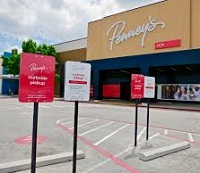 The pandemic has proved to be death knell for US retailers with stores remaining closed for most part of the year. Though steps like curbside pickups, shipping from store websites, furloughs and pay reductions have helped some retailers survive the crisis, the remaining have been forced to go down the bankruptcy lane.
As per a Womens Wear Daily report, brands that went rapidly into bankruptcy included private equity-backed Neiman Marcus Group, J Crew Group and John Varvatos. All these retailers filed for Chapter 11 protection, along with the Ascena Retail Group, Tailored Brands, Centric Brands and Le Tote. These were later joined by other US brands including JC Penney, Brooks Brothers, Retailwinds, Stage Stores, Lucky Brand, True Religion, etc. The situation is almost like a retail forest fire, says Greg Portell, Global Head-Kearney.
Bankruptcies bring unresolved issues to the fore
Though experts expect a new and reformed retail industry to emerge from the crisis, these bankruptcies have highlighted unresolved issues like the creation of the Mytherasa web business by Neiman Marcus. Creditors criticized the moving out of Mytheresa asset from Neiman’s debt structure into other affiliated entities as a maneuver to keep its value out of creditors’ reach. The argument led to Neiman Marcus filing for Chapter 11 bankruptcy besides a dramatic series of collateral events. The retailer emerged from bankruptcy after five months in September, under new owners and with over $4 billion of debt.
The company now faces new challenges like streamlining store base and headcount; generating more foot traffic in its surviving stores amid the pandemic and convincing to return to the stores. It also needs to sustain its online sales growth, and maintain high service levels.
Like Neiman Marcus, J Crew also emerged from bankruptcy in September which helped it to sharply reduce debt. The company now needs to reclaim lost position in the market though some of its stores are likely to remain closed. The new owners, Anchorage Capital Group, named Libby Wadle as its new chief executive officer in November.
Unlike, J Crew, bankruptcy was complicated for JC Penney as the retailer had to overcome opposition of lenders and shareholders before closing stores. Lenders opined that the bankruptcy deal favored a majority lender group while ignoring other creditors. All involved parties finally reached a settlement before the Texas bankruptcy court and approved sale in November. JC Penney is now led by a new team of managers led by Jil Soltau.
Fall before the rising
In Europe, bankruptcy trend was led by the UK with a number of high street stores shutting down due to a dip in physical retail, and the long months of lockdown. Some well-known retailers that shut shop during this time included department store chain Debenhams, which collapsed just hours after Arcadia Group declared bankruptcy in November; Arcadia, the parent of Topshop and Topman, which is being sold off part by part by Deloitte and Laura Ashley, Cath Kidston, Lulu Guinness and Oasis/Warehouse, all of which shut, but quickly found buyers for their IP and/or assets.
Mall operator Intu also went bankrupt this year, while DVF Fashion, Diane von Furstenberg’s UK subsidiary, wound down operations and shut its Bruton Street store in London’s Mayfair.
Now, the introduction of the COVID-19 vaccine and restoration of activities, the retail industry looks to charge ahead anew but now before going through the painful process of restructuring its operations.
FIMAST to be held from April 13-16
A unique event, in which world class manufacturers of yarn, textile machinery and technologies, hosiery, footwear and technical garments exhibit new products and innovations to international clients, FIMAST will be held from April 13-16, 2021 in Italy.
The four-day event will provide multiple contact opportunities with new international customers and consolidate relationships with existing customers through the tools made available by FIMAST.
It will have customizable pre-fitted booths and meet and match area for scheduled b2b meetings. The FIMAST Connect website will provide exhibitors with an online company profile page, an online catalogue, schedule video calls or chats with profiled customers
FIMAST will use functional and elegant pre-fitted exhibition solutions, optimized to facilitate exhibitors’ participation to the show. Booths will be modular and scalable according to needs and can be customized with accessories, furniture and graphics that can be ordered with a click on our online catalogue.
UKVFTA to help Vietnam, UK boost post pandemic recovery
The UK-Vietnam Free Trade Agreement (UKVFTA) is expected will help the two countries boost their post-pandemic recovery, says a report by Vietnam Plus. An article by Pincent Masons expects Vietnam and UK companies to benefit from reduced tariffs on imports and exports. The agreement will deliver annual savings of £114 million to Vietnam on exports to UK and £36 million on UK exports to Vietnam.
During the 2010 – 2019 period trade between Vietnam and the UK reached about $7.6 billion. Saved tariffs will help Vietnam escape the consequences of a decline in global demand that is hindering the export of manufactured goods. The COVID-19 pandemic has led to western countries’ cutting of orders for traditional Vietnamese exports, such as apparel, footwear, electronic devices and automotive equipment.
Associate Professor Wu Ming Jiang from the National University of Singapore’s Lee Kuan Yew School of Public Policy said Vietnam will have more access to the UK’s special strengths in management consultation services and in research and development.
China International Fashion Festival to be held in January 2021
A recent press conference revealed that the 6th China (Shenzhen) International Fashion Festival will be held in January 1-2, 2021 At Shuibei No.1, Luohu, Shenzhen. As per Zhou Shikang, President, Shenzhen Fashion Designers Association and Director-Organizing Committee, China (Shenzhen) International Fashion Festival, the main venue of this Festival is located in famous jewelry enterprises in Shenzhen Shellfish One.
Shenzhen Shuibei, Vice General Manager, No.1 Investment Development Co., Ltd said the main venue of the Shenzhen Fashion Festival has symbolic significance.
The press conference also held ‘Fashion live Innovation Forum’ It was attended by famous fashion designers Deng Dasheng and Yao Ziyi, well-known media people Chai ya, etc. The conference discussed topics like ‘How does fashion live broadcast meet the consumer demand of the audience?’ and ‘How to use the effective information feedback from online live broadcast to guide?’ More than 100 people, including responsible persons of well-known brands in Shenzhen, well-known fashion designers and news media reporters, attended the event.
Overtime and pay cuts rampant in Ethiopian factories
Forced overtime and pay cuts have become common feature in many Ethiopian short-staffed factories, says the Thomson Reuters Foundation. The Foundation states, in recent months, bosses eager to recover lost business have been forcing remaining workers to pick up the slack. These workers primarily worked for manufacturers including KGG Garments PLC and Indochine Apparel PLC, which supply big brands such as The Children's Place and Levi Strauss & Co. More than a dozen industrial parks were built in Ethiopia in recent years as part of ambitious plans to turn the poor, mainly agrarian nation into a manufacturing powerhouse, attracting investors with tax breaks, cheap loans and labour costs.
The Hawassa industrial park was inaugurated in 2016 and employed about 28,000 workers before the outbreak. Workers in this park said they have been struggling to meet their basic needs for most of the year — despite government measures aimed at protecting them.
Ethiopia declared a five-month state of emergency in April to fight the coronavirus and mitigate its affect, prohibiting companies including clothing factories from laying off workers despite significant sales and order reductions. Hundreds of workers employed in Hawassa in January kujbgvvbbgg2020 were furloughed or terminated during the pandemic, according to a phone survey of 3,896 female garment workers which was conducted between April 28 and July 1.
Workers interviewed by the Thomson Reuters Foundation said they were furloughed on reduced pay, forcing some to skip meals or take on loans to buy food. Most live in slums near the park, sharing small rooms often without access to safe water.
Campaigners and unionists like Industrial Federation of Ethiopian Textile, Leather and Garment Worker Trade Unions have advocated the establishing of a statutory minimum wage to protect workers from such abuses, though the government's reluctance and COVID-19 have halted the process.
Textile Ministry to launch new policy
The union textile ministry plans to launch a new textile policy that would boost the domestic industry, promote cultivation, processing and branding of organic cotton, and set up hubs to manufacture machinery with the help of Foreign Direct Investment (FDI), officials familiar with the matter said.
Textile secretary Ravi Capoor cited a Niti Aayog-led study that found Rs 13,000 crore worth machinery was being imported for the industry. Seven mega textile hubs are expected to be set up across the country as per the policy. The hubs will house end-to-end production, from raw material to export of the finished product. They will include a mega textile park spread over 1,000 hectare. The ministry will also set up a textile research institute in Coimbatore under the policy. The policy will seek a structural shift to make India a man-made fibre (MMF) rather than a cotton-driven industry.
The Union textile ministry also plans to launch Rs 10,000 crore production linked incentive scheme to encourage the industry. The ministry has identified 50 key sectors such as sanitary napkins and winterwear for the scheme with a five-year gestation period. It has removed the anti-dumping duty on purified terephthalic acid and acrylic fibre to boost the MMF sector.
Jeanologia to detoxify the jeans industry by 2025
Spanish finishing technology manufacturing company Jeanologia aims to dehydrate and detoxify the jeans industry by 2025 so that not one single jean being produced on the planet damages the planet or the big family of textile workers. The company has effectively navigated this crisis and will close the year by reaching revenues over €50 million and a profit of €5 million by end 2020.In the last five years the company grew between 30 and 40 per cent every year registering a growing EBITDA, and has now become a more agile and stronger.
Jeanologia has opened a new development hub in Hong Kong besides moving its US office from Houston to Miami where a new development center will be inaugurated by March 2021. Its new operational model is focused on sustainability, creativity and digitalization. The integration of Jeanologia technologies Laser, G2 ozone, eFlow, Smart Boxes and H2 Zero, with innovative software eDesigner and EIM allow the company to produce on demand, improving manufacturing costs and significantly reducing the time to market of new products.
For instance, the eDesigner software makes digital design and visualization of jeans finishing possible. This enables extraordinary collaboration between brands and their supply-chain partners that share the tools. Every player of the value chain can share creativity and achieve great results. Product development lead-time will be shortened by months, and the unnecessary expense of multiple physical sample iterations coming and going around the world will be eliminated while the final digital file containing the approved design can be sent to production centers around the world, or down the block, to accurately produce the jeans.
Deckers Brands’Q2 revenues grow by 15 per cent
Revenues of Deckers Brands, a designer and distributer of innovative footwear and apparel, increased 15.0 per cent to $623.5 million during Q2 FY21 that ended on September 30, 2020, compared to the revenue of $542.2 million in the same period last year. The company’s net income during the quarter increased to $101.5 million as against $77.8 million in Q2 FY20. Its gross profit during the quarter rose to $318.9 million while its income from operations rose to $128.6 million.
Sales of UGG brand increased by 2.5 per cent to $415.1 million while those of Hoka One One brand increased by 83.2 per cent to $143.1 million. The sales of the Teva brand grew by 20.5 per cent to $27.7 million while that of Sanuk brand slipped by 11.4 per cent to $9.5 million. The company’s wholesale sales increased 1.8 per cent to $451.6 million whereas its DTC sales grew by 74.2 per cent to $171.9 million.
Demand for spandex improves during COVID-19
Affected by the pandemic, orders for spandex in pandemic prevention materials, fabrics for sportswear and casualwear and thermawear improved in 2020. As per CCF Group, the prices of spandex gradually touched bottom in Jan-Jul, 2020. Demand for spandex surged after August and the market entered prosperity cycle. By the end of 2020, price, profit, operating rate and stocks of spandex all apparently improved compared with the beginning of 2020. Spandex price even hit 5-year new high. The following are big events of spandex industrial chain noteworthy in 2020.
Spandex companies including Huafon Chemical, Tayho and Zhongbai donated emergent pandemic prevention materials China, as the biggest mask producer in the world, took a lead in resuming production and exported massive mask and protective clothing. The Hs code of mask and protective clothing was split from March 20
The original Hs code 6307900000 was split into 6307900010 (mask) and 6307900090 (cargoes not otherwise specified made from other textile materials).
The original Hs code 6210103000 was split into 6307900010 (mask) and 6210103010 (protective clothing made from chemical fibers). As of October 20, China has provided anti-epidemic assistance to 150 countries and seven international organizations, exporting more than 179 billion pieces of masks, 1.73 billion pieces of protective clothing and 543 million testing kits.
Berlin Fashion Week to be held as per schedule
Unlike trade fairs with Premium, Neonyt and Co who plan to move Frankfurt by July next year, Berlin Fashion Week intends to hold its event as per schedule from January 18 to 24, 2021. The fashion week will be a hybrid event with digital events and face-to-face events with a highly limited number of participants.
As per Sportswear International, the new concept will focus on innovation, sustainability and digitalization. The event Fashion Open Studio/Fashion Revolution will be launched in cooperation with Mercedes-Benz Fashion Week, which will offer a platform for sustainable fashion brands. In parallel, sustainability experts will work with the organizers and international stakeholders to develop a Berlin sustainability agenda, the results of which will be presented at the Berlin Fashion Summit in January 2021.
A part of the Berlin Fashion Week, the Mercedes-Benz Fashion Week will be held digitally from January 18 to 20 – with live streams of catwalk shows as well as live digital talks. Designers for the event will include Tom Van Der Borght, Michael Sontag, Danny Reinke, Kilian Kerner and Rebekka Ruétz.