


FW
H&M launches new packaging system
H&M Group has launched a new multi-brand paper packaging system that’s reusable and recyclable. As per Fashion Network, the new bags are made of certified paper that can be made to be as protective of the products as plastic is. And once opened, the bags are recyclable as the company aims to cut down on the overall level of waste produced.
The company’s distribution centres in the UK, Netherlands, Sweden, China, Russia and Australia have been testing sustainable solutions for millions of packages. It is currently diving deep into digital and said the fact that e-commerce is increasing worldwide is driving large amounts of plastic waste, so there’s “an increased need to find new solutions for more sustainable packaging”.
Much of the packaging used to fulfil online deliveries is plastic-based and the majority of it ends up in landfill sites or, even worse, the oceans.
So far, the new packaging has been introduced to customers at Cos, Arket, Monki and Weekday. The H&M brand has started to implement it in selected markets, and it will be rolled out more widely at the brand in the months ahead. The &Other Stories brand will also be added to the programearly next year.
Messe Frankfurt reschedules 2021 edition of Heimtextil
Messe Frankfurt has rescheduled the 2021 edition of international home textiles expo Heimtextil to May 04-07, 2020 due to COVID-19 concerns.
Traditionally held each January, the event will take place concurrently with Techtextil and Texprocess.
Roughly 1,600 companies have expressed interest in exhibiting at the next Heimtextil, an international trade fair for home and contract textiles with more than 2,700 exhibitors and roughly 67,000 trade visitors. The trade fair serves as a business and information platform for manufacturers, retailers and designers from around the world. International exhibitors present their products to a wide trade audience on the Messe Frankfurt exhibition grounds. As the first marketing and ordering event of the year, Heimtextil showcases new home and contract textiles. By presenting bed, bath and table linens as well as floor and window coverings, upholstery and sun protection systems, Heimtextil covers the entire home and household textiles portfolio from across the globe.
Techtextil and Texprocess will also boast registration figures with over 85 and 65 percent respectively of the exhibition space already having been reserved.
Nike to capitalize on quick recovery with new expansion plans
As per reports, Nike plans to capitalize on its quick recovery to drive further investments.
The brand plans to focus on women's, apparel, digital and the Jordan brand. In apparel, the company's maternity line, which launched in September, saw a 100 per centsellthrough of tights in its first two days. The retailer also expanded its extended sizing into the kids category this quarter.
Its inventory is back to healthy levels though gross margin decreased 90 basis points to 43.1 per cent through efforts to reduce excess inventory.
Nike Digital now makes up 25 per cent of the North America business and the Nike mobile app grew 20 per cent in the quarter. The retailer has added 70 million new Nike members globally since the pandemic began and that buying member growth is outpacing new and active member growth.
The retailer also plans to open between 150 and 200 small-format stores in North America due to the strategy and is focusing its footprint on technology-driven concepts like Nike Live and Nike Rise. It is creating online to offline capabilities, like buy online, pick up in-store throughout its network.
Burberry included in DJSI for sixth consecutive year
Burberry has been included in the 2020 Dow Jones Sustainability Index (DJSI) for the sixth consecutive year, Ranked second place overall in the ‘Textiles, Apparel & Luxury Goods’ sector, the company secured leading positions within the Product Stewardship and Social Reporting categories.
During 2019/20, Burberry reduced its market-based emissions by 86 per cent and procured 83 per cent of its total energyfrom renewable sources. Burberry is now carbon neutral across 85% of its site globally, including the Americas region, its EMEIA and China retail stores and UK operations, and aims to be 100% carbon neutral by 2022.
These goals are underpinned by two additional climate goals approved by the Science Based Target initiative (SBTi) for Burberry’s own operations and extended supply chain. The targets covering greenhouse gas emissions from Burberry’s operations (Scopes 1 and 2) are consistent with reductions required to keep warming to 1.5°C, the most ambitious goal of the Paris Agreement. To date, Burberry has reduced its Scope 1 and 2 emissions by 82 per cent (since base year 2016/17). Through engaging with suppliers on energy efficiency and renewable energy, the company has reduced emissions in its supply chain by more than 1600 tonnes of carbon. These initiatives, alongside its transition to more sustainable raw materials, are contributing to Burberry’s Scope 3 Science Based Target.
In February 2020, Burberry created the Regeneration Fund designed to support a portfolio of carbon offsetting and insetting projects to directly tackle the environmental impact of its operations. The new insetting projects will be implemented within Burberry’s own supply chain and will work to promote biodiversity, facilitate the restoration of ecosystems and support the livelihoods of local producers, as well as storing carbon at source and removing it from the atmosphere.
Brama Group partners with Paige to expand distribution
Brama Group, which specializes in the distribution of American contemporary labels, will begin to distribute the Paige brand in Europe and the Middle East starting from the fall 2021 sales campaign.
Brama Group will partner directly with the brand’s U.K. team and London-based showroom as they look to expand the men’s and women’s distribution throughout continental Europe and The Middle East. It is European distributor of apparel labels including Equipment; Current/Elliott; Frame; Mother; Norma Kamali; Boyish; 360 Cashmere; SPRWMN; Mantero 1902; Re/Done; The Great; GiadaBenincasa; Electric & Rose, and Michael Stars.
Founded in Los Angeles in 2004, Paige’s collections include denim and leather pieces, blouses, outerwear, sweaters, T-shirts and shoes, which were launched two years ago. Paige’s signature whipstitch — nine stitched bars that adorn the back pocket of every pair of jeans — represents nine lives, “a reminder to always grow, reinvent yourself and evolve for the better,” Adams-Geller said.
Paige men’s and women’s collections are available at the brand’s boutiques in Los Angeles, San Francisco, New York, Texas, Miami and Scottsdale. The label is also available in stores in more than 80 countries worldwide.
Digitization, the key to save businesses during and after pandemic
 Held on December 11, the International Fashion Futurum Forum focused on the theme of ‘What is the future of independent fashion brands in post-COVID reality: cultural codes and business opportunities’. As per a Be Global Fashion Network report, the forum was attended by 74 speakers from 24 countries. It comprised 16 sessions which were viewed half a million times on all platforms.
The session tilted PR Consulting: An Invitation to Dream focused on theme of locality. Pierre Rougier, Founder, PR Consulting (USA), said if a brand stands out in the local market, it can achieve the rest by presence on social media networks. The session on ‘Sustainability: Global Practices to Save the Planet’ was inaugurated by Maeve Campbell, Deputy Editor, Euronews Living (UK) and Christina Dean, Founder and Board Chair, who defined sustainability as an ability to think about future generations’ needs ahead of one’s own greed.
Fashion-a mode of communication between cultures
At the session ‘Identity of world cultures through the eyes of the designers of the future,’ representatives of brands and fashion weeks from around the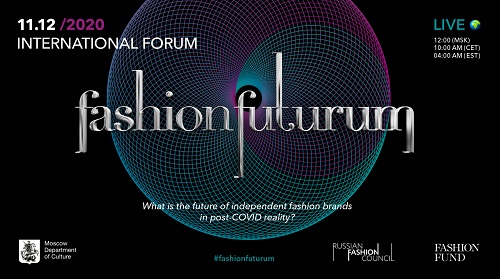 world discussed how designers can influence the culture and fashion of the future. Linus Leonardsson, Creative Director, Linus Leonardsson (UK), observed the world has changed, and all people will are adjusting to new rules. Fashion is becoming a means of communication between people of different cultures, added Ali Charisma, National Chairman of Indonesian Fashion Chamber and Director of Muslim Fashion Festival Indonesia (Indonesia).
Won Jeon, Founder, Painters and Design Professor, Le Rêve School of Arts, South Korea spoke about the peculiarity of local fashion while Gloria Wavamunno, Founder, Kampala Fashion Week said local brands more often work with capsules for a limited number of clothing items. Anna Chernykh, CEO, Freshblood, drew attention to the inclusive trend in fashion: she spoke about the collections of launched by the students of British Higher School of Art and Design trained for people with disabilities.
An ecosystem for local designers
Opening the session, ‘The Best of two Worlds,’ Shumsky, President, Russian Fashion Council and Mercedes-Benz Fashion Week Russia shared how the online format of events allows designers to expand boundaries and make events global and international. Lucilla Booyzen, Founder of South African Fashion Week (South Africa) added, digitalization helps create an ecosystem for local designers to collaborate with other designers and learn how to work with consumers through social networks.
Guido Ampollini, Owner and Head-Performance, GA Agency, believes digitalization will be the key to save businesses during and after pandemic. Competition in the digital space will increase in the next 10 years forcing small and medium-sized businesses to find new ways to increase their conversion rates on website, choose the right influencers for their projects and cooperate with large companies.
Practicality to drive future growth of performance fabrics
 The sports and outdoor industry is making a positive shift by using recycled fibers and fabrics. As per a report by Innovation in Textiles, majority of these fabrics are made from plastic waste, including single-use plastics or fishing nets collected from beaches and oceans. This not only prevents plastic waste from being dumped into the ocean and river but also requires less energy than the production of virgin polyester.
Held digitally on December 9 and 10, 2020, functional fabrics fair Performance Days focused on natural and renewable fibers. Focusing on the theme ‘Nothing to waste – closing the loop’, the event explored recycled, mono-material and biodegradable polyester and nylon fabrics.
Shift towards recycled synthetics
The Performance Forum showcased a range of recycled synthetic fabrics including a bi-colored knit fabric by Antex. Made from Seaqual, a recycled fiber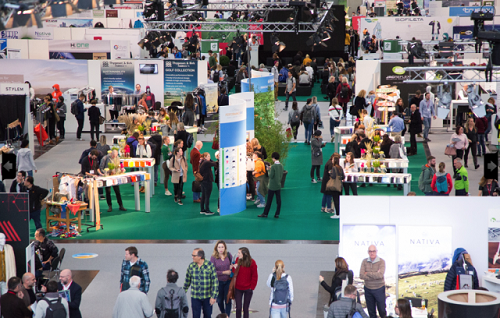 produced from plastic waste dredged up from the bottom of the sea, this fabric has helped the Spanish Mediterranean coast clean an estimated 600 ton of waste from the ocean. It has also transformed 99 ton of marine litter into up-cycled marine plastic.
Another innovation showcased at the Performance Days included Schoeller Textil AG’s 4-way stretch fabric that offers high abrasion resistance combined with elasticity and moisture management. The fabric is treated with ecorepel bio finish obtained from renewable, natural ingredients.
Winner of this season’s Performance Award, Merryson Corp’s fabrics are made from 79 per cent recycled content. Developed with the help of 3D weaving technology, these fabrics are highly durable and robust to be used in workwear or for outdoor apparel.
Collaboration for effective collection and sorting
Though fabric mills are developing mono-material functional textiles, they need to increase their collaboration with stakeholders to develop effective collection and sorting systems. An example is the BulkyStretch range launched by Evertex Fabrinology. Conceived as a 100 per cent polyester knit collection, these fabrics boast of 4-way mechanical stretch, UV protection and high breathability, while being durable and fast-drying.
Many biodegradable performance fabrics have been launched, however, only a few can be used commercially as the infrastructure for industrial scale textile composting is less developed than for recycling. Also, these fabrics face potential contamination issues caused by coloration, finishing and other treatment processes that can be overcome only by adhering to strict standards. Described as 100 per cent biodegradable, Schoeller GmbH & Co’s superfine merino and micro Tencel blend is certified by GOTS, RWS, EU Ecolabel and Bluesign. This lightweight fabric has a striking 3D honeycomb structure, which helps it to manage odor and sweat by reducing direct contact with the skin.
Another emerging innovation in this area is biodegradable nylon which was presented by Manifatture Italiane Scudieri Srl – Mectex, J&B Int’l while Brugnoli presented functional biodegradable textiles based on the Amni Soul Eco technology by Fulgar.
As seen from Pontetorto Spa’s Biopile collection, biodegradability also addresses synthetic fiber fragmentation and subsequent pollution of oceans and rivers. Made from 100 per cent polyester recycled from PET on the outside, the collection’s interior is constructed with hemp, which is certified as biodegradable in seawater.
New separation and recycling technologies
Though the industry has set a clear vision to achieve circular fabrics’ future; to close the technical and biological gaps between this vision and reality, it needs to increase the collaboration between fabric mills, brands and recycling and composting technology innovators.
As seen during the panel discussion with Infinited Fiber Company, Renewcell, Spinnova and WornAgain, the industry is set to launch many new recycling technologies and fibers. The sports and outdoor industry cannot develop and promote fabrics that cannot be recycled due to their harmful coloring and finishing processes.
The textile industry needs to develop suitable separation and recycling technologies or launch new solutions for substituting difficult elements. Designers and developers have to support textile mills in their innovations by incorporating practical solutions into their functional fabrics right at the beginning.
AAFA welcomes new congress’ agreement on new stimulus deal
American Apparel & Footwear Association welcomed the news that Congress had come to an agreement on a new stimulus deal to inject an additional $900 billion into the economy. At the same time, the association emphasized that more will need to be done to support the U.S. economy in 2021.
With the extension of the paycheck protection program and new unemployment benefits, the stimulus deal helps American businesses and American families when we need it most, said Steve Lamar, President and CEO, AAFA. While this new bill provides essential aid, it is only a down payment on what the American economy needs to make it to the other side. The job is not done, and more work will be needed in 2021.
AAFA is a member of the COVID RELIEF NOW coalition, which is representing the interests of a diverse segment of the economy that has been calling for further stimulus measures. Among the measures that the association supports: trade credit insurance; expansion of the Employee Retention Tax Credit (ERTC); legal liability protection; return to work incentives; Healthy Workplaces Tax Credit; and duty drawback for charitable donations.
AAFA expresses disappointment at inaction by congress
American Apparel & Footwear Association expressed disappointment and regret at inaction by Congress, leading to a lapse in two critical trade preference programs — the Generalized System of Preferences (GSP) and the Miscellaneous Tariff Bill (MTB) — imposing a tax increase on American workers, American consumers, and American businesses at a time when they can least afford it.
The cessation of these programs benefits no one but hurts many, at a time when they can least afford it, said Steve Lamar, CEO and President, AAFA. The inaction on these two critical bills will lead to tariff increases — in other words, tax increases — for the holidays on American workers, American consumers, American businesses, and the U.S. economy.
AAFA hence urged the Congress to swiftly reauthorize, and retroactively renew, both programs to minimize the damage as much as possible.
AAFA has been a staunch proponent of both bills, most recently calling for renewal of the programs in letters to Congress on December 1 and December 4.
New UKGT to benefit Indian exporters
The new UK Global Tariff (UKGT) may benefit Indian exporters as it allows duty-free import of 507 goods (at HS Code 6 digit) worth USD 32 billion. According to a study by MVIRDC World Trade Center Mumbai, India has export potential in these goods as it is already exporting them to the UK, although its market share in that country is limited.
Under UKGT, the UK government liberalized import of more than 901 goods (at HS 6 digit tariff lines) by allowing duty-free import of these goods. Of these, India exports 507 goods worth USD 547 million. However, the annual import of these 507 goods by UK is USD 32.03 billion, which leaves huge scope for Indian exporters to enhance market access in that country by taking advantage of the zero duty.
On January 31, 2020, the UK formally decided to exit the European Union and chose a transition period of 11 months upto December 31, 2020 for negotiating its trading relationship with the EU and other countries.
With the deadline of this transition period nearing, the UK government has introduced its own tariff schedule, known as UK Global Tariff (UKGT) to replace the EU’s Common External Tariff, which applies only till December 31, 2020. The UK government has placed this new tariff schedule before its Parliament for approval. Once it is approved, the new tariff schedule will be applicable to the goods imported by the UK from any country (except the countries with which it has signed free trade agreements).
Thus, until the UK signs a trade agreement with India, this new tariff schedule will be applicable to goods exported from India. The new tariff schedule eliminates import duty on certain organic and inorganic chemicals from 6-7 per cent, which was applicable under the EU’s Common External Tariff (CET). In some of the organic chemicals such as cyclic alcohols, India has 54 per cent share in UK’s total imports. In aldehydes, (which is another organic chemical), India has a share of 72 per cent in total imports of the UK. Similarly, UK proposes to eliminate duty on cotton yarn, fabric, granite, ferro alloys, certain parts of machine tools, copper products, leather articles and certain types of vegetables.











