


FW
Milan fashion shows cancel physical events
Milan fashion shows, MICAM Milano, MIPEL, TheONE Milano, Lineapelle and Homi Fashion & Jewels Exhibition, which had joined forces in the #strongertogether exhibition project, have decided to cancel physical trade fairs planned from March 20 to 24, 2021 at the Fieramilano Rho exhibition centre.
Under Italy's Prime Ministerial Decree concerning the COVID pandemic, physical trade shows are prohibited until March 5, 2021. Large number of buyers from all over the world are not be expected to attend these events as international limitations on travel and health restrictions prohibit them to travel safely to Fieramilano Rho.
The organizers plan to invest their efforts and investments into digital initiatives over the coming weeks. These virtual events will offer exhibitors an opportunity to digitally present their collections and the results of their undeniable creativity.
AII initiative focuses on Italian luxury footwear and apparel industry
The new initiative launched by the Apparel Impact Institute (AII) focuses on the Italian luxury footwear and apparel industry. As per a Sourcing Journal report, the initiative helps Italian manufacturers coordinate, fund and scale environmental programs with measurable impact.
The program aims to unite brands, manufacturers, philanthropy and nonprofits to create an action plan to address top environmental issues, increase awareness and fund initiatives. The program was launched at the end of 2020 with a prioritized group of Italian manufacturers. The next phase involves recruiting 10-15 more manufacturers and luxury brands to participate.
AII had also launched the Clean by Design initiative led by the Natural Resources Defense Council at its textile mills in 2013. Stella McCartney was the first European partner and the first luxury brand to implement the initiative followed by luxury conglomerate Kering.
Though AII was formed four years ago, it has already made a lasting impact on the fashion industry. The organization began as a collective effort among the Sustainable Apparel Coalition (SAC), the Sustainable Trade Initiative (IDH), Gap Inc, PVH Corp, Target, HSBC Holdings plc and other parties to unite the industry for sustainability.
Sports insoles next focus area for apparel manufacturers
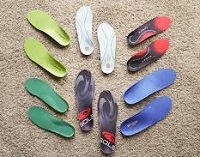 Due to the extra cushioning they provide, sports and athletic insoles are gaining popularity amongst sportsman. A report by Future Market Insights points out, the global sports insoles market is expected to grow at a CAGR of 7.7 per cent from 2020-2030. Insoles help sportsmen maintain feet comfort besides improving their body posture and providing breathability to the sole.
As gel insoles help absorb shocks generated during hardcore sports, they are gaining huge popularity amongst sportsmen, athletes, regular walkers and runners. Incorporated with a Messaging Gel Advanced technology, Dr Scholl’s® Athletic Series Sport Insoles help sportsmen reduce muscle strain. The gel insoles manufactured by Sofe Sole also ensure maximum cushioning for activities like running, cross training and walking. Having Skydex air bubbles in the heel and arch, insoles help sportsmen absorb impact.
Silicon and polymer emerge as favorite materials
Most sports insoles are made from silicone which absorbs the shock on heels, and metatarsal regions and maintains the foot’s arch. Besides silicone,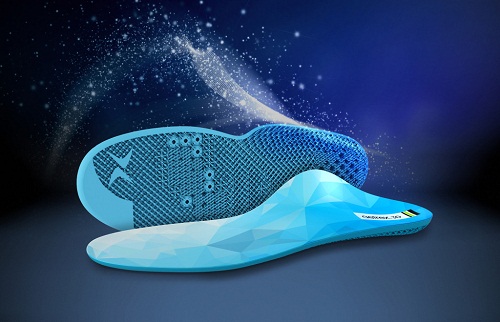 polymer insoles are expected to record remarkable growth in the next few years. One prominent manufacturer of polymer insoles is Amercule whose insoles are made with abrasion-resistant polyurethane, offering unparalleled impact reduction and shock absorption.
Manufacturers are also investing in the research and development of new materials in this area. For example, Nike has developed a new React technology that confirms durability.
Shortens delivery time
Another innovation in the development of sports insoles is 3D printing which simplifies fitting and customization process during insole manufacturing. It also reduces manufacturers’ production and delivery times. Hence, players across the world are opting for 3D printed sports insoles. Phits™ Insoles integrated their leading dynamic measurement foot scan solutions with Materialize’s 3D printing software to manufacture customized, dynamic 3D-printed insoles. Another specialized 3D-printed orthotics manufacturer is 8sole whose advanced biomechanics help alleviate the sportsmen’s pain by exerting only half of the total pressure.
Sports insoles for women are leading market growth as the percentage of women’s participation grew over 10 per cent in the Summer Olympic Games 2016 after 1950s. Many new players are entering the market with the US leading growth.
Rising costs and lack of knowledge impede future growth
Sales have seen good growth with online retailers recording strong CAGR during the forecast period. The rising cost of sports insoles are a major challenge the market. Also, consumers are not aware of many new products that are launched. Counterfeits are another challenge that insole markers have to contend with. Leading players are witnessing an increase in production of fake products which is impeding growth.
The pandemic has also disrupted demand across the globe. Ongoing transport ban has affected raw material imports, slowing production. The market is expected to revive in the current year as many players are switching to online versus offline sales. Players are advertising products at the some of the biggest events like Bauerfeind which sponsored events such as the Olympics and National Basketball Association (NBA) league. Manufacturers are also successfully penetrating newer markets with breakthrough innovations. The market is expected to reach a value of $19,650.9 million by 2030.
Luxury shopping gets a new twist with mystery boxes
 One interesting retail trend that has emerged from the pandemic is the concept of ‘luxury mystery boxes.’ Launched by two upstart companies -- Heat and Scarce -- these boxes contain clothing items from the surplus stock of boutiques, brands like Moncler, Balenciaga and Off-White. As per a Live Mint report, customers generally have no idea about the content of these boxes unless they receive and open them. Sold by gender, these boxes offer streetwear and contemporary styles like T-shirts and small accessories from brands including Rhude, Ambush, Casablanca and Haider Ackermann. Each items are priced at $400. On the launch day, Heat was able to sell thousands of these boxes using a tiered pricing scheme.
Variety of labels at pocket friendly prices
One major benefit these boxes offer customers is their pocket-friendliness. Young shoppers can buy a box containing luxury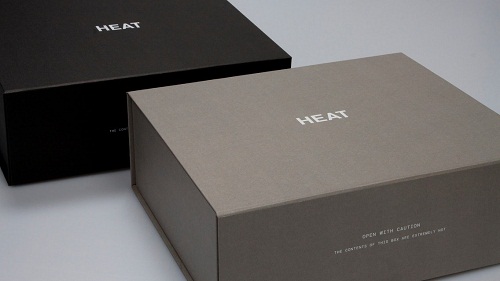 streetwear from Scarce for $698 and an ‘Outfit Box’ for $1,998. These shoppers often value a brand name more than the items and have a blind faith in their chosen brands.
While ordering these boxes, customers can choose their favorite labels. They can also return the boxes if the shipped items do not meet their approval. However, they need to be returned with all their contents within 14 days. Customers also have to pay returns shipping charges. This helps both companies to restrict their returns rate to less than 10 per cent.
Reflection of changing fashion trends
Both Heat and Scarce agree COVID-19 has made the concept of luxury boxes even more enticing for brands and retailers as it helps them offload unsold inventory, However, Heat and Scarce don’t just offload excess merchandise but make it more attractive with their slick packaging. These boxes are a reflection of the new emerging fashion economy where consumers were no longer skeptical of buying off-season clothes as it helps them add variety to their wardrobes.
Higher tariffs impede Bangladesh’s FTAs with trading partners
A report by the General Economic Division of Bangladesh says the country will face an uphill task in convincing major trading partners and regional blocs to sign free trade agreements (FTAs) because of higher tariffs as it looks to retain duty benefits after its graduation from the LDC group, according to a government report.
According to the report titled "Impact assessment and coping up strategies of graduation from LDC status for Bangladesh, ‘currently the country does not have any bilateral FTA with any country.
In December, Bangladesh struck preferential trade agreement (PTA) with Bhutan, its first bilateral trade agreement, as it looks to retain duty-free market access after it becomes a developing nation in 2024.
Under the deal with Bhutan, Bangladesh will get duty preference for 100 goods and extend the same benefit to Bhutan for 34 goods.
Bangladesh may ink PTA with Nepal soon. Besides, the government is in negotiation with 11 more countries to sign FTAs.
Post-LDC, Bangladesh may also have to negotiate a trading arrangement with the EU and the post-Brexit United Kingdom to ensure favourable access to the markets, which account for more than 60 per cent of exports from the country.
Beyond that, Bangladesh may seek more bilateral or regional FTAs if the projected trade creation (trade growth) contributes to growth and employment creation.
Cotton Index reports sharp decline in cotton prices
The Cotlook-A index has reported a sharp decline in the cotton prices for 2020. The prices slipped to 63.53-81.02 cents per pound in 2020 compared to the prices of 70.75-87.25 cents per pound in the prior year. The index remained in between 65.00-70.00 cents per pound from March-August 2020 and was lowest in April at 63.53 cents per pound.
The cotton prices moved down with decrease in global cotton demand by 7.60 million bales, or 6.40 per cent in March 2020, according to United States Department of Agriculture’s (USDA). The reduction was due to Covid-19 impacts on countries around the world.
It represented a loss of around 3.5 weeks of global spinning or about 16.00 per cent of the expected spinning in March through July based on the March USDA forecasts. The USDA report also noted that Covid-19-driven changes in behaviour and regulations significantly impacted the supply chain of the cotton sector. Recent travel restrictions in India, Pakistan, and Vietnam were likely to have similar impacts on cotton supply and demand in the short-term.
In addition to physical disruption across the global supply chain from farm to retailer, global cotton end-use had slipped amidst large portions of the global population limiting activity outside their homes or confined by stay-at-home orders and with many “non-essential” businesses including apparel stores closed. The two largest importers of apparel, EU and US, saw a widespread closure of shopping malls and retail stores, while three-quarters of US population were under travel restrict
VF Corporation discloses supplier information across all tiers
One of the world’s largest apparel, footwear and accessories companies, VF Corporation has disclosed the list of suppliers from Tier I to Tier IV in a consolidated, downloadable file. As per a Textile Focus report, VF launched in an initiative to map 100 of its brands’ most iconic products by December 2021. The company has published the origin and development of 46 of its products online. This new data allows the company to trace the full end-to-end supply chain, from raw materials conversion to product distribution. Its teams can use this data to improve its sustainability initiatives and labor working conditions.
In addition, the company can translate the data into geographical maps and publish its traceability disclosure list on its website. This offers its stakeholders and consumers visibility into the various tiers of the company’s supply chain. An American apparel and footwear company, VF Corporation was founded in 1899. The company operates more than 30 brands into three categories: Outdoor, Active and Work. It controls 55 per cent of the US backpack market with the JanSport, Eastpak, Timberland and North Face brands.
US Customs and Border Protection detains cotton apparels from Xinjiang
Urged by leading US fashion industry and retail groups, the US Customs and Border Protection withheld release order to detain all cotton products produced in mainland China's Xinjiang Uyghur Autonomous Region. In their joint letter, the American Apparel & Footwear Association, the Footwear Distributors of America, the National Retail Federation, the Retail Industry Leaders Association and the United States Fashion Industry Association had urged the Congress to take action on imports from the XUAR.
The letter also urges for the development of a transparent, tiered, risk-based approach to enforce new forced labor; a clear, transparent and evidence-based process for implementing both current and future regulations; development and implementation of cost-effective technologies and innovative approaches for traceability; and establishment of the California Transparency in Supply Chains Act as the basis for the federal disclosure requirement on what companies are doing to prevent forced labour and human trafficking in their supply chains.
Sympatex to convert 25 per cent raw materials to bio-based sources
Leading clothing and footwear materials producer, Sympatex plans to convert more than 25 per cent of the raw materials required for membrane to bio-based sources, originating from various organic waste streams. Sympatex will also ensure the membrane retains its high performance values in terms of breathability as well as water- and windproofness, besides remaining fully recyclable at the end of its life cycle.
DSM, Sympatex's long-standing raw material partner, will help the company convert its production facilities to renewable electricity sources In this way, DSM will support Sympatex, as the first signatory to the UNFCCC Climate Charter for Action for the Textile Industry (now signed by over 100 brands and associations), to reach another milestone on the road to climate neutrality several years earlier than planned
Specifically, incorporating Sympatex membranes into their collections will help its brand partners fulfill a major climate charter commitment – reducing CO2 emissions by 30 per cent compared to 2015 – much faster. One of the first brands to benefit from this would be Mammut, which will hit stores with a Sympatex collection in the coming winter season.
India refutes discrimination charges against American companies
India’s commerce secretary Anup Wadhwan said, India does not agree with the United State Trade Representative’s report that accuses it of discriminating against American company by levying a two per cent equalization tax on foreign e-commerce firms. As per Economic Times, last month, an USTR investigation accused India of discriminating against the US companies by levying a 2 per cent digital services tax on e-commerce supply and being inconsistent with international tax principles.
Wadhwan said, jurisdiction that offers economic benefit needs to be taxed. He added that the OECD (Organisation for Economic Co-operation and Development) is also moving in the same direction.











