


FW
Asos acquires new brands for $364 million
British online fashion retailer Asos has acquired the Topshop, Topman, Miss Selfridge and HIIT brands for $364 million. As per reports, the acquisition makes Asos the number one fashion destination for young customers worldwide. Its brand equity is strongest in the UK and it has also established a strong presence in both the US and German. The newly acquired brands will join Venture Brands portfolio alongside others, including Collusion, AsYou and Reclaimed Vintage.
Asos will retain its established brand and customer positioning by applying industry leading design talent and online retail experience. Retailer will also invest in customer engagement and brand positioning in line with its existing mode. The British fashion company anticipates incremental sales in fiscal year 2022 to be broadly flat as it focuses on driving growth on Asos platform and through select strategic retail partnerships. The acquisition is expected to be margin accretive, with strong operating leverage given the relatively low incremental costs of operation once integrated onto the Asos platform. Asos expects the transaction to deliver double-digit return on capital (post tax) in the first full year.
India Budget 2021-22: Focus on MSME with seven mega textile parks across India

Focusing on health and well-being of citizens, physical and financial capital and infrastructure, inclusive development for aspirational India, innovation and R&D, minimum government, maximum governance are some of the highlights of the Union Budget for the financial year 2021-22.
Finance Minister, Nirmala Sitharaman allocated Rs 15,700 crore for the Ministry of Micro, Small and Medium Enterprises (MSME) sector. She also proposed to reduce the money requirement under the Stand Up India scheme for the Scheduled Castes and Scheduled Tribes from 25 per cent to 15 per cent besides approving loans for activities in allied activities in agriculture.
Scheme for new textile parks
In view of global pandemic, the Budget also introduced a new scheme for setting up mega textile parks in the country. These parks will help the government position India as a fully integrated, globally competitive manufacturing and exporting hub for the sector.
Under this scheme, the government has sanctioned 59 integrated textile parks, of which 22 have been completed. The textile ministry also plans to set up a Mega Integrated Textile Region and Apparel (MITRA) Park, spread over 1,000 acres with state-of-the-art infrastructure, common utilities and Research and Development (R&D) lab. The government has also approved production-linked incentive (PLI) scheme for 10 key sectors including textile and automobiles which would help India become self-reliant, boost manufacturing and enhance exports. The scheme takes the total government outlay for such incentives to nearly Rs 2 lakh crore over a five-year period.
Industry needs a new law to end labor exploitations, say experts
 Dominique Muller from the Labor Behind the Label believes, the fashion industry is the root cause of exploitation of low-paid and undervalued workforce in development. He and other industry experts say, COVID-19 has highlighted the exploitative nature of global garment supply chains. In an Open Democracy report, experts advise fashion brands to end exploitation in supply chains and offer fair salaries and working conditions.
Pandemic exposes workers’ realities
Labor exploitation in garment supply chains began with the rise of globalization in the 1970s. Previously, the direct employees of fashion brands, garment workers became distant actors in complex global supply chains. Fashion brands were no longer held responsible for paying fair wages or offering employment benefits to their workers. COVID-19 has exposed this dark reality of brands, retailers and manufacturers, says Kalpona Akter, Executive Director, Bangladesh Center for Workers Solidarity. According to her, for years, brands and manufacturers have been exploiting workers by refusing to pay their salaries
A recent study by the Worker Rights Consortium further reports a 21 per cent decline in workers’ incomes between March and August 2020 – with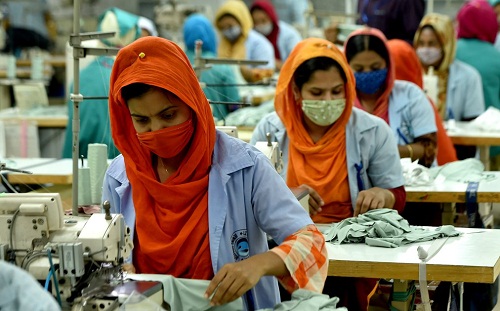 monthly wages falling from $187 to $147. They are made to work overtime without being paid even their minimum wages, adds Akter. Even when workers are paid full wages, 30 per cent goes on housing. A 20 per cent wage cut forces them and their children to starve as they still have to pay for accommodation and other compulsory charges, states Akter.
Workers in Sri Lanka also face a similar situation. Abiramy Sivalogananthan, Asia Floor Wage Alliance, explains, many workers in Sri Lanka’s vast free trade zones are migrant workers who support not just themselves but their families in rural villages. Workers also lost their December bonus due to the pandemic. This bonus helps them pay off their debts.
Sharp decline in retailers’ profits
The pandemic has affected not just workers but also many fashion retailers across the globe. For instance, retailers in North America and Europe– including Philip Green’s Arcadia collapsed. In the US over 25,000 physical shops were closed and McKinsey expects fashion companies to post a 90 per cent decline in profits in 2020. According to a McKinsey report based on2018 data, the top 20 fashion corporations based on total annual profits including Nike, H&M, Zara’s parent company Inditex, Lululemon, and adidas and luxury companies like Burberry, Kering, and Hermes which are ‘Super Winners’, have managed to weather the COVID-19 storm with 22 per cent higher indexed stock valuations. By October 2020, the share price of these corporations was 11 per cent higher than pre-crisis levels. It attributes their success to robust digital presence and quick diversification to the Asia Pacific region which has been less affected by the pandemic than the US and Europe.
Need for a human-centered approach
Henceforth, the fashion industry needs to adopt a sustainable and human-centered approach to rebuild its past glory, say experts at the International Labor Organization. It needs to ensure fair salaries and conditions for garment manufacturers in the Global South. It needs to work towards building a more resilient, inclusive, sustainable and garment industry, adds Tara Rangarajan, Head, Brand Engagemen, Better Work Program, ILO.
As COVID-19 disrupts work and health, workers are being forced to work when feeling unwell. They just take Panadol or a vitamin C tablet to pass through the temperature checks on fear losing jobs if they don’t show up for work. The profit model has not only made lower strung of supply chain more vulnerable to economic pain, it has also pushed the social and personal costs of the virus onto the same people. Muller believes the industry needs to adopt a new way of thinking that does not exempt the brands from responsibility for their workers. He further opines governments across the globe need to introduce a new law to curtail worker exploitation and hold companies responsible for labor abuses.
End of civil war to restore investor confidence in Ethiopian RMG sector
 Ethiopia, until recently, attracted many South and East Asian clothing manufacturers, however, now the country faces violent conflict in the Northern Tigray region. Fuelled by ethnic power politics, the conflict has so far killed thousands of people besides displacing over a million, says the International Crisis Group. As per a Quartz Africa report, the scale of this conflict is sufficient to scare away foreign investment in the garment sector. The sector is projected to grow around 40 per cent a year in the next few years.
Employing over 25,000 workers at its flagship Hawassa Industrial Park, Ethiopia faces many bureaucratic and logistical challenges. Workers in the garment sector are barely able to survive with their base monthly wages being $26. In addition, political instability threatens future investments and jobs prospects for millions of workers.
A complete breakdown of the sector
The collapse of the sector could dampen the spirit of Ethiopian garment manufacturers already struggling with their businesses. Ethiopia also faces acute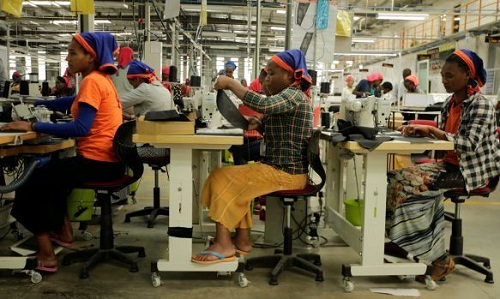 raw material shortage as it imports raw materials from India or China. Though its government has made 3 million hectares available for cotton cultivation, local farmers have been able to utilize only 60,000 hectares so far as they switched to other lucrative cash crops such as sugarcane, sesame, etc.
Ethnic tensions that erupted in 2018 have further translated into economic uncertainty for Ethiopian investors. The Hawassa Industrial Park was compelled to cancel night shifts due to security concerns for workers and foreign staff. Political demonstrations at the park’s fence disrupted production.
The Ethiopian garment sector was already on the verge of collapse when the pandemic broke out in early 2020. In June 2020, a report by the International Labor Organization described the sector’s condition as being perilous as over 60,000 garment workers lost their jobs. The current ethnic conflict threatens to lead to complete breakdown in the sector as internet and phone blackout in the Tigray region makes communication between buyers and factories impossible.
Worsening human rights situation in the region also makes completion and delivery of orders difficult for manufacturers. Besides, it increases security risks for their staff and workers, shaking their investor’s confidence of sustainable economic development.
Protect human rights and develop domestic supply chain
To restore investor’s confidence, the Ethiopian government needs to end the conflict in Tigray region and protect civilians. It also needs to allow independent human rights organizations to monitor the situation.
Ethiopian clothing companies and manufacturers also need to double their investments in the sector besides support human rights in the country. Alongwith the government, they need to develop a domestic supply chain and establish a standard minimum wage to ensure decent living conditions for workers.
Xingjian Uygur region publishes cotton industry sustainability report
Northwest China's Xinjiang Uygur Autonomous Region published a social responsibility report of its pillar cotton textile industry presenting the history and development of the industry and its importance to local people's livelihoods.
The Xinjiang Cotton Textile Industry Social Responsibility Report was released by the Xinjiang Textile Industry Association in hopes of clarifying facts and building a communication bridge between Chinese and international stakeholders, based on shared values and common interests.
The report consists of seven chapters, covering such aspects as the history and current development of the industry, securing people's livelihood, promoting common prosperity, global value and development outlook of the industry. It is based on surveys, interviews and questionnaires for cotton textile enterprises and employees.
After 70 years' development, the cotton textile industry in Xinjiang has now become vital for people of all ethnic groups in the region, the textile and garment industry of the country, as well as the global textile and garment value chain, the report said.
The cotton textile industry in Xinjiang has made remarkable progress in providing job opportunities, increasing cotton farmers' income, contributing to local economic development, and improving people's living standard, it added.
China’s VSF exports remain flat in 2020
VSF export of China was largely flat with that of 2019, while the import showed a trend of sharp decline. As per CCF Group, there was notable growth of demand from Pakistan that had become China's largest destination, while the export to Turkey and Indonesia declined sharply.
On a monthly basis, there was a temporarily low ebb of imports in April and July, while exports fluctuated greatly. Among them, export rush occurred in March and the export volume during April-June was much lower than the same period of past years due to the COVID-19 outbreak abroad, but it started to rebound sharply since August.
According to customs data, VSF import of Chinese mainland totaled 150.502kt in 2020, down 33.68 per cent year on year. The import from Austria, Indonesia, India and Thailand declined sharply year on year. Only UK maintained the similar level of 2019 and changes in percentage of import origins were different. The share of Austria and UK expanded, while that of Indonesia and India narrowed.
EPS of 29 Bangladesh’s textile and apparel companies record negative trends
Earnings per share (EPS) of around 29 export-oriented and publicly traded textile and apparel companies at two of Bangladesh’s reputed stock exchanges recorded negative trends in the first half of the current fiscal 2020-21 as exports dipped due to the pandemic.
As per a Dhaka Tribune report, 24 of these companies registered negative EPS in H1 of FY21, compared to the same period previous fiscal. In all, 56 export-oriented companies are listed with Dhaka and Chittagong Stock exchanges. Export Promotion Bureau (EPB) estimates Bangladesh’s exports earnings from the apparel sector to have declined 3 per cent to $15.54 billion during July-December period of 2020, against $16 billion in the same period of 2019. However, apparel exports posted 17 per cent negative growth to $27.5 billion in 2020.
During the period, consolidated EPS of Square Textile was Tk 0.79 as against Tk 0.84 for July-December 2019 as per the unaudited financial report for H1 of FY21. EPS decreased due to increase of finance cost as well as decrease of yarn price in international market during the aforesaid period, Square Textile explained in its financial statement posted on the Dhaka Stock Exchange (DSE). Envoy Textile, another export oriented fabric manufacturer also recorded negative growth in earnings. Its EPS was Tk 0.37 for July-December 2020 as against Tk 1.15 for July-December 2019.Earnings of the company dropped mainly due to the unprecedented impacts of pandemic, which disrupted the supply chain and ate up demands of goods, says Abdus Salam Murshedy, Managing Director, Envoy Textile.
As per BGMEA, global brands and retailers canceled or held orders of $3.18 billion during the first wave of the pandemic. They failed to realize dues of reinstated orders, which posed a great threat to earnings and already incurred financial losses, added Murshedy, also a former BGMEA president. Other companies which recorded negative EPS included Saiham Textile, Generation Next Fashion, Safko Spinning, Nurani Dyeing & Sweater etc.
US apparel and footwear companies partner USAID to boost jobs in Asia
To help alleviate the burden of COVID-19 related restrictions and boost jobs in Asia, US apparel and footwear companies plan to partner USAID. The plan involves companies like Gap, Target and the American Apparel and Footwear Association. The partnership is projected to provide $250 million towards expanding business in the Indo-Pacific by improving the economy, trade and overall infrastructure. This in turn will help increase jobs and improve the livelihoods of workers.
Part of the money will go towards promoting responsible business practices to protect workers and encourage better trade and investment practices in Burma and other partnering countries. A sum of $5 million will also go towards a business initiative between Sri Lanka and a consulting firm Stax. The initiative includes investing in more mid-market companies to create more sustainable economic growth. I will also provide a network of ethical businesses throughout Sri Lanka.
The decline in jobs due to the pandemic has made aiding businesses one of the main focuses in poverty alleviation. Through this project, USAID and US businesses hope to dilute the impact of COVID-19 on job market, particularly for supply chain workers in the apparel sector.
8th India International Silk Fair launched virtually
Union Minister for Women & Child Development and Textiles, Smriti Zubin Irani inaugurated the 8th edition of India International Silk Fair virtually. The fair is being held under the guidance of Indian Silk Export Promotion Council on its virtual platform from Jan 31to Feb 04, 2021. Over 200 overseas buyers have already registered and equal number of their representatives in India shall be interacting on virtual platform with more than 100 renowned and big Indian manufacturers and traders of silk and silk blended products.
India International Silk Fair is organized under the aegis of Ministry of Textiles and sponsored by Department of Commerce. India h is the second largest producer of Silk in the world. It produces all the four major varieties of silk i.e. Mulberry, Eri, Tussar, and Muga and has large varieties of products to offer i.e. garments, fabrics and saris, made-ups, carpets, hi-fashion silk apparels, gift items, scarves, stoles, home furnishing, curtains etc. India has around 11 Geographical Indications (GI) such as Pochampally Ikat,Chanderpaul Silk, Mysore Silk, Kanchipuram Silk, Muga Silk, Salem Silk, Arni Silk,Champa Silk, Bhagalpur Silk, Banaras Brocade and Sarees etc.
China, Sri Lanka sign MoU to steer apparel sector from COVID-19 effects
China National Textile and Apparel Council entered into a Memorandum of Understanding (MoU) with Sri Lanka’s Joint Apparel Association Forum (JAAF) to uplift the sector severely impacted by the COVID-19 pandemic. As per a Daily Mirror Online report, the key objectives of the MoU is to strengthen the working relationship between two associations to promote value chain cooperation, increase mutual visits, promote exchanges, and improve mutual trust among industry personnel.
Sri Lankan ambassador Palitha Kohona, believes the MoU will pave the way for China to become a key importer of Sri Lanka’s high-end apparels. A Sukuraman, Chairman, JAAF acknowledged the MoU as being timely for Sri Lanka with local apparel sector having faced the worst in 2020 due to the pandemic. He said the industry is confident of recovering in the next couple of years particularly as sectors, as casual, sports and leisure are a large part of the mix of products Sri Lanka manufactures.
Apparel and textile trade between China and Sri Lanka has expanded over the last three years and in 2019, the total textile and apparel trade between the two countries reached US$ 1.24 billion.











