


FW
Rising sea levels threaten to submerge Asian apparel factories
Rising sea levels are threatening to submerge thousands of apparel factories in Asia by 2030. As per a report by two Cornell researchers as part of a paper commissioned by the International Labor Organization (ILO), the analysis warns the problem of rising sea levels will impact smaller-scale suppliers most. The analysis, which covered Jakarta, Phnom Penh, Tirippur, Dhaka, Guangzhou, Columbo, and Ho Chi Minh City, overlaid a map of factory locations from open-source factory database the Open Apparel Registry onto data from US climate change think-tank Climate Central on where elevation will fall below the level of a coastal flood on average once per year by 2030.
Climate Central's data is based on projections from global datasets published in peer-reviewed science journals. The overlaid maps paint the gravest picture in Ho Chi Minh City, Vietnam and Guangzhou, China, where an estimated 50-60 per cent of factories will be below the level of the average annual coastal flood by the end of the decade.
Saleemul Huq, Director, International Centre for Climate Change and Development, Independent University, Bangladesh says, this calls for urgent action at the global level to both reduce emissions to limit warming while also providing funding for the workers to adapt to the adverse impacts of climate change.
Keep apparel factories open during lockdown, urge Bangladesh manufacturers
In a joint letter addressed to Prime Minster Sheikh Hasina, garments, textile, terry towel and garment accessories makers in Bangladesh have urged the government to keep apparel factories open during the countrywide lockdown. These industry leaders warned Bangladesh might lose $119.38 million per day only from garment export if factories remain shut for any reason. They said, the sector is expected to earn around $1.68 billion in the first 14 days of the current fiscal year. If factories are kept shut for nearly three weeks, it might lose a lot of work orders and few billions of dollars, the letter said.
The international retailers and brands have been granting new work orders to Bangladesh as the clothing retail outlets have already been opened up in Europe and the USA. The letter, therefore, urged the prime minister to shorten the lockdown period so that the production continues in the factories to offset the losses. It was signed by
Faruque Hassan, President, BGMEA; AKM Salim Osman, President, BKMEA, Mohammad Ali Khokon, President, Bangladesh Textile Mills Association; Shahadat Hossain Sohel, Chairman, Bangladesh Terry Towel and Linen Manufacturers and Exporters Association, and Abdul Kader Khan, President, Bangladesh Garment Accessories and Manufacturers and Exporters Association.
Munich Fabric Start, Bluezone to be held in a new format
Munich Fabric Start and Bluezone will be held in the new format from August 31 to September 2, 2021. As per Textile Network, the trade fair will host around 800 international suppliers. IT show will offer a large pool of inspiration: The trend forums will give unique insights for developing Autumn. Winter 22/23 collections; a COVID-19 compliant event program consisting of keynotes from leading trend researchers, panel discussions and expert rounds reveal industry information, innovations and future-oriented topics relating to circular economy, digital tools and production processes.
The modified hall layout of Munich Fabric Start will showcase the Fabrics, Additionals, Design Studios and Sourcing areas across four halls and two atriums in the MOC Munich. Almost 300 international exhibitors will present their textile innovations in the Fabrics Area – including brands such as Lisa, Yünsa, Lenzing or Thermore; the premium collections from well-known agencies such as Berner & Sohn, LOOMseven or Tex-Reseach; as well as exciting new exhibitors such as Delegant, Ecomax or Belinac.
In the Additionals area almost 90 manufacturers of buttons, ribbons, labels & Co. such as Frameless, The Button Maker, Shindo, Panama Trimmings or Deko Graphics and Packtato will be exhibiting.
The Sourcing area will have a significant European presence, with a broad scope of strong manufacturers from Portugal as well as suppliers from Greece, Italy, Turkey and Romania. Lagoon, Teijin Frontier, Top Trends or Calvelex and TMR Fashion will be among the 26 exhibitors featured there.
The Bluezone will be staged in the Zenith Hall in a renewed format: a fusion of the proven spectrum of international denim weavers and mills combined with a newly approached Keyhouse area as an innovation hub. A total of around 65 exhibitors such as Tejidos Royo, Prosperity, Calik Denim, Berto, Officina +39 or Montega will present their latest developments. Advance Denim, Tat Fung, Weko and Dinghui Fashion qualitatively expand the Bluezone repertoire.
Puma raises 2021 sales outlook
Boosted by strong second quarter demand, especially in North America, German sportswear company Puma has raised its 2021 sales outlook. As per Business of Fashion, the brand now expects 2021 currency-adjusted sales to rise by at least 20 percent, up from its previous forecast of mid-teens sales growth for the year.
It also specified full-year operating profit guidance, now expecting earnings before interest and taxes (EBIT) between €400 and 500 million ($472-590 million).
Second quarter currency-adjusted sales nearly doubled to €1.589 billion and EBIT swung to a profit of around €109 million.
Puma is a German multinational corporation that designs and manufactures athletic and casual footwear, apparel and accessories, which is headquartered in Germany. Puma is the third largest sportswear manufacturer in the world. The company was founded in 1948. It has been a public company since 1986, listed on the Frankfurt Stock Exchange. French luxury group Kering (formerly known as Pinault-Printemps-Redoute or PPR) holds 16per cent, Kering's largest shareholder Artemis SA owns 29 per cent of the share capital. Since 1 July 2013, the company has been led by former football professional Bjørn Gulden.
Co-optex to foray into organic wear for kids
The Tamil Nadu handloom weavers cooperative society Co-optex plans to foray into manufacturing and supply of organic wear for global markets. As per a Daiji World report, having over 1,000 handloom weaver societies, the cooperative plans to move away from selling traditional sarees due to declining demand.
The department is planning to target the high-income groups and urbanites. It is in the process of getting certification for its organic products to attract customers from all the age groups. It is also in the process of preparing more organic dyed products."
The raw materials for the organic cloth lines will be purchased from Pollachi and surrounding areas. The organic children wear and other new products from Co-optex will hit the market either during Diwali or Pongal depending on the certification it gets.
Co-optex is also planning to market the product in Western countries as well as in the Middle East, Singapore, and Malaysia. The Indian diaspora in these countries, as well as the local populace will be targeted in a high voltage campaign in the near future.
Burberry launches new campaign for TB Summer Monogram Collection
Burberry has launched a new campaign for its TB Summer Monogram Collection, starring the iconic Naomi Campbell.
The campaign captures fuses the classicism of stills imagery with the modernity of CGI technology. Its imagery seamlessly morphs into a dream-like digital realm in the campaign video, created by visual artist Frederik Heyman, featuring a CGI embodiment of Naomi Campbell. Beautiful structures meld nature and machine, as suspended shell sculptures rise from crafted seaside environments. A futuristic, harmonious vision, connecting serenity and adventure – inspiring us to dream, discover, be bold and go beyond.
Riccardo Tisco, CEO designed the campaign alongwith his creative team including photographer Danko Steiner, stylist Catherine Baba, make-up artist Adam Fleischhauer and hair stylist Jawara, He also collaborated with visual artist Frederik Heyman to bring the campaign to life in a unique CGI world.
This year’s TB Summer Monogram collection features lightweight pieces for women including nylon trench coats, nylon bomber jackets and nylon hooded jackets with silk, silk-satin slip dresses and oversized shirts in cotton and silk, cotton hooded tops, cotton jersey vests and silk shorts, stretch- jersey bodysuits and leggings, swimsuits and triangle bikinis. For menswear, the collection includes nylon car coats and hooded jackets, cotton hoodies and oversized T-shirts, cotton piqué oversized polo shirts, short-sleeve silk shirts and shorts, and drawcord swim shorts and briefs.
An ode to the house’s founder, Thomas Burberry, the bold interlocking TB initials of the Monogram are refreshed with new summer-inspired colourways, including cobalt blue, deep royal blue and mid grey. The collection of lightweight pieces is printed with the Thomas Burberry Monogram.
Slowing down growth can help fashion brands curb overproduction, labor exploitation
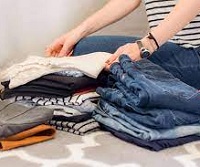 Fast fashion production has doubled in the past 20 years ago, estimates a Business Insider report. The industry produces clothes equivalent to one garbage truck full of clothing waste in its single production cycle, says World Economic Forum. Notorious for its gross disregard for the environment, the industry contributes to high carbon emissions, water waste, and overall environmental pollution.
A reason for the industry’s complete disregard to the environment is the shortening lifecycles of clothing items. As a Remake report states, from 2000 to 2014, fashion purchases increased 60 per cent, of which almost 85 per cent ended in landfills. Indeed, the industry is encouraging consumers to donate excess clothes to environmental charities and funds for last few years. However, this does not completely address the problem of overproduction.
Mass production triggers unsustainable practices
One reason brands mass produce is to confirm to the latest fashion trends. They usually contract out designs to manufacturers for short-frame production. As per a 2011 study by the International Journal of e-Education, e-Business, e-Management and e-Learning (IJEEEE), fast fashion brands introduce new styles every five weeks. Zara launches 11,000 new clothes per year as opposed to 2,000-4,000 launched by other brands like H&M or GAP. The production cycle of fast fashion brands is often marked by unethical and unsustainable practices.
Most fast fashion brands enter short-term contracts with manufacturers for mass producing trend-based fashion items. Manufacturers, in turn, subcontract to ease the pressure of overproduction. They hire workers on low wages, with zero job security. A 2018 ILO report shows, most hired workers are verbally and physically abused for failing to meet production targets.
Addressing labor and environment violations
The targets for production are also grossly overestimated. A report by the Business of Fashion affirms, retailers often overbuy to maintain inventory flexibility. However, this leads to increased inventory-to-sales ratio. To get rid of excess inventory, brands either burn or shred their clothes, notes Timo Rissanen, Fashion and Textile Researcher. For instance, H&M is estimated to have burnt 60 tons of new and unsold clothes worth $4.3 billion in 2018. To bridge this gap between demand and over production, brands need to take the responsibility for ethical and environmental violations by suppliers. They need to tackle issues of both unethical labor practices and unsustainable environmental negligence.
The issue of overproduction plagues not just the fast fashion industry but also manufacturers of luxury clothing items. Luxury brands often place large orders to keep their inventories flexible and set trends. They burn off unsold clothes to retain brand exclusivity. For instance, Burberry is reported to have burnt clothes worth $26.8 million tons in 2018. The brand’s action sparked a debate on the need to relook the industrys and consumers approach to fashion. It also gave rise to the idea of degrowth or a planned reduction of product volume and slow consumption of clothing.
AI to target degrowth
Experts believe, degrowth can be used to increase sustainability in supply chain by applying trend analysis techniques with the help of AI technology. Degrowth strategy can help brands curb carbon emissions, water wastage, and environmental mismanagement within the production process itself. By implementing AI in design and manufacturing, brands can target overproduction issues. They can use automatic forecasting models to analyze mid-term sales and forecast future trends.
Consumers can adopt degrowth by extending their clothes lifecycle. They can also contribute to the shift towards green economy by buying more second-hand clothes. Advocacy campaign Remake’s also advocates degrowth as a consumer-endorsed business solution through its new campaign own #NoNewClothes pledge.
A critical aspect of sustainability, degrowth needs a purposeful shift to conscious supply and demand. Brands need to lower production volumes and follow slower time frames. They also need to enter into long-term contracts with manufacturers to provide increased job-security to workers.
Textile Ministry releases compendium on MMF
Upendra Prasad Singh, Textile Secretary released a Compendium on MMF (Man Made Fibre) Garments during the Executive Committee meeting of the Apparel Export Promotion Council (AEPC) at the Apparel House in Gurugram.
The compendium covers details of all 90 MMF garment HS lines, including the top 10 high potential MMF garments for the USA market. It has the details of fabrics used to produce the 90 HS lines and their supplier details.
Singh said that the Rebate of State and Central Taxes and Levies (RoSCTL) scheme, along with the proposed Production Linked Incentive (PLI) scheme and Mega Investment Textile Parks (MITRA), would help apparel manufacturers see their exports registering a quantum jump.
The aim of the compendium, which has details of HS codes, pictures, fabric suppliers and prices, is to ensure better preparedness by the industry. Presently MMF garments contribute to around 165 billion dollars in total RMG exports of 470 dollars billion globally. India’s mill fibre consumption ratio of Cotton Vs MMF is 60:34. On the contrary, the global mill fibre consumption ratio of Cotton Vs MMF is 30:70. It gives a huge opportunity for Indian apparel manufacturers to diversify in MMF garments, he added.
RoSCTL to increase competitiveness with Bangladesh and Vietnam: Welspun India
Dipali Goenka, CEO & Joint Managing Director, Welspun India says, the government’s decision to extend the RoSCTL scheme till March 2024 will help the company to increase competitiveness with Bangladesh and Vietnam.
As per a CNBC TV 18 report, the company aims to make more investments in the textile category besides increasing FDI and generating more employment opportunities. Goenka adds, the PLI scheme focuses more on man-made fibres sector. However, Rebate of State and Central Levies and Taxes (RoSCTL) extension will provide a massive boost to the cotton segment.
On July 14, 2021 the Indian government approved the continuation of Rebate of State and Central taxes and Levies (RoSCTL) on exports of apparel, garments, and made-ups till March 31, 2024.
The RoSCTL scheme will continue with the same rates as notified by the Ministry of Textiles vide Notification on March 8, 2019, in exclusion from the Remission of Duties and Taxes on Exported Products (RoDTEP) scheme for these chapters.
India’s textile exports to the US outpace China during January-May’21: OTEXA
The value of India’s textile exports to the US outpaced China during January to May ’21 period, following a rebound in the market.
As per OTEXA, a trade body of US Department and Commerce, India textile shipments to the US grew by 66.69 per cent to $2.28 billion in the first five-month period of 2021.
During the same time, US’ import of textile products grew by 39 per cent to $12.47 billion. India’s share to this value remained 18.32 per cent.
On the other hand, China shipped textiles worth $4.32 billion from January to May ’21 period, constituting around 34.65 per cent of total textile import value of US.
The share of India’s textile exports increased by over 3 per cent, signaling a shift of business from China is not just on papers as rumoured by some industry stakeholders in the neighbouring countries.
Made ups constituted larger chunk in the total shipment from India to the US, valuing $1.92 billion, and growing by 64.54 per cent on Y-o-Y basis.
Yarn shipment increased by 88.37 per cent to $55.16 million, while fabrics’ exports clocked $302.92 million.











