


FW
Sneakers culture grows in India with new collaborations and product offerings
 Known for traditional, handcrafted designs, techniques and fabrics, the Indian footwear market is slowly opening up to international streetwear and sneaker brands. German footwear brand adidas recently launched A+P Luna Rossa 21 range in collaboration with Prada that sold out on its launch day itself. Local designers and retailers risk falling out of demand if they fail to broaden their scopes. As per a Vogue Business report, running shoes and branded shoes were the top searched items on Indian e-commerce portal Flipkart during the lockdown months of 2020.
Sale of higher-margin sports footwear to rise
As per the National Investment Promotion and Facilitation Agency of India, the footwear market is predicted to grow to $15.5 billion by 2024. However,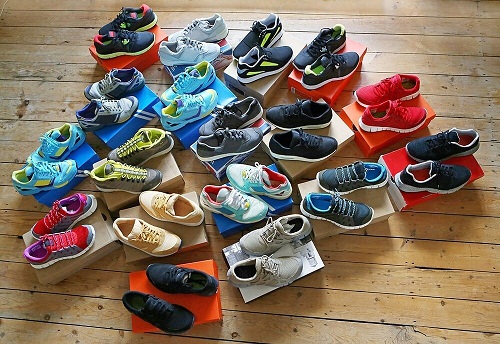 the sale of high-end trainers, like the coveted Nike Air Jordans, will remain restricted to a few boutiques like VegNonVeg and Superkicks. Their sale is likely to be affected by heavy import duties and the presence of resale marketplaces like StockX, and independent resellers. Emerging sneakerhead culture is likely to further boost sales of higher margin sports footwear in India. To tap this growth, brands plan to collaborate with new stores besides cashing on their popularity in the media.
The popularity of trainer shoes in India can also be attributed to an exposure to different cultures through travel abroad and social media platforms, views Shivani Boruah, Marketing Manager, VegNonVeg, which opened in 2016 in New Delhi. Indian online shopping portal Ajio also launched a new section Sneakerhood on its platform featuring both international and Indian footwear brands.
Customers encompass all age and income groups
While sneakers are mostly favored by young, trend-driven customers, Indian customers are not limited to a single category. They vary across different age and income groups, explains Boruah. In India, sneakers were first sported by Bollywood actors Varun Dhawan and Ranbir Kapoor in 2016. They became a fashion trend soon after with international brands like Yeezy launching their collections in the market, says Henry Vinoth, Founder of the blog Sneaker News.
Contemporary Indian labels like Huemn, Jaywalking, Gundi and Nought01 are also embracing the sneaker culture. For instance, designer Anamika Khanna, introduced a pair of trainer shoes in one of her 2016 collection. Online shopping portal Ajio also introduced its new vertical, Sneakerhood, on the official fashion week schedule for October. The portal features both international and Indian footwear brands, including special or limited-edition sneakers such as Nike Air Jordans, Fila Disruptors and Asics Gel-Noosa.
Indian brands are responding to the changing fashion landscape in the country with new initiatives. For instance, brand Jaywalking has announced plans to sell its shoes in high-end stores in New York, Tokyo and Singapore. The brand has gained immense support for its offerings on social media platforms.
Walmart prioritizes holiday season across major markets
Judith McKenna, CEO, Walmart International says, the e-commerce company is prioritizing on the holiday season across major markets, including in India, as online sales grow globally as well as in the United States.
Walmart is also on track to record $75 billion in global ecommerce sales by the end of this year. The e-tailer saw strong sales growth in Flipkart (India) as well as Mexico and China in its international markets
In India, it is prioritizing on the Big Billion Day sales, held during the Diwali festival in early November
Doug McMillon, President and CEO, Walmart Inc, said Flipkart had seen another good quarter. Its total revenues increased by 2.4 per cent during the quarter to $141 billion while ecommerce sales in the United States grew by 6 per cent. Ecommerce sales in India grew by 25 per cent to $38 billion in FY21, and are expected to grow over 30 per cent in the ongoing financial year.
Last month, Flipkart raised $3.6 billion in a new funding round, which is expected to give it significant firepower to expand online shopping in India and take on well capitalized rivals like Amazon, Reliance Industries (RIL) and the Tata Group.
Fast fashion brands polluting rivers in Africa: Report
According to a report published by the Water Witness International, popular fast fashion brands could be causing pollution that has dyed some rivers in Africa blue or turned their waters as alkaline as bleach.
The report focuses on the polluted rivers in Lesotho in southern Africa and Tanzania to highlight the risks posed as global brands increasingly source garments from contractors in Africa, attracted by cheap labor and tax incentives.
Global brands could force better practices, but so far their presence in Africa has done little to stem rife pollution, water hoarding by contracting factories or even ensure adequate water and sanitation for factory staff, says Nick Hepworth, Director, WWI and Author
In Lesotho, researchers found a river visibly polluted with blue dye for denim jeans. Meanwhile, samples taken from Tanzania's Msimbazi river in Dar es Salaam tested a pH of 12 – the same as bleach – near a textiles factory, the report adds.
It identifies 50 international brands that source or have sourced their clothes from African nations, including Inditex's Zara, ASOS and H&M, but didn't tie the pollution to any company's supply chain.
Brands can and do make environmentally sustainable clothing, and consumer pressure was key to encouraging more, adds Katrina Charles, Expert-water Security and Quality, University of Oxford.
Global sports and fitness clothing market to grow by 4.4 % CAGR by 2026
Published in January 2021, a new study by Global Industry Analysts (GIA), projects 4.4 per cent CAGR growth from 2019-2026 for the global sports and fitness clothing market. The market is predicted to grow to $221.3 billion by 2026, as per a Textile Today report. The GIA report highlights North America as the biggest market for sports and fitness clothing where the US has a share of $63 billion this year. However, the Asia-Pacific is reported to top growing market led by China which is projected to grow at 7.3 per cent CAGR from 2019-2026.
In 2020, the global sports and fitness clothing market was estimated at $172 Billion. The sports clothing segment is projected to grow at a rate of 4.5 per cent to reach $193.9 billion by 2026 end while the fitness clothing segment is projected to grow at a 3.6 per cent CAGR during the period.
Spot cotton prices reach highest growth levels since June 14: USDA
As per latest US Department of Agriculture (USDA) report, spot cotton prices in the US reached their highest growth levels since June 14, 2018 to average 88.35 cents per pound for the week ended August 12, 2021. The weekly average increased from 86.31 cents the prior week and from 57.62 cents a year earlier. Most benchmark cotton prices increased last month, with the value for the December NY/ICE futures contract ranging between 88 cents and 90 cents per pound, according to the monthly update from Cotton Incorporated. In early August, futures eached levels over 93 cents per pound, Cotton Inc noted.
The A Index also breached $1.00 per pound for the first time since June 2018. The International Cotton Advisory Committee’s (ICAC) has increased the current price forecast of the season-average A index for 2021-22 ranges from 73 cents to $1.25, with a midpoint at 95.43 cents per pound.
USDA also increased its global trade forecast from 335,000 bales to 46.3 million bales. As per the Cotton Inc report, this would enable the association to record third-highest trade volume, only behind 2012-13 and 2020-21.
The Cotton Inc. report noted that the final set of weekly U.S. export sales and shipment data for the 2020-21 crop year just released by USDA was highlighted by the strength of U.S. export shipments over the past 12 months, even in the face of the global Covid-19 pandemic. Although shipments trailed off near the end of the crop year, total U.S. exports in 2020-21 rank as the second highest on record, only behind the 17.7 million bales shipped in 2005-06.
Turkey’s textiles and raw materials exports touch $7billion in January-July ’21
Exports of textiles and raw materials by Turkey increased to $7 billion from January-July 2021. As per the ‘Export Performance Report, July 2021’ published by the Istanbul Textile and Raw Materials Exporters’ Association (ITHB), the rate of textile exports increased from 5.6 per cent to 5.9 per cent during the period. In July 2021, this rate increased by 46 per cent to reach $924 million. While textile exports declined by 18.7 per cent in July 2021 their share in Turkey’s overall exports also declined to 5.6 per cent during the month. As per a Textilequence report, Turkey’s overall exports increased 10.2 per cent to $16 billion during the January-July 2021 period.
Most of Turkey’s textile and raw materials during January-July 2021 were exported to the 27 EU countries, exports to which increased by 42.7 per cent to $3 billion. During the first half of the year, Italy emerged as the topmost export destination for Turkey textiles and raw materials. In this period, exports to the country amounted to $619 million with an increase of 58.7 per cent. Germany ranked second with exports worth $575 million, a 21.2 per cent increase from the previous year.
The US with an export value of $472 million was the third largest exported destination for Turkey during the period. Other countries with the highest exports included England, Spain, Bulgaria, Netherlands, Egypt, Belarus and Russia, respectively.
Yarns emerged as topmost exported product by Turkey during January-July 2021 with a 88 per cent increase from previous year. Turkey’s yarn exports increased by 56.5 per cent in July compared to the same month of the previous year The second most exported product group was technical textiles whose exports decreased by 8.5 per cent to reach $1.4 billion during January-July 2021.
In third place, woven fabric exports amounted to $1.3 billion with an increase of 26.1 per cent in the January-July period of 2021, and to $173 million with a decrease of 2.6 per cent in July.
Cotton cultivation in Brazil to decline in 2020-21
A report released by Conab (Brazil’s National Company for Food Supply) estimates 0.11 per cent decline in area under cotton cultivation in Brazil in the 2020-21 season compared to that reported in July. Productivity is estimated to rise 0.04 per cent compared to that reported in July, to 1,714 kilograms/hectare. The Brazilian output is currently estimated at 2.341 million tons, stable compared to that previously reported, but 22 per cent lower than that in the previous season.
Domestic cotton consumption is estimated to reach 715,000 tonne while exports in 2021 are now forecast to decline by 1.2 per cent to 2.1 million tonne. Ending stocks in the current season are estimated to decline by 6.9 per cent than that reported in July to 1.29 million tonne and 26.8 per cent below that last season. In July, Brazil’s cotton exports declined 39 per cent to 61,400 tonne from June and 20.6 per cent from July 2020, according to data from Secex, the secretariat of foreign trade.
The CEPEA/ESALQ Index for cotton in Brazil surged by 4.6 per cent during the first fortnight of August spanning from July 30 and August 13. The index closed at its highest price level since May 18, 2021 at 5.1915 BRL/pound on August 13. During the fortnight, Brazilian cotton farmers focused on the harvesting and processing cotton and completing pending contracts. Taking advantage of the price levels, many sellers closed new deals for further delivery – to both the domestic and the international markets – for the cotton from the 2021-22 and the 2022-23 seasons, says Sao Paulo-based Center for Advanced Studies on Applied Economics (CEPEA) in its latest fortnightly report on the Brazilian cotton market.
Levi’s partners tennis star Noami Osaka for a vintage denim collection
Denim brand Levi’s is partnering four-time Grand Slam singles champion and activist Naomi Osaka to launch a limited-edition collection made of vintage or upcyled denim. As per a Sourcing Journal report, Osaka has designed four distinct denim pieces that capture her sporty yet feminine style as well as her Japanese heritage.
The collection includes two styles of shorts: a vintage 501 jean short embellished with Y2K-worthy crystal fringe cascading down the sides, and a knee-grazing long short with lace-up details on the back made from pairs of upcycled men’s jeans. The lace-up theme is replicated in a denim bustier made from reworked Levi’s Trucker jackets. The bustier features the classic lines, flap pockets and shank buttons of the iconic Type III Trucker jacket, only in the shape and cut of a traditional corset-style bustier with a lace-up back.
The collection is secured by a denim kimono with a matching denim obi belt. The Levi’s x Naomi Osaka collection will be launched on August 24 in the US exclusively on the Levi’s App.
SLAEA launches new website and logo
The Sri Lankan Apparel Exporters Association (SLAEA) has launched a new website and logo to increase supply chain transparency and emphasize on its ethical practices to attract buyers and increase standards in order to improve the industry’s brand image. As Aroon Hirdaramani, Chairman says, the new website highlights the association’s capabilities in sustainability, technology, and its strategic relevance as a worldwide sourcing destination. He added, the new logo and website will significantly aid SLAEA’s industry’s marketing efforts.
The logo represents the teardrop shape of Sri Lanka, the female workforce of the industry and a pearl to signify the island’s identity as the pearl of the Indian Ocean. SLAEA will use the website to project the whole industry on one platform in which buyers and investors can easily access.
The Sri Lankan Apparel Exporters Association (SLAEA) is the pioneer association representing the country’s apparel exporters. The association’s membership accounts for over 70 per cent of the country’s apparel exports.
Esprit to offer 100 per cent sustainable clothing within two years
Ratingen-based fashion group Esprit aims to offer 100 per cent sustainable clothing within the next two years. The group has just published a booklet in which it highlights its ecological corporate goals. A Spin off reports says, Esprit currently makes over 60 per cent of its Ecollection with sustainable materials. The company pays special attention to the integration of resource-saving as well as recycled materials. Its production processes focus on water- and energy-saving techniques without the use of chemicals.
Esprit’s collections are mostly made from cotton grown according to organic standards, i.e. without the use of artificial fertilizers and pesticides. However, the group also uses certified recycled cotton and Better Cotton. Other materials by the group used include linen, which is 100 per cent biodegradable and water-saving, Tencel from Lenzing, made from lyocell based on the eucalyptus plant, and Lenzing's Ecovero, the viscose fiber certified with the EU eco-label, which is obtained from wood that in turn comes from environmentally friendly managed forests.











