


FW
Analyzing prices can help textile leaders avoid dispute due to new GST rates
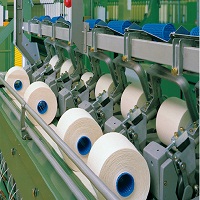 In its 45th meeting held on September 17, 2021, the GST announced certain changes in the GST rates for footwear and textiles in order to correct the existing inverted duty structure. The Inverted Duty Structure scheme entitles a supplier to get a refund of the accumulated Input Tax Credit (ITC) under the provisions of section 54 of the Central Goods and Service Tax (CGST) Act, 2017. However, certain goods in the footwear and textile industry are not considered eligible for this refund. And, to correct this anomaly, the GST council recommended an increase in the rates on goods manufactured by the footwear and textile industry from 5 per cent to 12 per cent applicable with effect from January 1, 2022.
Profiteering by dealers may rise
As per a Business Today write up by authors Sandeep Sachdeva and Vishesh Mehrotra, even though the move aims to reduce the concentration of ITC in the hand of the industry players by increasing the rate of output GST, it would lead to profiteering by dealers by not passing of the benefits of tax reduction to consumers. As per a report tilted ‘Implementation of Value Added Tax (VAT) in India - Lessons for Transition to GST' by the Comptroller & Auditor General (C&AG) of India, released in June 2010, India has incorporated several laws under Section 171 of the CGST Act, 2017 check profiteering by businesses. These laws state, any tax reduction in the supply of goods and services need to be passed on to consumers by reducing the product prices. As per these laws, ITC also needs to pass on the benefits it gets on reduction in taxes on goods and services.
A long-term solution needed
Hence, to reduce ITC accumulation, the GST council has proposed to increase the output rates of taxes, with effect from January 1, 2022, for products manufactured by the footwear and textile industry. This would lead to a huge amount of tax rate rationalization across the industry, says the report
However, even though by increasing the rate of GST on footwear and textiles, the rate of accumulation of ITC would slowdown, it would still persist, albeit at a slower pace. Hence, stakeholders feel suppliers should either pass on the additional benefit by way of reducing the price of the goods or face the consequences under the anti-profiteering provisions.
According to the report, the new rule may lead to commercial disputes between the parties for renegotiation of price and concerning the application of anti-profiteering measures against an assessee. To avoid this, the footwear and textile industries need to analyze their existing contracts and pricing structure.
Cambodia’s reliance to boost Thailand’s garment exports to 15% this year
Cambodia’s reliance on imported textile and fabric to fuel its garment exports is benefitting neighboring countries like Thailand whose exports are likely to grow by 15 per cent this year. As per Thai Garment Manufacturers Association, the Thai fabric industry has now catapulted back to full capacity. The industry exported garments worth 64.8 billion baht and textiles worth 188.6 billion baht in the first 11 months of2021.
Thai textile exports were boosted by demand from apparel-producing territories such as Vietnam, Cambodia, Indonesia, India, Europe and the US garment factories. Yuttana Silparnvitch, President, Thai Garment Manufacturers Association says, demand for Thai garments and textiles were being driven by the trend for environmentally friendly products.
Major brands are ordering products made from recycled fibers, organic cotton and other eco-friendly materials to satisfy customer demand. These items cost about 20 per cent more than regular clothes, he said. Kang Monika, Deputy Secretary General, Garment Manufacturing Association in Cambodia says, Thailand is one of the main raw material suppliers for the Cambodian garment sector. When there is a high demand from the Cambodian market it increases garment supply from Thailand.
Karl Mayer opens new demo center for sectional warping machines in India
Karl Mayer Textile Machinery India has opened Isowarp, a new demo center for its sectional wraping machines in Ahmedabad. The center facilitates short delivery times and optimum spare parts supply to its customers. The Isowarp demo center processes spun yarns and filament yarns and is particularly suitable for standard applications in the fields of apparel fabrics and home textiles. It is able to produce warp beams of exceptionally high quality and thus enables significant increases in quality and productivity in the weaving mill.
Karl Mayer also offers training for customers' technical personnel. The training offer includes courses at the textile manufacturers' premises, but also qualification events with theoretical and practical parts in the, just opened, demo center on the Isowarp. And, customers who opt for the high-performance sectional warping machine can benefit from the R&D know-how of the Karl Mayer Group and the support of its worldwide service organization.
Rising casualization fuels growth of global denim jeans market: Study

Several trade show organizers in the UK have either cancelled or postponed their winter shows overseas over the last month, due the rising coronavirus and travel restrictions. Drapers Online reveals, women’s and menswear trade shows Premium and Seek and trade show Neonyt, to be held from January 18-20, 2022, as a part of Frankfurt Fashion Week, have been postponed to July 2022.
Similarly, in France, menswear trade show Man/Show, to be held from January 21-23, 2022 at the Vendôme Pavilion in Paris, has been cancelled, while lingerie and swimwear trade show Salon de la Lingerie and Interfiliere Paris have postponed their January editions to June 18-22, 2022 at Porte de Versailles in Paris
UK fashion brands, buyers and agents say, they are skeptical whether remaining international shows will take place, or if they will attend, many have paused international travel until the situation improves. Many businesses say they are eager to attend UK trade shows instead.
As numerous trade shows across Europe have been cancelled or postponed it is clear trade show uncertainty remains. However, as the two-year anniversary of restrictions approaches, many are eager to return to in-person trade shows in the UK.
Trade show organizers in UK cancel overseas shows as COVID-19 cases surge
Several trade show organizers in the UK have either cancelled or postponed their winter shows overseas over the last month, due the rising coronavirus and travel restrictions. Drapers Online reveals, women’s and menswear trade shows Premium and Seek and trade show Neonyt, to be held from January 18-20, 2022, as a part of Frankfurt Fashion Week, have been postponed to July 2022.
Similarly, in France, menswear trade show Man/Show, to be held from January 21-23, 2022 at the Vendôme Pavilion in Paris, has been cancelled, while lingerie and swimwear trade show Salon de la Lingerie and Interfiliere Paris have postponed their January editions to June 18-22, 2022 at Porte de Versailles in Paris
UK fashion brands, buyers and agents say, they are skeptical whether remaining international shows will take place, or if they will attend, many have paused international travel until the situation improves. Many businesses say they are eager to attend UK trade shows instead.
As numerous trade shows across Europe have been cancelled or postponed it is clear trade show uncertainty remains. However, as the two-year anniversary of restrictions approaches, many are eager to return to in-person trade shows in the UK.
Reducing cotton import duty will harm Indian farmers, says VNSSM
Kishore Tiwari, President, The Vasantrao Naik Sheti Swavalamban Mission (VNSSM) has urged Prime Minister Narender Modi to consider the plight of Indian farmers before taking any decision on revoking the import duty on cotton. He says, current market rate of Rs 8,000-11,000/quintal has brought some relief to the peasantry reeling under the pandemic since the past two years.
However, the cotton and textile-garment industries keen to import cheaper cotton from Pakistan-China and dump it in India, which will again plummet prices below Rs 4000/quintal, not only spelling doom for local farmers but also fueling a fresh crisis in farmlands, he adds.
In order to ensure justice to Indian farmers, he demanded the import duty be further hiked to 18 per cent to make it on par with the global markets, any move to remove or slash import duties will not only directly benefit the economies of both Pakistan and China, but prove extremely disastrous to Indian farmers who could be left with no other options but to kill themselves.
Troika of headwinds for Indian spinners, moderate outlook ahead: Crisil
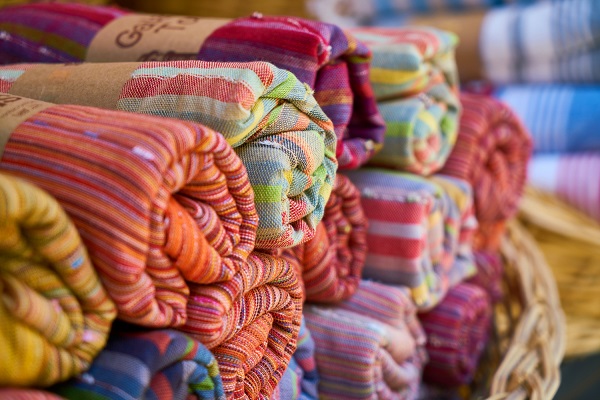
A troika of headwinds — elevated domestic cotton prices, lower exports and capacity utilisation — can unravel the operating margin of India’s cotton yarn spinners, so says Crisil.
Yet their credit profiles will be only slightly impacted because capital expenditure (capex) will be lower on-year, while working capital requirement remains stable. That will keep debt levels in check this fiscal. Last fiscal, robust cash accrual stemming from superior profitability had helped spinners deleverage. That, and lower capex will keep credit profiles healthy despite the moderation in operating margin.
The spread between international and domestic prices of cotton determines the competitiveness of Indian yarn spinners. While global cotton prices fell 17 per cent between April 2022 and August 2022 in anticipation of higher production, domestic prices rose two per cent because of limited supply. Pricier domestic cotton thus eroded India’s competitiveness, leading to a loss of export market share to China and Bangladesh.
Between April and August India’s cotton yarn export volume plunged 58 per cent, leading to moderation in capacity utilisation of spinners below 75 per cent in the first half from near-full utilisation last fiscal. Spinners had to even shut operations on some days in the first half of this fiscal. The second half is expected to see higher exports with the arrival of new cotton crop. Consequently, the decline in export volume would be restricted to 25 per cent.
Financial Prospects
A normal monsoon and an eight per cent higher sowing area will increase cotton production in India. That should cool domestic prices and allow spinners to regain some export competitiveness. But international cotton prices could fall on slowing yarn demand from Pakistan and Vietnam amid stable global production. Net-net, Indian yarn exporters won’t earn supernormal premiums like last fiscal.Over the medium term, Indian cotton yarn is expected to continue to benefit from the US ban on exports from the Xinjiang region in China, and supply-chain derisking by global customers. However, export volume can fall up to 25 per cent this fiscal because of the high-base effect of last fiscal. Domestic demand for cotton yarn is expected to pick up by seven per cent or nine per cent in the second half of this fiscal on more orders from end-user segments.
Moderation in the profitability of spinners expected
There are three reasons for moderation in the profitability of spinners this fiscal. First is the fall in cotton yarn spreads. Second is low capacity utilisation in the first half that can’t be compensated fully in the second half, and third expected inventory losses due to correction in cotton prices.
Consequently, the average debt to ebitda (earnings before interest, tax, depreciation and amortisation) ratio of spinners could rise to two times this fiscal from an exceptionally low last fiscal. Capex is seen curtailed this fiscal compared with last fiscal. In the road ahead, the removal of the ban on Xinjiang cotton and adverse movement in domestic cotton prices are crucial.
Bestseller makes sustainability investment in Ambercycle
Danish fashion house Bestseller has made a sustainability investment in US-based Ambercycle. Bestseller made an investment of $21.6 million during Ambercycle’s recent funding round. Camilla Skjønning Jørgensen, Sustainable Materials & Innovation Manage, Bestseller says, Ambercycle aims to transform worn-out clothing into a resource with the greatest possible value. Additionally, it specializes in recycling polyester, which is usually dependent on crude oil. By focusing on this integral systemic shift, Ambercycle has proven to be an interesting investment case and business partner for Bestseller
During 2021, Bestseller’s investment arm for sustainable fashion, Invest FWD, made investments in four innovative companies. Firstly an announcement of the Finnish innovator Infinited Fiber Company followed by further investments in Circular Systems, Nature Coatings and Evrnu - all three based in the USA. The latest addition, Ambercycle has developed a pioneering process for used polyester textiles that separates and purifies post-consumer textile waste at the molecular level to produce regenerated materials that can be crafted into new garments.
India: Itema participates in SITEX exhibition held in Surat
Global provider of advanced weaving solutions, including weaving machines, OEM spare parts, and integrated services, Itema participated in SITEX exhibition held from January 8 to 10 at the Surat International Exhibition and Convention Centre.
Itema showcased a rapier R9500-2 weaving machine, in weaving width 3800mm and equipped with a Stäubli LXM 5376 hooks Jacquard shedding machine. The machine on display in Stäubli booth weaved a fabric traditionally produced in the mills of the region and is configured to meet the local weaver’s production needs.
Itema (and previous brands – Somet, Vamatex, and Sulzer) spare parts and after-sales advanced solutions are a dedicated focus with the possibility to discover all opportunities to give new life to looms, such as customized upgraded kits to optimize machine performance and retrofit latest Itema innovations on existing looms and electric, electronic and mechanic repairs.
Itema is a trusted partner of many Indian weaving mills, from large textile conglomerates to small manufacturers, providing most advanced and user-friendly weaving technology and real-time assistance, from initial negotiation stage and throughout the whole machine life cycle.
CHIC Spring Shanghai postponed to April
The surge in new Omicron variant has compelled the organizers of Asia's largest fashion fair CHIC Spring Shanghai to postpone their show from March to April this year. The show will now be held on April 14, 2022.in Shanghai. It will focus on innovations with the highest priorities. Date change allows organizers to take into account the interests of international exhibitors and visitors. Germany will participate in the show with a German pavilion.
The trade show will showcase latest trend developments in fashion and offer trade visitors a concentrated overview of the industry. The main areas of focus at the show will be women’s wear, menswear, kids wear, denim, shoes and bags, accessories, designers and streetwear at the National Convention & Exhibition Center.
CHIC will be organized by Beijing Fashion Expo Co. and China World Exhibitions. It will supported by the China National Garment Association, the China World Trade Center and the Sub-Council of the Textile Industry (CCPIT).











