


FW
China’s PSF exports increase while imports decline in May 2022
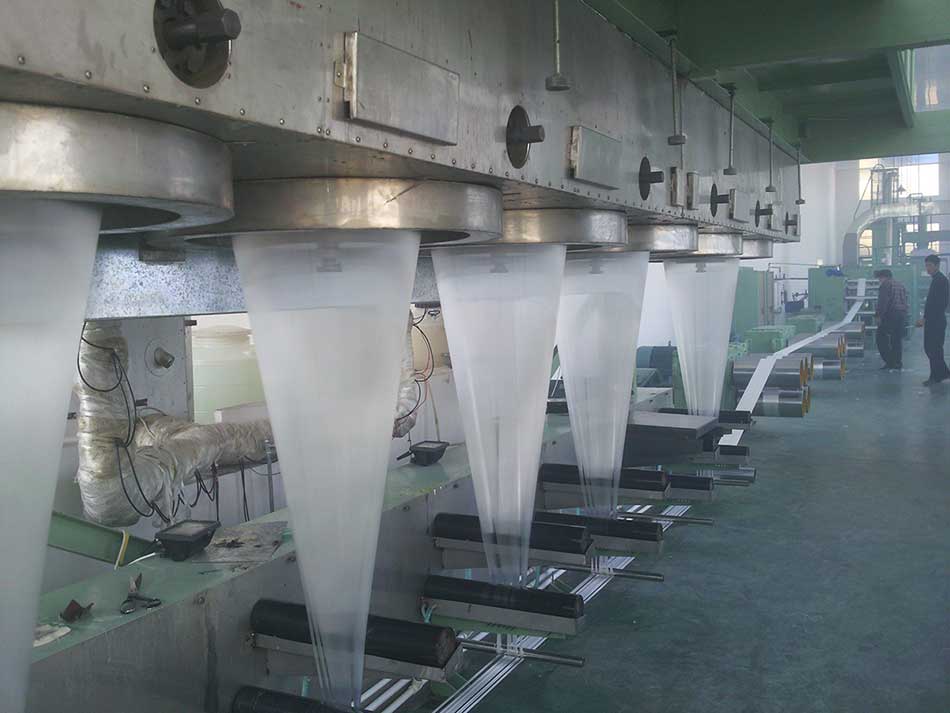
In May 2022, China’s PSF exports increased 24.4 per cent Y-o-Y and 0.8 per cent M-o-M to 90,000 tons. Imports declined 44.4 per cent Y-o-Y and 8.5 per cent M-o-M to 6,500 tons. However, in the first five months of 2022, exports declined by 4.6 per cent Y-o-Y to 19,200 tons, says a CCF Group report.
China gave inadequate orders for export of recycled PSF in the first half of 2022 imports from Southeast Asia and Africa increased. China’s imports were impacted by supply recovery in the overseas orders. China’s PSF imports declined by 51 per cent to 38,900 tons during January-May 2022 compared to the same period last years. China’s PSF imports from Myanmar declined sharply in 2020. In 2021, imports were mainly impacted by the epidemic and February 1 coup. China imported only 378 tons of 2021 while in 2022 it has not imported any PSF till now.
Imports from Vietnam decline 77.4%
Imports from Vietnam in 2018 had grown to 13,113 tons and reached 30,567 tons in 2021. The increase was mainly attributed to demand recovery, larger price spread between virgin PSF and recycled PSF and speculative demand around the Lunar New Year. In 2020, a few new plants engaged in solid re-PSF became operational, with a capacity of 50 tons per day, and the products are mainly delivered to China. This helped China’s imports from Vietnam to rise higher Year-on-Year.
In September 2021, imports totaled 729 tons, however, in October it declined to lowest 459 tons, due to strict lock-down measures. Later, with epidemic control and relaxation of power rationing, imports climbed to nearly 2,000 tons in November-December, 2021. Affected by surging sea freight, China-origin cheap fibers were hard to sell to Vietnam. From January, 2022, imports from Vietnam reduced largely, lower than the same period in previous years. In January-May, 2022, imports from Vietnam declined 77.4 per cent Y-o-Y to 4,106 tons.
Imports from Thailand, Cambodia dip
China’s imports from Thailand tripled in 2019 to 45,000 tons compared to 2016. In 2020, imports declined to 42,127 tons, and in 2021 they further declined to 31,996 tons. In January-May, 2022, imports were 8,950 tons.
In 2021, the imports from Cambodia were 1,261 tons. In January-May, 2022, they declined to 542 tons. Imports from Southeast Asia have been on the decline from 98,390 tons in 2019 to 78,779 tons in 2020, 76,245 tons in 2021 and 17,298 tons in January-May, 2022.
Imports from Africa rise
Interestingly, China’s PSF imports from the African market have been gradually rising in recent years. In 2018-2019, China transferred a few domestic production lines to Africa. This helped boost PSF exports to China. In 2020, China’s PSF imports from South Africa and Nigeria grew 28 per cent. But, in 2021, imports from South Africa shrank sharply affected by the riots, which caused disruptions of plant operation. Imports from Nigeria reached 2,728 tons in March’21. But imports from Africa were nil in the fourth quarter of 2021. In 2022, China imported only 455 tons of PSF from Uganda.
Bangladesh terry towels exports rise to $1.2 billion annually
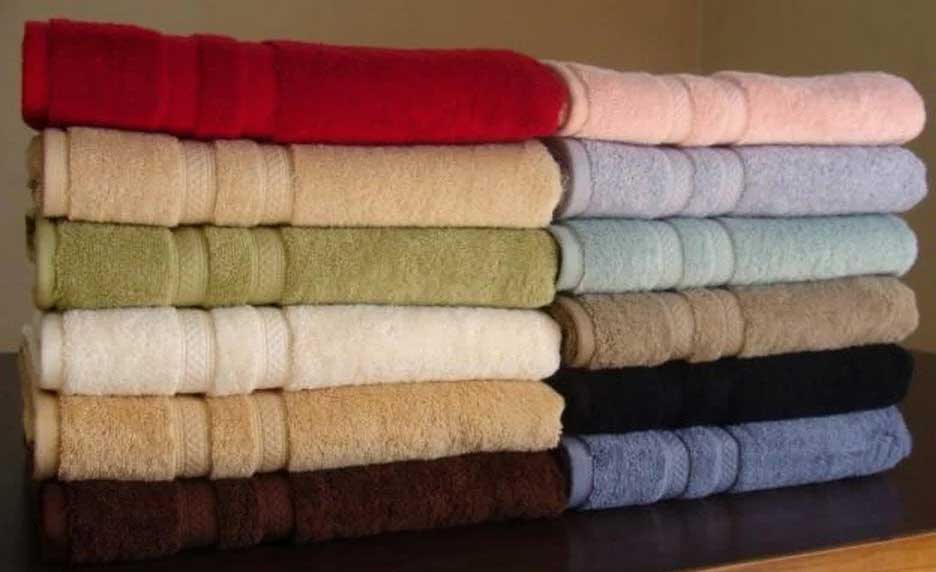
Around 110 companies produce home textile and terry towel items in Bangladesh currently, according to the Bangladesh Terry Towel & Linen Manufacturers & Exporters Association. Their factories employ nearly 65,000 workers and have investments totaling around $1.20 billion.
The success of the terry towel business in Bangladesh is attributed to Sonar Cotton Mills, the first towel factory in the Chattogram Export Processing Zone. According to The Business Standard, the factory has helped Bangladesh increase towels and home textiles production and exports to $1.2 billion annually.
Terry Towels a booming business
Established in the 1984 by Rais Khan, a Pakistani-born US citizen, Sonar Cotton Mills produces around 30,000 kg of towels per month. The company exported terry towels worth over 1.62 million in FY2021-22. Its products are now sold at multinational shops such as Amazon. Currently, the factory is run by Khan's son Shariq Khan who joined the production unit in 2002.
Shariq attributes the company’s success to the local towel-making sector and fashion quota system for the least developed countries through which the US sourced 1.2 million kg of towels from Bangladesh. He affirms, Bangladesh has a good reputation for skilled workers, many of whom joined the factory in 1984 and contributed to its current success.
The company faced many challenges along its journey, says Shariq. The factory was hit by a cyclone in 1992 which damaged all machines. It took him seven years to restore production in 1998. Barely recovered, it was once again hit by the 2007-08 global recession, which forced it to allow local investments in the factory.
Since 2003, Sonar Cotton has exported products worth $19.73, as per the Bangladesh Export Processing Zones Authority (BEPZA).The company has many new orders despite using its full manufacturing capacity. It now plans to set up a new factory in Mymensingh to double production in the next two years, Shariq asserts.
SACTWU settles wage dispute in worsted textile sub-sector
The COSATU-affiliated Southern African Clothing and Textile Workers’ Union (SACTWU) has settled its wage dispute in the Worsted textile sub-sector.
It is a 2-year collective agreement, effective from 1 July 2022 to 30 June 2024.
It provides for wage increases ranging between 7.5 per cent and 8 per cent for this year, and for next year, it provides for wage increases between 7 per cent and 7.5 per cent, as set out below.
This new 2-year collective agreement was successfully concluded under the dispute processes and procedures of the National Textile Bargaining Council (NTBC), with employers represented by the National Association of Worsted Textile Manufacturers (NTMA).
In a new precedent-setting provision for industrial workers in our industry, this Worsted textiles collective agreement provides for an extra day's paid annual leave per year, for workers who have completed 8 years' consecutive service on permanent staff.
The settlement was achieved after four negotiation rounds which commenced on 6 April, inclusive of a dispute conciliation round.
Nftically teams up with Mafatlal Industries for virtually gallery and store
Global Web3 E-Commerce platform, Nftfically has teamed up with Mafatlal Industries, a leading manufacturer and supplier of textiles, garments and uniforms, for its virtual gallery and NFT store on the metaverse platform, Comearth. The design collection features six distinct NFTs for school, hospital and corporate uniforms using 3D models for an enhanced immersive experience, making Mafatlal Industries the forerunner in the textile space.
With this collaboration, Mafatlal Industriesaims to gain the first-mover advantage in its category to enter the NFT ecosystem.NFT drops are technologically complex processes involving various challenges like Smart Contracts, Traffic Management, Security and Backend Streamlining. Nftically’sglobal benchmarked technology ensures smoothening out of the process for collectors and creators selling their digital assets as NFTs. Presently, over 11,000 stores are powered by Nfticallymaking it one of the largest and most preferred NFT marketplaces for creators and collectors. Nftically recently launched its e-commerce metaverse platform, Comearth, which aims to build an ecosystem of various stakeholders to generate value through engagement or transactions.
Informa Markets Fashion gears up for distination:miami by Coterie
An industry connector and host to premier fashion trade events including Project and Coterie, Informa Markets Fashion is gearing up for destination:miami by Coterie, a three-day fashion wholesale event designed to spotlight the latest designers and trends shaping the elevated resortwear category.
To be held from July 16-18, 2022, destination:Miami will host renowned and emergent brands in women’s advanced contemporary resort wear, swimwear, accessories, and footwear, showcasing a curated cross-selection of vacation-inspired apparel spanning premium to affordable luxury price points.
Buyers from retailers, including Goop, Revolve, Saks Fifth Avenue, Bloomingdales, Bergdorf Goodman, and Ritz Carlton, among others, convene at destination:miami for a look into future fashion trends, from body inclusivity, textured materials, to cut out designs, generate new accounts and ink deals, and increase global demand through networking with stylists, media and influencers.
Among the over 80 international and domestic brands confirmed for the upcoming event – slated to be held at the Eden Rock Hotel – including Gapaz Beachwear, Lily Franco, Nay Sunset Wear, Oasis, Sabine Arias, Apaya and Cruise.
JAAF thanks all industry stakeholders for helping sector meet commitments
The Joint Apparel Association Forum (JAAF) thanked all industry stakeholders for ensuring that the sector meets its commitments in the face of unprecedented challenges, as apparel export earnings expanded by 30 per cent Y-o-Y upto 446 million in May 2022.
Accounting for approximately 6 per cent of Sri Lanka’s Gross Domestic Product (GDP) and almost half of all merchandise exports, the apparel sector serves as a bulwark of the nation’s economy. While the sector continues to face significant limitations from continuing disruptions in energy supply and logistics, cumulative export earnings from the sector increased by 16% YoY up to US$ 2.2 billion as at May 2022.
The sector is still hopeful of achieving the export target of $6 billion by the end of 2022, however, it will have first overcome significant obstacles ahead, says YohanLawarence, Secretary General, JAAF.
The sector needs to prioritize support for SME apparel producers, who are an equally essential component of the industry that is also facing severe challenges in day-to-day operations, adds Lawrence.
Despite unprecedented domestic volatility, unstable global market conditions and escalating raw material and logistics costs, Sri Lanka’s apparel sector has provided extraordinary support to the national economy, including direct surrender of export proceeds to the Government.
All apparel companies receive payments through the formal banking system, which is visible at all times to the Central Bank. Once they receive these funds, they are permitted to use these dollars to fund raw material imports, which in previous years stood at approximately US$ 2.5 billion annually, adds Lawerence.
On a monthly basis, the balance industry’s export proceeds are converted into Sri Lanka Rupees to be provided to leading banks towards payments for essential imports such as fuel, gas, food and medicine, Lawrence explains.
These extraordinary measures have been commended by the Prime Minister’s office as having provided vital assistance in mitigating issues around energy, transport and healthcare in the country.
Anne Spangenberg to be new President-Fashion and Lifestyle, Deckers Brands
Anne Spangenberg has been appointed as the new President-Fashion and Lifestyle of Deckers Brands, a global leader in designing, marketing and distributing innovative footwear, apparel and accessories with effective from July 11, 2022. Spangenberg will serve on the Executive Leadership Team, reporting directly to Dave Powers, Chief Executive Officer and President of Deckers Brands.
Spangenberg has an extensive track record as a global leader and strategic brand builder, most recently as Chief Merchant for Nike, Inc. She will lead Deckers' Fashion Lifestyle brands, including UGG and Koolaburra, with a focus on product diversification, consumer adoption, and franchise evolution across a tightly-managed omnichannel marketplace.
Spangenberg has played a meaningful role in creating and transforming merchandising functions across categories, channels, and markets. She brings to Deckers an innate understanding of the consumer and the ability to efficiently implement strategy in alignment with the latest fashion and lifestyle trends, says Powers.
Spangenberg adds, the brand's unique combination of strong consumer demand, a loyal and expanding customer base, and the ability to innovate both new and existing franchises gives will help us further elevate UGG through disciplined and strategic global marketplace management while building on exciting levels of global brand heat.
Advance Denim aims tobe world’s most innovative denim mill
Advance Denim has committed to continuously improve its manufacturing business, and be the world’s most innovative and sustainable denim mill. This commitment will be the focus of Advance Denim’s newest mill, Advance Sico, in NhaTrang, Vietnam.
The Vietnam facility is already paying dividends. Advance Sico is responding to the huge demand in the country by increasing its production capacity 25 percent by the end of 2022.
As the company continues expanding, Advance Denim believes its five founding principles of innovation, service, quality, sustainability and people will drive success at both facilities.
In building Advance Sico almost three years ago, Advance Denim has benefited from the shared experience of Chinese technicians and Vietnamese experts. This has helped them create a team that is not just skilled and knowledgeable, but also focused on the teamwork needed to build a global denim mill. Advance Sico is adding to this skilled workforce by working closely with high-quality universities and colleges to offer internships to qualifying students.
Advance Sico in Vietnam has also set a goal to be the most sustainable mill in China.
The manufacturer is partnering with Archroma to produce all of its denim with 100 percent liquid indigo. In an effort to implement a cleaner, safer dye process, Advance Sico also uses its own proprietary BioBlue dye method to eliminate the toxic chemical, sodium hydrosulfite.
Next, Advance Denim is currently installing a state-of-the-art wastewater recycling system into the Vietnam mill. The company is targeting 100 percent wastewater recycling to establish a closed loop denim production.
Following the lead of many experts who agree that recycled cotton is one of the optimal fibers for sustainable production, Advance Denim is spearheading new recycling technologies and aims to raise the bar on not only sustainability but on quality and durability. The mill is using its expertise in sustainable innovation to create a 100 percent-recycled cotton denim.
Fashion industry’s obsession with size zero continues despite body inclusivity

The fashion industry’s obsession with size zero figures and ultra-thin models has always been a matter of debate. While, designers, model agents and fashion editors blame each other for the growth of this unhealthy trend, many countries have made lackluster attempts to ban it. Over the past few years, the fashion industry has woken up to the concept of body inclusivity. The industry has made great strides towards accepting not just all body types but also ages and races, says a Dazed Digital report.
End of body inclusivity with rise of skimpy dresses
However, a lot still remains to be done. Recent feature of models Ashley Graham, Paloma Elsesser, Jill Kortleve and Precious Lee on magazine covers and catwalks, has once again raised concerns amongst experts. They believe the return of figure-hugging dresses may rekindle the desire for such body types amongst consumers. Rachal Tashjan, Fashion News Director, Harpers’ Bazaar in a recent edition of her Opulent Tips newsletter, reflected on the growing concern amongst industry peers about a potential return to the ultra-thin body types. According to Tyler McCall, Editor in Chief, Fashionista.com, the fashion world is returning to its age-old hypocrisy. In order to make a real change, brands need to expand their size offerings for customers.
Blame game continues
Over the last few years, there have been concerns about the sustenance of body-inclusivity trend amongst brands. The trend of plus size models walking the ramp is yet to normalize, says Fran Burns, Stylist. In fact, even today, most clothes being produced for catwalk and editorial purposes remain designed for thin models only.
Burns, however, does not blame designers alone for this. It’s unfair to place so much responsibility on designers alone when big fashion houses do absolutely nothing about it, she adds.Designers, are meant to remedy the faults of earlier generation by being body inclusive and sustainable. Models should also be held responsible for their faulty representation, adds Burns. Currently, there seems to no real outrage against body shaming in the fashion industry as it no longer celebrates thinness. However, the core problems continue to persist as the worlds that emphasize on a celebrity’s status and power of visual overlap each other. Actresses, musicians, and influencers continue to be scrutinized for their body types. Despite the gibberish of embracing body positivity and widening the parameters of physical beauty, nothing has really changed in the industry.
Next edition of Texpro scheduled from Aug 18-20, 2022
The next edition of Texprois scheduled to be held from August 18-20, 2022 at Karachi, Pakistan. Over 250 Pakistani companies will exhibit their products which may include: home textiles, readymade garments, high-end fashion garments, fabrics and yarn, cloth woven and nonwoven, PPE, towels and madeups, accessories, denim, textile machinery, tents and canvas, carpets, sportswear, leather, footwear, etc,
Texpo will offer B2B meetings, sourcing and design studio. It will be a great opportunity for the visitors to see the textile potential of Pakistan under one umbrella.
The Trade Development Authority of Pakistan would offer local hospitality to Lebanese visitors, which includes pick and drop from airport to hotel to venue. Besides, discounted hotel bookings on self-payment basis will also be offered and Trade Development of Pakistan will also arrange factory visits for the foreign delegates.











