FW
G-III Q1 sales up three per cent
For the first quarter G-III net sales increased 3.6 per cent from the same period last year. Net income for the quarter rose 21.2 per cent. Gross profit ticked up 0.6 per cent in the period while operating profit was up 10.7 per cent. G-III generated around 86 per cent of its fiscal 2019 revenue in the US and sourced around 61.5 per cent from China.
G-III offers apparel and accessories under brands that include DKNY, Donna Karan, Vilebrequin, G. H. Bass, Andrew Marc, Marc New York, Eliza J and Jessica Howard. It also has fashion licenses under Calvin Klein, Tommy Hilfiger, Karl Lagerfeld Paris, Kenneth Cole, Cole Haan, Guess, Vince Camuto, Levi’s and Dockers.
The company has been seeking to diversify its sourcing network by arranging to move some production out of China and has also succeeded in obtaining price concessions from its Chinese vendors. In addition, it has obtained price increases from some of its customers in the US. G-III estimates that the incremental 15 per cent increase in tariffs for the remainder of fiscal 2020 will increase its cost by approximately six million dollars. However, the company has not factored any future increases in tariffs on additional goods imported from China into the US in its fiscal 2020 guidance.
Dutch brands launch eco-project in China
A joint Sino-Dutch project has been launched in the Yangtze River Delta. ‘Sustainable Textiles’ aim is to achieve more sustainability within the supply chain and take the first steps towards a fully circular production cycle. The project supports Dutch fashion brands committed to making their supply chain more sustainable. The project specifically aims at improving the sustainability of dyeing and printing enterprises in the Yangtze River Delta region. The Dutch environmental consulting agency Arcadis is, with support from the Netherlands Consulate General in Shanghai, managing the project for the ten involved companies.
With three modules, the project aims to help participating printing and dyeing enterprises reduce their environmental footprint and control occupational safety and health risks. The environmental pollution control module discusses the green supply chain. Topics include chemical management, waste gas treatment, waste disposal and land pollution control. Also, solutions to re-use waste water are introduced. The energy consumption module discusses solutions for printing and dyeing enterprises to reduce energy consumption, use of chemicals and water resources. The occupational safety and health module aims at creating a safe and healthy working environment. It includes on-site hazard assessment and guidance for enterprises.
Producing a cotton shirt requires about 2700 liters of water, which equals a two year drinking supply for an average person. Besides use of resources, it’s also about the waste being produced. When not handled safely, chemicals in this process can cause serious pollution and affect aquatic plants and algae or crops and soils.
Consumers want companies to get real
Over half of consumers in the UK and US want the fashion industry to become more sustainable. Consumers want fashion companies to reduce the amount of packaging, provide fair pay and good working conditions, use renewable and recyclable materials, make clothes that are designed to last longer and use fewer resources e.g. power, water, materials. Consumers in favor of greater sustainability also want retailers to clearly label clothes that are made in sustainable ways, offer discounts on clothing ranges that are more sustainable, do more to advertise and promote clothing that is made in sustainable ways, allow online shoppers to trade-in their used clothes for discounts on new items and automatically show people more sustainable alternatives to the items they are viewing online.
But only 29 per cent consumers are willing to pay more for sustainably-made versions of the same items. Despite many clothing manufacturers and retailers already taking steps to become more sustainable, the message is not getting through to the public. Of those that want a more sustainable fashion industry, 57 per cent say they try to keep clothes for longer because it’s better for the environment – among women this rises to 60 per cent, while it’s 52 per cent for men.
Candiani partners with Roica for sustainability
Italian denim mill Candiani emphasizes sustainable products. Candiani Denim is a frontrunner in the birth of the premium denim category. Candiani’s latest development, called ReLast, is a GOTS- and GRS-certified denim line made with a custom made recycled elastomer developed by Roica, the maker of the world’s first recycled elastomer. In the case of the Roica collaboration, Candiani was able to replace a dual core spun yarn with a single core recycled elastomer. The result is a recycled product that gives the garment a higher value and really exceptional performance. German brand Closed, a denim pioneer in and of itself, will be the first brand to adopt the sustainable fabric into its collection beginning this fall.
Candiani always tries to source as local as possible in order to reduce its carbon footprint. Roica’s recycled elastomer is made in Germany. Closed is one of the rare brands in the fashion industry that produces its collections 100 per cent in Italy. The biodegradable elastomer eliminates all the toxins from chemicals used in traditional elastomers. At the end of its life, Roica’s yarn breaks down without having any harmful substances coming out of the yarn or into the soil, This is a healthy, environmentally-friendly yarn that can be recycled into the circular economy.
Cambodia forces brands to scrap short term contracts
Brands can no longer resort to short-term contracts for garment workers in Cambodia. A legal clarification it makes it clear that, aside from an initial probationary period, those who have served for two years or more are entitled to contract upgrades, to permanent positions with bonuses and benefits.
Workers on short-term contracts are seen as less likely to be involved in unions, to report abuses, or to push back against bosses racing to meet rising production targets, for fear of losing their job. Under increased scrutiny as the world becomes informed of abuse faced by workers in fashion supply chains, Cambodia’s garment sector has been overhauled in recent years. But as salaries and standards rise, so do production targets as factories look to offset increased costs. Threats of contract non-renewal are used to force workers into working regular overtime, meeting excessive production targets and from engaging in independent trade unionism. Short-term contracts mean that as soon as a worker is brave enough to stand up for their rights, they can be silenced.
The garment industry is a pillar of Cambodia’s economy, accounting for 40 per cent of gross domestic product and employing more than seven lakh people, mostly women. But it is rife with labor and human rights violations.
Brands initiate mass customisation of their apparels
The 2019 Personalisation Report says, brands are taking steps toward making mass customisation of their offerings. The report, created by Sourcing Journal in partnership with Lectra surveyed 308 people across the apparel, accessories and footwear industries to find out what investments and adaptations clothing manufacturers need to undertake in order to make personalisation a possibility.
Almost half respondents, 49.2 per cent, are already creating smaller production runs to better serve market needs, and 42 percent have secured factories with quick-turn abilities. They’re undertaking other initiatives to prep, too: 40 percent are manufacturing closer to market and 32.6 percent are shortening development timelines through digitisation.
Around a third of respondents, 30.9 percent, said converting to mass personalisation is on their to-do lists within the next five years. Those companies are focusing first on product development tools, then factories. Of the companies that have already made strides, 34.9 percent said they’ve identified manufacturing facilities that are prepared to make personalized goods. Just over 27 percent are investing in product development tools, and 24 percent feel they’ve determined how to make the model profitable.
Predictions for when customisation would become mainstream varied, with 37 percent of respondents estimating it will take four to five years, 22.4 percent guessing six to nine years, and 20.8 percent reporting it will take only two to three years for these models to be the norm.
Absent migrant labour brings Ludhiana to a standstill
Ludhiana is grappling with a severe labor shortage. Migrants have yet to return from their native places, resulting in production losses to the industry. The migrant workforce in Ludhiana constitutes over 70 per cent of the total workforce in manufacturing industry. There are over eight lakh migrants in Ludhiana, including women and children. As the industry is heavily dependent on migrant workforce, their absence has hit production by at least 30 per cent. Over one lakh units across all sectors such as manufacturers of auto parts, hand tools, cycle parts, spinning mills and garment manufacturers have been affected by the labor shortage. Night shifts have been discontinued. Orders are not executed on time.
Ludhiana is a hub for knitwear and has around 5000 units with a majority of them in the medium and small scale sector. Ludhiana and its surrounding area is the headquarters for several renowned Indian and global apparel brands and also home to thousands of knitting, spinning and weaving units as well as garment manufacturing units. The northern region is one of the biggest Indian hubs for manufacturing textiles and apparel. Rising imports of manmade fiber textiles from China have Ludhiana upset. These imports attract low duty.
ShanghaiTex 2019 to feature 1,200 exhibitors
The 19th International Exhibition on Textile Industry (ShanghaiTex 2019), to be held from November 25-28, 2019, will feature over 1,200 exhibitors. The exhibition, at the Shanghai New International Expo Centre in Shanghai, will showcase a range of intelligent textile machinery and innovative eco-friendly materials, helping the enterprises to expand their businesses and drive towards "Sustainable Fashion". Green exhibits at the event will include green technologies of printing, dyeing and finishing, digital printing machinery and renewable materials, etc.
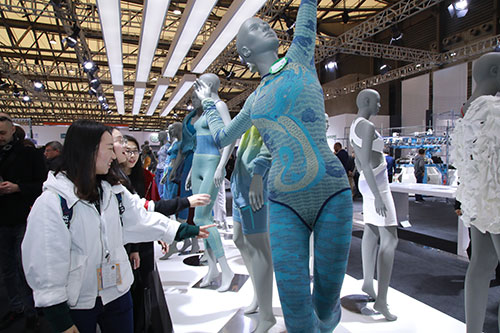
Besides, the exhibition will also include environmental sustainability related conferences that will address the issues arising from high energy and water consumption in the textile and fashion industries, such as how to use green technologies for denim finishing.
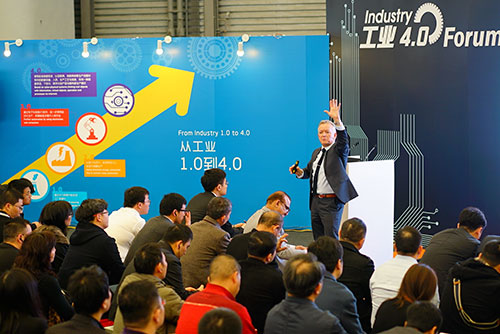
Successful pre-registered visitors of ShanghaiTex 2019 will be entitled to a range of benefits, including complimentary business matching service, priority access into the fair and events; one free show catalogue and discounted air tickets.
Eurojersey launches new lingerie FW 2020/21 collection
The Sensitive® Fabrics range by Eurojersey has launched its new lingerie FW 2020/21 collection. This ultra light collection offers refined undergarments which are functional in terms of performance and comfort.
The exclusive colour palette of this collection ranges from a highly sophisticated shade of nude to soft dusty pink, interpreted in floral patterns or plain colours in a play of transparent and lustrous effects thanks to the use of gold pigments. Shades of green and blue are offset by more urban tones borrowed from the blacks and greys of asphalt roads and buildings.
Pakistan’s cotton area up 47 per cent, targets better production this year
This year, Pakistan cultivated cotton over a 47.4 per cent larger area compared to the corresponding period of last year. Pakistan’s cotton output has improved this year with the availability of water. More than 76 per cent of the targeted area was brought under cultivation. A major chunk of cotton was sowed on time made possible on the back of better water management. The major beneficiary of smooth water supplies has been the province of Sindh that was otherwise starved of water last year due to low river flows. Against the target of 0.64 million hectares, cotton sowing was completed on 0.39 million hectares in Sindh – the highest yielding province in the country.
Chances of pink bollworm attack on the cotton crop this year are slim due to better off-season management. Sowing of cotton before April provided early feed to the pink bollworm, which is the most threatening pest for cotton and early crops became hatcheries for them. Infestation of pink bollworm on cotton crop is not a good sign. The attack, if not controlled, snowballs into a bigger onslaught on the later stages of the crop, cutting yields significantly. As the moist weather invites pests already present on the corn fields, the threat to standing cotton plant multiplies with the wetness providing favorable growing conditions for them.