FW
Ralph Lauren Corp launches limited edition apparels
Like other apparel companies, Ralph Lauren Corp, has launched limited edition apparels and partnered with professional golfer Justin Thomas for the sporting season to reinvigorate sales of core products like its Polo shirts. The company has taken a slightly more cautious view of the retail environment for the year ahead and continues to see challenges with brick-and-mortar traffic, including foreign tourist volatility.
For the second quarter, the company forecast net revenue to rise by about 1 per cent on a constant currency basis and expects a stronger dollar to pressure revenue growth by about 90 to 100 basis points. The company maintained its revenue forecast for the rest of the year.
Net income rose to $117.1 million or $1.47 per share, in the first quarter ended June 29 from $109 million, or $1.31 per share, a year earlier. Excluding one-time items, the company earned $1.77 per share, while net revenue rose to $1.43 billion. Analysts were expecting a profit of $1.66 per share and revenue of $1.42 billion, according to IBES data from Refinitiv. Shares of the New York-based company reversed course to fall about 4 per cent after rising about 6 per cent in trading before the bell.
Meridian Specialty Yarn opens yarn plant in the US
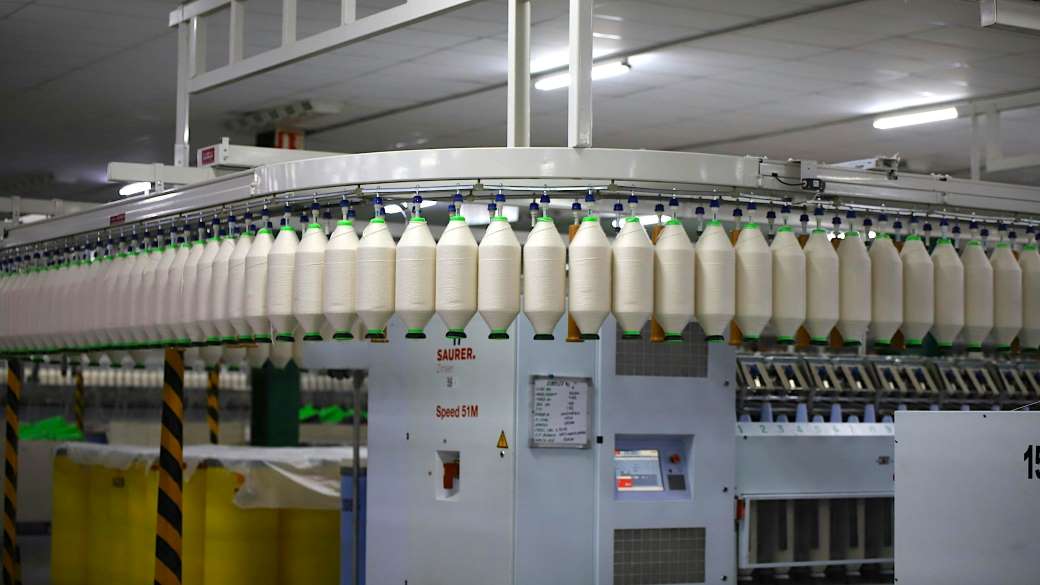
Meridian Specialty Yarn has opened a high-tech, yarn dyeing plant in the US. This will usher in a new era for the US textile supply chain. The 1,16,000 sq. ft. facility is the first yarn and fiber dyeing operation to be built in the United States in over two decades and offers the only tow-dyeing capacity in the United States. Until this summer, all producer-dyed acrylic tow was imported from outside US borders. This is the only green field yarn and fiber wet-processing plant to be built in the United States in a generation.
The new technology gives Meridian the capability to process every dyeable fiber in various forms including yarn, tow and top. This is very unusual in the dyed yarn world. The company can chemically treat or dye all fiber substrates, ranging from cellulosic and animal fibers, to polyester, nylon and dyeable aramids. Most dye houses specialize in certain products, but the company is now in a position to source from all over the world, from every type of textile fiber, supporting a wide array of end uses.
The plant literally puts a new spin on the primary staples of the textile industry – fiber and yarn. Meridian’s yarn dye operations will include several types of space-dyed yarns as well as twisting capabilities.
Italian textile machinery orders down 19 per cent
Italian textile machinery orders fell by 19 per cent for the period from April to June 2019 compared to the same period in 2018. On foreign markets, Italian machinery manufacturers had to face geopolitical situations that have considerably slowed investments. So Turkey, Iran, and even China, all primary markets for the sector, recorded a drop in demand for textile machinery for a variety of reasons. On the domestic front, on the other hand, orders remained stationary compared to the second quarter of 2018.
Last year closed with a downswing both in terms of foreign sales and total production. The overall sentiment for 2019 isn’t very positive either. Italy is the world’s second largest producer of machinery for the textiles industry. In the production of machinery for tanning, and for the footwear and leather goods industry, Italy accounts for over 50 per cent of world production.
The order index for Italian textile machinery from October to December 2018 fell compared to the same period for 2017. The index value stood at 101.9 points. The trade surplus of the textile sector accounts for 25.4 per cent of the trade balance of the overall fashion-textile production chain although textiles account for only 15 per cent of total sales.
Chinese polyester market declines in July
The overall polyester market in China declined in the month of July. The main reason was muted end-user demand. A rebound will require improvement of end-user demand. And this is expected to improve after less liquidity is occupied by inventory.
Prices of some polyester products, like pet bottle chips and fdy, touched lowest level in end-May and early-June. Fabric manufacturing units and beverage plants do not show higher buying interest even when the feedstock market is not profitable. Compared with late May, the current feedstock inventory of end-users is also low but stocks of finished goods are higher than the lowest point in late May. Different plants witness various performances and some plants still possess the capability to have bottom-fishing.
Many downstream players witnessed the worst business in July since the spring festival holiday and though the business is likely to improve in August or September, the improvement is expected to be limited. However, the business from August to September is anticipated to be better than that in June and July. Downstream plants are likely to try their best to lower stocks and run rate in August and September, holding a pessimistic view on demand in the fourth quarter.
India’s cotton yarn exports down 35 per cent
India’s cotton yarn exports fell 35 per cent in the first quarter compared to the same period last fiscal. In April 2019, the fall was 21 per cent compared to the same month previous year. May saw a decline of 31 per cent against May 2018 and June saw a whopping decline of 50 per cent compared to June the previous year.
India’s exports of cotton yarn have been declining since 2014 when incentives for shipments were removed. India lost its main market, China, to Vietnam, which has duty free access to China while Indian cotton yarn attracts 3.5 per cent duty. To make things worse, Indian raw cotton price is the highest in the world despite the country being one of the largest producers. The 28 per cent hike in minimum support prices disrupted prices, leading to a disconnect with international prices.
Direct benefit transfer to farmers can ensure that industry gets international competitive prices for cotton fiber. A rebate on state and central taxes and levies on an urgent basis can save the only textile segment where India is a leader. The rebate has been extended to made-ups and apparel but not to the yarn and fabric segments.
Mongolian cashmere maker plans base in the US
Gobi Corporation plans to enter the US market. This is a cashmere manufacturer from Mongolia. The corporation has more than 2800 employees and 80 per cent of them are women. An e-commerce website specially dedicated to US customers will be launched.
The United States plans to allow duty-free treatment for certain imports from Mongolia such as cashmere products and textile materials. This means more trade opportunities for Mongolia to export cashmere products to the US. Mongolia supplies around 48 per cent of the total raw cashmere to the world market, which makes the country the second largest raw cashmere supplier of the world. But only 15 per cent of it is used to make ready-to-wear finished cashmere garments. The remaining 85 per cent of the raw cashmere is sold as a semi-processed material to other markets and this is becoming the focus area of Mongolia’s domestic cashmere manufacturers. The United States of America is considered as the second largest cashmere consuming country. Duty-free treatment would open a tremendous opportunity for Mongolia to diversify its economy.
Increased trade between the United States of America and Mongolia will benefit many stakeholders in the supply chain of cashmere including consumers, nomads, employees.
Australia sourcing show in November
International Sourcing Expo will be held in Australia, November 12 to 14, 2019. The trade show will allow businesses to network with buyers from Australia and New Zealand and expand their trade network in the area. The trade show covers a number of product categories including fashion accessories, textiles, leather goods, home ware, gifts items, and eco-friendly products.
In the last edition, International Sourcing Expo Australia co-located with the China Clothing and Textiles Expo and the Footwear and Leather Show and featured over 700 businesses from 18 countries. The event welcomed over 4,500 trade buyers as well as importers, agents, wholesalers, distributors, and manufacturers. The three trade shows will take place concurrently again this year.
India’s Export Promotion Council for Handicrafts will take a group of Indian businesses to Australia for the expo. The handicraft sector is the largest employment providing sector in India after agriculture. For the upcoming edition, EPCH is offering subsidised participation rates for registered Market Access Initiatives exporters. One of the objectives of EPCH is to create awareness through seminars and workshops on export marketing, procedures and documentation, packaging, quality compliances, service tax, foreign trade policy, design development and awareness about trends and forecasts prevalent in the world market.
Now, brands move from customised to made-to-measure clothes
"Not so thin women do not have to contend with ill-fitting and uncomfortable clothes anymore. Brands these days are extending their size ranges to cater to more diverse body shapes. Some of them are adopting newer technologies to create made-to-measure clothes that fit their customers like second skin."
 Not so thin women do not have to contend with ill-fitting and uncomfortable clothes anymore. Brands these days are extending their size ranges to cater to more diverse body shapes. Some of them are adopting newer technologies to create made-to-measure clothes that fit their customers like second skin.
A 3D body model to create perfectly fitting garments
Newer fashion e-commerce brands like RedThread and Measure & Made are ensuring absolute comfort for women buying from their online store. RedThread founder and CEO Meghan Litchfield interviewed almost 100 women of all shapes and sizes over a period of 18 months about their most preferred styles and the fit issues they were facing.
The brand has also collaborated with technology partner Cala to scan each woman’s body. For this, the customer first uploads his selfies through a data-encrypted text-link sent by the brand. Using these selfies, RedThread and Cala auto-generate a 3D body model and come up with perfect-fitting garments — mainly staples like wide-leg pants and T-shirts — for that shopper. This initiative has garnered a positive response from its customers as over the eight months in business, the brand has a return rate of less than 4 per cent and plans to expand its product range in the coming months.
Size matters
Measure & Made, launched in January this year, uses the Fitlogic technology that not only takes into account the body shape of its customers but also their sizes. The company categories women into three shapes: straight, hourglass and extremely curvy. Using these parameters it has created a quiz for shoppers that inputs their height, typical dress pant size and body shape, among other stats, to find out what their Fitlogic size is. Using this technology, the brand has so far sold over 250,000 pairs of pants and jeans since its launch and has a return rate of less than the 50 per cent of national e-commerce average.
Dealing with excess inventory
While brands like RedThread and Measure & Made are successfully implementing these technologies to create customised clothes for women, the trend is not catching on with bigger brands and retailers as the concept is not easy to achieve. However, made-to-measure brands can achieve this as they can have around 100 factories manufacturing clothes for them. Around 70 per cent of RedThread’s garments are pre-made. The company just tailors these garments by hand in its South San Franciso factory within a week of receiving the customers’ measurements. This also helps the company to curtail the amount of waste it generates.
China textile and garment exports down two per cent
China’s textile and garment exports fell 2.37 per cent in January to June 2019 over the same period last year. Though textile exports were up 0.66 per cent, garment exports fell 4.93 per cent. From January to June, exports of yarns, fabric and related products from China saw a year on year growth of 0.7 per cent. And exports of garment and accessories were down 4.9 per cent year on year.
In June China's textile exports were down 3.24 per cent year on year. And garment exports declined 2.73 per cent. Since May 10, the United States has officially imposed additional tariffs on Chinese products, including textile yarns, fabrics, knitting, industrial finished products and some home textiles. It has brought some pressure on China’s exports to the United States. But both have agreed to restart economic and trade consultations on the basis of equality and mutual respect. They also agreed that the US will not add new tariffs on Chinese exports. Garments and most home textiles that have the largest proportion of exports to the US will not be affected by the increase of tariffs, which will help stabilize the confidence of US buyers in continually purchasing from China and release positive signals.
Rise in Welspun quarterly income
Welspun’s total income was Rs 1736.29 crores during the period ended June 30, 2019, as compared to Rs 1600.94 crores during the period ended March 31, 2019. Net profit was Rs 150.04 crores for the period ended June 30, 2019, as against net loss of Rs 79.29 crores for the period ended March 31, 2019. EPS was Rs 1.49 for the period ended June 30, 2019, as compared to Rs 0.79 for the period ended March 31, 2019.
Total income was Rs 1736.29 crores during the period ended June 30, 2019, as compared to Rs 1577.78 crores during the period ended June 30, 2018. Net profit was Rs 150.04 crores for the period ended June 30, 2019, as against Rs 127.21 crores for the period ended June 30, 2018. EPS was Rs 1.49 for the period ended June 30, 2019, as compared to Rs 1.27 for the period ended June 30, 2018.
Welspun is in the midst of a massive transformation driven by sustainability. It is refining systems and processes. But its biggest interventions are around the creation of vibrant and progressive farming communities. In Maharashtra and Gujarat, the main cotton producing regions for Welspun, farmers are given complete farm management solutions right from the field to the market.