FW
Global cotton consumption may increase
Global cotton consumption is projected to increase 1.7 per cent in the coming season but if production grows at the expected six per cent, it will exceed production by about 3,00,000 tons. As a result, global stocks should swell to 18 million tons. These factors, combined with tepid expectations for global economic expansion, have dimmed hopes for next season’s cotton demand.
At 5.9 million tons, China is expected to remain the world’s largest producer in 2019-20, topping India’s projected 5.75 million tons. West Africa, meanwhile, is expected to see its production hit an all-time high of 1.3 million tons.
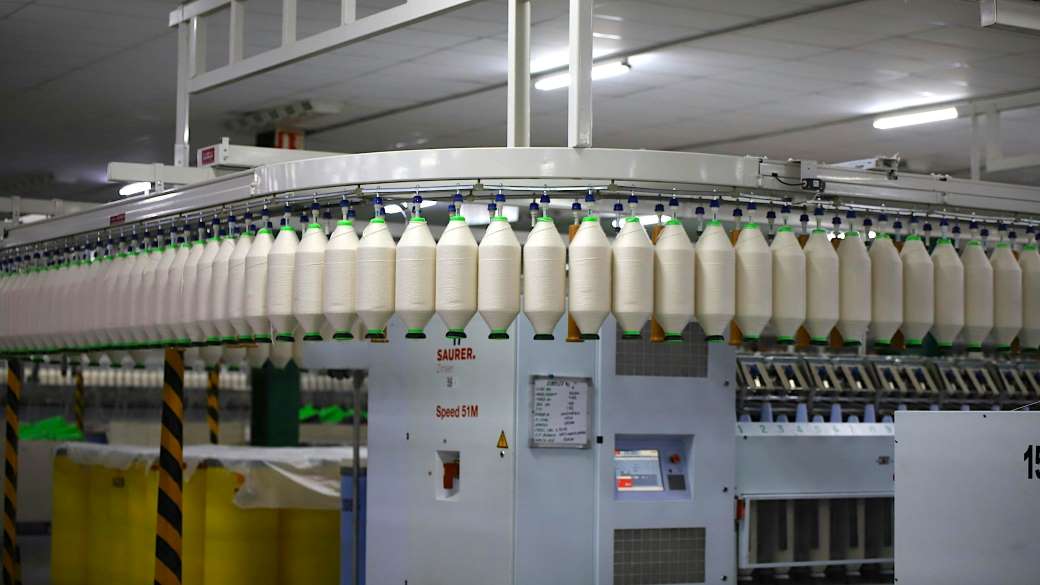
Cotton is the most recognized fiber in the apparel market, and is used, either in its pure form or blended with other materials, to make much of the world’s clothing. Global cotton production continues to be concentrated in a few countries. The top five cotton-producing countries are forecast to account for more than 78 per cent of total production. World cotton mill use is forecast to resume its growth after a 1.3 per cent decline last year. Global cotton consumption is projected at 2.6 per cent above last year’s. Mill use is projected to increase in each of the leading raw cotton spinners.
Cotton yarn exports decline by 35 per cent in Q1 FY 20
The Confederation of Indian Textile Industry (CITI) has revealed that exports of cotton yarn declined by 35 per cent in the first quarter of FY20 to $696 million compared to $1.063 billion in the same period last fiscal. Of this, exports in April 2019 declined by 21 per cent to $266 million compared to $337 million in the same month previous year. Those in May declined by 31 per cent to $241 million against $349 million in May 2018 while those in June declined by 50 per cent to $188 million compared to $378 million reported in June previous year.
Cotton yarn exports have been on a decline since 2014 when the Union government removed all incentives for the shipments. India lost its main market China to Vietnam which has duty free access to China while our cotton yarn attracts 3.5 per cent duty. To prevent these exports from declining further the industry needs rebate on state and central taxes and levies (RoSCTL) on an urgent basis.
The price of Indian raw cotton is the highest in the world despite the country being one of the largest producers. The 28 per cent hike in MSP disrupted the prices, leading to disconnect with international prices. To ensure that the industry gets international competitive prices for cotton, CITI recommends the introduction of direct benefit transfer’ to farmers.
USFIA Study notes a cautious outlook for US fashion industry
As per the sixth annual Fashion Industry Benchmarking Study by the United States Fashion Industry Association’s (USFIA), nowadays sourcing executives are more cautious and less optimistic about the five-year outlook for the US fashion industry. A year ago around 84 per cent survey respondents were either optimistic about this outlook. This year that number has dropped to 64 per cent. And one-quarter of the respondents were reported to have taken a ‘neutral’ stance.
Conducted in conjunction with Dr Sheng Lu, Associate Professor in the University of Delaware Department of Fashion & Apparel Studies, the survey asked respondents about the business outlook, sourcing practices, utilisation of Free Trade Agreements and preference programmes, and views on trade policy. It surveyed executives from 39 leading fashion brands, retailers, importers and wholesalers including some of the largest brands and retailers in the country.
Another key finding of the survey was the biggest challenge faced by the fashion industry faced today being the impact of increasing production and sourcing costs. Around 84 per cent of respondents termed it as a major challenge.
Sale of Made-in-Italy textile outperform expectations
In an economic report released during the Milano Unica 29, Confindustria Moda’s Research Center’s 2018 figures showed sales of Made-in-Italy textiles slightly outperformed expectations, with wool making up 42.7 per cent of total sales. Manufacturing data for 2019’s first quarter showed a -3.5 per cent downtrend, along with a similar performance for exports and imports.
Market segments, however were mixed: exports to the US grew by 15.5 per cent, and exports to China rose by 3.2 per cent especially for wool products. Exports of wool fabrics declined by 2.4 per cent, but worsted wools increased by 4.1 per cent while combed wool fabrics were down -4.7 per cent.
Milano Unica 29, the Italian Textiles Trade Show held between July 09-11, 2019 presented the Autumn/Winter 2020-21 collections of textiles and accessories featuring the very best of high-end products for men, women and children.
For the first time the show addressed the relationship between sustainability and style with its MU Sustainable Innovation Project, debunking the idea that sustainable apparel cannot also be beautiful and trendy.
As part of MU’s sustainability vision, it has partnered with Sistema Moda Italia and the Italian National Chamber of Fashion to offer a prize at the annual Green Carpet Awards, taking place this year on 22 September at the Teatro alla Scala in Milan. This prize will go to a young designer who demonstrates the ability to creatively interpret fashion in a more sustainable manner.
Brands give sourcing bigger attention
The sustainability movement has meant a sea change for raw material sourcing in the apparel industry. When making decisions on which fabrics to use in their lines, brands now have to put the environmental origin and impact of the ingredients that comprise their clothes top of mind. This begins with how the fiber is grown, harvested and extracted, as well as the textile processing and the end-use stage for that garment, and how the materials play into that. A key is using natural fibers that support farmers, enable a more traceable supply chain and help create transparency. It’s about collaborating with the right partners in the supply chain so that the fibers stay in a sustainable environment.
It’s nice to tell a sustainability story, but the aesthetic of the product is really important, as well. Products should be created to be desirable and have a long life. The same is true with building functionality and durability in products by making the correct material choices.
Lenzing’s Tencel with Refibra technology line introduced a couple of years ago—which uses cotton scraps blended with Tencel lyocell to create regenerated fiber produced in a close loop process—has been adopted by about a dozen brands and retailers.
Gap partners with Arvind to open a new innovative center
Gap Inc. has announced a new alliance with Arvind, its long-time sourcing and franchise partner in India, to drive industry-leading solutions that address global water scarcity. The two companies will open a new innovation center to promote the adoption of proven techniques and technology that reduce water use by the textile industry.
Further, both are also investing in a new water treatment facility that will eliminate the use of fresh water at Arvind’s denim mill in Ahmedabad. The facility will save three billion litres of fresh water by the end of 2020 and preserve the local community’s vital freshwater resources.
When it opens in 2020, the new center will be an innovation hub for apparel companies, manufacturing suppliers and vendors, sustainability experts, academics and other environmental stakeholders to advance and scale water stewardship across the apparel sector. The 18,000-square foot space will feature installations that showcase water management best practices and recycling technologies, a library, lab space to develop water management solutions as well as classroom training, and conference space. Once completed, the center will generate scalable solutions that can be replicated at other mills and laundries.
Innatex showcases sustainable fashion from 300 brands
Held between July 27-29, 2019, Innatex- the international trade fair for sustainable fashion and accessories, showcased around 300 brands in Hofheim-Wallau from July 27 to 29, 2019. The international trade fair for sustainable fashion and accessories, being held since 1997 was visited by conventional buyers and concept store buyers in addition to natural textile retailers. The motto of this year’s fair was “Fashion grows here.”
The Buyers Lounge at the fair enpowered visitors to questions associations such as Global Standard or IVN (Internationaler Verband der Naturtextilwirtschaft e.V.) about their certifications. The specialist forums and panel dealt on the subject of seals as a guide to purchasing and certifications.
The Design Discovery area showcased eight new labels included Sam Lang-a gender neutral streetwear that uses a special pleating technique in its designs; N’go Shoes which creates sneakers decorated with ethno pattern fabric and Nudo which offers casual silhouettes and a clear design.
Vietnams’ garment and textile exports to reach $40 billion this year
Vietnam garment and textile exports, which reached $19 billion in the first half of the year, are expected to top $40 billion this year. The country mainly makes products for medium and high-end market segments. The CPTPP has had a positive impact on the country’s garment and textile exports. Previously countries such as New Zealand, Australia and Canada rarely imported Vietnamese garment and textile products. But this year, with the CPTPP coming into effect, these markets have begun to import its garments and textiles in rather large quantities.
The country also benefited from reduction of yarn exports to China as it shifted to other lucrative markets such as Japan, South Korea, the Middle East, and Taiwan which enabled it achieve its yarn export target.
Three giants dominate Spanish fashion
Inditex, H&M and Primark lead Spanish textile commerce. In 2018, Inditex, H&M and Primark’s aggregated turnover reached €6.6 billion. Traditionally, sales of the three groups have evolved better than the revenue of the sector in Spain. These groups represent 37.8 per cent of the total fashion sector in Spain.
Inditex occupies 68.18 per cent of the aggregated sales for the three giants. This fiscal, the company’s revenue in the Spanish market was three per cent more than last year. Sales of the group represented 16.3 per cent of the total. H&M’s revenue in Spain was higher by 8.2 per cent. However, low cost Irish giant Primark’s revenue in Spain fell three per cent. This is not due to the group’s revenue in Spain, but because of its problems in home market.
Store chains lead the distribution channel in Spain, with a growth of 33.9 per cent, compared to department stores and multibrand outlets, which are seeing a fall in business. Despite all, the three giants of Spanish fashion have reduced their rhythm of growth. It was 2.17 per cent in 2018 compared to 18.8 per cent in 2014, 11.07 per cent in 2015 or 7.51 per cent in 2016.
Textile commerce in the world sank in 2018 by 2.38 per cent.
Salvatore Ferragamo net benefit up two per cent
Salvatore Ferragamo closed the first half of 2019 with a net benefit 2.3 per cent more than the same period last year. Sales rose 14.6 per cent during the period. Licenses and services rose 22.3 per cent while wholesale rose 7.4 per cent. Retail, on the other hand, grew 3.6 per cent in the first half. By regions, Asia Pacific and Latin America had a rise of 8.1 per cent and 13.4 per cent respectively. In Japan and North America, Salvatore Ferragamo had rises of 0.1 per cent and 0.4 per cent respectively. In Europe, revenue of the group rose three per cent. Leather goods grew 6.9 per cent while footwear and fragrances rose 4.1 per cent and 7.8 per cent respectively. Ready-to-wear, on the other hand, had a drop of 3.3 per cent.
The company has 661 points of sales, of which 397 are directly operated stores and 264 third-party operated stores. Salvatore Ferragamo, based in Italy, is one of the world’s leaders in the luxury industry. The group is active in the creation, production and sale of shoes, leather goods, apparel, silk products and other accessories, along with women’s and men’s fragrances. The group's product offer also includes eyewear and watches.