FW
Welspun targets doubling revenues
Textile major Welspun aims at doubling its revenue by 2023. The strategy is to expand its share of branded and innovative products to half of the company’s overall revenues. During the period, the company also wants to completely trim its debt as it will not be needing any significant capital expenditure in future. Welspun has launched the mass market brand of home textiles.
The company has just entered the flooring business. Exports constitute 94 per cent of its total sales. Welspun will increase its focus on the domestic market, aiming for it to contribute to 20 per cent of the total sales.
Currently, the consumer-facing segment that consists of luxury and premium brands Christy and Spaces, respectively, as well as other innovation brands such as HygroCotton and Wel-Trak make for a total of 46 per cent of the company’s total revenue. This will be taken to 50 percent. Christy brand has been facing headwinds in the UK due to a weak economic sentiment led primarily by uncertainties regarding Brexit. The company is trying to tide over this phase by taking the UK-focused brand to other markets such as the US, China and the Middle East while focusing on the online retail channel.
Surat weavers shift to cotton
Weavers and textile processors in Surat have shifted their attention to cotton and cotton-blended fabrics. Reason: growing demand for cotton fabric in the country. Units want to move ahead in garment manufacturing from synthetic fabrics to cotton fabrics. The trend has been visible after the implementation of GST as there is a flat five per cent GST on cotton yarn and fabrics. Around 25 mills in Surat are processing cotton fabrics. Unfinished cotton fabric from Ichhalkaranji and Bhiwandi is also making its way to textile dyeing and processing mills for processing.
Traditionally, Surat is known for its low-cost polyester fabric or manmade fabric. Surat’s manmade fabric sector manufactures four crore meters of polyester fabric a day. The industry employs more than 10 lakh workers in the manufacturing and processing sectors. There are about 6,00,000 plain power looms, around 1,00,000 embroidery machines and also 50,000 water jet and rapier looms in Surat. There are also numerous yarn texturising units. Export of synthetic fabrics from the Surat textile industry is around Rs 20,000 crores.
Cotton manufacturing is expected to have a 40 per cent share of the manmade fabric center in the next five years.
Sourcing becomes expensive for US brands with ongoing trade war
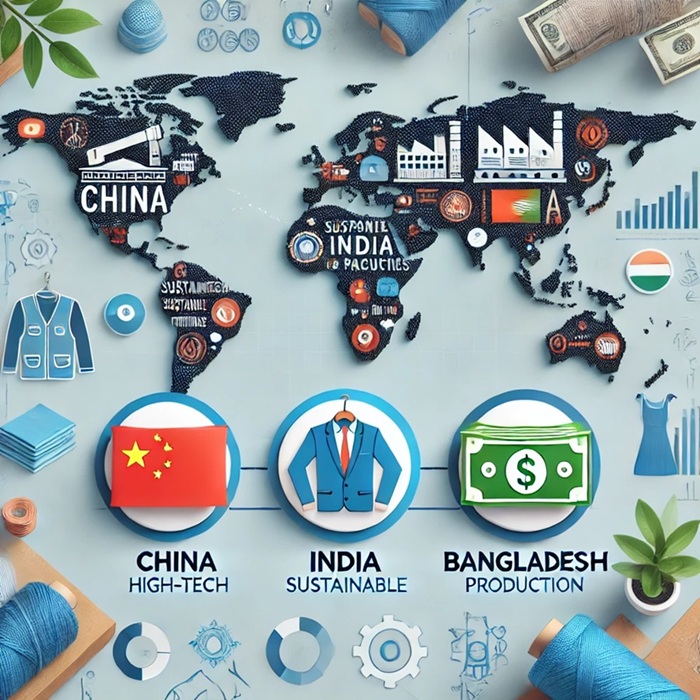
US fashion brands’ sourcing costs from Vietnam, Bangladesh, India and China have risen tremendously. The unit price of US apparel imports across the board increased by 10.7 per cent in the first five months of 2019. The unit price of US apparel imports in the first five months of 2019 from Bangladesh, Vietnam and India shot up 25.6 per cent, 23.4 per cent and 21.2 per cent respectively.
The number one driving factor of higher costs is shipping and logistic costs. The biggest challenge now for the fashion industry is the impact of increasing production and sourcing costs. But US tariffs will do little to shake China’s role as a dominant textile and apparel supplier for the US market. Sourcing from China is not expected to significantly fall in the next two years. The unit price of apparel imports from China only grew 3.3 per cent in the same period. Chinese suppliers have actually lowered sales price to keep sourcing orders while only around 9.3 per cent of textile products imported from China are now subject to new US tariffs.
No other country or region in the world can match China’s enormous production capacity in the textile and apparel industry in the foreseeable future and China also doesn’t have a near competitor in terms of variety of products.
Prada revenue up two per cent
Prada’s revenue rose two per cent in the first half of the year. Operating profit, or earnings before interest and taxes, decreased 13 per cent, equivalent to 9.6 per cent of sales. The group’s operating profit margin has been declining every year since 2012 when it stood at 27 per cent. Sales had risen in 2018 for the first time in four years helped by a new strategy aimed at rejuvenating the brand which focused on renovating shops, new products and digital sales. Improving full-price sales and a solid growth in its wholesale channel offset the impact of a move to cut back on markdowns. Prada, founded in 1913, is an Italian luxury fashion house specializing in leather goods such as handbags, shoes, and small fashion accessories which include wallets, pouches and belts, with a range of ready-to-wear items like shirts, jackets and knits.
The retail network declined three per cent, affected by the phase-out of markdown sales, while the wholesale channel rose 14 per cent, driven by online sales, with the rationalisation not having any impact yet on that part of the business.
The Italian fashion company will stop offering end-of-season promotions in its stores and be more selective with wholesalers to support full-price sales to lift margins and protect its brands.
Levi's Q2 sales outpaces growth estimates
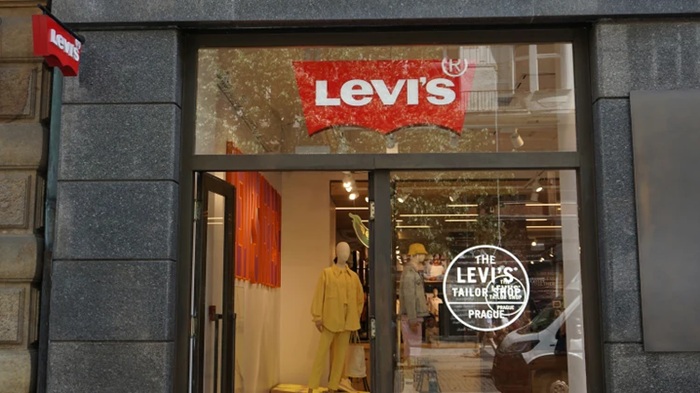
Beating forecast of $1.29 billion, denim brand Levi’s reported second quarter sales of $1.31 billion in mid-July. Its earnings crossed the newswires at $0.07 a share, falling short of estimates of $0.12 a share. Its actual earnings, excluding some $29 million in costs related to its late March IPO, also tallied to $0.17 a share.
Levi’s second quarter sales at US wholesale accounts — mostly department stores such as Macy’s and Sears — dropped 2 per cent. To combat this decline, the brand plans to open more retail stores and ask important vendors to stock more of its products. The brand’s operating income for its Americas, European and Asia markets excluding volatile currency swings outpaced sales growth in the second quarter. Sales of its men’s products rose by 6 per cent, women’s surged by 16 per cent, bottoms gained by 8 per cent and those of tops spiked by 14 per cent.
More recently, Levi’s has rolled out collaborations with Netflix’s “Stranger Things” and Hello Kitty. For Bergh, these tie-ups are yet another sign of Levi’s ability to stay culturally relevant during a time where there is so much choice in apparel. And by being able to stay relevant, it raises the prospects of keeping the brand’s sales momentum intact.
Indian spinners want interest subvention for cotton yarn
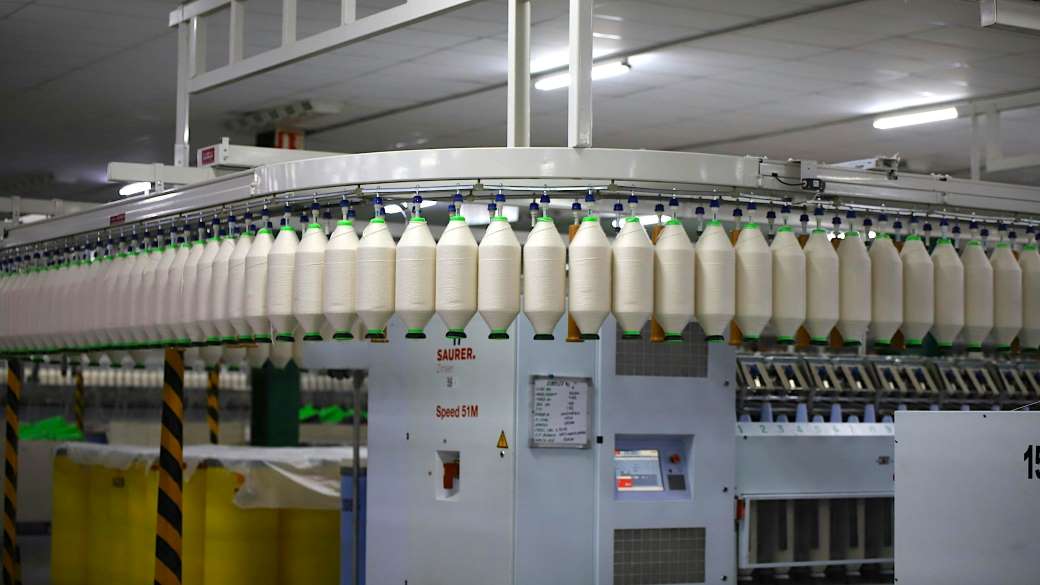
Cotton yarn is a value added product in India but it has been excluded from export benefits like interest subvention. The industry wants cotton yarn to be included in the interest subvention scheme, saying that this will ensure only products are exported and not taxes and also will provide the much needed impetus in the context of rising cotton prices and the appreciating rupee which are eroding competitiveness. A rebate on embedded taxes like agricultural cess, mandi tax, power and fuel surcharge incurred in the production process is also sought. As of now cotton yarn is excluded from the ROSCTL scheme which rebates these levies.
Cotton yarn sector is one of the pillars of the Indian textile industry and is also highly modernised and technology driven and provides sustainable income to farmers. But cotton exports in the first quarter fell 33 per cent compared to the same quarter last fiscal. The steep fall has been caused by a variety of reasons including decline in exports to leading markets like China, Bangladesh, South Korea and the duty-free access given by China to cotton yarn from countries like Pakistan and Vietnam.
If the trend of declining exports were to continue in the next quarter, several spinning units are expected to close, resulting in layoffs.
Indian cotton yarn exports down 33 per cent
Exports of cotton yarn from India in the first quarter have fallen 33 per cent. The steep fall has been caused by a variety of reasons, including a decline in exports to leading export markets like China, Bangladesh, South Korea and the duty-free access given for import of cotton yarn by China to countries like Pakistan and Vietnam. It is feared that if the current trend of declining exports continues in the next quarter, it will lead to the closure of several spinning units in the near future, resulting in layoffs.
Considering the large scale investment in spinning sector and sluggish demand in the domestic markets, exports are the only avenue to ensure uninterrupted production and capacity utilization. Even though cotton yarn is a value added product, it has been excluded from export benefits like interest subvention, the Merchandise Export of India Scheme and the Rebate of State and Central Taxes and Levies schemes. There is no rebate on embedded taxes like agricultural cess, mandi tax, power and fuel surcharge, which are incurred in the production process.
The cotton yarn sector is one of the pillars of the Indian textile industry and is also highly modernised and technology driven and also provides sustainable income to farmers.
Hugo Boss profit up three per cent
For the second quarter Hugo Boss profit rose three per cent.
Sales were up two per cent.
In Europe – the company’s biggest market - sales rose two per cent in the second quarter, and especially in Asia, with sales expanding at double-digit rates in China on a comparative store and currency-adjusted basis. However, quarterly sales fell three per cent in the Americas.
Hugo Boss is a German luxury fashion house. Hugo Boss, known for its smart men's suits, has introduced more casual and sportswear styles to appeal to a younger audience. The group expects 2019 currency-adjusted sales growth to be at the lower end of an outlook for a mid single-digit percentage rise, and operating profit to be at the lower end of its forecast for a high single-digit percentage increase. The revamp of key stores is expected to boost the company’s performance with New York and Tokyo flagships already performing well since their reopening and renovations of others in Paris and Chicago soon to be completed. While the German fashion company’s share price has slumped by 19 per cent over the past year, its performance has been impacted by reorganisation costs, a higher marketing spend and the strength of the dollar.
Huge jump in Indian cotton exports to Iran
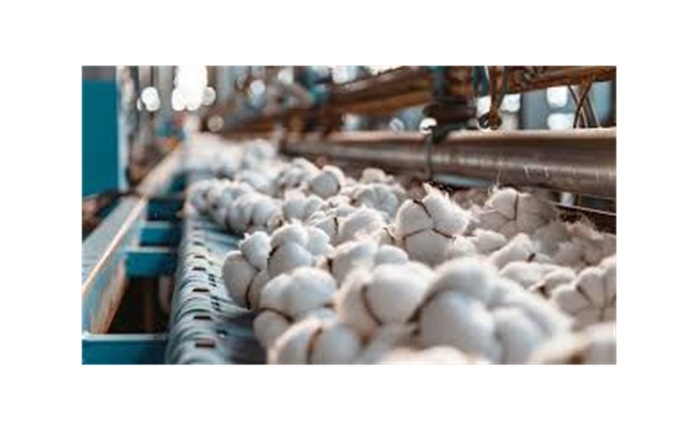
India’s cotton exports to Iran jumped a phenomenal 1070 per cent last year. Amid slowing raw cotton exports in recent months, India has seen a sharp jump in cotton demand from Iran, an unexpected buyer. One reason could be the trade sanctions western nations have imposed on Iran. And Iran pays in rupee denomination and the payment comes directly to the Indian bank account. This is possible because Iran sells oil to India in rupees.
During the April-June period of 2019-20, India’s exports of raw cotton to Iran were up 813 per cent on a year on year basis. Many small exporters have already sent cotton consignments to Iran. All the same exports to Iran don’t make much of a difference to Indian overall cotton export prospects. These prospects are hampered by the non-competitive prices of Indian cotton in international markets. If the scenario of higher prices continues to persist, Indian exports may fall further next year.
India’s cotton exports were reported at 44.64 lakh bales till April 30, 2019. Exports for the season ending September 2019 are expected to hover at 46 lakh bales, which are lower by 23 lakh bales compared with the previous year’s cotton export estimate of 69 lakh bales.
Coats revenues down three per cent
Coats’ revenues fell three per cent in the first half of the year. Operating profit grew three per cent, driven by improved operating margins, strong cash flow generation and cost-cutting measures. Savings were reinvested in innovation, digital and talent. Adjusted earnings per share fell four per cent. EPS growth was four per cent.
The sewing thread maker’s market-leading apparel and footwear thread business benefited from a continued focus on product innovation, digital solutions as well as its leading corporate responsibility and sustainability credentials. In its Performance Materials business, it saw strong growth in some emerging markets and key strategic focus areas and an acceleration in the performance of recent acquisitions.
Coats opened innovation hubs in Turkey, China and the US. These dedicated centers at key locations around the world will develop pioneering new products and processes in apparel and footwear and hi-tech products for end uses in automotive, oil and gas, protective wear and telecommunications by providing creative and inspiring spaces where an innovative idea can be developed and worked up into a prototype design which is then manufactured in a standalone pilot factory. While the company remains cautious around the current macroeconomic uncertainties, based on its current assessment of business trends it anticipates delivering 2019 full-year performance.