FW
Global Fashion Group to accelerate marketplace and platform services
Online fashion and lifestyle destination in growth markets, Global Fashion Group (GFG), plans to accelerate its marketplace and platform services by focusing on technology development. For this, the group has placed seven year senior, unsecured bonds convertible as per their terms and conditions in an aggregate principal amount of €375 million.
As per report, these bonds also support the group’s ambition of becoming a €10 billion Net Merchandise Value (NMV) business in the next 7-9 years. They enhance the group’s capacity to accelerate fashion e-commerce adoption in key markets and fuel the next chapter of its growth, say Christoph Barchewitz and Patrick Schmidt, co-CEOs. GFG also plans to expand its adjacent categories, acquire new customers, and introduce innovations in delivery. This will facilitate the expansion of its Global Fashion Platform, strengthening its position in the digital fashion market.
The group will issue the convertible bonds at 100 per cent of their principal amount with a coupon of 1.25 per cent payable semi-annually. The initial conversion price was set at a premium of 42.5 per cent above the reference price of €12.60.
Levi Strauss launches new program for Bangladesh women workers
US-based renowned denim giant Levi Strauss has launched the COVID-19 Response for RMG Women Workers in Bangladesh Program, which will deliver cash aid to 1,000 female ready-made garment (RMG) workers who lost their jobs due to the COVID-19 pandemic’s effect. Around 600 apparel workers in Dhaka and 400 workers in Chattogram would get Tk5,000.
Besides, 600 more apparel workers – 360 in Dhaka and 240 in Chattogram – would get hygiene kits including soap, detergent and reusable face masks, worth more than Tk1, 200 per person. NGO ActionAid Bangladesh would distribute the cash aid and hygiene kits among the workers through its two associates – Safety and Rights Society in Dhaka and Sangsaptak in Chattogram.
Sekender Ali Mina, Executive Director, Safety and Rights Society, said they will list the project recipients from their RMG workers database. Moreover, they will gather information from the RMG workers. Mina said, they had already prepared 50 volunteers for the aid payment. By mid-March, they expect to reach out to the RMG workers with the aid. Annually, Levi’s sources 39.5 million pieces of denim from Bangladesh.
Pakistan approves cross-border import of cotton yarn
Pakistan Prime Minister Imran Khan has approved cross-border import of cotton yarn as the shortage of industrial input is feared to stymie recovery in textile exports.
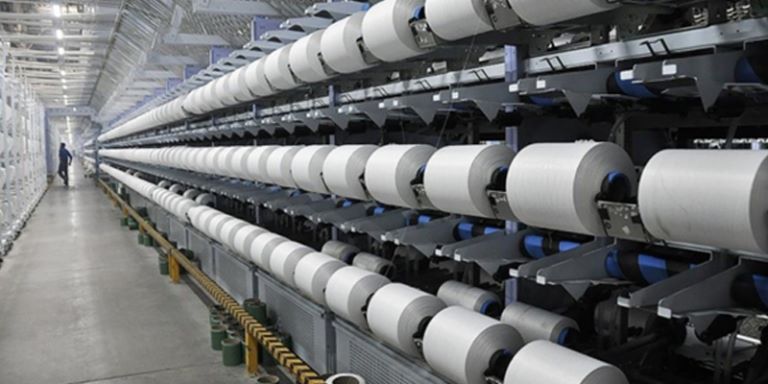
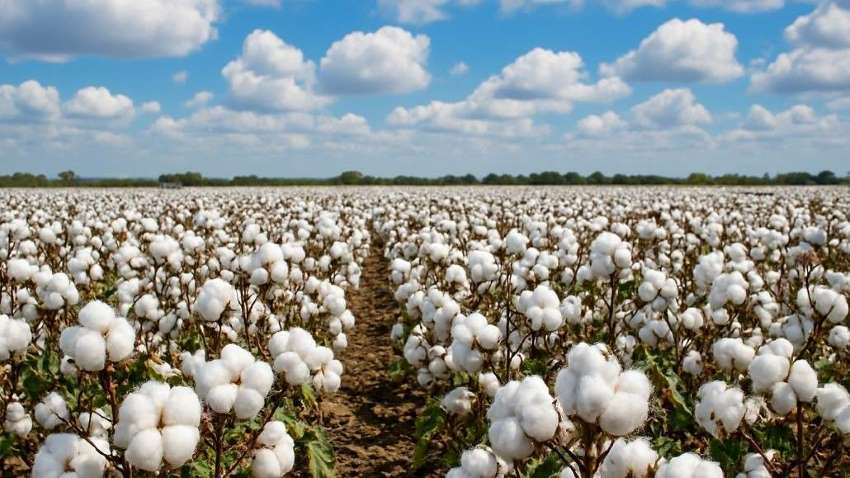
As per reports, Pakistan’s cotton production declined to 5.5 million bales from as much as 15 million bales recoded annually in previous years, causing unstoppable rise in its prices.Its textile and clothing exports increased by over 8 percent to $8.8 billion in the seven months of the current fiscal year.However, traders warned that the growth pace can slow down amid the shortage of raw materials.
Pakistan Yarn Merchants Association expressed deep concern over the unavailability of cotton yarn and its price reaching to an all-time high. It asked the government to immediately allow duty-free import of yarn and cotton from India to save the textile industry from collapse
If export orders are not fulfilled on time, the business will adversely be affected, according to the association.
The association’s office bearers said a large number of export orders from China, Bangladesh and India were transferred to Pakistani exporters, which led to an increase in production activities. However, these days the cost has risen sharply due to non-availability of raw materials as per the demand of the textile industry and the high price of yarn in the local markets.
Nudie Jeans to create 15,000 pairs of jeans from discarded denims
Nudie Jeans aims to create 15,000 pairs of jeans from the company’s unsold denim. The Swedish denim brand, celebrated for its use of organic cotton and its jeans repair program, will take its own jeans it considers to be “second-quality” and turn them into fabric for new jeans. Second-quality jeans are those with slight defects such as a discolored wash, inconsistent stitching or irregular cut. Historically, they are either sold at a discount or otherwise discarded.
Post-industrial waste recycling is a $350 billion opportunity in the Western hemisphere, according to a report from Accelerating Circularity, a collaborative initiative formed by sustainable materials community Textile Exchange. The denim brand teamed with United Nations Industrial Development Organization (UNIDO) as part of the EU-funded circular accelerator, SwitchMed, to bring denim recycling to Tunisia. Nudie Jeans produces the majority of its jeans in Tunisia through companies Denim Authority and Universal Colours.
In December, Nudie and UNIDO developed a two-phase pilot project to test the recycling process at scale. Phase one involves taking 8,000 pairs of second-choice jeans and combining them with virgin denim material to make 20,000 meters of new fabric. By May 2021, the project will have produced 15,000 pairs of new jeans. The second phase will then focus on developing a post-industrial denim recycling program with Tunisian designers to further circularity efforts. Tunisia has seen increased water scarcity in recent years, making circular design an even greater priority for the denim brand.
Intertextile Apparel Fabrics to hold Spring Edition 2021 from March 17-19
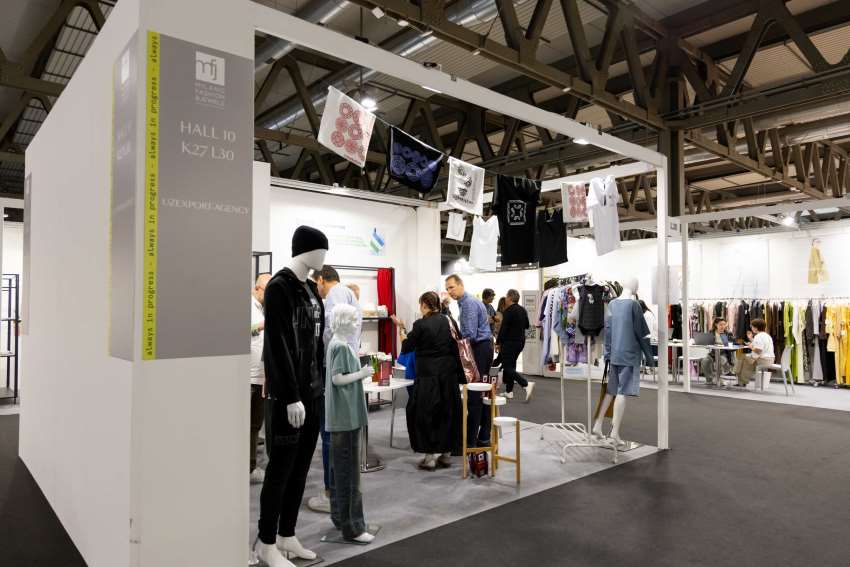
The Intertextile Apparel Fabrics will hold its Spring Edition 2021 from March 17-19, 2021, at the National Exhibition and Convention Centre, alongside Yarn Expo Spring, Intertextile Shanghai Home Textiles, CHIC, and PH Value. The show attracts a line-up of global companies, to help them seize business opportunities in China’s recovering textile market.
This edition, exhibitors from Argentina, Denmark, Ethiopia, France, Hong Kong, Italy, Japan, Korea, Spain, Switzerland, Taiwan, Turkey, and the UK are taking part. Visitors will also be able to source from country and region pavilions from Hong Kong, Japan, Korea, and Taiwan, along with the Korea Textile Centre group pavilion. In addition, Chinese exhibitors will be grouped by product-end use.
For buyers who cannot attend the fair in person, Intertextile’s online business matching platform, Connect PLUS, will be accessible two weeks before and four weeks after the fair. With a database of over 4,500 global exhibitors and buyers as well as AI-driven matching recommendations, users can search for products, chat via instant messaging and video call functions, and schedule online or onsite meetings. Online exhibitors can also join the fair’s Hybrid Showcase to display their products for onsite buyers to touch and feel. Complemented by the Intertextile mobile app, live-streams and webinars, these digital solutions maximise product exposure for exhibitors while enhancing sourcing efficiency for buyer.
Gap Inc reports 54% growth in online sales during fiscal 2020
Gap Inc, the owner of purpose-led, lifestyle brands including Old Navy, Gap, Banana Republic and Athleta, reported a 54 per cent in its online sales to over $6 billion during the fiscal year 2020. Its online sales represented 45 per cent of total sales leveraging the company’s competitive digital platform and omnichannel capabilities.
The company’s diluted earnings for the fourth quarter of FY2020 per share was $0.61 including approximately $0.45 for non-recurring tax benefits and approximately $0.12 in impairment charges related to the Intermix business resulting from a strategic review.
The company’s market share grew by 0.2 percentage points, ending the year at 5.5 per cent of total US apparel sales, supported by continued strategic investments in marketing and other demand-driving initiatives.
Net sales for the fourth quarter of fiscal year 2020 declined by 5 per cent to$4.4 billion COVID-mandated store closures in international markets and softer store traffic in select U.S. regions with stay-at-home restrictions impacted sales by an estimated 4 percentage points. In addition, strategically planned permanent store closures had an estimated sales impact of about 5 percentage points.
Online sales grew by 49 per cent compared with last year and represented 46 per cent of net sales in the fourth quarter, which was an increase of over 17 percentage points versus last year. Store sales declined by 28 per cent in the quarter, with impacts from COVID and strategic closures noted above.
Egypt’s textile and apparel exports to decline by 15% in 2021
Egypt’s textile and apparel exports are likely to decline by 15 per cent in 2021as several manufacturers, especially in the cotton textiles industry, have reduced production.
The country’s textiles and apparel exports declined by 29 per cent to $2,313.38 million in 2020. In 2019, US, Turkey, Germany, Italy, and Spain were the top five export destinations, however UK entered in the list replacing Italy in 2020.
Egypt is a major exporter of apparels, home textiles and fabrics. The country also exports yarn and fibres in comparatively smaller amount. The dip in country’s textiles and apparel exports has been observed from April 2020 to June 2020. It recovered in the following months but again declined in November 2020 and December 2020.
Disney to create a more flexible e-commerce experience
Disney plans to create a more flexible, interconnected e-commerce experience to give consumers easy access to unique, high-quality products across all our franchises. The company aims to integrate the Disney platform more with the Disney Parks apps and social media platforms.
Disney's pivot to online follows a 4 per centdecline in retail revenue in the fiscal year that ended in October 2020, which covered much of the pandemic so far. For reporting purposes, the brand giant lumps its retail revenue together with licensing, which together made about $4.2 billion for the fiscal year, or about a quarter of Disney's total revenue, according to the company's most recent 10-K.
Disney has also been expanding its shop-in-shops worldwide. That includes a shop-in-shop partnership with Target, launched in 2019 ahead of the holidays that helped beef up Target's assortment of toys and gave Disney an in with a growing force in the category in Target.
Calik Denim to boost use of recycled cotton
Calik Denim aims to boost the use of recycled cotton in production processes to reduce its environmental impact. The use of such cotton saves great amount of water and preserves unspoiled nature by stopping new agricultural expansion. 1 kilo of recycled cotton saves almost 10.000 liters of water. However, genuinely proving that the final garment is made with recycled material is getting harder every day. The recycled materials travel between several locations and organizations (spinners, dyeing houses, weaving mills, traders, etc.). During this journey, the recycled material can easily be modified or tweaked. So, the original recycled material usage in end-product can be difficult to obtain. That is why the industry works with various certification methods and traceability becomes very important to prevent any greenwashing.
Calik Denim’s sustainability strategy “Passion for Denim, Passion for Life,” is built on the idea that making a positive impact creates a better life. The purpose is to embrace its products, stakeholders, and the environment. Calik Denim is aware of its responsibility to move from the linear business model to a circular approach.
Each year Calik Denim increases use of recycled raw material such as cotton and polyester, lowering its environmental impact. Also, the company believes that collaborating and building partnerships is key to share a coherent messaging about principles of circularity and expand necessary know-how about it. As a part of its 2025 Targets, achieving a 60% use of organic, recycled or BCI Cotton in production and boosting traceability, Calik Denim and Aware™ has kicked off a collaboration on a new capsule collection. New off-season collection includes 4 different products and it is made with fully traceable recycled materials.
APTMA urges government not to allow cotton imports from India
AsiffInam, Chairman, APTMA Sindh-Balochistan Region urged the government not to allow import of cotton yarn from India as India has imposed restriction on import of all Pakistani products. To restrain import of yarn from India and support the local industry he demanded the government to withdraw levy of sales tax on zero rated sector so that the genuine industry may flourish and be able to provide yarn at affordable prices.
Inamshowed his deep concern on drastic decline in price of fine counts of yarn by Rs. 10,000/- per bag in the Faisalabad Yarn Market which is in expectation of massive tax evasion plan by individuals in anticipation of permission be allowed to import cotton yarn from India through Wagah Border.
Inam has said that industry has procured cotton at very high prices and they are not in apposition to sustain these losses. He said that about 90 percent of yarn produced in the country is available for the domestic market and there is no shortage of yarn in the country.
He also urged the government to save domestic industry from total closure, DLTL should not be provided on those entire textile products produced using imported materials which are either produced or manufactured in Pakistan as all such textile items which are produced using imported materials are incurring losses to the national exchequers because most of the exporters falls under the category of Fixed Tax Regime whereas they are also availing DLTL facility ranging between 2% to 4% and subsidized Export Refinance Facility which is provided from the revenue earned by the government from Pakistani Taxpayers. DLTL and ERF should only be provided on the products produced using domestic yarn and fabrics, he added.