FW
Sleepwear to be more feminine with matching accessories in future
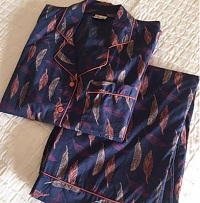 Year 2020 was defined by growing demand for comfort fashion. Data from Edited estimates sleepwear sellouts to have increased by 46 per cent Y-o-Y in Q4 FY2020. The latest Technavio report expects demand for sleep and loungewear to continue growing at 9 per cent CAGR by 2024 globally.
Studies suggest consumers preferred sleepwear made from modal fabrics by mid and mature labels in soft shades with grey tones. Slogans, plaids and Disney licensing were the most popular prints especially in matching mini-me sets. Gowns with fuzzy textures in pink and grey tones also dominated demand while the celestial patterns were seen across various retailers’ Instagram feeds.
Brands line up new collections
Fast fashion retailer Zara launched its new spring collection featuring a blue striped PJ set and 100 per cent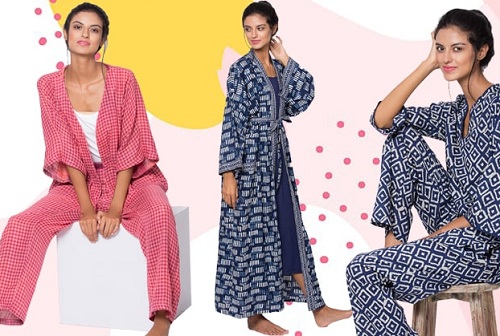 cotton separates, while RIXO’s debut collection comprised pajamas made from silk cotton in the label’s signature playful prints. Fitness brand Athleta launched a sleepwear range comprising pajamas, sleep bras and rompers while cult label Ganni partnered with luxury retailer Browns on an exclusive pajama set complete with ruffle sleeves and an embroidered logo. Many fast-fashion brands increased their sleepwear offerings during the year with The Style’s range growing notably from just 0.2 per cent to 5.4 per cent.
Fabric and design trends
Sleepwear in satin gained popularity as it offered the comfort of silk at an affordable price. Popular brands Nasty Gal and I Saw It Fist launched multi-piece satin sets with matching sleep masks, scrunchies and travel bags. For fall 2020, retailers used ribbing to update categories such as basics and knitwear. The trend continued with nightwear during spring 2021. Pink was the most popular color during the year with pink arrivals outpacing neutrals.
Newly launched at Lulu’s and Boux Avenue, bralette sets are perfect for occasions like the Valentine’s Day. Their lace trims add a touch of femininity to sleepwear. Boohoo uses the eyelash lace while others opt for elastane blends. One of the popular retailers of eco-friendly sleepwear, Esprit incorporates 100 per cent organic cotton and LENZING™ ECOVERO™ into its garments.
John Lewis & Partners offers online consultation on topics such as choosing the right mattress, bedding, technology and general sleep wellness while the newly launched app Wave offers real-time sleep sessions every 30 minutes.
Evoking childhood memories with styling cues
Sleepwear trends emerging from most recent collections include pastels, candy stripes, oversized button-up sets and vintage-inspired nightdresses. Silk and satin have emerged as the most important fabrics as is evident from the recent Pinterest searches and new season arrivals. In future sleepwear is likely to incorporate feminine details and colors with matching headscarves, sleep masks or slippers. To tap into this trend, brands need to emphasize on the fit and feel of their garments by focusing on the fabric quality and technology. They also need to evoke customers’ childhood memories by using styling cues like pairing sleepwear with high heels and statement jewelry.
Active apparel diplomacy will help Bangladesh survive amongst the fittest
 Bangladesh is finally moving from being a least developing nation to a developing nation as per United Nations’ Committee for Development Policy (CDP). And as per a Daily Star report, this recommendation will be endorsed by the United Nations Economic and Social Council (ECOSOC) in June this year with the final approval from the UN General Assembly in September. For this recommendation, CDP considered three eligibility criteria including: per capita income, human assets, and economic and environmental vulnerability. Bangladesh met all these requirements in the second triennial review itself with the RMG industry largely contributing to its success.
The robust growth of RMG industry is attributed to its status as a Least Developing Country (LDC). As a LDC, Bangladesh enjoys duty-free market access to the European Union (EU)—under the EU's Generalized Scheme of Preferences (GSP).
LDC graduation to end GSP status
However, its graduation to a developing country will now take away this benefit from Bangladesh. To continue enjoying duty-free market access to the EU, it will now have to attain the GSP Plus status. For this, Bangladesh will have to boost exports of its products qualifying for GSP status, besides ensuring that its three-year average exports of these products do not exceed 6.5 per cent of their total import by the EU. However, apparel imports from Bangladesh accounts for about 9 per cent of EU’s total apparel imports from the world.
Bangladesh therefore, needs to convince EU to increase this threshold to 12-13 per cent by adopting apparel diplomacy. The CDP has also recommended the country be granted five years to transit from being a LDC to a developing nation. During these five years Bangladesh needs to continue apparel diplomacy to confirm the GSP Plus status for post-LDC period.
Apparel diplomacy for fruitful collaborations
The changing global apparel scenario demands a close collaboration between Bangladesh industry and its government. The country needs to form a joint taskforce with the Ministry of Foreign Affairs, Ministry of Commerce, and Bangladesh Garment Manufacturers and Exporters Association (BGMEA) to perform the required apparel diplomacy for attaining GSP Plus.
Bangladesh also needs to move away from its traditional US and EU markets to explore new ones like Japan, South Korea, Russia, Latin American countries, China and India. It can no longer depend on favorable or subsidized trading terms. To survive amongst the fittest, the Bangladesh government and trade bodies need to pursue an active apparel diplomacy that will enable them to form productive partnerships with their largest trading partners.
Apparel supply chain needs new strategies to survive post-COVID-19 era
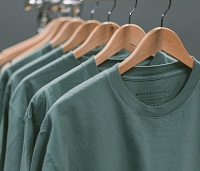 The pandemic has plunged fashion and retail sales like never before. The apparel industry experienced an unprecedented drop in demand, impacting its entire supply chain. To emerge from this crisis, the industry needs to make supply chains more flexible, demand-driven and sustainable. It needs to make more investments in knowing customers’ needs and belief, says McKinsey report.
Post COVID-19, customers are showing greater preference for virtual environments, and digital commerce. They are also opting to shop for brands that are more mindful of customers’ needs. To understand customers’ current psyche, brands need to invest in data intelligence and acquire digital and analytical capabilities to track customer’s sentiments.
Adopt agile business practices
Brands also need to revamp the working styles of product design and development teams. They need to adopt agile practices that enable their team members to work autonomously yet remain coordinated with each other. This would help them promote interaction between all involved departments such as customer experience, planning, sourcing and merchandising.
As the final decisions on sample approval, color or fitting of the garments are still made by brands, they need to develop new 3D fittings tools and arrange video conferences with their suppliers. They also need to bring product development teams closer to suppliers to speed up processes and make decisions.
Increased collaborations with suppliers may also help brands and retailers internalize their production processes, thus reducing lead times, increasing flexibility and bringing better control over the work-flow of product development.
Increase collaboration with luxury players
Though the pandemic has increased demand for comfortable clothes, there is also a growing demand for elegant outfits for rare social gatherings. This has led to increased collaboration between fashion labels and luxury brands for vintage garments. Drop in consumption is also increasing the purchasing capacity of buyers who are now able to invest in luxury brand pieces that were earlier unreachable for them.
Go digital with new technologies
Brands and retailers need to adopt digital strategies by identifying technologies like sophisticated analytics software, AI-powered demand forecasting and assortment optimization, 3D design and fitting tools, virtual sampling, machine learning in production planning, automatized warehouse and robotized fulfillment, Blockchain technology, etc.
Aim for a sustainable supply chain
Brands also need to aim for a sustainable supply chain by ensuring fair and ethical manufacturing practices, source sustainable fabrics and raw materials, lower consumption and inventories levels and reduce waste. They also need to make realistic short-term goals and at the same time be ambitious in the long term. They need to be honest and transparent with customers about their environmental and other initiatives.
Supply-chain is driving the apparel industry to adapt to the changing demands of the new markets. To succeed in this changing scenario, brands need to adopt new strategies to build brand equity and emerge as market leaders.
US’ textile and apparel imports from India increases by 26.93%: OTEXA
The volume of US’textile and apparel imports from India increased by 26.93 per cent in January ’21 than January ’20 – according to OTEXA data.
The country saw an influx of 683.16 million SME of textile and apparels in the first month of 2021 from India, of which textile products contributed 588.23 million SME (up 35.83 per cent) and apparel products shared 94.93 million SME (down 9.73 per cent).
Of total textile imports, the share of yarns, fabrics and made-ups was 91.97 million SME, 208.26 million SME and 348 million SME, respectively, and the respective surge was 27.84 per cent, 62.08 per cent and 24.50 per cent.
In terms of values, the total textile and apparel shipment has noted 2.78 per cent yearly increase to US $ 739.34 million in January ’21. Textile products witnessed a rise of 29.40 per cent to US $ 451.39 million, while apparels were down by 22.28 per cent to clock US $ 287.95 million.
Cotton-made apparels contributed 74.45 million SME and experienced a surge of 7.57 per cent on Y-o-Y basis in January ’21.
However, the values of cotton apparel import by USA from India plunged 12.47 per cent to US $ 229.77 million, all because of lowering unit prices!
On the other hand, India’s shipment of MMF apparels to USA tumbled heavily. The shipment was worth 51.91 million SME (down 44.08 per cent on Y-o-Y basis) and could tap just US $ 19.48 million, falling 42.33 per cent in January ’21.
Alarming Decline Witnessed In Cotton Production
Cotton production in Pakistan declined by 34.18 per cent as compared to 8.5 million bales during the corresponding period of 2020.
According to the statistics released by Pakistan Cotton Ginners Association till March 1, exactly 5,631,191 bales underwent the ginning process i.e. conversion to bales. Cotton arrivals in Punjab were recorded at over 3.5 million or 3,501,580 bales, while Sindh generated just over 2.1 million or 2,136,169 bales.
Cotton arrivals in Punjab were recorded at over 3.5 million or 3,501,580 bales whichwas 1.5 million bales less as compared to the last year’s production of more than 5 million bales.
Cotton arrivals in Sindh were recorded 2.1 million or 2,136,169 bales which was 38.52 percent less as compared to the last year’s production of more than 3.4 million bales.
Just over 5.4 million or 5,446,141 bales were sold out with major chunk of it, 5.37 million (5,375,941) bales, bought by textile mills and 70,200 by exporters. Exactly 191.608 bales were lying unsold at the ginneries.
Bahawalnagar district of Punjab remained on top with cotton arrival figure of 998,131 bales followed by Sanghar district in Sindh (791,278) and Rahim Yar Khan (656,885 bales).
A total of 22 ginning factories were operating in the country – all of them in Punjab, and none in Sindh.
United Colors of Benetton launches new store in Florence
United Colors of Benetton has launched a new store in Florence. The tore is well decorated with intensive use of sustainable material and state-of-the-art energy-saving technologies. The 160 sq m, single-floor boutique uses recycled natural materials. The floor is built out of gravel from the river Piave and waste wood from beech trees. The walls are treated with a mineral paint with antibacterial and anti-old properties that can reduce the pollutants in the environment.
As per Massimo Renon, Chief Executive Officer, Benetton Group, the new boutique is a benchmark in terms of power consumption, as it uses 20 percent less energy than normal store. A system based on tiny sensors, AI and data analysis increases the energy efficiency of the points of sale and guarantees comfort for the consumer.
Benetton Group S.r.l. is a global fashion brand based in Ponzano Veneto, Italy founded in 1965. Benetton Group has a network of about 5,000 stores worldwide. It is a wholly owned subsidiary of the Benetton family's holding company called Edizione.
Government to lower turnover and investment thresholds in draft PLI scheme
The government plans to lower the turnover and investment thresholds, and include cotton-based products, according to its draft Rs 10,683-crore production-linked incentive (PLI) scheme. The scheme aims to offer 11 per cent incentive to large companies for investments over Rs 500 crore in Greenfield projects in technical textiles. However, the companies to record an incremental turnover of Rs 1,500 crore in the first year and a 25 per cent rise in turnover each year after that.
Firms with an annual turnover of Rs 100-500 crore will receive an incentive of 9 per cent for brownfield projects. This will be subject to an increase in turnover 50 per cent each year. Similarly, companies with a turnover of Rs 500 crore or more will be granted a 7 per cent incentive in the first year. However, the turnover has to increase by 50 per cent in the first year and by 25 per cent each year after that. The incentives in all the categories will be trimmed by 100 basis points each year after the first year and granted for a total of five years starting FY22.
The draft PLI scheme marks a paradigm shift in the government’s decision-making on two counts. First, it earmarks big bucks for big companies, shedding its long and costly bias towards small businesses. Second, it seeks to correct India’s historical policy preference for a cotton-dominated value chain, which is contrary to the global trend. The idea is to reclaim India’s export markets after ceding substantial ground to Bangladesh and Vietnam in recent years.
ITM International Exhibition 2021 postponed to June 2022
To be held at the Tuyap Fair and Congress Center in Istanbul, from June 22-26, 2021, the ITM International Textile Machinery Exhibition has been postponed due to the ongoing pandemic. The exhibition will now be held from June 14-18, 2022. Uniting hundreds of domestic and foreign textile leaders, the exhibition ranks among the leading exhibitions of the sector. It also has a place in the world's textile exhibitions calendar with its feature of international arena where cutting-edge technologies are exhibited.
Prioritizing protecting its exhibitors and visitors’ investments and all rights, the organizers believe the exhibitors and buyers will understand and cooperate with its decision to postpone the exhibition.
Value of US’ apparel imports drops 18%
The value of apparel imports by the US dropped by 18 per cent to $5.52 billion in January ’21 as compared to $6.76 billion in January ’20. As per Apparel Resources, the import volume tumbled .70 per cent to 2.13 million SME in the first month of 2021. The unit prices of the imported apparels sunk by 11.64 per cent to $ 2.58 per SME in January ’21 as against $2.92 per SME in January ’20.
Imports from all major destinations such as China, Vietnam, Bangladesh, India and Indonesia tumbled in January, while those from countries such as Pakistan, Egypt, Ethiopia and Colombia improved on Y-o-Y basis. However, as compared to December ’20, the import values surged indicating a M-o-M recovery.
In January ’21, apparel imports by the US surged by 14.28 per cent from $4.83 billion worth of apparels imported in December’20.
AAFA adds 13 new board members
American Apparel & Footwear Association (AAFA) has added 13 new members to its Board of Directors for 2021-22 besides re-electing several other board members.
The members confirmed as AAFA’s Board of Directors for the 2021-2022 term included Colin Brown, CEO, Under Armour Inc as the new Chairman; Sarah Clarke, Executive Vice-President, Supply North America, PVH Corp as the Vice Chairman; Ted Dagnese, Chief Supply Chain Officer, Lululemon Atheletica as the Secretary and Kurt Cavano, CEO, Nimbly as the new treasurer.
Newly elected members included Deborah Weinswig, Coresight Research Inc and Sid Howard, Amann Group. The re-elected members included Halide Alagoz, Ralph Lauren Corporation; Lisa Bate, Bureau Veritas Consumer Products; Ted Dagnese, Lululemon Athletica; Bill Ells, Vibram USA; Mike Fralix, Textile/Clothing Technology Corporation; Katherine Gold, Goldbug Inc; Todd Kahn, Tapestry Inc; David Miller, Minnetonka Moccasin Company, Inc; Steve Mostofsky, TTI Global Resources; Josue Solano, BBC International and Sunny Tan, Luen Thai.