FW
EU Smart Textiles market to reach € 1.5 billion in 2025
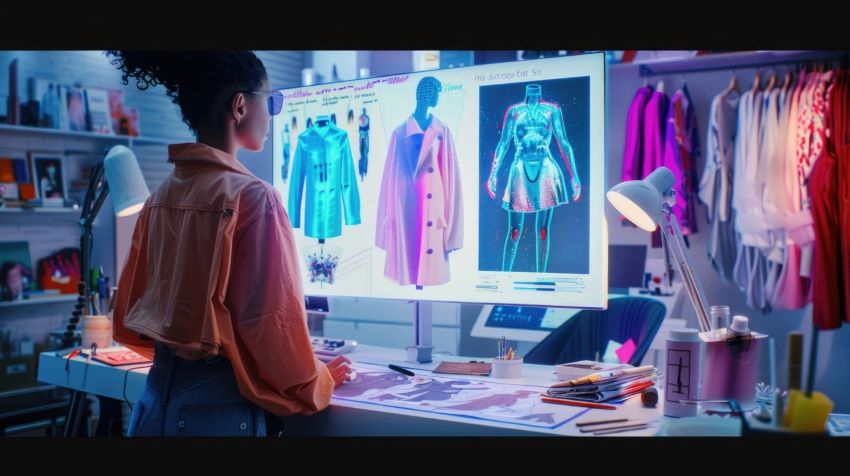
As per a Euratex report, the EU smart textiles market is expected to reach € 1.5 billion in 2025 with key innovations in areas of smart high performance materials and products, digital manufacturing and supply chains and bio-based materials and processing. Digital evolution will play a big role in the industry’s further developments. In future, the IoT (Internet of Things) revolution will totally change how production machines operate while gathering data on all processes will cement big data in the decision-making at all levels. At the same time, the design within the fashion manufacturing and within the technical textiles sector moves to a completely digital process, allowing fast simulation of the created products to evaluate their effectiveness before they are actually produced.
According to a 2020 research, the European project ICT-TEX “ICT in textile and clothing higher education and business, most companies currently use automatic programs, even if the production stages are mainly managed by the personnel. Companies consider innovation as an important aspect and expect their employees to improve the production lines and to develop new kinds of products. On the other hand, they believe that these kinds of competences, together with those related to technological and ICT skills are the ones that the technical staff need to improve the most.
They also expect their employees to manage pieces of machinery exploiting the possibilities offered by their latest functionalities and covering all the functions based on software, representing nowadays machineries essential components. They also expect companies working in the smart textile sector to develop new smart products, including also those skills connected to sensors and ICT components development.
Finishing printing and functionalization specialized companies need to adopt innovative technologies. For this, they need to develop technical abilities and special knowledge mainly related to specific dyeing and printing processes, as for example rotary screen printing technology, raster printing, colorimetric, and so on. Around 66.7 per cent T&C companies used Cad systems while 38.1 per cent used Cam Systems. ERP is used by 31,7 per cent while PPC is used by 30,2 per cent.
Online clothing market to see robust growth from 2021-31: Report
A report by ESOMAR-certified market research and consulting firm, projects online clothing rental market will see robust growth between 2021 and 2031. The report perdicts the will reach $1.8 billion by 2021-end with subscription model becoming a new trend in clothing rental business. The online clothing rental subscription market is extending customer’s reach by obliging specialty/niche markets. Some of them are adopting innovative strategies to gain traction. For instance, Gwynnie Bee offers rental clothes for plus-sized shoppers.
The market is expected to grow at a CAGR of 11.0 per cent between 2021 and 2031, says the latest market intelligence study. The US has emerged as a highly lucrative market, accounting for nearly 95 per cent of the North America market.
The UK is projected to register 11.8 per cent Y-o-Y growth in 2021, performing exceedingly well within the Europe market. Germany and France will continue exhibiting high demand for online clothing rental Within East Asia, the demand for China and South Korea is expected to be higher than Japan.
Thredup processes over 100 million secondhand items in 2020
As per the IPO filed by Goldman Sachs-backed secondhand clothing retailer ThredUp Inc, last year the company processed over 100 million unique secondhand items from 35,000 brands. The company’s net loss widened to $47.9 million for the year ended December 31, 2020, from $38.2 million a year earlier. Its full-year revenue, however, jumped 14 percent to about $186 million.
ThredUp received $175 million in funding in August 2019, which it said would be used to expand its platform to offer resale clothing services to retailers. The resale firm plans to use $500,000 from the proceeds to start an environmental policy function, to advocate the reuse of apparel. Goldman Sachs and Morgan Stanley are the lead underwriters for the offering.
E-commerce firms have benefited during the COVID-19 pandemic. A fleet of digital resellers, including ThredUp’s peer Poshmark Inc and ContextLogic Inc, the parent company of shopping app Wish, have gone public in recent months.
€3 billion required to support Italian enterprises: Camera della Moda
At a talk organized by the lower Chamber’s industry Commission and the Senate’s European budget and affairs Commission, Carlo Capasa, Chairman, Camera della Moda said, upto €3 billion would be required to support all the small and medium-sized enterprises in Italy. As per a Womens Wear Daily report, Capasa said the association will request for special measures and strategies from the government to help the industry recover from COVID-19 effects. The Italian fashion industry recorded sales worth € 100 billion last year with exports amounting to €71.5 billion. He ensured his organization Camera Nazionale della Moda Italiana will activate detailed projects on environmental and social sustainability, digitalization, internationalization and training to ensure a specialized and competitive future on the global market for the new generations.
Last week, a group of leaders had met to discuss the challenges and opportunities facing the industry, and how larger companies could help smaller and medium- ones impacted even more heavily by the pandemic.
The meeting included representatives of the Camera della Moda’s strategic committee which confirmed its plans to develop a document shared with Confindustria to help grow the sector after the pandemic, underscoring the importance to collaborate on proposals and actions to undertake.
Vietnam to export textiles and apparels worth $39 billion this year
As per recent Vietnam General Department of Customs stats, the country’s textiles and apparels exports are expected to reach $39 billion this year. Exports increased $270 million to reach $3.77 billion by February 15, 2021. Le Tien Truong, Deputy Chairman, Vietnam Textile and Apparel Association (VITAS) and Chairman, Vinatex says, since the COVID-19 situation is still intense and consumption is declining in Vietnam’s major export markets like the US, EU, and Japan, many local firms have shifted to producing items for common use with reasonable price tags.
VITAS expect consumption to reach 2019 levels in the third quarter of 2022. However, slow recovery can delay this to 2023-end. Total aggregate demand for textile and apparel products has declined by 22 per cent globally. According to Vinatex, many firms in the sector have signed orders until the end of April. Similarly, new orders for knitwear and items have been placed until July and August.
Mutually-beneficial partnerships can help the US overcome supply chain inadequacies
 Hit hard by the pandemic, America’s apparel manufacturers are moving away from the Trump administration’s ‘America First’ Biden’s ‘Buy American’ policy. As per a McKinsey report, 71 per cent of America’s small businesses were negatively impacted by the pandemic and this once again brought into sharp focus the inadequacies in supply chains.
Carbon neutrality by 2050
The Biden administration aims to build tighter procurement and build supply chain resilience to make the country self-reliant in critical raw materials. As a per Innovation in Textiles report, it is currently focusing on addressing climate issues like rejoining the Paris climate accord and revoking permits for the Keystone XL pipeline scheduled to run from Canada to US along the West coast.
The administration also aims to achieve carbon neutrality by 2050 by accelerating its move to renewable energy, says John Kerry, Biden’s special envoy for climate. Gina McCarthy, the President’s domestic climate advisor said the government aims to use the Federal budget and its procurement opportunities to inform the market about technologies and products that need to be built in the country.
Eco-friendly partnerships
US textile and apparel manufacturers are also focusing on environmental and social impacts of domestic and imported goods. Manufacturers are embracing new sustainability initiatives as can be seen from industry conferences and trade shows such as the IFAI’s annual Expo. American suppliers are also focusing on eco-friendly partnerships such as opening Hohenstein, a top European service provider and manufacturer opening an US office. The country also sees digital innovation as essential for achieving a transparent supply chain.
Change in shipping rules
Making a cautious move, the Biden administration is building international partnerships without disturbing existing tariffs and other trade barriers. However, it needs to give attention to rising shipping costs which have increased by almost 300 per cent in the past 12 months, says the FBX Freightos Baltic Index. Special attention needs to be paid to the Jones Act that requires goods shipped within the country to be transported using vessels built, owned and operated by American citizens or permanent residents. Europe and other trade partners have been urging the US government to make changes in this Act and allow greater competition and lower costs. The government seems to be focusing on building domestic manufacturing capability, stronger environmental laws but retaining tariffs. It can also gain from building mutually beneficial partnerships.
Susie Mulder appointed Global Brand President for Timberland
VF Corporation has appointed of Susie Mulder as Global Brand President, Timberland. She will replace Scabbia Guerrini who has served as the Timberland’s brand’s interim brand president for the past 14 months.
Mulder will be responsible for driving the Timberland brand’s core strategies including product diversification across footwear and apparel, and a consumer-led, retail-centric, digital-first approach. She will build on the brand’s new eco-innovation franchises while also ensuring continued success within the Timberland PRO® business, all while serving on VF’s executive leadership team.
Prior to VF Corporation, Mulder was employed with clothing brand Nic+Zoe where she served as CEO since April 2012. During her tenure as the brand, Mulder supported the brand’s revenue growth through expansion into new points of distribution in the U.S. and internationally, and launched the brand’s direct-to-consumer efforts via e-commerce and its owned stores.
Skills gap in the industry at a crisis point: SDC survey
Global skills gap in the textile dyeing industry is now reaching a crisis point, as younger people fail to enter the profession, says a new survey by the Society of Dyers and Colorists (SDC). As Textile World, around 87 per cent respondents in the SDC survey highlighted growing concerns of the industry and ongoing workplace education to counter these issues.
One third global employers involved in dyeing and finishing reported being unable to recruit the required talent with a further 55 percent of participants claiming that there is a lack of transferable scientific knowledge within the industry. Almost 77 per cent agreed there was a skills crisis and 53 per cent believed this was already at crisis point. Reasons for this included negative perceptions that young people had of the industry alongside a lack of knowledge of the chemistry behind the processes, as well as poorly promoted opportunities in dyeing. Suggestions for increasing the international talent pool included introducing online learning globally, dedicated support from governments, and working together to promote apprenticeship roles.
Luxury brands increasingly embrace resale category
Luxury brands are increasingly embracing the resale. For instance, Kering, the luxury conglomerate that owns Gucci, Balenciaga, and Alexander McQueen, has announced a $216 million investment in a French secondhand marketplace called Vestiaire Collective. This partnership aims to accelerate Vestiaire’s growth in the resale sector.
For Kering, partnering resale platforms could generate more revenue for its brands. The retailer explored a version of this earlier in the year, before investment, in which Alexander McQueen partnered Vestiaire on a program called “Brand Approved.” The luxury label contacted best customers, offering store credit to return garments, accessories, and shoes from previous collections, which would then be sold on Vestiaire.
Resale companies, along with some fashion brands, believe secondhand market allows products to circulate in the economy for longer. A survey conducted by Vestiaire and BCG found that 32 per cent of respondents sold secondhand goods so that they could buy new products. Alexander McQueen’s partnership with Vestiaire is designed to encourage the brand’s customers to shop even more frequently.
Ralph Lauren launches new rental service
Ralph Lauren has launched a new clothing rental service called ‘The Lauren Look.’ As per Fox News, the new platform offers fashionatas the chance to rent an "ever-evolving" selection of women’s wear from Lauren Ralph Lauren brand for $125 a month. The chosen selections are shipped out to the shopper to rent, try or buy.
The service allows the brand to explore an entirely new model tapping into the growing focus on the sharing economy and revolutionizing how it looks at fashion consumption, said David Lauren, Chief Innovation and Branding Officer.
The sustainable service will also give back, as the clothes will be donated to the nonprofit Delivering Good for those in need once they've reached their rental cap. Like many luxury brands, Ralph Lauren has struggled during the coronavirus pandemic with continued store closures and diminished global demand, Reuters reports. The brand’s net revenue plunged to $1.43 billion in the third quarter ending December 26, 2020.