FW
PBF urges government to set up five mega textile parks
In budget 2021-22, proposals, Pakistan Businesses Forum (PBF) urged the government to set up five mega textile parks to make the industry globally competitive.
Sahibzada Usman Zulfiqar, President, PBF said, in the last year finance bill, textile industry had been completely ignored and deprived of relief. Pakistan has a continuing balance of payments crisis and is being financed by local and international borrowing. More debt piling or borrowing is not a feasible solution; therefore, this challenge can be overcome only by increasing exports, he stressed.
The government through Finance Act 2013 had raised the general rate of minimum turnover tax under Section 113 of the Income Tax Ordinance 2001 to 1 per cent from 0.5 per cent, which was further increased to 1.5 per cent through Finance Act, 2019. PBF proposed for the abolition of the minimum turnover tax for the coming year. It also urged for the extension of taxation regime to indirect exporters.
Zulfiqar also urged the government to make it compulsory for the large spinning units having more than 30,000 spindles to grow their own cotton to manufacture cotton yarn and extend full support to them because country textile exports could not be enhanced without increasing the area under cotton cultivation and yield.
He also requested the government to announce the availability of credit and soft loaning facilities at the rate not more than 4 to 5 percent of policy rate in finance bill. In this regard, SBP should direct the commercial banks to disburse 20 per centloans to export oriented industries and approval of the loan amount could be directly credited to vendor or opening for any letter of credit (L/C) to purchase machinery etc; so that loaning facility may utilize correctly, he added.
ICAC revises cotton price projection for 2020/21
ICAC’s current price projection for the year-end 2019/20 average of the A Index has been revised to 80 cents per pound this month. The price projection for the year-end 2020/21 average of the A Index is 89.7 cents per pound this month.
If, as expected, global cotton production in 2020/21 (estimated at 24.6 million tonne) is unable to keep pace with global consumption (estimated at 25 million tonne) and worldwide trade remains healthy (estimated at 9.8 million tonne), that combination of factors normally would be expected to drive an increase in price.
However, ongoing trade tensions between the US and China will continue to have an impact on prices, and the recently announced US restriction on cotton from Xinjiang — which produces about 9 per cent of China’s cotton lint each year — complicates the outlook as well. If fully enforced, the restriction would place a very difficult burden of proof on companies throughout the long and complex cotton supply chain.
Kornit Digital collaborates with Asos and Fashion-Enterfor Sustainable On-Demand Textile Production
Kornit Digital, worldwide market leader in digital textile printing technology, has partnered with global online fashion retailer Asos and its supplier Fashion Enter to explore the future opportunities presented by on-demand manufacturing.
Both these companies have installed Kornit Presto, the most advanced single-step solution for direct-to-fabric printing, enabling Fashion-Enter to rapidly deliver test-and-repeat small product runs on behalf of ASOS. These production capabilities will enable ASOS and Fashion-Enter to imprint designs on multiple fabrics at the push of a button, through a lower-impact production process that has zero water waste and accelerates production speeds by cutting out typical dyeing processes.
Kornit Digital develops, manufactures and markets industrial digital printing technologies for the garment, apparel and textile industries. Kornit delivers complete solutions, including digital printing systems, inks, consumables, software and after-sales support. Leading the digital direct-to-garment printing market with its exclusive eco-friendly NeoPigment printing process, Kornit caters directly to the changing needs of the textile printing value chain. Kornit’s technology enables innovative business models based on web-to-print, on-demand and mass customization concepts.
BGMEA demands a 10% cash incentive on MMF exports
Faruque Hassan, President, BGMEA, demanded a 10 per cent cash incentive on export of MMF-based garments from the government. He said this will bring in new export orders to the country which will create new employment.
He also urged the government to allow deferred payment of existing loans as many factories would have to shut down without the facility.
In order to protect employment in the industry, the government should provide support to the factories as the world has never experienced such a pandemic before, Faruqueadded.
He also demanded a stimulus package like that given in the previous year to pay workers’ wages for the months of April, May and June along with festival allowances.
Hasan said to encourage new orders, BGMEA aims to develop new products and tap new markets. He pointed out that cotton-based garments made up for 75 per cent of the global consumption while man-made fibre accounted for the remaining 25 per cent 30 to 35 years ago but now the consumption of MMF had increased to 75 per cent while that of cotton-based garments had declined to 25 per cent.
BGMEA is interested in working on MMFbased garments as the country’s exporters had already invested in technology and process modernization in the last 10 to 12 years, he added.
US’ T-shirt import value declines 10.70%
The total value of T-shirts imported by the US declined 10.70 per cent Y-o-Y to $2.92 billion during the January-February ’21 period. As per Textile Value Chain, volume-wise, the imports declined by 8.04 per cent on Y-o-Y basis to 83.68 million dozen and plunged by 8.04 per cent on Y-o-Y basis in January- February ’21 period.
According to an analysis done by Apparel Resources, imports from China increased by 5.37 per cent to $403.87 million. As far as quantity of shipment is concerned, China exported 13.51 million dozen T-shirts to its largest trade partner, growing by 17.58 per cent on yearly note.
Shipments by Bangladesh increased by 2.87 per cent to 5.35 million dozen, which valued $129.10 million in the January-February ’21 period. India shipments declined by 19.62 per cent to $140.42 million while volume wise shipments dropped by 0.06 per cent to 4.21 million dozen of T-shirts.
US registers 6.98% decline in T&A imports in January-February ’21
US textile and apparel (T&A) imports decreased 6.98 percent to $15.580 billion in the first two months of 2021, compared to $16.749 billion in January-February 2020. As per China Textile, with 28.54 percent share, China was the largest supplier of textiles and apparel to the US during the two-month period, followed by Vietnam with 14.83 percent share.
During these two months, US’ apparel imports valued at $10.914 billion, while non-apparel imports accounted for the remaining $4.666 billion, according to the latest Major Shippers Report, released by the US Department of Commerce.
The country’s imports from Pakistan grew by 13.45 percent year-on-year while imports Indonesia, Jordan and India registered a sharp decline of 29.64 percent, 23.39 percent and 21.89 percent respectively.
In the non-apparel category, imports from Turkey, India and Pakistan increased by 48 percent, 20.48 percent and 19.98 percent, respectively. On the other hand, imports from South Korea declined by 0.89 percent to $118.362 million. Of the total US textile and apparel imports, cotton imports amounted to $6.951 billion, while manmade fiber products accounted for $7.994 billion, followed by $326.278 million of wool products and $308.562 million of products from silk and vegetable fibers.
US senators to set up ROZs on Afghanistan-Pakistan border
US senators plan to set up Reconstruction Opportunity Zones (ROZs) in Afghanistan-Pakistan border regions and have introduced the Pakistan-Afghanistan Economic Development Act for this. ROZs will allow certain products from these areas to enter US duty-free. They will generate a great economic opportunity for the people in the war-torn areas and lay the groundwork for a more stable region, said the Senators —Chris Van Hollen, a Maryland Democrat; Todd Young, an Indiana Republican; and Maria Cantwell, a Washington Democrat.
Prabhu Dhamodharan, Convenor, Indian Texpreneurs Federation believes, ROZ will give Pakistan an edge over other competing Asian countries. It will boost Pakistan’s import of US apparels from the current 2.5 per cent. To increase its market share, the Indian government needs to derive an action plan to get some duty advantage for products like apparel, adds Dhamodharan.
TM Lewin partners British & Irish Lions for 2021 Castle Lager Lions Series
British online menswear brand TM Lewin has partnered British & Irish Lions for the 2021 Castle Lager Lions Series. As per Apparel Resources, TM Lewin will provide the required apparels and accessories to the British & Irish Lions teams. The designs of these apparels have been specifically made for the upcoming rugby series. The bespoke collection comprises a custom, deep blue Prince of Wales check for the tour blazer.
Casualwear includes an exquisite embroidered padded gilet in addition to having stone-coloured chinos and a signature TM Lewin button-down Oxford shirt. James Cox, Director, TM Lewin and Torque Brands, said that the brand wants to make clothes that empowers its consumers to take on the world.
Founded in 1898, the online menswear brand is known for its shirts, suits, jackets, ties and chinos, amongst others. The brand also sold over 30 million of its iconic TM Lewin ‘original’ easy-to-iron shirts, which makes them Britain’s favorite shirts.
Tamil Nadu exporters urge flexible import laws for cotton
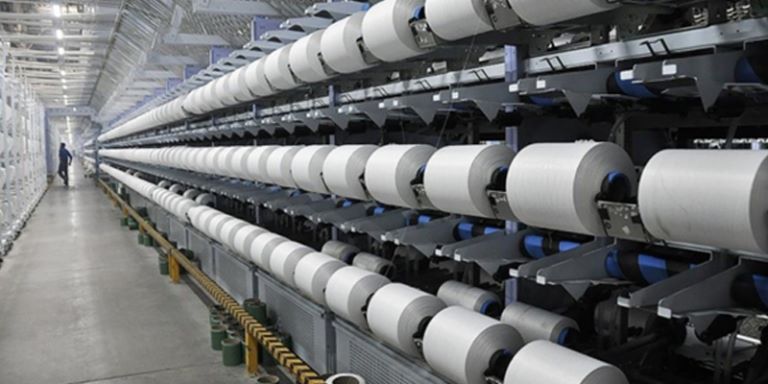
Domestic yarn exporters in Karur, Tamil Nadu have requested yarn trade authorities to loosen up import laws on cotton to offset the increasing yarn cost. Yarn costs have increased over 60 per cent in the last two months which is affecting domestic exporters in the Karur area. While half the yarn created in the nation is from Tamil Nadu, home material units secure it from plants in Coimbatore and Dindigul regions. In spite of the fact that the lockdown implemented in Walk 2020 had unfavorably influenced the home material business, things fired looking into five months after the fact in August.
M Nachimuthu, President, Karur Material Exporters Affiliation says, the increase in yarn costs is influencing their overall revenues. Little and medium units reprimand it on the enormous units for storing cotton yarn and selling it in the bootleg market, adding to the expense, he adds.
R Harden Babu, Chief Council Representative, Karur Material Exporters Affiliation, adds, costs are expanding as a result of the unscrupulous acts of huge home material units. Significant exporters are impeding yarn supply by making mass appointments and keeping little players from getting it.
S Jagadesh Chandran, Vice President, South India Spinners Affiliation, blames the Partnership of India (CCI) for the increase in yarn prices. The expense of a kilogram of a kilogram of cotton presently is fixed at Rs 140 by CCI, which is Rs 20 higher than the expense before the Coronavirus episode. Unless the government cuts down crude cotton prices, yarn prices are not going to decline.
Cambodia’s Labor Ministry, GMAC seek no penalties from buyers for delayed shipments
The Ministry of Labor and Vocational Training and the Garment Manufacturers Association in Cambodia (GMAC) has sought no penalties from buyers and other stakeholders for delay in orders due to current lockdown measures. In Q1 FY21, Cambodia’s garment product exports declined by 10 per cent, according to figures from the Ministry of Economy and Finance. Most Cambodia’s garment factories remained closed during the quarter due to a rise in COVID-19 case in Phnom Penh and Takmao city, Kandal province, reports Khmer Times.
The Royal Government of Cambodia also announced a two-week lockdown in Phnom Penh and Takmao from April 15 to May 5 to contain and prevent the spread of COVID. The ministry has been urging international buyers to show flexibility and understand the condition in Cambodia’s garment sector. Spokesperson Heng Sour said the full production chain will be normal once the COVID-19 situation is better and they will be able to supply products quickly.