FW
Conventional spandex prices to remain high
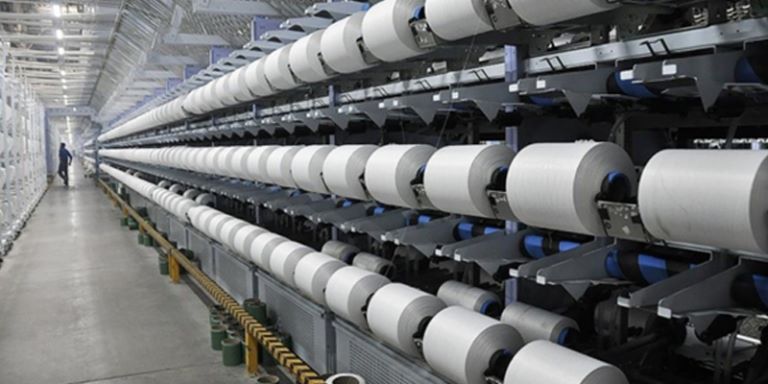
Prices of conventional spandex are likely to remain high while those of tighter varieties are expected to see a slight increase. The prices of medium-to-coarse denier varieties of spandex are expected to fluctuate. As per CCF Group, prices of 20D spandex rose 6.3 per cent in Q2 2021 while those of 30D rose 2 per cent amid, mainly stimulated by high-density circular knitting market and fine covered yarn market. Prices of spandex 40D fluctuated while those of medium-denier spandex for lace knitting, etc declined 3.1 per cent or 2,000 yuan/mt. Sales ratio remained high and price of conventional varieties increased further although downstream buyers retreated to sideline. Price of medium-to-coarse denier spandex declined with slower sales.
Operating rate of spandex plants remained above 95 per cent in Q2.The market saw slightly increasing monthly production, hitting historic high. Downstream fabric mills continued running at high capacity in May. Production and orders for thermal fabrics increased, ending up with slightly higher run rate of some plants. As a result, rigid demand for spandex improved on the month.
Operating rate of circular knitting plants in Zhejiang, Jiangsu and Guangdong, lace knitting plants in Fujian, braid mills in Guangdong and conventional covered yarn plants in Zhuji and Yiwu was at 30-60 per cent and that of cotton core-spun yarn and air covered yarn plants in Zhangjiagang and warp knitting mills in Haining and Guangdong was at 70-80 per cent. . Price of upstream feedstock dipped recently and run rate of downstream mills declined compared with Q1. However, recent downstream demand for conventional spandex improved. Sales ratio increased with increasing local and export orders.
COVID-led lockdowns continue to threaten Turkey’s apparel manufacturers
Though Turkey is likely to end its three-week lockdown on April 17, apparel manufacturers in the country continue to live under growing virus threat. As per Sourcing Journal, the country was troubled a UK variant of the virus that exploded in January. It is currently grappling with other more recent mutations that appear to be more transmissible.
As per The Guardian report, few researchers at Imperial College London found that the virus found in India is spreading faster than the UK variant, adding to fears that the pandemic has yet to subside even as economies lurch toward reopening. Japan declared a state of emergency in four perfectures including Tokyo on April 23. The new restrictions are set to expire on May 31. On the other hand, Malaysia entered its third lockdown due to more contagious COVID mutations. Thailand too is facing a spike in cases while Thailand and Philippines have banned travellers from certain South Asian countries to curb virus spread.
Wiser Tech launches AI-powered devices with Wox
Wiser Tech, which introduced Wiser Wash in 2018, has launched artificial intelligence-powered devices with Wox, the company’s first venture into hardware.
As per Sourcing Journal, Wox is based on the Wiser Wash process, It can wash garments without chemicals or stones and just a small amount of water. The company reports that a pair of jeans washed with traditional methods uses an estimated 60 liters of water, which is nearly halved when using Wiser Wash—and it aims to increase these savings to 92 percent.
Working with advanced technologies, Wiser Tech enhances the technology by delivering 40 percent lower cycle duration and 66 percent higher production capacity, all while yielding improved bleaching results.
Comprised of an ozone drum and an ozone generator, Wox is much more than it appears. Through a secured cloud-based platform, the device collects data on the production process and feeds it to artificial intelligence algorithms. Sensors located at different parts of the system can identify possible abnormalities at all stages of the process, giving it the ability to identify and assess its own needs.
Features include a user-friendly control panel, ergonomic drum, easily accessible filter drawer and a LED progress ring that uses color to represent a different stage of the process. It also allows the user to adjust the amount of oxygen used during the process.
GglielmoOlearo quits as COO of Premiere Vision SA
GuglielmoOlearo, who until recently served as executive board member and COO of Première Vision SA, has left the trade show group.
As per Spin Off International, the manager had worked for the French company for nine years.Among the shows Olearo managed was Denim Première Vision, the specialized international denim show. In his place, Fabio AdamiDalla Val will work for the show in his role of show manager.
Other major changes in management seem within the whole Première Vision include the exit of Pascaline Wilhelm, former fashion director who had worked for the show for 23 years, and Chantal Malingrey, former manager operating within the trade show organization for 13 years.
Created in 1973 by some fifteen silk industry professionals from Lyons, Première Vision invented a new and unprecedented platform for the creative fashion industry. A platform that brought together, in one trade fair, industry professionals from the same sector looking to collaborate, to promote their know-how and to develop their business opportunities, while introducing the first coordinated development of seasonal colour and fabric fashion trends.
Chinese garment factories shut operations in Myanmar
Chinese-funded garment factories in Myanmar have decided to shut operations due to COVID-19 led disruptions, says Khin May Htway, Managing Partner, MyanWei Consulting Group, which advises Chinese investors in Myanmar.
Foreign investment in garments surged in Myanmar over the past decade as economic reforms, an end to Western sanctions and trade deals helped establish the sector as the greatest symbol of its nascent emergence as a manufacturing hub.
Myanmar garment shipments rose from less than $1 billion in 2011, about 10 per cent of exports, to more than $6.5 billion in 2019, about 30 per cent of exports, according to UN Comtrade data.
However, the sector has been rocked by the pandemic resulting in tens of thousands of garment factory jobs lost in Myanmar, says Oman Observer. Then the coup happened.
In the weeks that followed, many garment workers joined protests or couldn’t get to work as streets became battlegrounds. The turmoil also jammed the banking system and made it difficult to get goods in and out of the country, factory owners said.
With international condemnation of the coup growing, European and US fashion brands last month issued a statement through their associations saying they would protect jobs and honour commitments in Myanmar.
However, many have recently halted orders there including the world’s second-biggest fashion retailer, Sweden’s H&M, Britain’s Next and Primark, and Italy’s Benetton.
Next said it would split its orders previously going to Myanmar between Bangladesh, Cambodia and China, while Benetton said it would mainly move the business to China. H&M and Primark have not commented on how they will redistribute orders.
In Vietnam, garment factory owner Ravi Chunilal said he was starting to get more business from European buyers diverting from Myanmar.
Peter McAllister of Ethical Trade Initiative, a labor rights organization said that it would be very difficult for Myanmar’s garment sector to recover if Chinese investors left.
Chinese lingerie market thrives despite COVID-19
As per a Jing Daily report, the lingerie market in China is thriving despite the COVID-19 pandemic, and analysts predict it to grow by a significant CAGR by 2025.
CBNData’s Underwear Industry Trends Research estimates the market to have occupied 60 per cent share of the Chinese underwear market in 2019.
Smart retailers are capitalizing on the opportunities presented by the stay-at-home economy, which prioritizes comfort and health to the detriment of sexy intimates.
Global brands are mitigating risks by entering into partnerships with distributors and management companies like Privet.
Privet offers B2B professional communications services to the operation of mono-brand and multi-brand stores. Since its founding in 2014, it has serviced more than 50 global lingerie brands, offering them personalized marketing solutions and assisting their China market entry strategies.
Working in omnichannel accelerations, Privet has partnered exclusively with brands like Aubade, Chantelle, and Eberjey. It has the best conversion rate, says its founder.
China, Pakistan call for enhanced B2B matchmaking in textile industry
At the China-Pakistan Economic Corridor (CPEC) textile B2B webinar, Chinese and Pakistani officials and businessmen discussed ways to advance business-to-business (B2B) matchmaking in the industry.
The webinar was co-organized by Pakistan’s Board of Investment (BOI), China Council for International Investment Promotion (CCIIP) and China National Textile and Apparel Council (CNTAC) on April 27.
It was attended by senior officials and textile entrepreneurs from Pakistan and China. FareenaMazhar, Secretary, BOI, called for enhanced B2B matchmaking between the Pakistani and Chinese textile enterprises. XuYingxin, Deputy President, CNTAC, called for enhanced industrial cooperation between China and Pakistan under CPEC, especially in the textile sector.
In addition to analyzing the textile sector of both countries and discussing the investment opportunities, notable textile companies from both sides also presented their projects requiring cooperation and held discussions for potential matchmaking.
American Eagle launches new limited edition jeans collection
American Eagle Outfitters, Inc has launched a limited American Eagle jeans collection using guidelines as a part of the Ellen MacArthur Foundation’s Jeans Redesign project, reports Fashion Network.
By using guidelines developed by the Foundation's Make Fashion Circular team alongside over 80 denim experts, the AE x Jeans Redesign collection adheres to the principles of a circular economy where clothes are made with limited impact, are recyclable and are long-lasting to be kept in use.
The collection will be made of 100-percent organic cotton with easy-to-remove hardware, making the jeans easily recyclable, and will be produced without the use of harmful chemicals and processes, among other sustainable aspects.
Since the launch of its sustainable efforts, American Eagle has decreased the amount of water used to make jeans by nearly 7 gallons per jean, compared with 2017; saved a total of 4.5 billion gallons of water since 2017, due to recycling and reduction efforts; and conserved an estimated 2.4 billion gallons of water in 2020 as a result of cotton sourcing practices, and more.
ABG bids 1 million for Reebok
Authentic Brands Group (ABG) has made a $1million bid for Reebok. As per Fashion Network, If a deal materializes, the licensing company would add Reebok to a roster of brands such as Juicy Couture, Nine West and Frye.
Adidas, Reebok’s parent company, confirmed it was considering a buyer for the sneaker brand in December 2020, although whispers of a sale — and suspicions that ABG would be involved — first circulated in 2019.
Adidas wrote down Reebok’s value to €842 million (about $1 billion) in 2020, while its namesake brand generated is worth nearly 16 times that. Reebok has spent most of the last decade competing with sportswear and sneaker giants like Nike, attempting its hand at headline-making partnerships with celebrities and fashion figures like Cardi B, Victoria Beckham and Kerby Jean-Raymond.
ABG has purchased a slew of fashion brands over the past two years, including Brooks Brothers, Lucky Brand, Barneys New York and most recently, Eddie Bauer.
Retailers, union groups extend Accord agreement by three months in Bangladesh
Retailers and union groups have succeeded in extending the tenure of the Accord agreement by three months. As per a Reuters report, over 200 brands and retailers were negotiating to extend the agreement period.
The signatories include top apparel retailers like Zara-owner Inditex and H&M. However, trade unions have threatened to pull out of the organization currently running the Accord if retailers do not commit to the legally binding portion of the agreement, obliging them to pay for fixes at supplier factories and banning them from working with these factories until they are deemed safe by accord inspectors.
The Accord on Fire and Building Safety in Bangladesh was signed in 2013 after the collapse of garment production complex Rana Plaza killed at least 1,100 people. It created an independent body to run inspections at factories and obliged retailers to pay for any repairs, collecting $500,000 from each signatory per year to fund its activities.
Originally due to expire in May 2018, the Accord was extended that year, culminating in the creation of a new organization called the Ready-Made Garments Sustainability Council (RSC).
Governed by factories, unions and retailers, the RSC took over the accord’s team and duties in June 2020 but did not immediately commit to extending the legally binding portion of the agreement beyond its expiration date of 31 May.