


FW
BGMEA seeks additional tax cuts from the government
The Bangladesh Garment Manufacturers and Exporters Association (BGMEA) has urged for more tax cuts from the government as the industry has suffered huge losses due to the COVID-19 pandemic. The industry lost exports worth $4 billion in the 2019-20 fiscal year. BGMEA has urged the government to reduce tax at source on readymade garment exports from the existing 0.5 per cent to 0.25 per cent for the next five years and not deduct income tax against this source tax.
Faruque Hassan, President, BGMEA requested the government to keep the corporate tax rate at 10 per cent for green factories and 12 per cent for other factories for the next five years. He also demanded the rate of income tax deduction on incentives be reduced from 10 per cent to 0 per cent. BGMEA further proposed the apparel sector be allowed to repay their incentive loans through 30 installments in three years instead of 18 installments in two years. It has also sought maximum cooperation of the finance ministry for the release of various imported goods and fire extinguishers.
The BGMEA also plans to contribute Tk500 crore to the SME Assistance Fund and take steps to meet the emerging challenges in transitioning from a least developed country (LDC) to a developing one. The apex apparel sector trade body has also sought funds for creating a virtual marketplace, which requires an allocation of Tk100 crore in the next budget. It has also placed several proposals related to the sustainable development of the industry.
Consumer awareness may help prevent ‘Greenwashing’ by brands
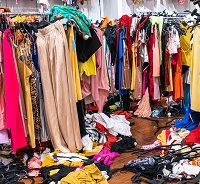 The growing importance of sustainability has unfortunately also given rise to greenwashing amongst fast fashion brands. As per an extra.ie report, the term, first coined in 1980, has once again come under spotlight with consumers’ increasing demand for sustainable fashion brands. Laura Egan, Owner, Studio Minti, defines Greenwashing as misleading of consumers by brands by falsely projecting their practices as being sustainable. Egan cites the example of some print ads released by US oil company Chevron in the 1960s that falsely depicted its environment-friendly policy by making employees pose with animals like sea turtles.
Putting up ‘sustainability façade’
Companies resort to Greenwashing to capitalize on the demand for sustainable products amongst consumers, says Egan. They often spend more on putting a façade of sustainability rather than actually being sustainable. A study by Neilsen Holdings in 2015 showed 66 per cent consumers were willing to invest more in sustainable products. Today, this figure has risen to 73 per cent. Consumers need to evaluate the sustainability approaches of companies to see whether it is a holistic one or limited to one specific factory or product. At times, conscious’ brands promote their collections made from so-called ‘sustainable’ fabrics. Consumers need to be wary of such brands that inadvertently indulge in mass production and stop buying from them.
Awareness can lead to more sustainable choices
Often, brands focus on a minor sustainability details like recycled fabrics, ignoring larger issues involving the ethical and environmental aspects of their production. For instance, fast fashion brand Primark claims to adhere to international working standards in its factories. It also claims to have stopped using chemical dyes and raw materials in its garments. However, Egan rubbishes the claims made by the brand and calls them frustrating. She recommends consumers to buy more secondhand clothes as they contribute to a circular economy.
Egar also recommends opening of swap shops to enable consumers exchange clothes with others. According to her, this would enable owe something new without paying a cent and contributing to the fast fashion industry.
Emphasizing that reducing fast fashion consumption may not happen overnight, Egan urges consumers to be aware of its environmental hazards. According to her, this will help them alter their shopping habits and make more sustainable decisions.
Next edition of London Fashion Week to be held digitally in June
The next London Fashion Week will again be held digitally from June 12-14, a week before the final UK reopening date. The event will cover both women’s and menswear. Though largely digital, the event will have certain physical events operating strictly in line with official guidelines.
Sponsored by Clearpay, the event will celebrate excellence in design and creativity but with a strong skew towards enabling growth with sustainability. Participants in the event will include, Av Vattev, recent award-winner Bethany Williams, Dilara Findikoglu pLtd, Jordanluca, Liam Hodges, Lyph, Marques ‘ Almeida, Nicholas Daley, Olubiyi Thomas, Per Götesson, Preen by Thornton Bregazzi, Pronounce, Qasimi, Robyn Lynch, Staxx, Teija, University of Westminster, and Discovery Lab in collaboration with Toni & Guy. The latter will feature Abigail Ajobi, Auroboros, Azura Lovisa, Béhen, Chloe Baines, Djokic, Maxime, Mayyaagayeva, Noirgaze, Paolo Carzana and Shek Leung.
Trident to raise funds through NCDs and equity
Textile and paper maker Trident plans to raise funds up to Rs 1,100 crore through NCDs and equity shares. Of this, Rs 600 crore will be raised by issuing Non-Convertible Debentures (NCDs) and up to Rs 500 crore through equity shares. As per SRTEPC reports, Trident had earlier cleared the resolution for raising of funds for an amount not exceeding Rs 600 crore by issue of NCDs by way of public or private offering, in one or more tranches. It also approved the resolution for raising of funds for an amount not exceeding Rs 500 crore by issue of equity shares, non- convertible debt instruments along with warrants, convertible debt instruments or by way of a public or private offering, including QIP.
The company also appointed Naveet Jindal as its new CEO for Paper, Chemicals and Energy Business and Swapan Nath as CEO for Budhni. The board also approved the change in designation of Rajiv Dewan as the new Chairman of company with immediate effect and appointment of Usha Sangwan as its additional director.
Maternity wear market to grow by 3% CAGR from 2021-2025
Introduction of COVID-19 vaccines and consumers’ rapid shift to online shopping is expected to push maternity wear market during 2021-2025 growing at 3 per cent CAGR. As per reports, growth in global maternity wear market is being driven by improvements in economic conditions and rising disposable incomes. Also, the rising number of pregnant working women and increasing awareness about the availability of fashionable maternity apparel has created a significant demand for maternity wear. Moreover, increasing fashion consciousness among women in both developed and developing countries is expected to present several growth opportunities for vendors during the forecast period.
Driven by increasing demand for maternity tops from developing countries like India and China, the market generated maximum revenue in the tops segment in 2020. The segment is expected to witness further growth in the forecast period owing to rising disposable incomes and increasing birth rates. Growth in APAC is expected to be faster compared to the growth of the market in other regions. This can be attributed to increasing number of working women. Also, the high birth rate in the region is expected to contribute to the growth of the maternity wear market during the forecast period.
IWTO to organize Retail Forum on May 20
International Wool Textile Organization (IWTO) plans to organize a Retail Forum on May 20 as part of its ongoing meeting from May 17-21, 2021. The meeting is focusing on sustainability in the wool industry. It is being attended by Simon Cotton, CEO, Johnstons of Elgin who said, year 2020 brought changes in a single year. Amid changes to the market and places where retail sales occur, cotton flags up 2020 as the year of sustainability.
However, despite being natural, renewable, and biodegradable, wool must work much harder to present its sustainability credentials, because wool and other natural fibers rank as less sustainable that synthetic, fossil-fuel based fibres.
Panellist Veronica Bates, Former Development Consultant and World Bank Analyst added, lack of robust evidence and data to support the comparisons, and the failure of prevailing sustainability indexes to consider the socio-economic impacts of their claims on farmers and farming communities.
Olivier Segard, former IWTO Executive Committee Member and Managing Director, Segard Masurel wool traders since 1846, added, the Abelusi initiative allows traceability from farm to spinner, and covers 50-odd criteria, audited regularly, in animal welfare, environmental and social responsibility. This is a vital link in the value chain between farm and retail, meeting the demand for sustainability that Simon Cotton noticed in his customers. It is a fine example of the way the wool industry responds to challenges: through partnership and long-term relationships.
Gokuldas Exports raises future outlook as order book strengthens
One of India’s largest organized apparel manufacturers Gokuldas Exports expects its future outlook to be positive as it has a strong order book for upcoming quarters. Revenues during the fourth quarter of FY21ended March increased to Rs 370 crore. It clocked a turnover of Rs 358 crore during the quarter while its profit after tax but before exceptional items increased to Rs 16 crore from Rs 6 crore in the year-ago period. Earnings before interest, taxes, depreciation and amortization (EBITDA) increased to Rs 38 crore from Rs 30 crore.
The company reduced its net debt by Rs 38 crore during the year FY21 to Rs 166 crore compared to Rs 204 crore as on March 31, 2020. Sivaramakrishnan Ganapati, Managing Director says, the company consciously reduced its exposure to Indian retail customers to minimize credit risk. It ensures high efficiency in its manufacturing process, controls its costs and improves connection with customers.
India’s cotton output to increase 4 per cent in MY2020-21: CARE Ratings
India’s top rating agency CARE Ratings expects cotton output in the MY 2020-21 (October-September) to increase by 4 per cent to 38 million bales. As per Money Control, the country’s cotton exports are likely to rise 20 per cent to 1.02 million tons due to competitive pricing in the global markets and an improvement in international cotton consumption. Its cotton surplus will decline on account of higher exports along with a recovery in domestic cotton demand.
Sunand Subramaniam, Senior Research Associate, Choice Broking says, the firm expects MCX Cotton futures to trade bearish as cotton farmers from various states are planning to increase the area under cultivation in the coming 2021-22 Kharif season. Cotton exporters are going strong as Indian yarn prices are attractive. However, arrivals are delayed due to COVID cases and lockdown in many parts of the country, he adds.
In the futures market, cotton for May delivery touched an intraday high of Rs 22,130 and an intraday low of Rs 21,840 per bale on the MCX. So far in the current series, the commodity has touched a low of Rs 20,680 and a high of Rs 22,950.
The value of May and June’s contracts traded so far is Rs 30.77 crore and Rs 11.52 crore respectively.
Brands feel the pinch of rising raw material costs
Brands are reeling under rising raw material prices. Blake Kreuger, CEO, Wolverine says, his company plans to make “selective” product cost increases in the back half of 2021 due to rising supply chain and logistics costs, as well as growing costs of rubber, cotton, leather and other materials. As per Sourcing Journal, prices of all fibers have increased over the past month. The July New York ICE futures contracts of Cotton Incorporated rose to above 90 cents per pound from 78 cents. As per a Cotton Inc report, prices have been near 88 cents per pound.
The Cotlook A Index of average global spot prices increased to 95 cents per pound in early May from levels near 85 cents in early April, reports Sourcing Journal. US spot cotton declined 84.92 points from the prior week to average 84.03 cents per pound for the week ended May 6, reveals USDA. Though Cotton Inc expects stock levels and stocks-to-use ratios to decrease in upcoming crop year, USDA suggests, supply will remain elevated.
Despite COVID, the US is projected to export the third-highest volume on record, 16.3 million bales, during the 2020-21 crop year. With shipments to most other markets lower, this has been driven by business with China, says Cotton Inc. China will continue to increase purchases of US agricultural goods in the 2021. However, it may extend its agreement in 2022.
Owning to strong demand from China, prices for standard viscose have increased by 33.8 percent from the beginning of the year. In polyester, the US Bureau of Labor Statistics (BLS) reported in its Producer Price Index that synthetic fiber prices rose by 6.1 percent in April compared to March and by 9.6 percent from a year earlier.
However, the prices of Australian wool trended downward for the first week of May. As per Australian Wool Innovation (AWI), the merino fleece sector registered the largest declines of up to 47 cents. The benchmark Eastern Market Indicator (EMI) finished the week 2.6 percent lower in dollar terms, to close at $10.19 per kilogram.
Burberry reports strong growth despite forced labor allegations
Burberry’s reported strong sales in its full-year results this week despite the backlash it faced for forced labor at its Xinjiang factories. Marco Gobbetti, CEO, affirms, the brand will continue to navigate through the issues faced in the country. Recently, several social media platforms criticized the brand for its stance on forced labor. Actress Zhou Dongyu terminated her contract with the company, as did actor and model Song Weilong.
With around 475 stores around the world, Burberry is one of the biggest luxury fashion brands worldwide. The fashion powerhouse was the seventh most valuable luxury brand in the world and the only British company in the top 10 ranking as of 2018.
Headquartered in London, Burberry is famous for its iconic trench coat which was created by the brand’s founder, Thomas Burberry. Christopher Bailey, the creative name behind Burberry since 2001, is responsible for transforming the brand into the modern and global fashion powerhouse Burberry is today.











