FW
Intex & INMAC Sri Lanka accelerates $8 billion apparel export goal
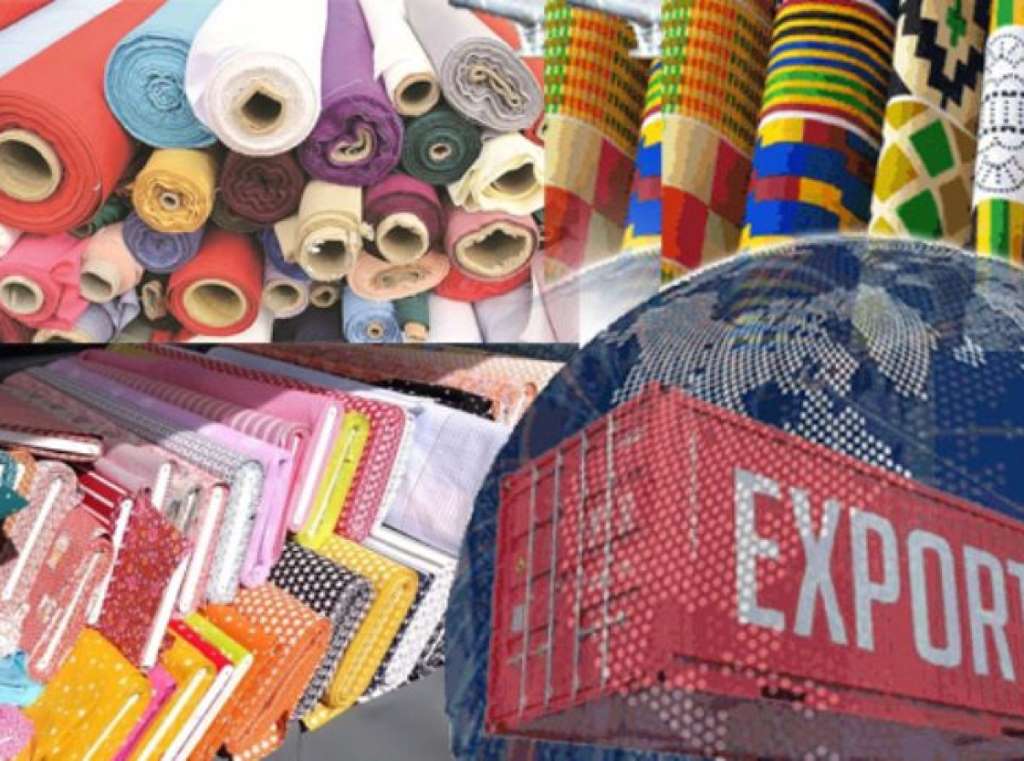
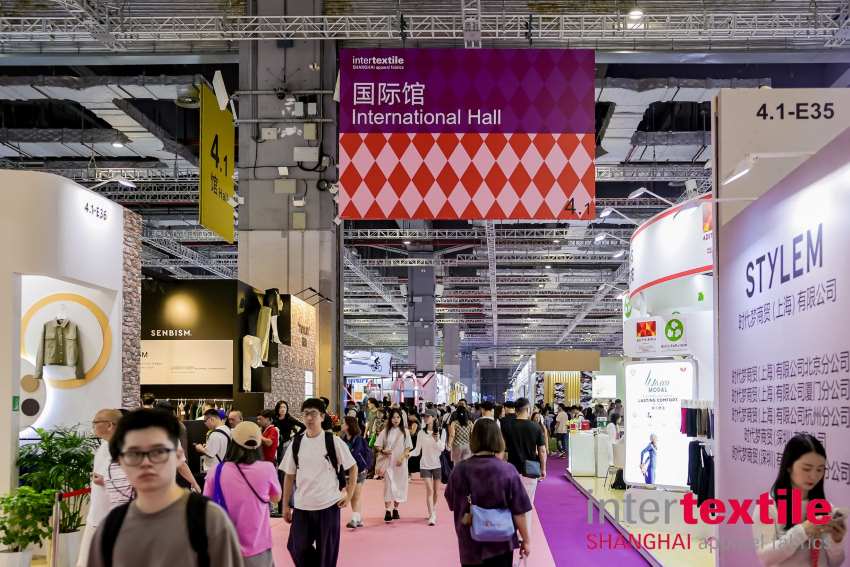
The conclusion of the Intex & INMAC Sri Lanka exposition in Colombo marked a structural step toward scaling the nation's garment export corridor. Uniting over 250 international suppliers from 15 countries, the dual trade showcase connected raw material procurement with automated manufacturing systems.
With RMG generating over 40 per cent of Sri Lanka's total merchandise export earnings, aligning fabric procurement with AI-enabled cutting and sewing machinery yields immediate operational efficiencies. Manufacturing excellence has become just as important as sourcing excellence, states Yasas Hewage, Chairman, Industrial Development Board. Smarter technologies and stronger global partnerships are crucial to help businesses grow, he adds
Bilateral trade expansion drives regional competitiveness
The showcase advances Sri Lanka's roadmap to reach $8 billion in apparel export revenue by 2030. Industry leaders emphasized expanded garment quotas through the India Free Trade Agreement alongside duty-free access via European GSP+ concessions. Integrating sustainable yarns and automated assembly empowers domestic manufacturers to offset freight volatility while satisfying strict Western environmental compliance standards.
A textile sourcing engine for South Asia
Organized by Worldex India since 2015, Intex South Asia serves as the region’s primary B2B sourcing platform across Sri Lanka, Bangladesh, and India, connecting over 70,000 buyers with global fiber, fabric, and machinery vendors. The event series continues expanding regional supply trade networks to support South Asia’s multi-billion-dollar apparel export targets.
East India RMG, hosiery sectors boost investments in high-precision production
The RMG and hosiery sector in East India is accelerating capital deployment into high-precision manufacturing systems to replace legacy equipment. Ahead of the flagship Garknit-X trade showcase in Kolkata, regional mills are prioritizing automated fabric cutting, high-speed knitting, and eco-friendly digital printing. West Bengal aims to double its share of national textile production from 6% to 12%, supported by state-backed apparel park infrastructure. The integration of automated fabric-cutting machinery—demonstrated live at the event—enables regional units to cut material wastage by up to 15% while sharpening production speed and accuracy.
Eastern sourcing base secures export market access
Upgrading regional infrastructure remains critical as European and domestic buyers enforce stricter quality and lead-time benchmarks. Adopting computer-aided manufacturing and high-throughput machinery is essential for local units to capture higher-value apparel orders, notes BP Mishra, Director, Vardaan Events. With over 2 million direct workers relying on the region’s textile ecosystem, modernizing production technology provides regional garment producers a clear path to lower unit costs and capture growing export demand.
Regional industrial catalyst and trade platform
Organized by Vardaan Events, Garknit-X is Eastern India's premier garment machinery and textile technology showcase. Connecting global equipment manufacturers with regional factories across knitting, embroidery, digital printing, and CAD/CAM software, the platform supports West Bengal’s industrial strategy to scale apparel manufacturing capacity.
UK retail campaign pushes for 90 minutes of free high-street parking
Spring & Autumn Fair has launched a national campaign calling for at least 90 minutes of free parking in town and city centres across England, alongside a Parliamentary petition aimed at local authorities. The campaign follows its Voices of Retail research with Faire, which found that 38 per cent of the independent retailers believe free parking would have the biggest positive impact on their businesses, while 63 per cent of consumers say it would encourage them to visit town and city centres more frequently.
The findings point to a wider challenge for physical retail. Some 95 per cent of consumers said they would spend more if their local high street offered a better mix of shops, while 96 per cent want more independent retailers alongside cafés, bakeries and other experiences.
Parking positioned as retail policy
The campaign argues, parking should be treated as part of town-centre economic development rather than solely as a transport or revenue issue. Its petition calls for legislation requiring English local authorities to provide a minimum of 90 minutes’ free parking, alongside wider measures to increase visits and spending.
Jackson Szabo, Portfolio Director, Spring & Autumn Fair, says, retailers and consumers had independently reached the same conclusion on removing practical barriers to high-street visits.
Connecting brands with retailers
Spring & Autumn Fair is a major UK retail trade event bringing together retailers, brands, suppliers and industry professionals. Its portfolio spans fashion, gifts, home and lifestyle products, connecting brands with independent and larger retail businesses. The event’s Voices of Retail research tracks changing retailer and consumer priorities.
Ester Industries posts Q1 FY27 turnaround as value-added films lift margins
Ester Industries reported a sharp improvement in consolidated performance for the quarter ended June 30, with total income rising 27.4 per cent Y-o-Y to Rs 441.9 crore. The company’s EBITDA more than doubled to Rs 58.9 crore from Rs 28.9 crore a year earlier, taking the margin to 13.3 per cent from 8.3 per cent. Consolidated profit after tax stood at Rs 18.6 crore, compared with a Rs 7.2-crore loss in Q1, FY26.
The recovery was led by polyester films, where revenue increased 37 per cent to about Rs 399.5 crore. Film sales volumes rose by 2.7 per cent to 22,120 tons, while value-added and specialty products grew 23 per cent to 6,368 tons, accounting for 29 per cent of total film sales. The company attributed the improvement to better realisations, higher throughput and a stronger product mix.
Recycled polyester gains ground
Sustainability-linked products are becoming a more significant part of Ester’s portfolio. rPET sales volumes increased 19 per cent Y-o-Y to 1,394 tons, with revenues rising 24 per cent to Rs 17.5 crore. This follows a much larger expansion in FY26, when rPET volumes rose 258% to 5,325 tons.
The company said improving industry conditions, tighter Chinese pricing and demand for recycled-content materials are supporting the film business. India’s Plastic Waste Management Rules, which began implementation in 2025, have also strengthened demand for films containing post-consumer recycled material.
Sportswear-linked recycled resin order
Ester’s 50:50 joint venture with Loop Industries, ELITe, has secured a letter of intent from a global sports and athletic brand for up to 15,000 tonnes a year of Loop PET Fiber Grade resin from its planned Gujarat facility. The company said a significant portion of planned capacity has been committed before commercial production, providing visibility for its recycled-materials business. Ester has previously disclosed a multi-year sustainable-materials offtake agreement with Nike.
Polyester and recycled-materials portfolio
Incorporated in 1985, Ester manufactures polyester films, specialty polymers and rPET for packaging, textiles, technical textiles and other industrial applications. It supplies customers across more than 50 countries and operates three manufacturing facilities in India. Its strategy increasingly centres on specialty films, recycled materials and circular-economy technologies, including its Loop Industries joint ventur
Chinese company initiates development of new export hub in Egypt
China’s Zhejiang Jasan Holding Group has initiated construction on a self-financed $117 million integrated manufacturing hub in Egypt’s Suez Canal Economic Zone (SCZONE). Located across a 300,000-sq-m site in the Qantara West Industrial Zone, the three-phase development incorporates spinning, weaving, seamless sportswear fabrication, and dyeing units. Designed to ship 90 per cent of output to international retail markets, the project will generate approximately 6,000 direct jobs at full operational capacity. Concentrating sequential apparel manufacturing processes within a single zone optimizes lead times and structural production costs, states Waleid Gamal El-Dien, Chairman, SCZONE Authority.
North Africa consolidates regional manufacturing shift
This facility advances Cairo’s target of expanding national garment and textile exports from $2.8 billion in 2024 to $11.5 billion by 2030. End-to-end domestic processing reduces reliance on imported intermediate fabrics, enabling brands to comply with European sustainability and traceability standards. Coupled with incoming Turkish manufacturing commitments, Jasan’s investment strengthens North Africa’s position as a low-tariff sourcing alternative for Western retailers seeking short-haul supply chain resilience.
Industrial scale and global footprint
Founded in 1993, Zhejiang Jasan Holding Group produces seamless activewear, hosiery, and technical yarns for global apparel brands. Operating production networks across China and Southeast Asia, the Shanghai-listed manufacturer is expanding its EMEA capacity to sustain double-digit export expansion and improve global order fulfillment.
Polish retail giant LPP restores supply relations with Bangladesh textile sector
Polish apparel conglomerate LPP SA has rescinded its brief operational suspension in Bangladesh following a joint resolution with the Bangladesh Garment Manufacturers and Exporters Association (BGMEA). The dispute stemmed from unpaid invoices linked to third-party buyer FES Retail, which had created operational uncertainty across local manufacturing units. Clarifying that LPP holds no direct financial liability for third-party claims, both organizations reaffirmed their ongoing commercial ties. LPP sources over $700 million annually from Bangladesh through 722 supplier facilities, underscoring the strategic necessity of insulating primary supply lines from indirect credit exposure
Operational continuity and legal protections secured for apparel hub
The settlement mitigates systemic risk for more than 350 direct apparel manufacturers that faced sudden order freezes during LPP's strategic review. BGMEA committed to engaging government ministries to safeguard LPP personnel from administrative complications and commercial pressure. Disputes involving isolated third parties should not compromise broader sourcing stability or harm compliant export partners, noted Mahmud Hasan Khan, President, BGMEA. This resolution reinforces supply chain predictability for Bangladesh’s ready-made garment sector as European brands enforce stricter compliance standards.
Global apparel sourcing footprint
LPP SA manufactures fast-fashion collections across five major retail brands - Reserved, Cropp, House, Mohito, and Sinsay - targeting European and Asian markets. The Gdansk-headquartered group expands store networks globally while targeting annual revenues exceeding PLN 20 billion, building on four decades of international retail scaling.
On recalibrates retail distribution with a focus on margins over wholesale volume
Swiss performance brand On Holding AG is recalibrating its retail distribution strategy, accepting top-line pressure in exchange for gross margin defense. The brand’s Q2, FY27 net sales increased by 13.5 per cent Y-o-Y to CHF 850.3 million ($1.05 billion)—missing consensus estimates = as wholesale revenue growth moderated to 4.8 per cent. Rather than engaging in broad market discounting amid cautious consumer spending, On deliberately restricted wholesale order allocations to preserve brand positioning. Consequently, management raised the company's full-year gross margin guidance to at least 65 per cent.
Direct-to-consumer channel drives global expansion
This operational rebalancing is supported by momentum across direct-to-consumer (DTC) channels. DTC revenue increased by 26 per cent to CHF 388.4 million, accounting for a record 45.7 per cent of overall sales. Strategic store openings in Copenhagen and São Paulo, combined with a 54.7 per cent constant-currency sales gain in Asia-Pacific, reflect On’s plan to scale physical retail and capture higher-margin apparel sales.
Sector implications and executive outlook
The brand is intentionally prioritizing profitability and full-price selling over short-term sales volume, notes a brand executive, addressing import tariffs and promotional market trends. As legacy athletic wear brands manage excess inventory, On's focus on premium placement offers a distinct strategy for navigating retail volatility.
Brand architecture and financial profile
Founded in Zurich in 2010, On Holding AG manufactures premium performance running footwear and sportswear utilizing patented CloudTec technology. Operating in North America, Europe, and Asia-Pacific, the firm is expanding its global store network, targeting full-year 2026 sales between CHF 3.47 billion and CHF 3.56 billion.
The new fashion equation, quality, agility and value replace speed and discounts

The traditional order that once separated low-cost fast fashion from premium luxury is steadily breaking down as consumers become more selective about value rather than simply price. Rising operating costs, regulatory scrutiny on cross-border trade, digital-first retail, and the rapid increase of resale platforms are altering how fashion companies compete.
What is emerging is a market where retailers offering the strongest balance of quality, design and affordability are consistently outperforming both discount-driven operators and brands trapped in the middle of the pricing spectrum. Rather than racing to the bottom on price, successful apparel companies are creating stronger consumer propositions built around product longevity, supply-chain agility and disciplined inventory management.
Middle market loses ground
Traditional fast-fashion retailers are finding themselves squeezed between two rapidly growing competitors. On one side are factory-to-consumer (F2C) platforms such as Shein and Temu, who have redefined affordability through algorithm-driven merchandising, customer-to-manufacturer (C2M) production models and highly responsive manufacturing systems. By producing in small batches and replenishing only successful products, these platforms have pushed average selling prices below $11 while dramatically reducing inventory risk.
On the opposite end, the resale economy has transformed from a niche sustainability movement into a mainstream retail channel. Platforms led by Vinted have grown rapidly combining affordable pricing with growing consumer interest in circular fashion. With second-hand apparel typically priced between $11 and $16, resale offers consumers both economic and environmental value.
This leaves conventional fast-fashion retailers in an uncomfortable middle ground. Selling products between $19 and $27, these brands are no longer the cheapest option nor are they the strongest quality proposition, forcing many to rationalize store networks while reassessing sourcing strategies.
|
Segment |
Price |
Market growth |
Focus |
|
Factory-to-Consumer (F2C) |
< $11 |
High volume/ emerging policy risks |
Real-time demand algorithms & small batches |
|
Resale / Circular Retail |
$11 – $16 |
Rapid scale/platform profitability |
Peer-to-peer logistics & sustainable choice |
|
Traditional Fast Fashion |
$19 – $27 |
Margin squeeze/flat growth |
Network rationalization & sourcing shift |
|
Value-for-Money Champions |
$43 – $54 |
High margins (20% EBIT)/strong growth |
Superior sourcing, store experience & relevance |
|
Masstige & Contemporary |
$86 – $162+ |
Performance divergence |
Brand equity realignment & product upgrade |
Value becomes the competitive edge
While discount retailers and legacy fast-fashion operators battle shrinking margins, a distinct group of value-for-money brands has established a profitable competitive position. Retailers including Zara, Uniqlo and Mango have deliberately shifted away from competing solely on price, investing in better fabrics, stronger product design, higher retail environments and integrated digital experiences instead.
These improvements have translated into operating margins of almost 20 per cent EBIT, among the strongest across global apparel retail. Rather than relying on constant promotions, these companies maximize full-price sales through flexible inventory management, shorter sourcing cycles and efficient omnichannel operations. The strategy reflects a broader change in consumer behaviour. Shoppers are willing to pay moderately higher prices when they perceive tangible improvements in garment quality, durability and overall shopping experience.
As senior retail analyst Marc Thorne observes, “Competing strictly on low prices has become unsustainable under today's supply chain realities and tariff landscapes. The winners in global retail are those establishing a clear sweet spot—offering a noticeable step up in material, design, and longevity over disposable garments without reaching high luxury prices."
Global leaders redefine retail economics
The operational models adopted by the world's largest apparel groups showcase how strategic positioning now matters more than aggressive discounting.
Table: Rise of value-for-money brands
|
Company/ brand |
Parent group |
Estimated revenue |
Operational strategy |
|
Zara |
Inditex S.A. |
$42 bn |
Flexible nearshore sourcing, flagship store upgrades & digital integration |
|
Uniqlo |
Fast Retailing |
$20 bn+ |
Functional fabrics (LifeWear), supply chain control & global expansion |
|
Shein |
Roadget Business |
$38 bn |
On-demand manufacturing, C2M model & social commerce acquisition |
|
H&M |
H&M Group |
$21.6 bn |
Store portfolio optimization & premium line expansion (COS, Arket) |
Among these companies, Inditex continues to show how operational discipline can create sustained competitive advantage. Through Zara and its wider brand portfolio, the Spanish retailer has built a highly responsive supply chain supported by nearshore manufacturing, digital integration and continuous investment in flagship stores. This allows the company to react quickly to changing demand while maintaining healthy margins despite an increasingly volatile global market.
Uniqlo has followed a different but equally effective strategy, differentiating itself through functional innovation under its LifeWear concept while retaining tight control over sourcing and production. Meanwhile, Shein continues to dominate the ultra-value segment through on-demand manufacturing, although evolving trade policies and greater scrutiny of cross-border logistics may reshape the economics of its model. H&M, in contrast, has responded by optimizing its global store portfolio while increasingly relying on premium concepts such as COS and Arket to strengthen profitability.
Premium pricing faces higher expectations
At the upper end of the market, brands positioned within the masstige and contemporary categories are facing a different challenge. Consumers are proving more unwilling to pay premium prices unless they are matched by superior craftsmanship, distinctive design and an elevated retail experience.
This explains why curated brands such as COS continue to gain traction while several traditional premium labels experience slower growth. The market is becoming less tolerant of price inflation unsupported by clear product differentiation. The shift reflects a broader change in consumer priorities. Rather than chasing trends or brand labels alone, shoppers are placing greater emphasis on durability, versatility and perceived long-term value.
Changing competitive scenario
The apparel industry's next phase will be defined less by speed and more by execution. Tariff adjustments, nearshoring initiatives, supply-chain diversification and digital retail are reshaping global competition, while circular fashion continues to expand consumer choice. For apparel companies, success depends on having a clearly defined position in the market. Retailers that can consistently combine quality, affordability and operational agility are showng that value not simply low price has become the industry's most powerful competitive advantage.
The global fashion reset is therefore, not merely about changing consumer tastes. It is a transformation in retail economics, where brands capable of delivering superior value across sourcing, design, merchandising and customer experience are setting the new benchmark for sustainable growth.
Canada Goose strengthens Board to accelerate global retail growth
In a decisive governance move to support its multi-season retail expansion, Canada Goose Holdings Inc. appointed luxury industry veteran Massimo Piombini to its board of directors following a 99.98 per cent shareholder approval vote. Havng over 35 years of commercial executive experience spanning executive leadership roles at Balmain, Valentino, Bally, and Diesel, Piombini,transitions from his strategic advisory role on the Canada Goose International board. His appointment directly addresses the performance luxury brand’s agenda to deepen direct-to-consumer (DTC) store productivity, optimize international wholesale channels, and navigate European market complexities.
Driving margin expansion amid category diversification
The board enhancement coincides with Canada Goose posting a 13 per cent Y-o-Y revenue increase for fiscal 2026, anchored by an 8 per cent lift in DTC comparable store sales. While macroeconomic volatility in global luxury retail poses ongoing headwinds, the Toronto-based company is prioritizing category diversification - scaling year-round apparel and footwear alongside core heavyweight outerwear. His experience leading iconic global brands, scaling international businesses, and navigating periods of transformation will be invaluable as we continue to execute our long-term growth strategy, states Dani Reiss, Chairman and CEO, Canada Goose. By leveraging Piombini’s expertise in luxury brand building and operational transformation, Canada Goose aims to expand fiscal 2027 EBIT margins into the 11 per cent to 12 per cent target range.
Performance luxury pioneer scaling global footprint
Founded in Toronto in 1957, Canada Goose manufactures and retails high-performance outerwear, apparel, footwear, and accessories across North America, Europe, and Asia-Pacific. The company targets disciplined low-single-digit revenue growth in fiscal 2027 by expanding direct-to-consumer retail, scaling spring-summer collections, and driving sustainable margin expansion.
RSWM to build Industry 5.0 Garment Hub with Spain’s NDS9
A part of the LNJ Bhilwara Group, Indian textile manufacturer RSWM has entered into a 74:26 joint venture with Barcelona-based Noize Design Studio (NDS9) to set up an advanced garment manufacturing facility in India. The new entity, LNJ NDS9 Global, represents an initial Phase 1 investment of Rs 186 crore to establish a green, Industry 5.0-aligned manufacturing campus.
The plant will integrate artificial intelligence, digital manufacturing, and rooftop solar power to produce high-end denim and activewear for international fashion labels. Initial capacity is targeted at 500,000 denim garments monthly, with a planned Phase 2 expansion scaling total output to 1.5 million units per month.
A future-ready manufacturing platform
By combining their manufacturing expertise with NDS9's design innovation and global market capabilities, the company is creating a future-ready manufacturing platform built on Industry 5.0 principles, states Riju Jhunjhunwala, Chairman and Managing Director, RSWM Limited.
NDS9 will manage trend forecasting, product development, and global brand relationships, while RSWM directs plant operations and supply chain logistics. The initiative positions India as an integrated sourcing destination for value-added apparel.
Textile heritage and value-chain integration
RSWM Limited operates as the flagship textile company of the LNJ Bhilwara Group, manufacturing synthetic, blended, and denim yarns along with knitted fabrics. Established in 1961, the company supplies domestic and international markets across 78 countries. RSWM continues advancing toward downstream garmenting to enhance top-line operating margins and long-term earnings resilience.