FW
AEPC urges brands not to cancel orders
The Apparel Export Promotion Council (AEPC), which represents the interests of the garment industry in India, has sent a letter to main operators in Europe and the United States urging them not to cancel orders in present times, while at the same time opening itself up to seeking flexibility measures.
Besides Primark, several companies have communicated to their investors over the last few days that their adjustment plans to deal with the pandemic include adjusting their purchases. British group Superdry, for example, will introduce "potential changes in the timing and structure of stock purchases for the next collection". In early March, the United Nations (UN) made a first approach to the impact of the pandemic on the fashion industry worldwide. The organization estimated losses in the textile and apparel industry at $1.5 billion, mainly due to a lack of raw materials.
The UN indicated that the most affected market will be Europe, with losses of $538 million; Vietnam, with $207 million; Turkey, with $164.2 million; Hong Kong, with $107 million; Taiwan, with $102 million, and the United States, with estimated losses of $80 million.
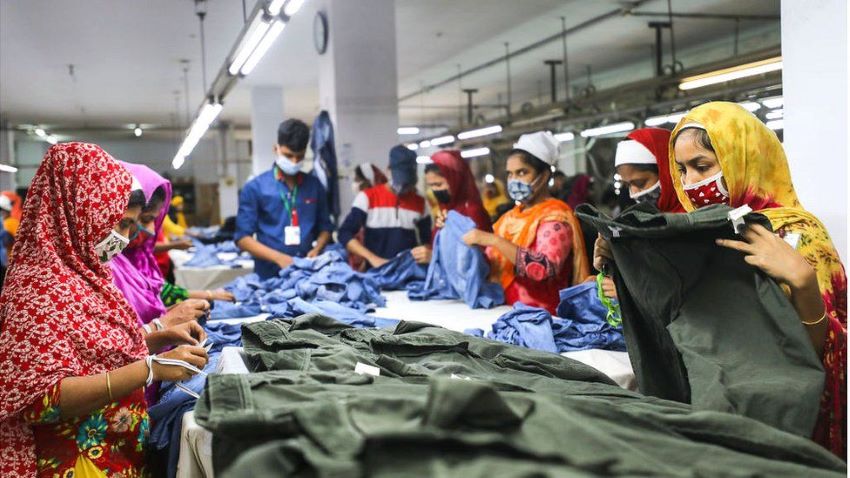
The entity chaired by António Guterres did not, however, contemplate order cancellation that is already taking place: in recent weeks, 490 factories in Bangladesh, one of the world's largest hubs, had received order cancellations with an impact of US$1.44 billion on the country's exports.
The impact of the cancellations is not limited to Asian markets, but also extends to nearby sourcing. In Turkey, where large groups have displaced their production with the stoppage of China, order cancellations are beginning to be registered, a situation that is repeated in Morocco.
Fashion retailers cancel orders worth $3 bilion: BGMEA
According to the data by BGMEA, fashion retailers have cancelled or put on hold more than $3 billion in orders due to the coronavirus outbreak, though a handful have agreed to pay anyway.
The recently released data from BGMEA reflected both orders already made or in the works and planned orders from the country, which is the world's second largest exporter of clothing after China.
The cancelled orders included tens of millions in purchases from many big buyers, including European buyers C&A and Inditex, Primark of Ireland, Britain's Marks & Spencer and Tesco and U.S. retailers like Walmart and Target.
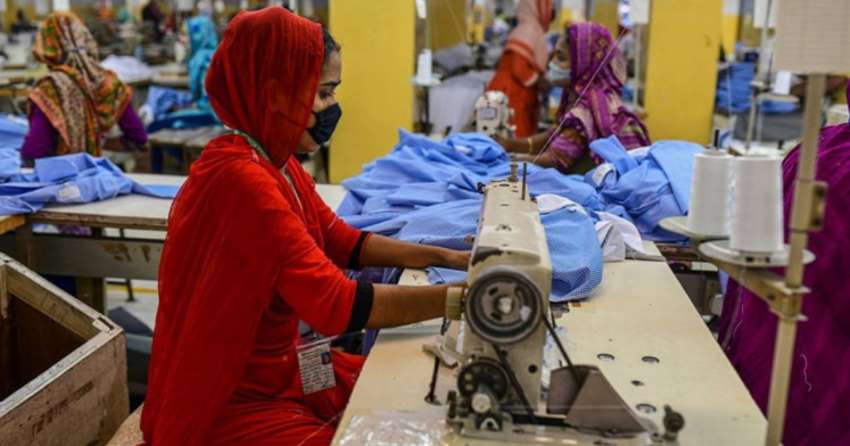
Bangladesh is just beginning to feel the direct impact of the pandemic and its government has ordered a shutdown of most businesses to help contain it. But shocks to the country's export markets have been cascading into its economy for weeks. A survey of factory owners in Bangladesh released Friday showed millions of Bangladesh factory workers being sent home without the wages or severance pay they are owed.
The BGMEA reported that $1.8 billion in orders have been put on hold and another $1.4 billion have been cancelled. Cancellations of planned orders, for April-December, amounted to nearly $1.7 billion, it said. The figures are conservative because they exclude orders that would go to multiple buyers.
Reliance Industries donates Rs. 500 crore to PM Cares Fund
Reliance Industries has announced a donation of Rs. 500 crore to PM Cares Fund in response to the call by the Prime Minister to support the nation’s fight against the Coronavirus onslaught.
RIL also informed that in addition to the financial contribution to the PM’s Fund, the company has also provided contributions of Rs. 5 crore each to the governments of Maharashtra and Gujarat to support their fights against the Covid-19.
RIL also continues its 24x7, multi-pronged, on-the-ground effort to do its bit to ensure the nation remains prepared, fed, supplied, safe, connected and motivated to fight and win against the unprecedented challenges brought upon by the Coronavirus pandemic.
RIL has already deployed the strengths of the Reliance Family on this action plan against COVID-19. RIL and its motivated team have stepped up in the cities and villages, on roads and lanes, clinics and hospitals, grocery and retail stores, and it has pressed additional capabilities into the service of the nation.
COVID-19 Fall Out: Major recession awaits global fashion and luxury brands
 With the COVID-19 pandemic gaining momentum, the impact on fashion and luxury industry is likely to be more severe than was estimated earlier. As a recent analysis by Javier Seara, Partner and Managing Director, Global Sector Leader Fashion & Luxury, at Boston Consulting Group, reveals, compared to last year, global fashion and luxury sales are likely to drop by 25 to 35 per cent in 2020 as stores will remain closed, people will curtail purchases leading to a contraction of the global economy. To deal with this fallout, Seara recommends, besides working on short-term measures, brands need to plan their upcoming collections, stock allocations, purchasing, and supply-chain decisions.
Sales drop to outpace 2009 recession
Seara believes a major impact of this pandemic will be on fashion sales which are likely to decline by around $600 billion worldwide from 2019 levels. That is a bigger drop than during the great recession a decade ago. However, this impact will not be the same everywhere. It will depend on how different countries and regions have reacted to the crisis so far and the effect of those actions on their retail spending. Some areas are likely to hit harder than the average, while others will escape with relatively less damage.
The four phases of Coronavirus
According to Seara, COVID-19 outbreak can be divided into four phases. These include the first appearance of the novel Coronavirus; lockdowns across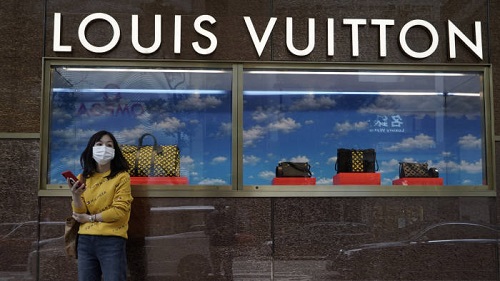 countries to control its spread; growth in COVID-19 subsidies leading to a bounce-back of industry and recovery of manufacturing and increase in consumer spending to pre-outbreak levels.
Seara looks at the intensity of the crisis in each region, how it responded to it, and specific market conditions that affect the sector’s sales in that area. These conditions include the strength of local economy and the market share of its fashion industry. Seara believes overall sales will bottom out in March and April to bounce back with10 per cent to 15 per cent in December over last year.
Recoveries to differ by region
Recoveries from the outbreak will differ by region. Countries that faced a severe outbreak, and whose economy is not as solid as others, will have a harder time recovering. This can be seen from the example of Spain, where, a government-enforced shutdown has led to a more than 90 per cent drop in Spain’s fashion and luxury sales from last year. Shutdowns in such places will result in slower recovery that will be exacerbated by travel restrictions.
In contrast to Spain, China is in better shape to weather the crisis. Not only has the country passed the COVID-19 crisis point, it also has a solid pre-outbreak economy, which will help it recover fairly quickly. The country is likely to record fashion and luxury sales off only 5 per cent to 10 percent from 2019. North America falls in the middle range as a few US states have instituted shelter-in-place orders while others are yet to limit people’s movements. This is likely to affect the pace of the outbreak in the region and prolong its bounce-back period. By detailing these scenarios in each of these countries, Seara hopes that brands use this analysis to strategise their moves for the rest of the year.
Textile Exchange launches new RMS standard
Textile Exchange has released a new Responsible Mohair Standard (RMS) and has made its first revision to the Responsible Wool Standard (RWS) that was created in 2016. The new RMS verifies and identifies mohair produced in farming systems that respect animal welfare and the environment. It creates a strong assurance system by performing regular audits of farms and tracking the material to the final product. The standard is designed to make sure animal welfare is carried out and that the goats that provide the mohair are humanely treated, healthy and well cared for.
The Responsible Mohair Standard was based on, and is closely aligned with, the Responsible Wool Standard and the two standards are combined for the supply chain. Both the RMS and the RWS are structured around the Textile Exchange Animal Welfare Framework, which sets out the principles and expectations that guide and connect Textile Exchange’s animal welfare standards.
The RWS has seen strong adoption across the supply chain, with certified farms in all key wool-producing countries, according to Textile Exchange. The revision covers updates and clarifications to the animal welfare and land management modules, including the introduction of additional requirements and guidance around biodiversity. It also introduces a set of social welfare requirements.
Italy fashion brands demand suspension of land lease for retailers
Confindustria Moda, an organisation representing the Italian fashion industry, has asked commercial premises landlords to put lease payments on hold for retailers due to the Coronavirus crisis, which has left Italy one of the hardest hit countries in the world.
Over 50 companies sigsned Confindustria Moda's letter to landlords with brands ranging from Moncler to Corneliani. Confindustria Moda represents a total of 66,000 companies who generated 95.5 billion dollars in revenue for the country.
All non-essential business activities in the country are on hold until April 3, when it will reassess opening. While Italy's rates of infection are slowing, the country will have to assess whether or not their healthcare system can handle any rates of new infections should they occur. Italy's healthcare system was crippled by the coronavirus with a shortage of ventilators and lack of hospital space leaving some patients to die.
The health situation has left the country with literally zero dollars in retail revenue, as there are neither residential shoppers nor tourists to be found, and non-essential businesses can't open. Marenzi is asking landlords to suspend payments until stores reopen again.
Even if Italy's rate of infections continue to level out, an April 3 restart date for their economy is looking unlikely. Quarantine could be expected for another several weeks as the government takes measures to make sure citizens are better safe than sorry.
Mynamar factories stop operations as brand cancel orders
Myanmar Garment Manufacturers Association (MGMA) has revealed many garment factories stopped operations as countries in the European Union, a major export market, cancelled orders last week amid the spread of the COVID-19 pandemic. All operations of factories that have accepted orders from the EU have stopped.
The bad news came as the supply of raw materials from China re-started to flow back into the country after three months of stoppage due to the virus outbreak. Among the garment companies that suffered cancellations of orders are the Global Apparel Textile Myanmar, which no longer has problems with the supply of raw materials but left with huge inventory due to cancelled purchase orders.
Lat War is stuck with 500,000 pieces of garments after a European buyer cancelled the order. Other companies in the same predicaments are Gold Emperor, Hong Text, and Myanmar Irrawaddy.
The shutdown of more garment factories led to more labour unrest, including the strike at the Grand Enterprises Garment at Yangon’s East Dagon Industrial Zone as the company announced layoff of thousands of workers.
Before order cancellation from the EU, at least 20 out of the 500 factories in Myanmar had shut down due to the pandemic, leaving more than 10,000 workers unemployed, industry sources said. Since January, 38 cut-make-pack factories that includes the garment factories, have shut down, according to the Ministry of Labour, Immigration and Population. Among these were 22 garment factories. Others reduced the number of workers at their facilities.
FHCM, CNM postpone men’s fashion weeks in Paris and Milan
The Fédération de la Haute Couture et de la Mode (FHCM) and the Camera Nazionale della Moda Italiana (CNM) in Milan, respectively the governing fashion bodies in France and Italy, have decided to postpone their next menswear seasons and the Paris haute couture runway season this summer.
The Paris Fashion Week Menswear was scheduled from June 23 to June 28, 2020, and the Haute Couture Week from July 5 to July 9, 2020. The Milan men's fashion week, scheduled from June 19-23, 2020 would take place during the Italian women’s wear season in September.
FHCM is also working on new digital formats and new ways of meeting in life,for the days scheduled for Milan menswear, via B2B and B2C platforms. The FHCM and CNMI recently held a video conference with the other major fashion organisations running runway seasons, the British Fashion Council in London and the Council of Fashion Designers of America, which augured for a united front in terms of dates.
AEPC request for financial relief for exporters
Apparel Export Promotion Council (AEPC) has requested for an extension of the Interest subvention scheme beyond March 31, 2020. It has also requested for the extension of 5 per cent available to the MSMEs to all units, especially in a labor intensive sector like the Apparel export industry.
Besides, the AEPC has also asked the Minister of Labor and Employment to extend the Provident Fund, ESI and other related benefits for workers of small establishments to apparel workers as well. The Council requested the government to provide relief in terms of our obligation towards the workers by way of contributing wages/salaries for six weeks. The industry should also be allowed to defer payment of PF/ ESI and electricity charges by a period of three months.
In addition, the Finance Minister has been urged that the benefits that are due to the apparel exporters in terms of RoSCTL and GST should be released at the earliest. AEPC welcomed the 75 basis points cut in repo rate by the RBI, considering the impact of Covid-19 related lockdowns on economic activities.
The council hopes that the cut in the repo rate to 4.4 per cent would translate into lower lending rates for both retail and corporate credit, and would thus encourage consumption and investment.
Fashion companies mobilise in response to COVID-19 outbreak
Companies in the style industry are quickly mobilising their response to the COVID-19 crisis. Many are switching production, while big brands like LVMH, Kering, Armani, Prada and Ralph Lauren are diverting to production of essential items like sanitisers, masks and medical suits.
The three factories of LVMH, that earlier produced perfume and cosmetics factories, have started producing hand sanitisers. This is for distribution to hospitals fighting the outbreak in France.The production plants of Armani will also start producing single use medical overalls. It is the brand’s effort to support healthcare workers in the Covid-19 crisis.
Gucci (owned by Kering) and Prada are churning out masks and overalls for medical workers. Ralph Lauren is also pitching in, producing medical masks.
Fast fashion label H&M plans to use its extensive supply chain network to help hospitals in need of supplies like masks and gowns. Inditex, the company that owns Zara, has offered to do the same.
Having cancelled the Met Gala, Vogue is working with the CFDA (Council Of Fashion Designers Of America) on a new initiative to raise both awareness and needed funds for those in the American fashion community who have been impacted by the Covid-19 pandemic. This is a repurposing of the existing fashion fund from CFDA and Vogue.
In addition, the CFDA is helping connect designers and manufacturers with local agencies in the US – which involves sourcing materials and large-scale production capabilities.