FW
Fast-fashion brands hit hard by coronavirus
Fast-fashion companies — especially those with physical retail, like H&M, Zara and Mango — are finding themselves in a tough spot as coronavirus spreads across Europe and the U.S.
Data from Quantum Metric shows though online apparel revenue growth to have increased by 43 per cent from this time last year — fast-fashion companies are in a difficult position, both those with retail stores and e-commerce-only businesses. While companies like Princess Polly, Forever 21 and H&M are trying to pivot, using their websites to promote comfortable apparel for those staying at home, the trend-driven nature of the business puts these brands at risk.
Most fast-fashion companies are offering steep discounts during this time in an effort to sell some of that inventory. Forever 21 is offering 25 per cent off a purchase of $75 or more, encouraging customers to stay in and save, and Princess Polly is pushing 15 per cent-25 per cent off, depending on how much customers spend. Forever 21 and Princess Polly did not respond to a request for comment.
Most brands are promoting lounge and activewear products to customers through their websites, social media and customer emails, as more people stay at home.
According to Quibit’s data, fast-fashion companies across the U.S., United Kingdom, Italy, France and Spain are set to see sales slip by 20 per cent in the month of March.
While both fast-fashion brands with physical stores and online-only brands are struggling right now, Maria Haggerty, CEO of fulfillment and logistics company Dotcom Distribution, said e-commerce-only brands will likely see the most benefit in the coming weeks compared to those like H&M and Zara.
RBI announces financial package for the textile and apparel industry
Indian textiles & clothing industry has been pleading for two years moratorium period for payment of all term loans which was duly recommended by Hon’ble Union Textile Minister, Smriti Zubin Irani. The same demand was made when the textile industry delegation met the Hon’ble Prime Minister on December 26, 2019. Under these circumstances, the unforeseen COVID-19 pandemic has created severe financial stress especially after the announcement of 21 days lockdown. The textile industry, being highly capital, labour and power intensive, is facing acute crisis. The industry had represented to the Government to give one year moratorium for payment of loan and interest, provide 25% additional working capital without additional collateral or margin money and defer payment of electricity charges for three months. Under these circumstances, the relief package announced by RBI has come as a sigh of relief for the ailing textile industry.
Ashwin Chandran, Chairman, The Southern India Mills’ Association (SIMA) has welcomed the announcement of three months moratorium period for payment of term loans and working capital interest, advising the banks to re-calculate the drawing power liberally and extending additional working capital facility, substantially reducing the Repo rate thereby enabling the financial institutions to reduce the rate of interest and making provisions to exclude the three months moratorium period for asset re-classification and credit rating.
SIMA chief has appealed to the Hon’ble Prime Minister to advise RBI and banks to give clear instructions to provide additional working capital to the tune of 25% without any additional collateral or margin money. He has also strongly felt that extending three months moratorium for the interest payment towards term loan also is the need of the hour as the industry would not be in a position to make any payment since they have to make payments for salaries and wages and meet the huge standing charges. He has urged to the Hon’ble Prime Minister to advise RBI to issue clear direction immediately for extending the moratorium for the payment of interest on term loans as the March 2020 quarter is fast approaching. Chandran hoped that the Government would review the situation in the days to come and announce suitable financial measures. He has also appealed to the State Governments in South India to defer payment of current consumption charges for three months and waive the demand charges for electricity.
Mixed impact of India's lockdown on China PX and PTA industry
After the March 22 announcement of city lockdowns, India’s Directorate General of Shipping (DGS) imposed quarantine on shipping vessels from ports of infected countries including China for 14 days starting from the date of departure from the infected ports. This lockdown would have a mixed impact on China’s PX and PTA industry
India's PTA capacity is 6.18 million tons per year. However, due to India's anti-dumping policy on China's PTA, PTA exports to India is not too large. In 2019, China's total PTA exports to India were around 41,000 tons, accounting for about 6 per cent of China's total exports.
At present, no PX suppliers announce force majeure or reduction in production. MCPI's 1.2 million tons/year PTA plant has announced force majeure. It is reported that the company is discussing the specific time of close. Some South Indian yarn mills have announced production suspensions, and some ports have announced force majeure on March 25. Market sources say India's polyester polymerization rate has also dropped significantly. Therefore, the impact of India's lockdown in the future may further increase.
For PTA, although the export volume that directly affects the Chinese mainland may not be obvious, the main PTA import origins of India are South Korea and Taiwan. If India could not consume the amount, it means that South Korea and Taiwan need to find other export destinations. Mainland China is also an attractive market.
Sale of international brands in China dip due to COVID-19
German sportswear makers Adidas and Puma warned of a major decline in sales in China due to the corona-virus and said while there were early signs of improvement there the impact had spread to other markets.
Global luxury brands including Gucci and Louis Vuitton are scaling back orders with Italian suppliers, as the spread of the epidemic from key market China to major manufacturing hub Italy hit business across the sector. Italy, home to scores of specialist manufacturers of high-end goods from shoes and leather goods to menswear, has seen the biggest epidemic of the virus outside China, prompting Rome to impose a virtual lockdown over much of its wealthy north.
The €280 billion per year global luxury goods sector, already reeling from months of protests in the shopping hub of Hong Kong, was dealt a hammer blow earlier this year by the coronavirus outbreak in mainland China. As authorities battled to contain the emergency in a country that is home to more than a third of global luxury shoppers, brands were forced to shut shops, shelve new openings and post- pone advertising spending there.
The spread of the virus across the world, and to Italy in particular, has compounded the pain, with countries including Britain and the United States warning against non-essential travel to Italy, slowing tourism to a trickle. That is set to translate into a major sales hit for the country’s 90 billion euros fashion and textile industry. “Prolonged disruption of economic activity may well result in supply chain issues for most brands.
COVID-19 turbulence to accelerate Pakistan export growth
Global economic pause due to Coronavirus has given other smaller economies a chance to step up. For example, Pakistan with complete textile and apparel supply chain existing in the country can profit from the slowdown in trade flow between China and the US and the EU in textile products as it can capture some of the fashion market shares.
From 2013 and 2018, around $1.1 billion was added to the exports of articles of apparel and clothing to the EU. Furthermore, exports of made-up textile articles improved to $650 million between 2013 and 2018 due to the GSP Plus preferences.
Pakistan Bureau of Statistics data shows, exports boomed 13.82 per cent year-on-year in February 2020. Amidst a global slowdown in trade, exports from Pakistan have gained by 3.65 per cen in the current FY. And the country’s exports to the EU increased from $6.3 billion in 2013 to $8 billion in 2018. This shows that the unilateral trade incentives provided by the European Union to Pakistan in the form of GSP Plus status did help boost export sales to the region and limit what otherwise could have been a complete decay of the export sector between 2013 and 2018.
The trade linkages established between Pakistani exporters and their clients can help increase exports and tap newer markets as supply chains are threatened due to the spread of the pandemic. Pakistan should continue with its policies to boost total exports. Although the growth in global trade is likely to slow down this year, Pakistan must contemplate in developing its export sector to take advantage of opportunities as a result of challenges reported by the large manufacturing powerhouses.
Gap withdraws its full year forecast
Gap Inc has withdrew its full-year forecast issued just two weeks ago, suspended its dividend and said it will draw down on its entire $500 million credit facility as the apparel retailer looks to weather the COVID-19 crisis. Disruptions caused by the health crisis mark the latest headache for newly named Chief Executive Officer Sonia Syngal as she tries to revive demand for apparels in a competitive market plagued by slowing footfall in malls.
Several retailers have warned of a sales hit due to store closures and restrictions imposed to slow the spread of the virus in China and now in the United States and other parts of the world. The company previously expected 2020 adjusted earnings in the range of $1.80 to $1.92 per share after accounting for a $100 million sales hit in Asia and Europe.
The company was taking the steps to further strengthen its financial liquidity and flexibility “in this time of unprecedented disruption to the retail sector.”
The company will also reduce capital expenditure by nearly $300 million during the year, as well as review all operating expenses to curb spending.
Coronavirus: Primark withholds quarterly rent
Primark withheld its quarterly rent in a bid to force landlords to consider revising terms urgently as the COVID-19 pandemic decimates the fashion retailer’s trading. The move pertains to 110 of the value retailer’s leasehold properties in the UK, and the quarterly rent was due yesterday.
Primark has written to landlords asking them for their support on lease agreements to mitigate the unprecedented financial impact of the pandemic on the business. Primark wants to sit down with landlords and address both scheduling and quantum of payments.
Primark, which doesn’t trade online like many of its high street fashion rivals, temporarily shut all 189 of its UK stores over the weekend ahead of Prime Minister Boris Johnson’s wider retail lockdown announcement on Monday night.
As a result, it now faced a £650 million loss of sales per month now that its stores in the UK and abroad are temporarily shut due to the pandemic.
Primark revealed over the weekend that it had cancelled all new clothing orders from suppliers, such as factories in India and Bangladesh, but said it would continue to honour orders already shipped or delivered to Primark warehouses or stores.
BGMEA members to shut factories
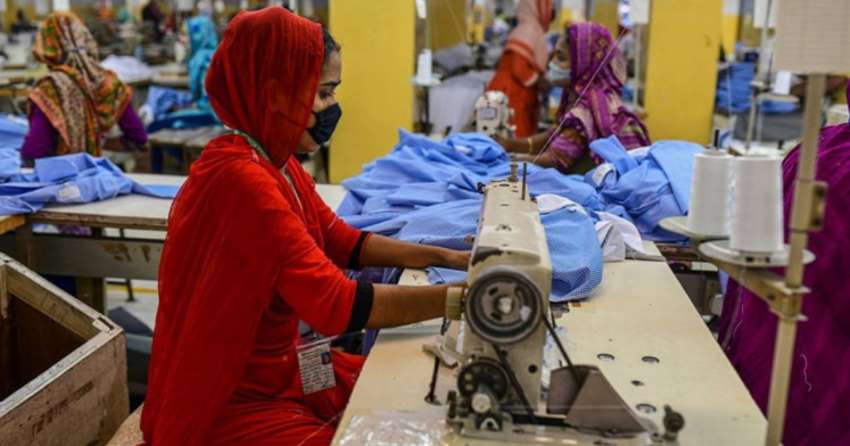
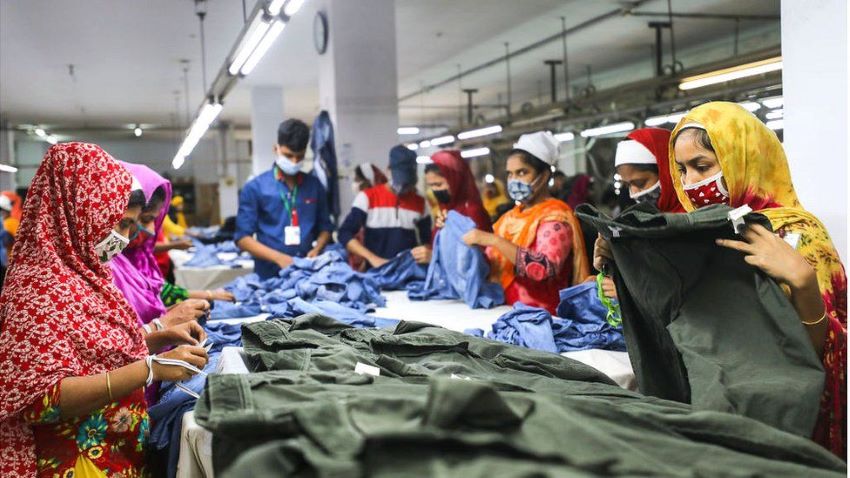
BGMEA has decided that its members can consider shutting factories to avoid the spread of the COVID-19. However, if a factory management decides to run the factory it will have to follow the highest hygiene and safety measures such that the workers are safe, Garment shipments account for more than 80 per cent of the national exports of Bangladesh and the sector employs more than 40 lakh workers.
The prime minister has given specific directives and called for taking some measures to ensure protection and good health.
Over the last 30 years, Bangladesh has grown into a sweater hub as many entrepreneurs invested heavily Bangladesh is a major supplier of sweater products to the world and exports approximately $3.5 billion worth of items annually.
Continuation of duty rebates to help boost exports: AEPC
The Union cabinet has approved the continuation of Rebate of State and Central Taxes and Levies (RoSCTL) for export of garments and made-ups from April 1, 2020, till the scheme is merged with Remission of Duties and Taxes on Exported Products (RoDTEP). According to AEPC, this will help exporters in promoting shipments.
AEPC chairman A Sakthivel says, given the acute shortage of working capital, this reimbursement should be given as Direct Cash Transfer, as in the case of erstwhile ROSL and drawback. This will reduce the time and transaction cost of availing the scheme.
Apparel exporters, who were anyway facing trouble with the reversal of policy benefits like MEIS and delays in refunds, are now facing uncertainties related to both export orders and import of raw materials. Hence, the continuation of this benefit will strengthen the entire cotton textiles value chain.
China weighs response to mixed signals from US
Chinese officials are weighing potential responses to a series of mixed signals emerging from the US, where officials have been touting progress in the phase one trade agreement, while at the same time reinstating tariffs on Chinese products. China remains committed to implementing the phase one deal, despite the Coronavirus epidemic that has seriously affected economic activities both in China and abroad, but the US should also focus on easing tensions with China and not raising them.
Even as China's trade dropped significantly in the first two months of the year, its soybean imports from the US jumped six fold year-on-year to 6.101 million tons, reports o Reuters. Also, Chinese companies have resumed importing US liquefied petroleum gas after Chinese officials exempted it from tariffs, The US will collect a 25 per cent tariff on certain Chinese products after a previous exemption expired and the US Trade Representative's (USTR) office did not extend the exemption on those goods, according to a recent notice from the USTR. The USTR would extend tariff exemptions for 11 categories of products - part of $34 billion worth of Chinese goods targeted by a 25 percent US tariff imposed in July 2018 - for another year, but left out 22 categories of products, including breast pumps and water filters. In addition, the US decided to slap anti-dumping and anti-subsidy duties on up to 262.2 percent and 293.5 percent, respectively, on Chinese wood cabinets and vanities imports.