FW
H&M Group collaborates with The Renewal Workshop
The H&M Group has collaborated with The Renewal Workshop to launch a new test collection made from unsold clothes that have been repaired and brought back to market through its COS (Collection of Style) branded stores.
As per a Textile Value Chain, report, this first of its kind ‘Restore’ collection developed by its internal innovation department ‘The Laboratory’ and its fashion brand COS (Collection of Style) will launch in three stores located in Berlin, Stockholm and Utrecht. The COS brand launched in 2007 and currently operates over 250 stores in more than 40 worldwide markets.
Laura Coppe, Head-Circular/Sustainable Business Development, The Laboratory, says,the brand launches new solutions for a lower impact on the environment whilst offering customers quality, beautiful products that last.
Indochino expands women’s suiting range
Global leader in custom apparel, Indochino has expanded its women’s suiting range.
The brand will now offer a new women’s base pattern, developed over the past year. This will help the brand further streamline the measurement and fitting process, as well as accommodate diverse body shapes and silhouette trends.
Focusing on personalization, this new silhouette will better allow customers of all genders to create a made to measure suit that fits their style preferences and identity. The silhouette will be offered in all of the brand’s fabric options, and with all of the stylistic customization options that have become hallmarks of the brand’s shopping experience.
The women’s suiting range is now available at 8 showrooms across the US and Canada, including locations in Vancouver, Toronto, New York City, Seattle, and Bellevue, with plans to expand to additional showrooms in 2023. Each item in the collection is customizable and made to measure. Custom suits from $449 and separates from $99.
Sneaking Out ends on successfully in Hyderabad
Organized by SteppinOut and SoleSearch in association with Royal Enfield, India’s largest sneaker festival Sneaking Out ended in Hyderabad recently.
The event celebrated the rising trend of streetwear, sneakers and hip hop culture with an exciting opening act by the phenomenal DJ Ivan Lendl as well as renowned artists including BohB, DJ Mavericks and Venom. Along with the biggest curation of sneakers and streetwear seen thus far, from the finest homegrown as well as international brands, the pop culture extravaganza hosted an elite lineup of over 100 exhibitors from around the country.
Several brands showcased their line of products including Farak, VibeTheHype, Cop Underdog, Helios and Prosperity. The festival also featured performances by some of the top music artists in the country and hosted other exciting activities like auctions, gaming zones and a whole lot more.
KhusbuMav, Marketing Head, SteppinOut, says, events like SneakinOut are not just a platform for these resellers, they are actually a celebration of sneaker culture and creating experiences which have become an integral part of the sneakerhead community and are here to stay.
The sneaker fest partnered with brands like Royal Enfield, Casa Bacardi, Jimmy’s Cocktails and served as just the right opportunity for the sneaker and streetwear communities to learn and celebrate their mutual love. It concluded on a grand and successful note, and is expected to return at an even higher scale soon.
Spandex value chain sees weaker demand as BDO prices collapse in June
The entire spandex value chain saw weaker demand and cost during as prices of BDO collapsed in late June. Players of spandex value chain were more determined to reduce production with plunging cost, depreciating PTMEG and spandex inventory and weak demand for downstream fabrics.
Supply of PTMEG remained high in China. The settlement of price was passive since Q2, mainly following the price trend of BDO, while the profitability of PTMEG started being feeble after Q2.
Spandex 40D has been unprofitable since Q2. BDO market also witnessed apparent losses after price slumped. The whole value chain suffered deficit. Market players tried to reduce supply to ease the contradiction of supply glut after faced great losses, which could further lower inventory.
More factories scaled down output with pressure from losses and inventory. The whole value chain saw great production curtailment in July, with run rate down to 50-60 per ent. The pressure of mounting inventory weakened after production was cut. Sales improved. The competition under low prices dwindled under losses. Price gradually touched bottom. Price of BDO started stabilizing from mid-Aug. As a result, the whole value chain is estimated to touch bottom in short term.
Downstream demand is supposed to largely increase in traditional peak season Sep and Oct by convention, which may also warm up this year, but the improvement is likely to be pressed. With the expectation of economic recession, weaker consumption and high stocks of downstream and middle stream products, demand is anticipated to grow slowly.
Price of BDO-PTMEG-spandex is expected to touch bottom in short run. Downstream buyers may slightly increase purchasing in expectation of recovering demand, which will lower high inventory burden. However, the specific improvement still needs further confirmation.
The whole value chain has witnessed a new round of capacity expansion. Producers may adjust unbalanced supply/demand pattern by altering supply. With supply glut, prices are expected to shiver near the cost line for a long period.
Burberry launches Autumn/Winter Campaign
Burberry has launched its Autumn/Winter 2022 campaign that captures the power of community.Highlighting the collection’s theme of belonging under the bright LA sun, the campaign uses bold images and film to harness the power of self-expression to forge togetherness.
Building upon the brand’s code of duality, the campaign studies different identities. It features elevated studio shots for the womenswear collection and candid outdoors shots for the menswear collection
Riccardo Tisci, Chief Creative Officer, Burberry reconnects with photography duo and friends of the brand Inez and Vinoodh to further explore his avant-garde approach to the house, whilst stylist LottaVolkova brings definition and a new perspective to the attitudes expressed throughout the collections.
Offering a playful twist on tradition in a reconstruction of heritage, the classic women’s trench is recreated as a voluminous strapless gown with signature details, whilst car coats are enlivened with chain-link elements. Across womenswear, waxed cotton coats and field jackets are presented alongside vintage-inspired floral lace corset tops in candy pink and red with matching pleated skirts, black leather bodysuits and skirts. The Lola bag also features in the campaign, celebrating the heritage of the brand and its founder Thomas Burberry.
Government eases metrology rules for inner garments
The Indian Government has issued a notification to ease the metrology (packaged commodities) rules for inner garments and hosiery products. It gave consumers the liberty to touch and feel the product before purchasing. However, trial of the garments will not be practical due to hygienic considerations.
The notification gives a clear definition of a ‘loose’ garment as one sold loose or open at the point of sale in such manner that the consumer can inspect the product before buying.
The Federation of Hosiery Manufacturers Association (FOHMA) has been representing to the concerned ministries for years on this issue. It argued that garments by their very nature can be seen, touched, felt, and even tried in some products, and hence they should not be included in the ambit of a “packaged” commodity, where the consumer buys the product in a sealed condition without having the opportunity to see, examine, or test the communicated parameters.
Centrestage to be held from September 09-11, 2022
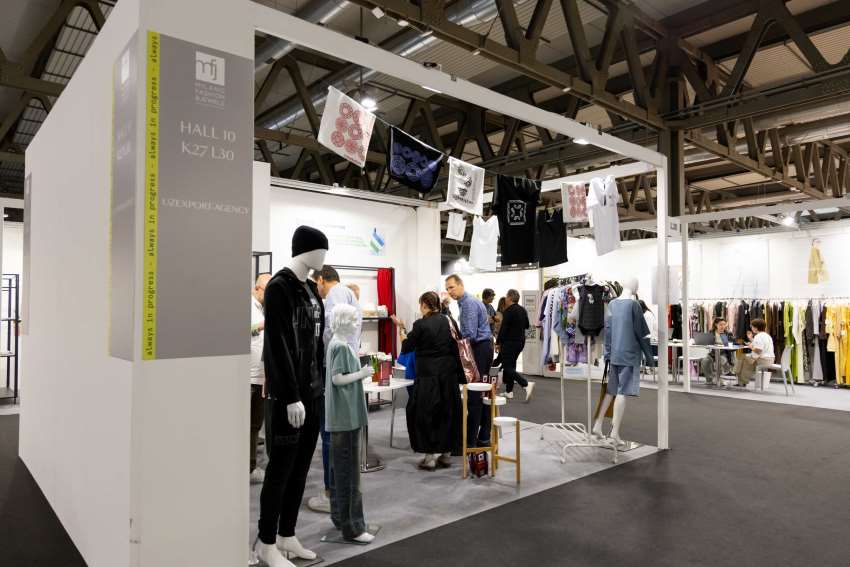
Organized by the Hong Kong Trade Development Council (HKTDC) and sponsored by Create Hong Kong* (CreateHK) of the Government of the Hong Kong Special Administrative Region (HKSAR), Centerstage will be held from September 09 to 11, 2022.
Sophia Chong, Executive Director, HKTDC, says, this year's event will focus on the theme of ‘Inclusion and Diversity’ with an emphasis on authentic self-expression, projecting a common goal of enabling everyone to express their bold imagination through beauty and aesthetics. The three-day event will feature 20 fashion shows and showcase the latest collections of more than 230 brands from 15 countries and regions. A series of digital experiences have been added in 2022, amplifying the enjoyment of this iconic event.
The opening show, Centrestage Elites will feature Hong Kong and Japanese brands DEMO and Children of the discordance - both chosen by Fashion Asia Hong Kong as among the 10 Asian Designers to Watch in 2020. Derek Chan will launch the latest 2023 spring/summer collection of his gender-neutral fashion label DEMO together with co-founder Mite Chan. At the same time, Japanese designer Hideaki Shikama, founder of young fashion label Children of the discordance will be showcasing his collection in Hong Kong for the first time. The show will be live streamed through the CENTRESTAGE fair website and social media platforms (Facebook and Instagram).
The Fashion Hong Kong Runway Show will feature six Hong Kong brands presenting their 2023 spring/summer collections. A series of "Brand Collection Shows" and "Designer Collection Shows" will be launched over the three days of the event. The former will feature a number of renowned Hong Kong fashion brands while the latter will showcase the best works from different fashion designers. In addition, this year's Centrestage will welcome the participation of Fashion Farm Foundation (FFF), which works to promote Hong Kong fashion design.
Global protective clothing market to grow at 6.3% CAGR by 2030
The global protective clothing market is likely to grow at 6.3 per cent CAGR to reach $13.72 billion by 2030
As per a Textile Today report, North America will command the regional market with the largest share growing at a CAGR of 5.7 per cent during the forecast period. Oil & gas, construction & manufacturing, healthcare/medical, firefighting & law enforcement, and mining are among the industries whose demand for thermal protective clothing has increased in North America.
Asia-Pacific will hold the second-largest share of $4.38 billion, growing with the highest CAGR of 7 per cent during the forecast period. Construction and building is Asia-Pacific’s most rapidly expanding industry, particularly in China and India. During the forecast period, expanding industries such as building and construction, oil and gas, mining, and automotive will boost demand for protective clothing.
Bangladesh kidswear exports to US grow 20% in H12022
Bangladesh’s kidswear exports to the US grew by 20 per cent in H1 2022 to reach $153.30 million.
Kidswear exports from Bangladesh have been on a growth course of late and the USis one of its largest export destinations.
Barrister Shehrin Salam Oishee, Director, BGMEA says, the US’s clothing import and retail sales grew significantly since the middle of 2021. During COVID-19, people had to stay at home for a long period. So after the lockdown, they shopped more. This led to a huge growth in retail sales and imports of the USA in previous months
Datafrom the US-based agency Office of Textiles and Apparel (OTEXA) shows, US imported $81.58 billion worth of apparel from the world whereas their import from Bangladesh was $7.14 billion.
US’s imports from Bangladesh increased by 36.69 per cent whereas their global import grew by 27.36 per cent in 2021 compared to the previous year 2020. Also during the first 6 months of 2022, US’ imports from Bangladesh increased by 60.30 per cent compared to the same period of 2021 while their global apparel import grew by 40.14 per cent, Oishee adds,
As per the latest data released by OTEXA, US imported $1.40 billion worth of kidswear in the period. Its kidswear sourcing grew by 26.54 per cent Y-o-Y.
High yarn prices disrupt spinning mills in Tiruppur, many units closed

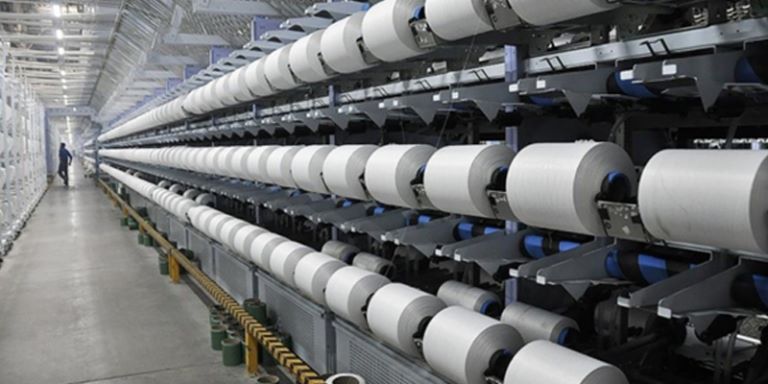
Spiraling yarn prices have rendered nearly one-third of existing garment and industrial processing units in Tiruppur idle, as business for these units has become largely unviable. In fact, many units are idle for many months with most of them getting outsourced orders from major garment exporters. Exporters from this knitwear hub, are unable to deliver orders from abroad and they fear this could lead to losing out to completion and orders moving elsewhere.
Prices of all kinds of cotton yarn have increased with prices of combed and semi-combed varieties reaching Rs 220-290 per kg in 2021. This led to cotton yarn mills increasing prices by Rs 30-40 per kg every month, from August 2021. Yarn prices across categories cross Rs 400 per kg in early 2022. Price hike resulted in a drop in production with exporters opting to buy yarn form mills, notes MP Muthurathinam, President, Tiruppur Exporters and Manufacturers Association. Domestic garment manufacturers also increased prices in North Indian market leading to distributors cutting back orders, he adds.
High prices make order negotiations difficult
Despite piling yarn stock, the Tamil Nadu Spinning Mills Association asked members to stop production recently. This led to a reduction in industrial consumption of electricity from a monthly average of 5.5 crore units to 4.5 crore units. From 11,300 industrial processing units that consumed power through LT service in the city, they rose to 12,400 units in December 2021, as per a TANGEDCO official. However, power consumption did not increase proportionately. Power consumption dropped by one crore units from June 2021- June 2022.
High yarn prices are making it difficult for garment exporters to negotiate orders, says C Ramasamy, Proprietor, Harvey Exports. Stakeholders fear the industry cannot survive if the price of yarn continues at this level and this could lead to huge losses to exporters. Hence, most units are either shut or operating with minuscule workforce.
Loss of jobs for migrant workers
Drop in production has affected workers too. High yarn prices have made these units un-operational with most running in single shifts. This is impacting migrant workers employed in these units, points out N Sekar, AI TUC Banian Union, Tiruppur.
A few export and domestic garment companies have stopped recruiting migrant workers from North and Northeast India, informs Sekar. Hundreds of inter-district migrant workers from Pudukkottai, Dindigul, Madurai, and Tiruvannamalai have already left Tiruppur. Revenue records show, the garment industry in Tiruppur employs over 1.30 lakh laborers from other states.