FW
Istanbul Fashion Connection recalibrates global sourcing dynamics
The tenth edition of the Istanbul Fashion Connection (IFCO) concluded at the Istanbul Expo Center, drawing 12,550 trade professionals from 117 countries. International buyers comprised 36 per cent of total participation, underlining Türkiye's aggressive push to position its domestic apparel manufacturing infrastructure at the center of European and Middle Eastern supply chains. Exhibitors spanning womenswear, denim, and technical textiles engaged in structured commercial negotiations, capitalizing on proximity and rapid lead times to capture market share from competing sourcing regions.
Structuring future B2B frameworks
Organizers are capitalizing on this momentum by introducing Sourceist, a targeted sourcing platform debuting in February 2027, alongside a permanent shift to September scheduling to align with international buying calendars. Global retailers are demanding greater supply chain transparency and agile manufacturing channels, which our localized ecosystem delivers seamlessly, stated an İHKİB representative. Exhibitors reported robust order intakes, particularly across specialized denim and sustainable finishing sectors, reinforcing the country's transition toward high-value apparel production.
Operated under the Istanbul Apparel Exporters’ Association (İHKİB), IFCO connects Turkish textile manufacturers with international retail buyers. Focused primarily on ready-to-wear, denim, and accessories, the exhibition network drives export expansion, technological modernization, and sustainable manufacturing practices across Türkiye's vibrant fashion sector.
Ami Paris expands commercial operations with debut Childrenswear collection
Translating Adult Codes for Next-Generation Consumers French luxury ready-to-wear label Ami Paris has formally expanded its commercial footprint by launching its inaugural childrenswear line, Ami Kids. Rather than treating the launch as a superficial line extension, the brand has scaled down its signature adult silhouettes - including the iconic Ami de Cœur emblem, heavy-gauge knitwear, and structured cotton shirts. The collection targets a growing segment of family-oriented lifestyle retail, focusing on natural fabrics like wool and cotton configured into uniform unisex essentials for younger demographics.
Celebrating youth freedom with new store launches
Capitalizing on Global Retail Momentum, the launch follows a series of strategic physical retail expansions, highlighted by the opening of the brand's 116th global boutique at Place des Victoires in Paris. Supported by steady financial performance, particularly across Asian markets, executive management views the junior demographic as an untapped opportunity to capture long-term household brand loyalty. The brand is translating their core philosophy into a format celebrating the freedom of youth, notes a brand leader regarding the rollout across international flagship stores and digital channels.
Offering refined Parisian luxury apparel
Founded in 2011 by designer Alexandre Mattiussi, Ami Paris specializes in relaxed yet refined Parisian luxury apparel and accessories. Backed by successive institutional investments, the brand operates an extensive global retail network spanning Europe, Asia, and North America.
Coterie expands global footprint and tech integration for New York showcase
As international participation scales from 30 per cent to 34 per cent of the total exhibitor base, Coterie New York is set to host brands spanning over 31 countries at the Javits Center. The upcoming trade showcase emphasizes robust international country partnerships, featuring dedicated delegations from Italy, Brazil, Greece, and South Korea alongside expanded representation from African and Moroccan manufacturing hubs. More than a trade show, Coterie is an ecosystem for growth, fostering connections between brands, buyers, and industry leaders that extend beyond the event itself, states Purvi Kanji, Vice President - Events.
Advanced educational programming and digital commerce
Integrating operational enablement with physical buying, the event introduces the Fashionology Innovation Series alongside targeted workshops focusing on artificial intelligence, marketing technology, and supply chain efficiencies. Simultaneously, an extended digital partnership with wholesale platform Joor allows global retailers to engage with collections two weeks prior and six weeks following the physical event, bridging seasonal buying cycles with continuous digital commerce.
Trade show overview and strategic focus
Organized by Fashion by Informa, Coterie is a premier international trade event connecting contemporary and advanced contemporary womenswear brands, accessories, and footwear with elite global retail buyers, department store executives, and boutique owners during New York Fashion Week.
Crude correction gives polyester a fresh cost advantage
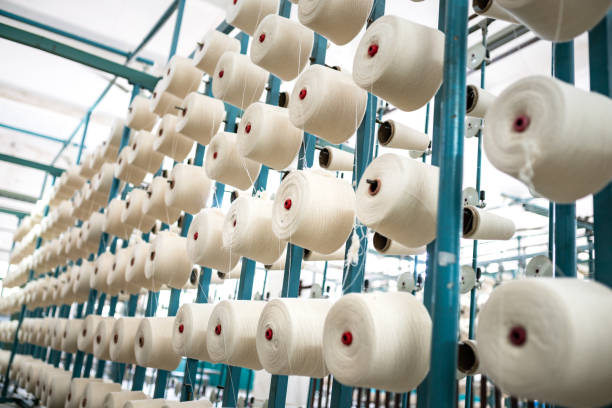
A sustained correction in crude oil and petrochemical benchmarks is reshaping the economics of synthetic yarns, widening the cost gap between polyester and cotton and giving textile manufacturers a fresh incentive to optimise fibre blends. The decline in upstream crude prices has flowed through Asian petrochemical chains, lowering costs for purified terephthalic acid (PTA) and monoethylene glycol (MEG), the principal feedstocks for polyester. The adjustment has pushed export prices for 1.4-denier virgin polyester staple fibre (PSF) at Chinese and Southeast Asian ports to around $0.84-$0.88 per kg.
For spinning mills, knitters and weavers in India, Bangladesh and Vietnam, the correction has translated into yarn procurement savings of roughly 5-8 per cent over the past two financial quarters. But the benefit is not uniform. Mills that accumulated fibre inventories at higher prices are facing inventory valuation pressure, making faster stock rotation and feedstock-linked pricing increasingly important.
The widening spread
The critical change is not simply that polyester has become cheaper. It is that polyester is now trading at a substantial discount to cotton, creating a stronger case for substitution in price-sensitive applications.
Table: Comparative fiber economics and production dynamics
|
Fibre |
Production drivers |
Benchmark price |
Yield/efficiency |
Major demand exposure |
|
Virgin PSF (1.4D) |
Crude/naphtha, PTA + MEG |
$0.84-0.88/ kg |
98-99% usable yield |
Activewear, fast fashion, nonwovens, home textiles |
|
Upland Cotton |
Crop yields, weather, acreage |
$1.72-1.82/kg |
88-92% after cleaning losses |
Shirting, denim, jersey, innerwear |
|
PC 65/35 Yarn |
Agricultural + petrochemical inputs |
$2.15-2.30/kg |
Established ring/rotor systems |
Workwear, uniforms, retail basics |
At current levels, virgin PSF carries an estimated 48-52 per cent cost advantage over physical upland cotton on a landed mill basis. Cotlook A and ICE cotton prices around 78-82 cents per pound reinforce the difference.
That spread matters because mills can alter fibre ratios without completely redesigning their manufacturing infrastructure. When cotton prices rise, production can shift towards 65/35 or 52/48 polyester-cotton blends, particularly in products where performance, durability and price are more important than a pure-natural-fibre proposition.
Polyester therefore acts as an effective price ceiling on medium-staple cotton. Cotton prices can rise only so far before downstream buyers have an economic reason to switch specifications.
Industrial vs agricultural supply
Polyester’s advantage emerges from the predictability of industrial production. Polymer and fibre plants can adjust run rates as per market conditions, while cotton remains vulnerable to weather, pests, acreage decisions and crop failures. Tightening global cotton inventories could increase this difference. Recent assessments by the International Cotton Advisory Committee and the US Department of Agriculture point to pressure on world carryover stocks as weather affects production across key growing regions.
This does not mean polyester will replace cotton. Rather, it strengthens the bargaining power of synthetic fibres in applications where consumers and brands are unwilling to absorb higher raw-material costs.
Blends emerge the margin tool
The impact is already visible across Asian manufacturing centres. Surat’s synthetic textile industry has been able to exploit lower PSF and DTY costs by adapting water-jet and rapier looms to polyester-viscose and polyester-cotton filament blends. This has helped producers maintain operating rates at around 84 per cent despite weak export conditions.
A similar response is emerging among Bangladeshi exporters. Knitwear manufacturers facing fixed-price orders from European and US discount retailers have adjusted selected jersey programmes towards cotton-polyester blends. Re-engineering fabric specifications from 100 per cent cotton to combinations such as 60/40 can reduce fabric costs while retaining broadly comparable commercial characteristics. The significance is greater than the immediate saving. Blending gives manufacturers a hedge against volatile cotton prices while allowing them to defend margins on fixed-price export contracts.
The sustainability contradiction
The synthetic price correction, however, creates a new dilemma for retailers. Lower virgin polyester costs can protect gross margins and shelf prices at a time when consumers remain price sensitive. Yet the same economics can make sustainability commitments more expensive.
Recycled polyester continues to command an estimated premium of 18-25 cents per kg over virgin PSF because of constrained waste feedstock and higher processing costs. As European sustainability regulations, including Ecodesign requirements and Digital Product Passport frameworks, increase pressure on material traceability and circularity, brands must balance immediate sourcing economics against longer-term compliance.
This creates a two-speed synthetic market: cheaper virgin fibre strengthens commercial competitiveness, while regulatory requirements increasingly reward recycled and traceable inputs.
Margins move upstream
For integrated producers such as Indorama Ventures, the correction is less straightforward than for independent spinners. Exposure across petrochemicals, PET, polyester fibres and recycling provides greater ability to manage feedstock cycles, but also makes margins dependent on the spread between upstream costs and downstream fibre prices.
For textile manufacturers, the immediate lesson is clearer. Falling petrochemical costs are not merely reducing yarn prices; they are changing the relative economics of fibre selection. The widening polyester-cotton spread gives mills greater flexibility to redesign blends, protect fixed-price orders and manage inventory risk.
The next phase of competition will therefore be determined less by the absolute price of cotton or polyester than by how quickly manufacturers can translate changing feedstock economics into fibre substitution, product engineering and procurement decisions. In an increasingly margin-sensitive apparel supply chain, that flexibility could become as valuable as the raw-material saving itself.
Chinese apparel majors trade volume for margin in premiumisation push
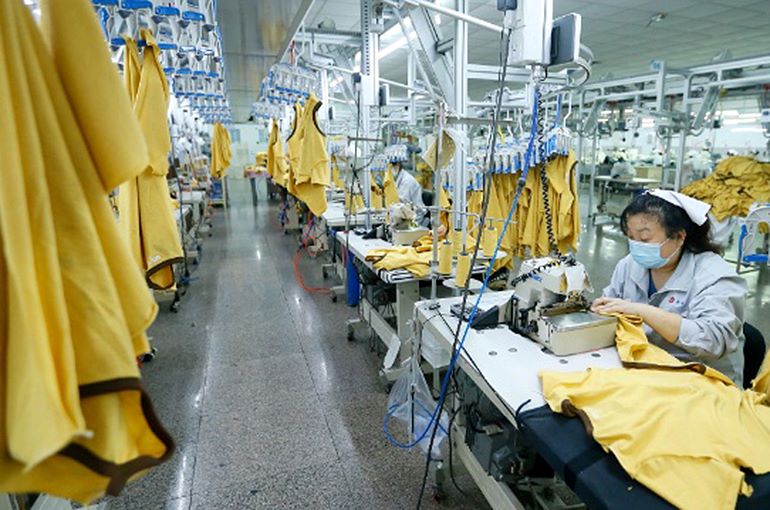
China’s apparel and consumer goods market is moving beyond the traditional volume-at-any-cost model, with leading domestic brands betting on premium pricing, technical performance and tighter retail control. The shift is creating a new competitive tier between mass-market apparel and international luxury, while putting pressure on global sportswear and fashion brands to rethink their China strategies.
According to Brand Finance’s Apparel 50 2026 report, five Chinese brands viz. Chow Tai Fook, Anta Sports, Laopu Gold, Bosideng and Li-Ning, together account for $15.2 billion in brand value, up 27 per cent year-on-year. Their rise points to a broader transformation where product differentiation, material innovation and controlled distribution are becoming more important than sheer store count or promotional volume.
Premiumisation gathers pace
The strongest evidence of the shift comes from brands moving into higher-value categories.
Table: Chinese brands global position
|
Brand |
Brand value ($bn) 2026 |
YoY growth (%) |
Global rank (Apparel 50) |
Core segment |
|
Chow Tai Fook |
$4.70 |
+13 |
19 |
Heritage & Fine Jewelry |
|
Anta Sports |
$3.50 |
+3 |
26 |
Performance Sportswear |
|
Laopu Gold |
$2.70 |
New Entrant |
35 |
Ancient-Style Gold Craftsmanship |
|
Bosideng |
$2.50 |
+21 |
Fastest Growing |
Functional & Down Apparel |
|
Li-Ning |
$1.70 |
New Entrant |
9th Strongest (BSI 84.3) |
Athletic & Lifestyle Footwear |
While Chow Tai Fook and Laopu Gold indicate demand for heritage-led premium products, the sharper apparel story is unfolding in technical outerwear and performance sportswear. Chinese consumers are evaluating garments through measurable attributes such as thermal insulation, breathability, waterproofing and fill power. This is pushing brands to invest in proprietary materials, testing capabilities and specialised product lines rather than relying primarily on brand familiarity.
Tech replaces discounting
The premiumisation drive is also closely linked to a change in retail operations. Large Chinese apparel groups are deploying AI-powered demand forecasting and inventory analytics across stores and digital channels. Smaller production batches can be tested, successful products replenished rapidly and weak styles discontinued before they accumulate into large inventories.
That matters for margins. Traditional apparel cycles often depend on heavy end-of-season markdowns to clear excess stock. A more responsive supply chain allows brands to protect full-price sales while reducing working-capital pressure. The result is a retail model built around margin quality rather than unit volume.
Bosideng moves up
Bosideng offers one of the clearest examples of this strategy. Its brand value rose 21 per cent to $2.5 billion in the 2026 Brand Finance ranking, making it the fastest-growing apparel brand in the index. Its brand valuation has increased by nearly 170 per cent since 2019. The company has moved beyond entry-level down jackets into high-altitude mountain equipment and urban technical outerwear. Its Areal capsule with designer Kim Jones, unveiled at Paris Fashion Week, has also helped connect functional apparel with fashion credibility.
This combination allows Bosideng to justify higher price points while broadening its addressable market from practical winter clothing to premium lifestyle and technical wear.
Sportswear becomes strategic
Li-Ning is following a similar path through performance credentials. Its $1.7 billion brand valuation and AAA- brand strength rating underline its growing commercial relevance. The company’s position as official sports apparel partner of the Chinese Olympic Committee for the 2025-28 quadrennial strengthens its association with elite performance. Product development in running and badminton further reinforces a specialist proposition rather than a generic athleisure identity.
Anta, meanwhile, has created a broader multi-brand growth engine. Its portfolio combines the domestic Anta brand with global outdoor assets under Amer Sports, including Arc'teryx and Salomon. This gives the group access to both mainstream sportswear and premium outdoor consumption.
Local champions pressure global brands
The financial comparison shows why global players are being forced to adjust.
Table: Comparative market performance: Domestic scale vs global brands
|
Company/ Group |
Primary segment |
Recent annual revenue scale |
Operating margin profile |
Focus in greater China |
|
Anta Sports Group |
Multi-brand Athletic / Outdoor |
$11.7bn (RMB 80.2bn) |
24.5% (Gross margin 62%) |
Direct-to-consumer store upgrades; high-end outdoor scaling via Amer Sports. |
|
Nike Inc. |
Global Athletic Footwear / Apparel |
$51.3bn global ($7.2bn Greater China) |
11.5% global operating margin |
Clearing wholesale inventories; recalibrating price points in Tier-I-II cities. |
|
Adidas AG |
Global Athletic Footwear / Apparel |
$24.8bn global ($3.6bn Greater China) |
6.5% global operating margin |
Rebuilding localized cultural marketing; rationalizing regional wholesale accounts. |
|
Bosideng International |
Technical Down & Outerwear |
$3.2bn (RMB 23.2bn) |
17.5% (Gross margin 59.6%) |
Premium mountain outerwear; designer collaborations; high-margin retail flagship networks. |
|
Moncler Group |
Luxury Outerwear & Apparel |
$3.0bn (€2.71bn) |
29.5% EBIT margin |
Exclusive Tier-I luxury mall presence; direct-operated experiential boutiques. |
Domestic players are gaining an advantage through tighter inventory control, direct-to-consumer distribution and faster product adaptation. For global brands accustomed to using wholesale networks to drive scale, weaker department-store traffic and uncontrolled discounting can undermine both pricing power and brand equity.
Global brands rethink China
The response is centred on three changes: hyper-local product development, tighter wholesale networks and deeper category specialisation. Global brands are shifting more design decisions to Chinese teams, developing products tailored to local climates, sizing and consumer preferences. At the same time, underperforming wholesale accounts are being reduced in favour of company-operated stores where brands can control pricing, merchandising and customer experience.
Rather than compete head-on with Chinese players across general sportswear, international companies are also concentrating on specialised segments such as premium running, tennis, trail sports and technical outdoor apparel, where performance credentials can still support premium pricing.
The next test is outside China
China’s domestic premiumisation, however, does not automatically translate into global success. Expansion into Europe and North America brings higher customer-acquisition costs, complex distribution structures and tariff challenges. For Chinese brands, sustaining premium valuations will ultimately depend on whether innovation can keep pace with price increases. Technical claims must be supported by measurable performance, while global expansion will require consistent brand positioning and service standards.
The larger lesson for retail is clear: China’s leading apparel companies are no longer competing simply by producing more or selling cheaper. They are building value through technology, controlled distribution and specialised products and proving that higher margins can be a stronger growth engine than higher volumes.
Taipei conclave targets fiber integration and supply chain resilience
The international textile manufacturing community is convening in Taipei for a high-level strategic seminar organized by the International Cotton Advisory Committee and the Taiwan Textile Federation. Against a backdrop of persistent geopolitical friction and volatile raw material costs, the summit focuses heavily on forging operational synergies between natural cotton and man-made fiber value chains. Industry executives note, bridging these traditionally separate segments is vital for insulating factory output against external market shocks. Building robust operational frameworks requires unprecedented cross-sector alignment, states Kanwar Usman, Head-Textiles, ICAC. Global trade forecasts project worldwide cotton trade to approach 10.3 million tons, necessitating smarter integration with synthetic alternatives to maintain steady mill utilization rates.
Scaling circular and sustainable production
Environmental compliance and circular economy mandates are shifting from voluntary corporate goals to strict regulatory requirements across major export destinations. Taiwanese textile mills are showcasing advanced green manufacturing methods that combine organic cotton properties with recycled synthetics to produce high-value technical textiles. Panel discussions featuring executives from leading fiber producers like Far Eastern New Century and Ruentex Industries address the technological hurdles of advanced fabric blending. Optimizing resource efficiency without sacrificing material performance remains our primary manufacturing objective, remarks Dr Fanny Liao, Executive Vice President , Far Eastern New Century. Market analysts emphasize, mills adopting closed-loop recycling and hybrid yarn spinning early will capture disproportionate share as global compliance standards tighten.
Aiming for long-term operational viability for textile manufacturers
Established in 1939, the International Cotton Advisory Committee functions as the premier intergovernmental association for cotton-producing, consuming, and trading nations, operating under United Nations recognition. The organization monitors global output, trade statistics, and market consumption trends while delivering technical research and transparency to member states. Headquartered in Washington, D.C., the agency directs extensive resources toward stabilizing the world agricultural economy and facilitating cross-border technological adoption.
Through international forums and cooperative research networks, the organization guides producers and textile manufacturers toward long-term operational viability, environmental stewardship, and enhanced supply-chain integration across key regional markets.
Monforts expands machinery footprint across emerging textile hubs
German textile machinery manufacturer Monforts is accelerating its commercial outreach across fast-developing manufacturing corridors, targeting key industrial exhibitions in Uzbekistan, Kenya, and Pakistan. As Central Asia shifts its economic focus from raw agricultural yields toward high-margin fabric production, machinery suppliers are experiencing heightened demand for advanced finishing systems. Speaking ahead of the CAITME exhibition in Tashkent, Thomas Päffgen, Area Sales Manager, Monforts, highlighted the structural evolution of the region. Monforts has been closely involved in Uzbekistan’s rapid move downstream from cotton and yarn production into higher-value fabric manufacturing, he noted. Regional mills are aggressively procuring Montex stenter units and Thermex continuous dyeing ranges to satisfy stringent export compliance parameters and boost factory output.
Meeting efficiency demands in South Asian corridors
Following engagements in Tashkent and an upcoming VDMA symposium in Nairobi, Monforts will transition its technical showcase to Lahore for Igatex Pakistan. Particularly within major production clusters in Karachi, Lahore, and Faisalabad, Pakistani textile exporters are prioritizing resource optimization and energy-efficient processing technologies to mitigate rising operating overheads. Industry analysts indicate, integrating automated finishing lines enables domestic mills to enhance product quality for international home textile and denim markets. Manufacturers are increasingly seeking technologies that can simultaneously improve productivity and deliver greater resource efficiency, explains a senior company spokesperson, underlining the sector-wide shift toward sustainable, high-performance mechanical operations.
Supporting sustainable innovations across textile hubs
Established in Germany, Monforts is a premier global engineering enterprise specializing in advanced machinery for the dyeing, finishing, and coating of woven and knitted textiles. The company serves industrial manufacturing markets globally, supporting vertical integration, resource efficiency, and sustainable processing innovations across key regional textile hubs.
10th Istanbul Fashion Connection concludes on a successful note
The global apparel and textile manufacturing community concluded a highly successful showcase in Turkey following the culmination of the tenth Istanbul Fashion Connection exhibition at the Istanbul Expo Center. Drawing over 12,500 trade professionals from 117 countries, the milestone event underscored Turkey’s growing significance as an alternative sourcing powerhouse for international retail brands seeking agile supply chains. Exhibitors spanning womenswear, menswear, denim, and active categories reported robust commercial engagement with global buyers navigating ongoing logistics volatility. International buyers are actively prioritizing regional nearshoring hubs that offer certified sustainability and rapid turnaround times, remarks Ahmet Karaduman, Head-International Trade Relations, Istanbul Textile and Apparel Exporters Association. More than 200 leading manufacturers displayed advanced collections emphasizing eco-friendly material blends and digital design integration.
Expanding sustainable design horizons
Environmental compliance and traceable manufacturing dominated conference sessions, reflecting tighter regulatory mandates across European and North American retail markets. Participating apparel producers showcased collections featuring recycled synthetics, organic cottons, and closed-loop manufacturing techniques designed to minimize carbon footprints across the textile value chain. Industry analysts noted that the robust turnout of international delegations - featuring strong purchasing representation from Europe, the Middle East, and North Africa - signals sustained market confidence in Turkish export capabilities. As global retailers finalize autumn ordering cycles, events like the Istanbul Fashion Connection continue to serve as essential commercial catalysts for cross-border textile collaboration and long-term contract procurement.
Sustainable innovation and international expansion
Organized by the Istanbul Textile and Apparel Exporters Association, the Istanbul Fashion Connection is a premier biannual trade exhibition connecting global apparel buyers with Turkish manufacturers. The platform covers ready-to-wear, denim, kidswear, and technical textiles, focusing on sustainable innovation, design excellence, and international wholesale expansion.
Pearl Global to expand European operations across North Africa production hubs
Major international apparel manufacturer Pearl Global Industries is actively exploring manufacturing opportunities across North Africa and Jordan to establish closer proximity to European retail buyers.
Facing persistent maritime logistics bottlenecks and shifting trade policies in North America, leading garment exporters are recalibrating their global footprints to mitigate supply chain vulnerabilities. The company, which produces ready-to-wear apparel for prominent fashion brands including Zara, Gap, and Levi’s, aims to balance its geographic revenue concentration. While the United States remains its primary market, its revenue share has decreased to approximately 50 per cent from over 85 per cent in FY21. Meanwhile, the European Union contributed 16 to 17 per cent of group revenue in FY26, prompting executive leadership to pursue structural growth closer to Mediterranean retail destinations. We are again evaluating things, and could consider partnerships in locations closer to Europe, noted Pallab Banerjee, Managing Director, Pearl Global.
Accelerating financial performance and capacity
The prospective Mediterranean expansion aligns with an aggressive capital expenditure program, with the firm investing between Rs 200-Rs 250 crore during the current financial year to scale global infrastructure. Industry analysts observe, establishing localized production networks in North Africa will enable faster inventory replenishment cycles for European fashion brands seeking agile nearshoring alternatives. Boosted by expanding order books across Spain, Britain, and Japan, corporate leadership anticipates revenue growth exceeding 15 per cent for FY27, tracking ahead of schedule to meet its Rs 60 billion milestone before 2028.
Aiming for diversified global market penetration
Established as a leading Indian multinational apparel manufacturer and exporter, Pearl Global specializes in comprehensive garment design, manufacturing, and supply chain solutions. Serving major international fashion retailers, the company maintains multi-country manufacturing operations across Asia and Central America, targeting sustained long-term revenue expansion and diversified global market penetration.
Bangladesh textile sector contracts as thresholds for value addition in apparels rise
The Bangladeshi apparel manufacturing industry is confronting a challenging regulatory shift following trade policy updates that push minimum local value-addition requirements up to 40 per cent for specialized synthetic segments. While traditional cotton-based knitwear has historically navigated lower compliance baselines comfortably, the enhanced mandates place heavy operational pressure on mills utilizing man-made fibers. Industry stakeholders note, meeting these elevated thresholds is complicated by an underdeveloped domestic backward-linkage infrastructure for synthetics, alongside persistent utility constraints such as erratic natural gas supply. Achieving thirty percent value addition is manageable for standard cotton assemblies, but synthetic and technical lines require robust local support systems that are still evolving, states Fazlul Hoque, Managing Director, Plummy Fashions. Exporters warn, rigid enforcement could temporarily restrict manufacturing throughput unless regional supply networks scale rapidly.
Balancing export growth and sourcing realities
The stricter regulations aim to deepen domestic industrial integration and reduce foreign exchange leakage by forcing apparel producers to source intermediate materials locally rather than depending on imports. However, trade associations argue, aggressive compliance targets conflict with ongoing efforts to rehabilitate shuttered production units and diversify away from basic product portfolios. Manufacturers handling technical garments and synthetic underwear emphasize that international buyers frequently dictate specific raw material inputs, leaving local factories with limited operational flexibility. Economic analysts suggest, while the mandate creates long-term incentives for domestic spinning and weaving investments, short-term margin contraction remains a distinct risk for export-oriented factories navigating competitive global pricing environments.
Rapid expansion into MMF and sustainable technical textiles
Bangladesh operates as a premier global hub for readymade garment exports, serving major international retail brands across the United States, Europe, and Asia. Driven primarily by cotton knitwear and woven categories, the sector anchors the national economy while aggressively expanding into man-made fibers and sustainable technical textiles.